

Find some pine trees
and a wide rock in the sun.
Settle down and feel gratitude
curl around your shoulders.
Listen to the wind
sense that there is sorrow too
in this place,
deep and old,
threaded through the
lines of sun
slices of shadows.
It tells of what has been lost,
what has been stolen,
of silenced stories,
and of fracturing.
Make a vow,
silent and sacred,
to do what you can,
to rebuild the web
to reweave the fabric.
Lie on your back in the pine needles,
feel your body soften into the ground
and become still.
Allow yourself to feel held,
heavy bones and soft skin
becoming part of the land.
Wonder how many of your
ancestors kept other people
from becoming ancestors themselves.
Watch the sunlight making tiny rainbows
through your eyelashes and pines.
Find a pretty rock.
Don’t take it.
Leave it where it belongs,
on the land that gave it birth.
Go home.
Keep your promise.
Category: Poetry
Biblical Poetry – Trees by Janet Maika’i Rudolph

In many cultures of the world, including our own, trees are considered the ancestors of humanity – own our ancestors.
Trees are connected with great goddesses throughout antiquity. We see this in the bible where, as I’ve noted before, the Tree of Life is Eve’s tree for the word Eve means life. It is, in essence, the Tree of Eve. Goddesses in trees feeding humans were common themes in ancient Middle Eastern art. The tree was Hers to give freely of as she wished.
Anthropologist and religious scholar, Mircea Eliade writes extensively about the associations of trees ancestral connection to humans. He calls them both mystical and mythical.[1] His examples include the Miao groups of Southern China and Southeast Asia who “worship the bamboo as their ancestor.” He also notes Australian tribes who view the mimosa as their progenitor. And there is a tribe from Madagascar, called Antaivandrika which means “people of the tree,” who considered themselves descended from the banana tree.
Continue reading “Biblical Poetry – Trees by Janet Maika’i Rudolph”When Earth Meets the Son by Sara Wright
As I curl up
in my hatchback
open to sky
I am a snail
loving her shell
sun warms
me from behind
Autumn light
shimmers, leaves
a testament
to breeze
some withered
by a freeze.
Burnt umber
Gold
Salmon
the understory
in full glory
Bare hardwoods
peer down
sentries stationed
Overhead
Acorn browned oak
leaves smudge
sage greens
dark crimson
bleeds
geese fly by
haunting goodbye
A dragonfly lands
on my foot
Not a grouse
in sight
Hunted
in thickets
too thorny
for stealth
She’ll
live to see
another dawning
Scarlet pockmarked palms
lie face up
on the ground.
Warning.
Signs are everywhere.
Insect ridden leaves –
puncture marks
deform once
smooth hands
some shriveled
beyond recognition.
Continue reading “When Earth Meets the Son by Sara Wright”Upon Rising: Poems Call Out by Margot Van Sluytman
Moderator’s Note: Margot reads each of her poems aloud. They can be heard through the links in the titles.
“And what then is poetry?” We ask this time and time and time again. And poetry HERself answers. SHE needs no descriptor. Mimetic sagacity spells HER clarity.
~~~
Dreams be Fed
I am a body that remembers
The joys of falling into hues of
Brilliant blues and greens.
I am a soul that trades in
Cinnamon and spices.
Elevating chance.
Caressing mystery.
I am a will that conceives fat
Ebullient Moon as
Golden Goddess. Divine.
SHE who feeds our dreams.
SHE who teaches us
To tend our fires.
©Margot Van Sluytman
For Mahsa by Lori Stewart
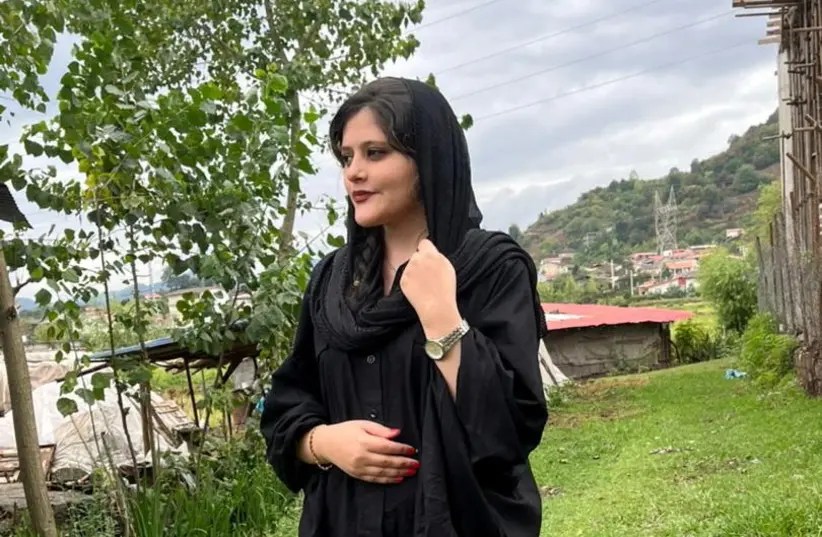
On Friday, September 16, 2022 Mahsa Amini died in a Tehran hospital having been arrested by Iranian morality police on September 13 for wearing “inappropriate attire”. She was 22. Mahsa’s family claims she had bruises to her head and limbs from being beaten. The Iranian police dispute that claim saying Mahsa died from a pre-existing health condition.
Mahsa’s death sparked major protests against the Islamic Republic in Iran and protests of support are occurring around the world. Women are burning their hijabs, which they are mandated by Iranian law to wear, chanting, “Women, life, freedom”. They are cutting their hair which is a longstanding symbol of protest and loss in Iran’s history. This action harkens back to the epic Persian poem “Shahnameh” by Ferdowsi in which hair is a theme and the cutting of hair a symbol of mourning. Around the world, people have followed suit by cutting their hair in solidarity with the protesters in Iran. A recent chant by the protesters is “it’s the beginning of the end” as they challenge their theocratic government.
Continue reading “For Mahsa by Lori Stewart”The Appalachian Cailleach Speaks by Annelinde Metzner
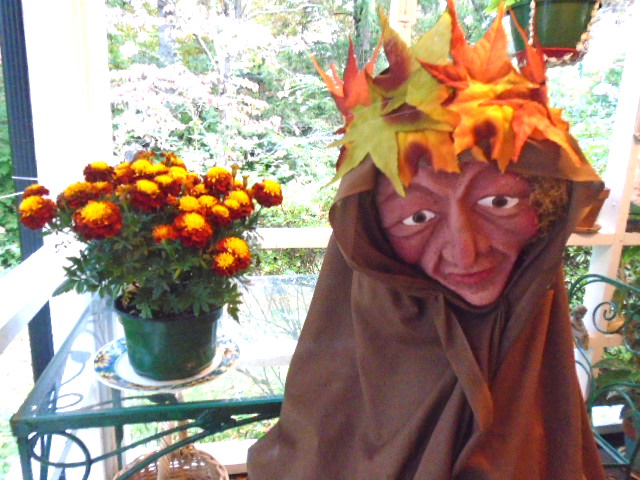
The Cailleach is a Celtic Ancestor-Goddess, a Divine Hag, a Crone who controls the winter winds in the far reaches of remote places. Living in the still-wild mountains of Western North Carolina, I’ve found it is easy to conjure up the Cailleach rising up through a rhododendron “hell.” She certainly took my breath away, and captured my consciousness, when I wrote this poem in 1995. Some years later, Lisa Sturz of the Red Herring Puppets created for me the eight-foot tall, wearable Grandmother puppet you see here. She has appeared in a number of my theater productions to the Goddess, while the poem was being dramatically read, with improvised music on the psaltery. Grandmother is happy to be coming out of my basement once more, for the Samhain service at our Unitarian church here in Black Mountain.
Continue reading “The Appalachian Cailleach Speaks by Annelinde Metzner “On Her Birthday by Sara Wright
One of the aspects of feminism that really disturbs me is the SILENCE around aging. Reflections on our personal lives are a critical piece that can help women to deal with this inevitable process. Oh, we write about the “wisdom” of the crone, the powers of the “Old Ones”, but we don’t share the poignant, dark, or terrifying aspects of personal aging leaving women without female empathy and companionship when we need it most. I am committed to breaking this silence. My birthday poem speaks to the pattern that lies behind my life and how it determined to an extent how I have lived. Chosen or not.
We come out of a culture that believes that each person has ‘free will’ and therefore the choices we make are our own. I challenge this concept because my life experience has taught me otherwise. Within the constraints of the patterns we live we do have choices. So this is a “both and” approach. Coming to terms with constraining patterns can be painful, but only then can we make choices that allow us to make peace with our lives.
On her birthday…
On her birthday
she surrendered –
Continue reading “On Her Birthday by Sara Wright”Beauty in the Heart of the Beholder by Janet Maika’i Rudolph
In the past two years, I began a project which I call biblical poetry. I had been doing my own translations of biblical verse based on the hieroglyphic meanings of Hebrew words. Ancient Hebrew or Semitic Early writing grew out of the hieroglyphs of Egypt. Since hieroglyphs are pictures, we are able to use the rebuses or picture puzzles to glean the original or at least older meanings of words. I have begun to see these a route to interpreting meanings from before the dawn of patriarchy. This door to understanding appeals to my religious/spiritual/feminist sensibilities. At first, I attempted to stay somewhat true to the well-known meanings as they have come down through the ages. When I began my poetry project, I broke out of that structure to reveal the more mystical/shamanic/pagan meanings that I find beneath the words. At the bottom of this post, I have links to a few of my past biblical poetry posts.
The bible is quite large, so this is an encompassing project with lots of material to explore. This month, I wanted to take a look at how the concept of beauty is treated in the bible. The word for beauty is yaphah. Yaphah can also mean miracle and wonder as well as beauty. Let’s stop for a minute to unpack that. When we think of the word beauty in our culture, the thought is generally about how someone looks (unusually a female someone). But just the Hebrew word alone broadens the meaning. If beauty is someone or something that is wondrous and has miraculous qualities than it goes well beyond cultural standards of how someone looks. If you love someone, they would be beautiful to you because they would be wondrous. Biblical usages and translations tend to focus on beauty, mostly women, sometimes cows (yep cows) and a few handsome men in the mix. But I found that yaphah doesn’t have to be a vision that relies on one’s eyes.
Continue reading “Beauty in the Heart of the Beholder by Janet Maika’i Rudolph”Death By Drowning: A Poem Written the Day After The Supreme Court Overturned Roe v. Wade by Marcia W. Mount Shoop
Today at 10:06am
I found him
belly up
only a little bloated
water his deep
dark grave.
Turn the bucket
over
Talk gently
“How long have you been
in here, friend?”
Turn him over
his final rest
decomposing leaves,
Poison Ivy canopy
Sets off the blue
Sky Woman comes to Earth by Sara Wright
Every twig
is singing
a song of thanksgiving
to Sky Woman
who gifts
steady rain
nourishing
earth’s parched body.
Cracked ground
softens
soaks in minerals
and scent
sensing wonder.
Continue reading “Sky Woman comes to Earth by Sara Wright” Feminism and Religion