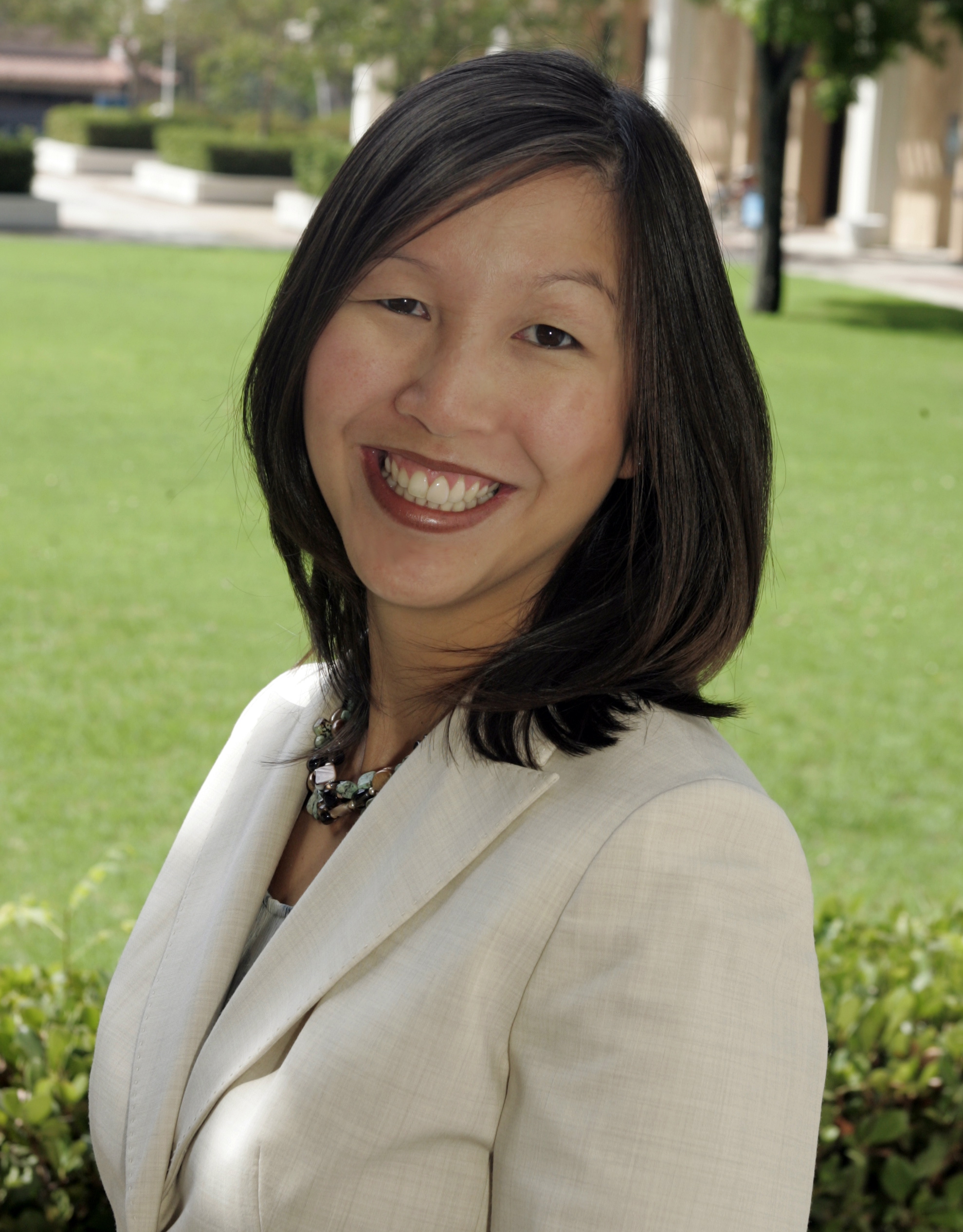
Like many others, I’ve been following the aftermath of the recent shooting death of an 18-year old black teenager by a police officer in Ferguson, Missouri with a mixture of shock and horror. Mainstream news coverage and my Facebook newsfeed have been appropriately flooded with commentary about systemic racism, racial profiling, civil unrest, and the militarization of the police. As several African American thought leaders have noted, Brown’s death was not an aberration but “just the most recent example of police officers killing unarmed black men.” Continue reading “What Feminists of Color Taught Me In the Wake of the Michael Brown Shooting by Grace Yia-Hei Kao”
Category: Racism
Systemic Violence and the Killing of Michael Brown by Xochitl Alvizo

Oppression is systemic. Injustice is systemic. It pervades the whole – it seeps into everyday actions and becomes habits and patterns that function as default. As a result, the actions that fall within these patterns hardly need justifying. If anything, the questioning of them is what is put on the defensive. And those who stand against injustice must usually do so in the face of militarized policing, before vast forces that serve to preserve the status quo.
I can’t help but see the similarities between the everyday existence of young black men, of boys in this country, and that of women. The lack of safety in public places; the need to always be aware of one’s surroundings; the lack of trust in the intentions of another; living with the knowledge that people like you experience violence at much higher rates than others. It is a racist, violent, patriarchal world we live in. And, yes, it is also other things, good and beautiful things, but sometimes the hard reality of everyday life blocks out that light. Continue reading “Systemic Violence and the Killing of Michael Brown by Xochitl Alvizo”
Donald Sterling, Racism, the Social Construction of REALITY, and the Power of WORDS by Paula L. McGee
My dissertation: The Wal-Martization of African American Religion and much of my work talks about the social construction of identity, racism, sexism and the power of brand®ed identities and celebrity. I keep seeing images and hearing those WORDS or sound bites of Donald Sterling—owner of the Los Angeles Clippers. His “racist” WORDS kept playing over and over in my head. Donald Sterling, the owner—or maybe the former owner—now banned for life—fined 2.5 million dollars—alleged adulterer—and an alleged racist.
Paula, you have to write about this and add to your literary and scholarly canon. Then suddenly, like the burning bush in the Exodus narrative and the call of Moses, I started asking questions of myself and whether I am worthy to write these words. Dr. McGee, “What WORDS are academic, yet popular enough? “ More importantly, “How does this fit into your research?” You want your blog to be on the top of a Google search tomorrow, when the thirty-something and under crowd find the right combination of WORDS to pull you into the browser of their lives. Your last blog was about Preachers of LA. How perfect. Your second blog, Reverend McGee will be about billionaire racist WORDS, alleged mistresses, rich ex-wives, and black basketball players. WORDS, WORDS, WORDS, WORDS! Continue reading “Donald Sterling, Racism, the Social Construction of REALITY, and the Power of WORDS by Paula L. McGee”
I Believe Anita! by Marie Cartier
During the past week I attended a Los Angeles premiere of a new documentary Anita: Speaking Truth to Power (Dir: Freida Lee Mock USA, 2013). The screening was sold out and I had great seats saved for me– sitting with a friend who works at Samuel Goldwyn, the distributor of this fine film.
In 1991, Anita Hill provided testimony she hoped would serve to dissemble the nomination of Clarence Thomas as a Supreme Court justice. Although the vote would end up being close (52-48) Hill’s testimony did not serve to dissuade the decision — Clarence Thomas’ nomination was confirmed and he was appointed to a life term on the Supreme Court four days after Hill’s testimony concluded. Here is an outline of the debate. Continue reading “I Believe Anita! by Marie Cartier”
Musings on Reification by Sara Frykenberg
The following is a bit of a messy and meandering blog: a kind of a ‘brain train,’ that starts with a question of reification and eating disorders, and moves into a sense of the literal ‘consuming’ nature of oppression. So I will start with a ‘thank you’ to readers who will meander with me and with gratitude to the teachers whose thoughts I am wandering with along the way.
Reification is the process by which those created ideas that we externalize into institutions, concrete objects, or social principles then become so real to us that we tend to think of them as a separate reality or a thing/ life in and of itself.[1] I teach this concept in my ethics classes when we discuss the way in which actions and choices are connected to what we often consider to be external forces like “the government,” or “the economy,” when in fact, we are in relationship to and often, actively play a role in maintaining these realities (even when only playing a small role). Reification can subversively undermine our understanding of response-ability because it is a way of making the structures that form our society “other” than ourselves.
My students definitely struggle with this concept and often express the fear that they are too small as individuals to see any real change happen. (I too, often struggle with this fear when thinking about the reified ‘monsters’ of oppression and hate.) Dealing with this discouragement in class, I (and we) switch gears by emphasizing praxis and recognizing its successes. I ask my students to consider what can be done and what choices/changes I, they, or we are capable of making while re-membering changes already being made. As Gustavo Guiterrez says: “Pessimism comes from reality because reality is tragic, while optimism comes from action because action can change reality.”[2] Continue reading “Musings on Reification by Sara Frykenberg”
Segregation by Carol P. Christ
As I think about the incarceration of young black men for relatively minor drug crimes, and the murders of Trayvon Martin and Jordan Davis, I cannot help but compare the astonishing progress that Americans have made in overcoming prejudice against gays and lesbians to the astounding lack of progress we have made in overcoming prejudice against black Americans.
It is often repeated that the reason for changes in attitudes about gays and lesbians is the process of coming out—most people in America now know a lesbian or gay family member, friend, or co-worker. On the other hand, I would dare to speculate that many—perhaps most—Americans who are not African-American do not know a boy like Trayon Martin or Jordan Davis. If you do—count yourself lucky! Our society remains divided by race and class divisions (many of them a legacy of racism) that prevent many non-black Americans from knowing a single young black man. Continue reading “Segregation by Carol P. Christ”
“Never Again…” by Ivy Helman
Every year, the Greater Lowell Interfaith Leadership Alliance, GLILA, sponsors an interfaith service on genocide. During these services, the community gathers together to remember, to mourn, to heal, to honor and to work towards a world in which Elie Wiesel’s words, “Never Again!” ring true. Three years ago, we focused on the Shoah and the year after that the Armenian genocide. Last year it was Cambodia under the Khmer Rouge and this year our focus is Rwanda. Part of this preparation is self-education. I would like to share with you a few of the things I have learned through my own research about the Rwandan genocide as well as some reflections on this difficult, yet extremely important topic.
In many ways, the Rwandan genocide is a direct consequence of colonialism as well as a United Nations’ failure to respond to warnings. Before colonization, first by the Germans and then as a spoil of WWI for the Belgians, the Hutus, Tutsis, and Twa peoples lived in relatively peaceful coexistence. Yes, there were acknowledged differences between the three groups based on caste-like descriptions, but they also all spoke the same language, practiced the same religion, intermarried, and co-existed together for a long time. Generally, the Hutus who made up 85% of the population were the lower caste, so to speak, and were associated with labor and farming, while the Tutsis, 14% of the population, were the herders. This occupation often generated more wealth and prestige than farming did, so Tutsis were also long associated with the elite in economic and political terms running small chiefdoms and the like. According to Philip Gourevitch in We Wish to Inform You that Tomorrow We Will Be Killed with Our Families: Stories from Rwanda, these were fluid categories of sorts where it was possible to become part of another group through the acquisition or loss of wealth (see page 47). Continue reading ““Never Again…” by Ivy Helman”
Yes, You’re a Homophobe by John Erickson
Jesus loved sinners and Jesus would rather be dancing with me in West Hollywood on a Friday night than lugging through a swamp luring ducks into a trap with a duck caller made by a clan who think that my sexual actions are similar to that of an individual having sex with an animal.
To be able to walk down the street holding the hand of the one you love is a great feeling and an action that some of us aren’t able to perform without fear.
A line has been drawn in the sand between those who support gay rights and those who do not. While some call it being on the “right side of history,” I simply now refer to it as not sounding and looking like a bigot in the halls of history and in the various books, Facebook posts, and Tweets that our children will one day read. Continue reading “Yes, You’re a Homophobe by John Erickson”
A Reflection on Leading Discussions about Difficult Ethical Issues by Elise M. Edwards
I think classroom discussions can be a good forum for modeling the kinds of discussions students might have in their families, peer groups, faith communities, and political contexts. But sometimes I really wish I wasn’t the one responsible for leading the discussion.
I started a new position this year as a lecturer in Christian Ethics. This semester, the high moments of my week are my two 75-minute sessions of an Introduction to Christian Ethics class. I have less than 20 students and they are smart, kind, engaging, talkative, and respectful. They also come to class prepared and eager to participate in discussion. I love it. I count myself as blessed for having the opportunity to teach them. But there have been several days when I haven’t wanted to go to work and face them. Continue reading “A Reflection on Leading Discussions about Difficult Ethical Issues by Elise M. Edwards”
Feminism vs. Humanism: A response to an idealized feminist identity by Mariam Williams
My first thought after reading Gina Messina-Dysert’s post, “Feminism vs. Humanism: Continuing to claim a feminist identity” was, “Guess she missed that whole #SolidarityIsForWhiteWomen trend on Twitter last week.” Until I saw Gina’s bio signaling the end of the post, I thought she was building the foundation for a witty piece of satire. The feminism she wrote about was so ideal compared to humanism that I thought she was using irony to address feminism’s imperfections. She wrote that “humanism does not value diversity and difference,” which implied that feminism does, always or at least consistently. Humanism “reinforces western, privileged … values,” but feminism doesn’t? As in doesn’t ever? Is that what she meant to say?
It isn’t that Gina, or the Feminism and Religion blog as a whole, doesn’t acknowledge diversity among feminists. It’s that in the post, she didn’t recognize that feminism can be just as exclusive as humanism according to the definition of humanism she provided. Continue reading “Feminism vs. Humanism: A response to an idealized feminist identity by Mariam Williams”