From the Archives: Abortion–the topic that won’t go away–or even morph

This was originally posted on March 12, 2014. It was Esther’s first FAR post.

Recently, I got involved in a conversation about abortion.  It happened on Facebook when a relative posted that her heart hurts when she considers her “sweet baby girl” and how the law (Roe v. Wade, 1973) in the United States gave her the choice as to “whether [or not] I would have her killed.”  She’s sincere.  Many of her friends “liked” her post and, with few exceptions, commented in agreement.  I was one of the exceptions.

March celebrates Women’s History Month–a month to remember the accomplishments of our foremothers, noting their work helping to secure for us (their progeny) certain rights, most notably the right to vote (Elizabeth Cady Stanton, 1815-1902) and reproductive rights (Margaret Sanger, 1879-1966).  Support for abortion nowadays almost always falls under the rubric of “women’s reproductive rights.”  So when we hear, “It’s my body and I’ll decide what I’ll do with my own body,” the speaker is giving voice to what many consider to be a fundamental right–the right to be autonomous and exercise free agency over one’s own person.

Continue reading “From the Archives: Abortion–the topic that won’t go away–or even morph”

From the Archives:“Vaginas are Everywhere!”: The Power of the Female Reproductive System by John Erickson

Moderator’s note: This marvelous FAR site has been running for 10 years and has had more than 3,600 posts in that time. There are so many treasures that have been posted in this decade that they tend to get lost in the archives. We are beginning this column so that we can all revisit some of these gems. Today’s blogpost was originally posted June 19, 2012. You can visit it to see the original comments here.

I have a beautiful picture of vagina hanging on my wall.  However, for the longest time it was in the back of my closet, with a plastic bag covering it.  I wasn’t ashamed of it but my ex-boyfriend, like most gay men, refused to have it on the wall where he could see it.  He is now long gone; the vagina is now out and proud.

I bid on the picture one fall during a showing of the Vagina Monologues at Claremont School of Theology.  One of my best friends was in the show and I had always loved its powerful message.  I walked out of the theatre, waiting for my friend, and there it was: the picture of the vagina.  I found myself caught up in its beauty.  Its gaze had mesmerized me.  The outlying layers of red, the contours of its shape, they all began to mold into a figure before my eyes.  While I have never thought of myself as a religious person, I realized that at that moment I was no longer looking the old photo but rather I was staring at the outline of the Virgin Mary.  At that moment, I realized that I had to have the picture.

Continue reading “From the Archives:“Vaginas are Everywhere!”: The Power of the Female Reproductive System by John Erickson”

Women’s Bodies and Texas

I have been so angry about the Texas law that functionally bans abortion, I have not even been able to find the words to write about it. But alas . . . being angry without taking action is too often what we women do. So, I am forcing myself to focus and write this blogpost. I think the worst part of this law (although there are so many it is truly hard to choose), is how it isolates a vulnerable, pregnant woman. Can you imagine having an unwanted pregnancy and not being able to talk to anyone about it? This law puts a whole women’s support system into legal and financial jeopardy; a mother, sister, friend, doctor, staff at the doctor’s office, therapist, random neighbor and on and on. A woman’s only “legal” option is to talk to a crisis pregnancy center which comes with a hefty dose of political agenda. This is manipulation at this most virulent, cruel, and controlling.  

Continue reading “Women’s Bodies and Texas”

Why Pro-Life Stops at Birth: Who Really Supports Life and Why by Winifred Nathan

The patriarchal Catholic Church claims to be pro-Life.  But is it pro-Life?  Or is it pro-Birth?  A Catholic Benedictine sister outed the pro-Life movement. Her position: the pro-life crowd shows little if any ongoing interest in life after birth.  They’re pro-birth, but not pro-life.  Legislators who enact laws to restrict a woman’s right to an abortion, but then stand firm against funding  programs that assist the mother and her baby once the child is born are not pro-life.   Too often the goal of anti-abortion advocates is for the fetus to make it to birth. Birth is the important value, life not so much.

I propose the starting point for deciphering this puzzle is to look at our desire as human beings for immortality.  We want to defy death believing that there is a spiritual continuation of who we are after our bodies shut down.  We want death to be a new beginning.

A great deal of effort goes into seeking  an answer to the question what comes next.  A question we presently lack the capacity to answer. We honestly do not know what if anything happens following death.

Continue reading “Why Pro-Life Stops at Birth: Who Really Supports Life and Why by Winifred Nathan”

Restricting Access to Birth Control is Immoral by Katey Zeh

On a hot August day in 2012, I was taking my usual monthly trip to Walgreens to pick up my birth control prescription. As I pulled out my wallet to cover the co-pay, I was pleasantly surprised when the pharmacist informed me that I didn’t owe anything. It was the first month that the contraceptive mandate included in the Affordable Care Act required health insurance companies to provide contraceptives without a copay.

pills-1354782_1920

Over the years my birth control pills had cost me between $30-50 a month. It might not sound like much, but as a young professional working in the nonprofit sector, it was something I had to budget for carefully. I was also paying my own insurance premiums at the time. Throughout most of my twenties I worked as a contractor, which meant I didn’t qualify for employer-provided insurance, and with my limited budget, I had to settle for less-than-ideal coverage.

When I discovered that the cost of my birth control would be covered completely under my premiums, I wanted to show my appreciation to the Obama Administration. I quickly snapped a picture of my pharmacy receipt that showed my total as “$0.00” and posted in on Facebook with the simple phrase, “Birth control with no copay. Thanks Obamacare!”

tumblr_m8exo7olqp1rdr9obo1_1280

The next morning I woke up to find my image had gone somewhat viral after the Planned Parenthood and Barack Obama social media teams had shared it on their platforms. I had a lot of support, but as you might imagine, the backlash was hellacious. I was incredibly grateful that I’d been wise enough not to capture any of my personal information in the picture I’d taken. Here are a few examples of the messages I got.

“I don’t want to pay for you to have the power to sleep around.”

“It really disgusts me that MY tax dollars are paying for other people to have protected sex and abortions. That money could go into my college fund or help pay for a car or help pay for medication that I actually NEED, but nope. The government decided that my money is better used to pay for someone else to have protected sex. I really hope you all enjoy spending MY hard earned money.”

There’s absolutely nothing factually accurate about these two comments from trolls–I was in a committed relationship and paying for my birth control prescription through paying my insurance premiums–but they do capture some of the most common arguments made against women having the ability to make decisions about our bodies and lives.

  • Women who have sex and want to avoid pregnancy should be shamed.
  • We should not do anything to support a woman making a decision about her life and body.
  • Any social program that supports women’s reproductive decision is a burden on taxpayers.

The pervasiveness of these beliefs and the disdain for women’s autonomy among white conservative men is why the Trump administration has no qualms about its plans to rescind this policy that has helped over 55 million women over the last five years. What is the premise of this decision? Religious freedom.

There is nothing moral about restricting a person’s access to the tools and resources they need to plan their lives, care for their bodies, and dream about their futures.

In March of 2014 I stood outside the Supreme Court building to speak my truth in protest of the argument of “religious freedom” used (successfully, I hate to say) in the Hobby Lobby case. I spoke these words:

As a young woman, a family planning advocate, and a Christian, I stand in solidarity with millions of women in this country whose access to contraception is at stake today.  I do this not in spite of my faith, but because of my faith.

I stand upon the firm foundation of my Methodist faith that has declared health care as a right, and access to contraception a moral good that enables women and couples to make responsible, ethical decisions about the timing and spacing of their families. To permit an employer to restrict that access through financial hardship or other means would impose upon my religious freedom—and the religious freedom of millions of other like-minded people of faith.
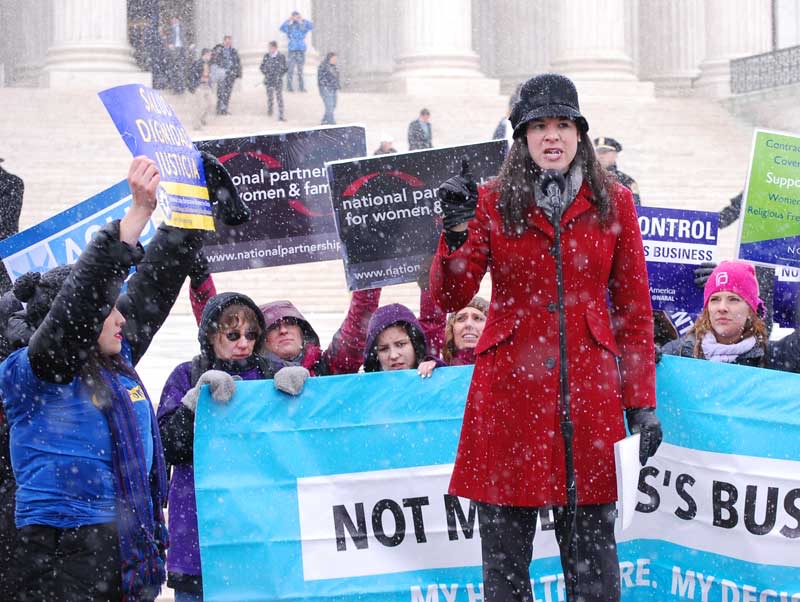
scotuszeh11.jpgWhat few people knew at the time was that when I gave that speech,  I was 10 weeks pregnant with my daughter who will turn three later this month. It was a planned pregnancy and a cause for joy in my life, even though physically I felt terrible. Looking back now I see how critical access to birth control was in creating the family I wanted. It allowed me to become a parent at the time that was right for me.

Isn’t that what all of us ought to be striving for?

 

RA82Katey Zeh, M.Div is a strategist, writer,  and speaker who inspires communities to create a more just, compassionate world.  She has written for outlets including Huffington Post, Sojourners, Religion Dispatches, Response magazinethe Good Mother Project, and the Journal for Feminist Studies in Religion. She is the co-host of Kindreds, a podcast for soul sisters. Her book Women Rise Up will be published by the FAR Press in March of 2018.  Find her on Twitter at @kateyzeh or on her website kateyzeh.com

The Intersections of Faith and Reproductive Justice by Katey Zeh

The Intersections of Faith & Reproductive Justice

Last week I participated in a panel discussion hosted by the Center for American Progress (CAP) on the intersections of faith and reproductive justice. These conversations are critically important, particularly in these political times when threats to our bodily autonomy and right of conscience are sanctioned by our current administration, Congress, and many state legislatures.

The framing of these public discussions is always interesting and somewhat troubling to me. Often progressive spaces like these do recognize that many people of faith support reproductive health care, but with that understanding is the assumption that supporting the full spectrum of reproductive healthcare, including access to safe abortion care, necessitates some kind of moral reckoning for religious people.

Continue reading “The Intersections of Faith and Reproductive Justice by Katey Zeh”

Encountering Spirit: A Ritual of Blessing for an Abortion Clinic by Katey Zeh

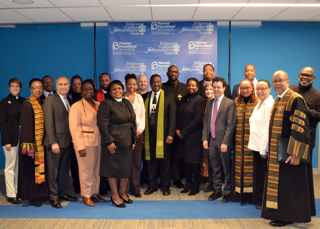
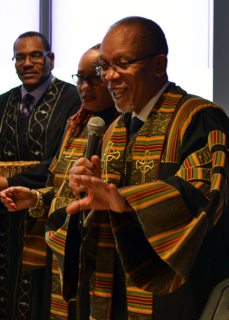
Diverseclergy.png
Photo Credit: Helen Parshall

For the last year I have had the honor of serving as Chair of the Board of Directors for the Religious Coalition for Reproductive Choice (RCRC). This leadership role often requires great personal and professional sacrifices and yet blesses me tenfold in return. At this moment in history I can think of no more important organization to offer my time and gifts than on behalf of RCRC.

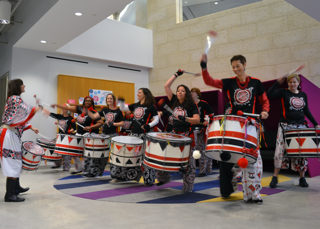
Last week RCRC partnered with Planned Parenthood of Metropolitan Washington (PPMW) to hold an Interfaith Unity Ceremony to honor their brand new health center in southeast D.C. I had the privilege of joining more than sixty clergy, justice leaders, and clinic staff as were led by the Reverend Doctors Dennis and Christine Wiley, co-pastors of the Covenant Baptist United Church of Christ, through an interfaith service of blessing. There was drumming from the all female percussion band Balatá, testimonies from providers and patients, poetry, liturgical dance, a Hindu chant, and a ritual of healing from the shame and stigma surrounding abortion.

Drumming.png
Photo Credit: Helen Parshall

At one point during the service a colleague of mine turned to me and whispered, “I’ve got goose bumps. Something is happening here, isn’t it?” I said, “Yes, Spirit is here.”

Many might find an encounter with the sacred at a Planned Parenthood surprising to say the least. It might have been for me had I not experienced something quite similar ten years ago. At the time I was a seminary student at Yale, and I had recently participated in RCRC’s pastoral care training on how to walk alongside women making decisions about their unplanned pregnancies. Before I offered any kind of counseling I wanted to see for myself what went on in abortion clinic. After taking a tour of the local Planned Parenthood health center I was so moved by the love and kindness of the doctors and support staff that I decided to volunteer on days when abortions were provided. Through that experience I felt the holy nudge to dedicate my ministry to supporting the work of abortion providers like Planned Parenthood and standing up for the rights and dignity of those who need access to safe, legal abortion care.

Now, almost a decade later, I found myself back in a health center. That time of being amongst my people, surrounded by words and sounds of truth affirming the sacred decisions of women about their bodies and lives, felt like I had tasted my first bite of food after a long, difficult fast. I didn’t realize how much over these last few months I had been starving for hope, love, and life-giving energy until that ritual of blessing held within the walls of the Planned Parenthood health center.

wileys
Photo Credit: Helen Parshall

Later that night on my drive back to the airport I found myself repeating the same simple prayer, “Thank you, thank you, thank you.” I felt an overwhelming sense of gratitude for the way that ritual had restored my spirit and affirmed my call to ministry. For the first time I felt prepared to take on the heavy burden of the next four years. I am ready. Are you?

Katey Zeh, M.Div is a thought leader, strategist, and connector who inspires intentionalKatey Headshot communities to create a more just, compassionate world through building connection, sacred truth telling, and striving for the common good.  She has written for outlets including Huffington Post, Sojourners, Religion Dispatches, Response magazine, the Good Mother Project, the Journal for Feminist Studies in Religion, and the United Methodist News Service. Her book Women Rising will be published by the FAR Press in 2017.  Find her on Twitter at @kateyzeh or on her website kateyzeh.com


Nobody’s Disciple by Maeve Rhuad aka the Celtic Magdalen via Elizabeth Cunningham

Elizabeth Cunningham headshot jpegSince beginning her posts for FAR four years ago, Elizabeth has featured an excerpt from my chronicles each July in honor of my feast day on the 22nd.  At least I thought it was my Feast day. It has been brought to our attention that Pope Francis only recently elevated the 22nd to the status of a Feast. Before that, it was merely a Memorial of me as a saint, whether optional or obligatory I am not sure.  The only thing more elevated than a Feast day is a Solemnity.  (Needless to say my mother-in-law, aka the Blessed Virgin Mary, has one of those.)

You may not know me as Maeve, the Celtic Magdalen. Mary Magdalen, who she was (or is) should or could have been is a highly charged subject. Not very much is known about me, really, which is why  legends, novels, and films abound. I’m a storied woman, to borrow Natalie Weaver’s term. There are fourteen references to me in the Gospels. I am associated with the non-canonical Gospel of Mary (I believe the credit for that should go to Mary of Bethany whom many people conflate with me). Pope Gregory is largely responsible for my lugubrious image as a penitent prostitute. Continue reading “Nobody’s Disciple by Maeve Rhuad aka the Celtic Magdalen via Elizabeth Cunningham”

Kasich Cuts Women by Gina Messina-Dysert

Gina Messina-Dysert profileKasich is cutting women from Ohio’s budget. In an attempt to prove himself a conservative and worthy of the title of POTUS, he has taken a step towards joining the ranks of Trump and Cruz using fear and misogyny as primary tactics.

Beginning with his defunding of Planned Parenthood in Ohio, Kasich is participating in the ongoing marginalization of women in the US based on supposed Christian values. His comment that “women are coming out of the kitchen to support me” demonstrates his inability to recognize the important role that women play in this nation. Likewise, it shows support for the ongoing notion that women belong in the home, and idea firmly entrenched in Christian dogma.

The former Catholic now Anglican presidential candidate continues to buy into the idea of complementarity, that men and women have distinct roles, a teaching Pope Francis calls “an anthropological fact.” And what does this mean? That women belong in the home, rearing children, and cooking for their husbands while men do the “important” work. Continue reading “Kasich Cuts Women by Gina Messina-Dysert”

A Choir for Reproductive Freedom by Katey Zeh

choir-305352_1280

I was home watching the live stream of those gathered in front of the Supreme Court building to show their opposition to this law that has prevented so many women from accessing the abortion services they need. The speakers, many of them leaders in reproductive justice organizations, powerfully called out the many ways that this unjust law has targeted women of color, immigrant women, and poor women.

During one of the speeches, those gathered in support of this law began singing “Spirit of the Living God.” It was audible over even the most powerful voices speaking out against it. I began to get irritated. But as the song continued, I got angry–and then I got inspired. Continue reading “A Choir for Reproductive Freedom by Katey Zeh”