Future of Mifepristone by Winifred Nathan

Today is the one year anniversary of the Dobbs decision.

The alarm grows louder. How far will the antiabortion lobby restrict women’s reproductive health care before they are satisfied? If they successfully secure a complete abortion ban, will they stop? Or will they go on to control women’s dress, education, travel, etc.?

Reportedly, Dobbs v Jackson overturned Roe v Wade so the states could set the legal boundaries of abortion through the democratic process. But on November 18, 2022, the US District Court of Northern Texas delivered Alliance for Hippocratic Medicine et al. v US Fodd and Drug Administration et al., a decision that stops medical abortion in all fifty states by ending FDA approval of mifepristone. The Supreme Court has stayed (paused) the Texas order as the appeal works its way to their docket. Mifepristone continues to be available, but for how long? Will the Supreme Court eventually side with the plaintiffs?

Continue reading “Future of Mifepristone by Winifred Nathan”

Bathsheba: From Survivor of Sexual Abuse to Queen Mother by Linda Cooper Costelloe

Bathsheba by Artemisia Gentileschi, wikimedia commons, public domain

The image we have of Bathsheba is that of a scheming temptress. That’s the way she’s been portrayed in media, such as the 1951 movie, David and Bathsheba, and Leonard Cohen’s song, Hallelujah. She deliberately bathed on a rooftop in sight of King David. She caught his eye and he was helpless to withstand her charms. The Bible does not support that image of Bathsheba, however. It says that Bathsheba was used and abused by David, and God was displeased.

The Bible says that David was on his rooftop. It does not say where Bathsheba was, only that she was bathing to purify herself after her period (2 Samuel 11:2-4). She was probably in an inner courtyard. In their book, Flawed Families of the Bible. How God’s Grace Works Through Imperfect Relationships, David E. Garland and Diana R. Garland write: “The laws required ritual washing at the conclusion of her menstrual period. A woman would be highly unlikely to conduct such a cleansing from her menstrual period as a come-on. If she were in public view, she would have washed without disrobing. There is no reason even to assume that she was naked. Public nudity was not acceptable in this ancient Jewish culture but instead was considered shameful. There is no foundation for assuming she was some kind of exhibitionist.”i

Continue reading “Bathsheba: From Survivor of Sexual Abuse to Queen Mother by Linda Cooper Costelloe”

A Poem for Enheduanna by Nan Lundeen

Cuneiform Tablet from Nippur, Sumeria
(Modern Iraq) 2300 – 2100 BCE
Mary Harrsch from Springfield, Oregon, USA,
CC BY 2.0 <https://creativecommons.org/licenses/by/2.0&gt;,
via Wikimedia Commons

In beautiful synchronicity, I received an invitation to submit a poem to an anthology in the voice of a female-identified persona around the same time I first learned of Enheduanna. The first named author and poet was mentioned in my New Moon Womyn’s Circle. When I looked her up, I was flabbergasted. I am a poet, a feminist, and a long-time student of Women’s Spirituality, and yet the world’s first author—a high priestess who worshipped a female supreme deity, was unknown to me.

I learned that Enheduanna was a brilliant poet who wrote with majestic metaphors, who shared her emotions, and who grappled with concepts of the divine as a female supreme deity in and with nature, and with whom she experienced a personal relationship. She lived and wrote around 2300 B.C.E. Scholars say they do not have the specific dates of her birth and death, but they do know that she served as high priestess for 40 years at the city of Ur in what is now Iraq.

Continue reading “A Poem for Enheduanna by Nan Lundeen”

Hear Me! Redux by Winifred Nathan

She Said; He Said 
And How 
She won! He lost!

On May 9, 2023, in New York Supreme Court, “she said,” won. E. Jean Carroll was awarded a judgment of five million dollars in compensatory damages in her defamation and sexual abuse case against former President Donald Trump. YES, she won! He lost!  

How did this happen?

The starting point is looking to a New York state change in its law regarding sexual assault. The assault took place in early 1969. Like many women, Ms. Carroll didn’t seek immediate legal help. She waited until 2019 to file a suit. Her explanation: at her trial, she opined, “I was born in 1943. Women like me were taught and trained to keep our chins up and not to complain.”

In November 2019, E. Jean Carroll did bring her first lawsuit against Donald Trump, which grew from his remarks when she accused him of sexual abuse. The suit was, however, limited to defamation. (Applicable statutes of limitation precluded any potential criminal action for sexual assault.) The Justice Department appealed the case. 

Continue reading “Hear Me! Redux by Winifred Nathan”

Goddess Lost: How the Downfall of Female Deities Degraded Women’s Status in World Cultures by Rachel S. McCoppin; book review by Margot Van Sluytman

She Who Knows

What then is my repentance?
If not, by rote this repetition?
“Godde is.”
“Godde is.”
“Godde is.”
“Love.”
And my face tastes
The beating heart
Of the sun’s call
For reclamation of
SHE Who Is.
SHE Who Is: knows me.
She, who also, is.
©Margot Van Sluytman

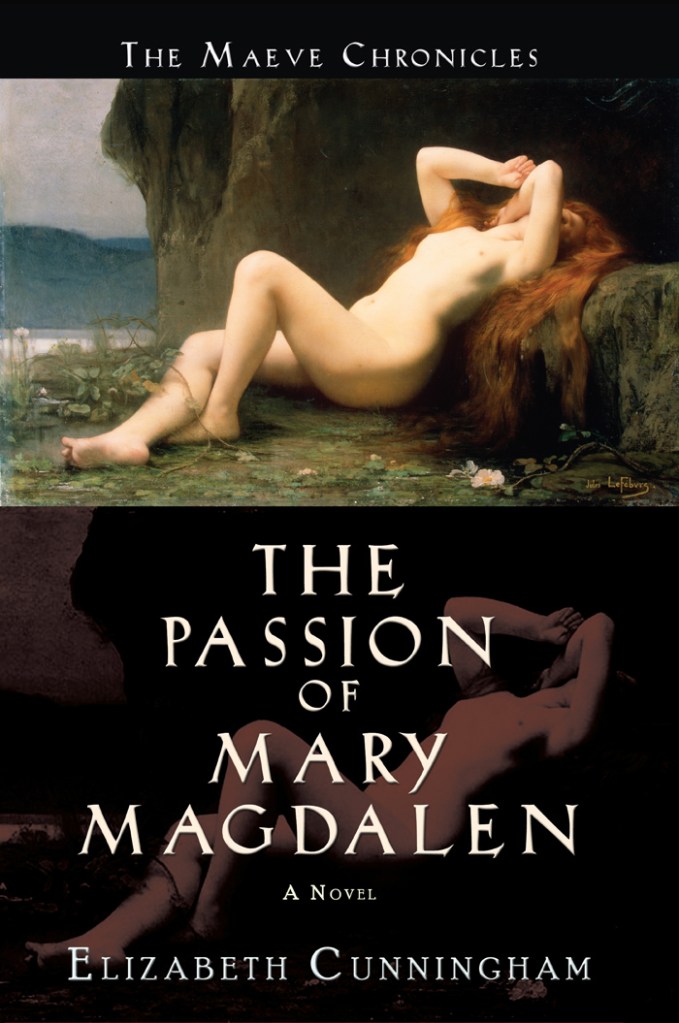
From the moment I saw the title, Goddess Lost: How the Downfall of Female Deities Degraded Women’s Status in World Cultures, by Rachel S. McCoppin, I knew I would have to read it. When it arrived in my mailbox and I saw the cover, I was imbued with inspiration. Then I read two sentences in the Preface, which articulate what for me, and for many, is one of the most vital, powerful, and, as yet, under-addressed, facts.

Continue reading “Goddess Lost: How the Downfall of Female Deities Degraded Women’s Status in World Cultures by Rachel S. McCoppin; book review by Margot Van Sluytman”

Remember! by Mary Gelfand

“There was a time when you were not a slave, remember that.
You walked alone, full of laughter, you bathed bare-bellied.
You say you have lost all recollection of it, remember! ….
You say there are no words to describe it;
You say it does not exist.
But remember.  Make an effort to remember.
Or, failing that, invent.”

From Les Guerilleres, by Monique Wittig, mid-20th Century French feminist writer

The first time I heard this quote from Wittig was in the mid-1990s when I took ‘Cakes for the Queen of Heaven,’ an introduction to feminist thealogy and the Great Goddess, created by the Women & Religion committee of the Unitarian Universalist Association.  Cakes was my introduction to Carol Christ, feminist thealogy, and the Goddess.  It changed my life forever.  I’ve been teaching this program for close to twenty years now and as my understanding of women’s history and the role of patriarchy in our suppression has deepened, I continue to find new resonances with Wittig’s words.

“There was a time when you were not a slave, remember that.”  This statement is relevant to all oppressed peoples and especially to women.  History tells us that enslavement was a part of European culture long before Africans were kidnapped into slavery on this continent.  Enslavement of the defeated was a common aspect of war, dating back to Biblical times.  Many aspects of the feudal system dominant in western Europe for centuries were little better than slavery. 

Continue reading “Remember! by Mary Gelfand”

Herstory Profiles: Indian Royalty, Suffragette, Women’s Rights Activist by Anjeanette LeBoeuf

April is Sikh Awareness month which is incredibly important this year due to what is currently happening in the Punjab by the Indian Nation State. If you haven’t heard about the government shutdown largely targeting Sikhs, you can read here. To keep the focus on the Sikh Community, this post will be focused on the amazing royal turning fierce activist and suffragette – Sophia Duleep Singh.

Continue reading “Herstory Profiles: Indian Royalty, Suffragette, Women’s Rights Activist by Anjeanette LeBoeuf”

Life Still Shaped by the Witch Hunts? by Eline Kieft

In this article I reframe my understanding of feminism through the lens of Mona Chollet’s In Defence of Witches, and reflect on how my psyche as a woman today is still deeply influenced by the effects of the witch hunts in mediaeval times. 

Continue reading “Life Still Shaped by the Witch Hunts? by Eline Kieft”

Hope Is Giving Birth in the Face of the Dragon by Beth Bartlett

Syrian Baby

The image of the baby born under the rubble of the earthquake in Syria has been haunting me. So has the image in my mind of her mother, giving birth to her baby while trapped after the building, where she, her husband, and their children were sleeping, collapsed.  The baby’s uncle, when digging through the debris hoping to reach his brother and family, found the baby alive, her umbilical cord still attached to her mother. When he cut the cord, the baby let out a cry.  Tragically, her mother had died after giving birth, as had her father and siblings.

Continue reading “Hope Is Giving Birth in the Face of the Dragon by Beth Bartlett”

That Old, Old, OLD Story – The Warts and Wisdom of the Ancient

My grandmother Clarine was an incredible human being. I absolutely could not be more proud to be her granddaughter. She started her first teaching position in 1927 at age 17. She met my grandfather in seminary; but despite her clear talent and call, the church apparently felt one minister was enough for the family and refused to ordain her. Undaunted, she famously wrote a one line reply to the bishop: Well, Moses got along fine without it, and Jesus got along fine without it, so I’ll be fine without it, too.

Continue reading “That Old, Old, OLD Story – The Warts and Wisdom of the Ancient”