What “Can” Women Do? – An Excerpt from Nice Churchy Patriarchy by Liz Cooledge Jenkins

In an essay called Sister, You Can Be Anything God Desires You to Be,[1] Kara Triboulet recalls a discussion in her theology class at her Christian college. When the professor opened up the floor and invited students to express their views on women in leadership, these are some of the things her classmates said:

“I believe women can be in leadership, just not as pastors.”

“Allowing women to teach other women and children isn’t limiting. At least they have a place to serve.”

“Women can be directors, but not pastors.”

“The Bible is very clear . . . women can’t teach or lead men because men were created first. It’s just the way God ordained it, and we all just need to accept that.”

Continue reading “What “Can” Women Do? – An Excerpt from Nice Churchy Patriarchy by Liz Cooledge Jenkins”

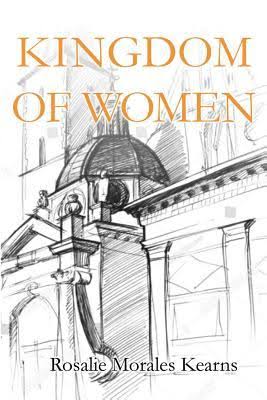
Kingdom of Women BOOK REVIEW by Katie M. Deaver

In her novel, Kingdom of Women, Rosalie Morales Kearns imagines a reality that is post-patriarchy, and post male violence while showing us what near-future women had to go through in order to get to that reality.  Morales Kearns weaves this story through the voices of multiple characters.  One of these characters is Averil Parnell, a female Catholic priest. Part I of the book opens with a woman visiting Averil to seek her counsel in regards to taking revenge on her male college professor who has been harassing her ever since she refused to sleep with him.

While Averil seems to be of little help with this particular conversation, we learn that Averil was one of the twenty three original female priests that were to be ordained by the Catholic Church. On the day of their joint ordination however, the Cathedral Massacre took place and twenty two of the female seminarians were killed in cold blood.  Averil then, is most definitely a woman who understands the yearning for revenge, the feeling of survivors guilt, and the expectation to be a wonderful priest for her dear friends who had that chance ripped away from them.

At the same time this conversation is taking place it has become clear that small groups of vigilante women are popping up around the world and punishing men for acts of violence against women.  The male dominated government of course sees all these punishing acts as coincidental, explaining them away in one way or another, or ignoring them completely, never imagining that it is in fact the beginning of women rising up to truly end male dominance and violence.

Continue reading “Kingdom of Women BOOK REVIEW by Katie M. Deaver”

The Spirit and Jarena Lee: Inspiration to Break Boundaries by Elise M. Edwards

elise-edwardsI am so frustrated that we are still fighting to affirm women’s place in leadership.  I’ve been thinking about this struggle in the context of church ministries (especially preaching) and social activism, seeing a stark contrast between the way institutional churches and universities promote and subvert women’s authority and the ways movements like Black Lives Matter do.

Particularly, I’ve been struck by the ways that more radical movements employ language and practices that are based in spirit more than hierarchical authority.  I have found a theme emphasizing equality in humanity’s access to spirit in both historical and contemporary movements and writings about religious experience.  I’m certainly not the first one to notice or discuss how appeals to Spirit have empowered those excluded from dominant systems of power to challenge constrictive social structures, but I would like to share how this dynamic has become more visible to me so that, together, we might find encouragement, inspiration, and food for thought.

Continue reading “The Spirit and Jarena Lee: Inspiration to Break Boundaries by Elise M. Edwards”

Power & Restraint: A Feminist Perspective on Mormon Sisterhood: A sculpture series by Page Turner, presented by David Volodzko

David VolodzkoHistory offers few instances of women helping create scripture. Hinduism’s sacred Rigveda may have been partly composed by women, and scholars believe the biblical Book of Ruth was possibly written by a woman, but the evidence for each is wanting. And while Muhammad’s widow was entrusted with the manuscript that would become the Quran, its scribe was a man named Zayd ibn Thabit. The only clear exception to this is the Book of Mormon, which Joseph Smith partially dictated to his wife Emma. The central role of Mormon women in the church was therefore fixed from the start.

In 1842 Joseph Smith organized the church sisters into a philanthropic organization known as the Relief Society. Among other things, the Relief Society sent women to medical school and opened cooperative stores. Operating independently from local bishops, it afforded Mormon women unprecedented independence. In fact the early Mormon Church was a feminist pathfinder. The first Mormon pioneers arrived in Salt Lake City in 1846, and by 1870 Utah Territory became the second place in the Union (after Wyoming) to give women the right to vote—nearly fifty years before the Nineteenth Amendment. But Mormons wanted freedom for all women, and that same year the Relief Society held a meeting in which the renowned poet Eliza Snow entrusted Bathsheba Smith with a mission to travel “all through the South” preaching “retrenchment [restriction of government spending] … and women’s rights.” Continue reading “Power & Restraint: A Feminist Perspective on Mormon Sisterhood: A sculpture series by Page Turner, presented by David Volodzko”

Moving Away from Normative Maternal Roles in the Catholic Church by Michele Stopera Freyhauf

FreyhaufEarlier this week, social media was all abuzz about the Pope’s investigation into restoring women to the diaconate. In the complete transcript of the Pope’s comments,  the traditional notion of women’s maternal role in the church is mentioned in relation to the Church.  Certainly this is nothing new.  Here the Pope describes important “maternal” work such as working with the marginalized, catechesis, and caring for the sick – once again, nothing new.

However, in the next sentence, a very subtle shift is seen when it comes to normative gender roles:

…. there are men who do the same [work as consecrated women], and it is good…..and this is important.

What does this mean – a change in language?  a laying of groundwork? or nothing at all?

imgres

It is no secret that cultural constructs of women as maternal and how a mother is defined as or even does has radically changed in today’s society; but, the Church continues to remain steadfast in normative roles between the priesthood and the “motherhood” of the Church (and therefore “motherhood” in general).

Continue reading “Moving Away from Normative Maternal Roles in the Catholic Church by Michele Stopera Freyhauf”

Reform? Progress? By Elise M. Edwards

Elise EdwardsIn my class yesterday (a survey of Christian thought and practices), I was lecturing about monastic life in the Middle Ages. Among other points, I mentioned that medieval religious orders provided settings where women could be educated and assume leadership roles (primarily among other women), thinking of Hildegard of Bingen (1098-1179) who was the Abbess of a monastic community in Rupertsberg. Other women medieval writers who developed influential writings, like Mechtild of Magdeburg (ca. 1210-1282) and Catherine of Siena (1347-80), belonged to tertiaries or third orders, which were monastic community for laypersons. This part of the lesson emphasized that monastic reforms around the 12th century opened religious orders more extensively to women and laity.

Still speaking of medieval reforms, I displayed a picture of Francis of Assisi on the screen at the front of the room. I mentioned that Francis was concerned about the poor and the animals and that he has inspired some contemporary Christians, including the current pope who took Francis as his name. We talked about how both St. Francis and Pope Francis are seen as reformers.

Because earlier in my lesson I’d made a point of speaking of women’s experience, when I spoke about the Pope’s name as a possible sign of renewal or reform, Gina Messina-Dysert’s question “What about the women?” came to mind. In her recent post, she responded to the Pope’s exclusion of many issues that concern women in his address to the US Catholic Bishops. Like Gina, I applaud many of the Pope’s reforms but I am confused about how rarely he is criticized for maintaining the long-held Catholic view that disallows women to be ordained as priests.

Let me provide an example: During the Pope’s visit to the US, one of my students described Pope Francis as “very liberal.” When I interjected that he has not supported the ordination of women, the student laughed and said the pope would be accused of heresy for supporting that! While that may be true, my more immediate concern was that in a classroom of students who are mostly supportive of women in ministry, the Catholic restrictions on the priesthood were seen as a part of the tradition not worth challenging. Why is it that preserving male leadership is excused as a part of the tradition while preserving exclusive marriage practices is something to be challenged? They are interrelated.

As we know from blogs and social media sites, many people who support LGBTQ rights were upset over news stories about the Pope meeting with Kim Davis, the county clerk who was jailed for refusing to issue marriage licenses to same-sex couples. Certainly such a meeting is disturbing to same-sex marriage advocates. But is it surprising? At least one womanist ethicist I know, Eboni Marshall Turman, pointed out in a Facebook discussion that the church has long since been public in its support of male privilege and heteronormativity. My intent is not to single out Catholicism for sexist practices. When recently asked about women’s ordination and leadership in Baptist churches in my own town of Waco Texas, I had to admit that even though ordination of women is permissible and practiced in many of the churches, the number of churches that have called women to the position of senior pastor is shockingly few.

My point is this: When we find teachings in particular religious traditions that justify the exclusion of one group, we should expect to find justifications for excluding other groups, too. In the same discussion I referenced above, Eboni Marshall Turman said, ”Oppressions are compounded and intersectional. If they come for me, it is just a matter of time before they come for you. This is basic theological ethics.”

The experiences of varied groups are not the same; our oppressions and marginalizations also differ. But practices of exclusion are constructed on the same logic that values some persons (the in-group) more than others (the outsiders). Therefore, feminists have a responsibility to advance the well-being and interests of other groups (besides women) who are being marginalized.

Another reason for this advocacy is that many women are included in other marginalized groups. To ignore the intersectionality of oppression is to deny its pervasiveness and the realities of women’s lives. This is why feminists of color are often critical of white feminism. (The recent debate over the photo shoot for the movie Suffragette is a new instance of a persistent critique of white or mainstream feminism. See Rebecca Carroll’s piece on “Suffragette’s Publicity Campaign and the Politics of Erasure”).

To counter the limitations of our own experiences and be consistent in our pursuit of equality, feminists should intentionally cultivate practices of solidarity and coalition-building in our work. I, like everyone else, am often unable to see the inconsistencies in my own practices and teachings without others’ experiences to expand my view. This is one reason I value this Feminism and Religion community. Thank you for the wisdom and practices you offer from your own religious traditions and your own experiences of marginalization. You make me a better feminist through your writings and comments.

Perhaps working together, we can bring about religious reforms that our descendants will recognize in the centuries to come.

Elise M. Edwards, PhD is a Lecturer in Christian Ethics at Baylor University and a graduate of Claremont Graduate University. She is also a registered architect in the State of Florida. Her interdisciplinary work examines issues of civic engagement and how beliefs and commitments are expressed publicly. As a black feminist, she primarily focuses on cultural expressions by, for, and about women and marginalized communities. Follow her on twitter, google+ or academia.edu.

The Acid Attack on WomanPriest Alexandra Dyer: The Cancelation of Evil with the Face of God/ess by Cynthia Garrity-Bond

cynthia garrity bondOn August 20, Alexandra Dyer, a Roman Catholic WomanPriest was the victim of a targeted acid attack to her face.  Dyer had just left a meeting at The Healing Arts Initiative in Queens, NY.  As she was walking to her car, a man in his 30’s came up from behind and said, “Can I ask you something?”   As she turned to face her assailant, he threw a full cup of thick acid into her face.  In her pain and hysteria, Dyer somehow managed to get into her car, driving approximately 200 feet before losing complete control.  Her screams from the pain drew the attention of others, who called for help.  Dyer suffered third degree burns to her face and hands.  Here’s the thing about acid—it continues to inflect damage to the skin and bone after the fact.  While Dyer will survive the physical attack, she will never be the same woman.  Her outer scars will forever remind her of what she suffered—those physical features that made her Alexandra are gone, replaced by years of reconstructive surgery and further pain.
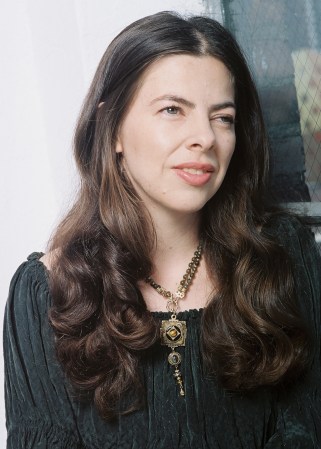
“Can I Ask You Something?” Continue reading “The Acid Attack on WomanPriest Alexandra Dyer: The Cancelation of Evil with the Face of God/ess by Cynthia Garrity-Bond”

Embracing the Hebrew Priestess by Jill Hammer

Jill HammerEven after I was ordained as a rabbi, I longed to be a priestess. The spiritual leadership I wanted most was less about leading traditional Torah study and prayer (though I’d done plenty of that) and more about immersing in the ocean, creating new rituals, reading kabbalistic sources on Shekhinah (the divine feminine mentioned in Talmud and kabbalah), or interpreting legends about women. My deepest desire was for there to be a school for Jewish women on a priestess path.

Ten years ago, my dream came true. In 2005, Taya Shere and I founded the Kohenet Hebrew Priestess Institute to bring to life the traces of the priestesshood we were finding in the Bible, in Near Eastern archaeology, and in Jewish lore and history. In Kohenet sacred space, we explore the women of spirit among our ancestors, resist their erasure, and bring forward the practices that were sacred to them. We discover in these forgotten teachings the mysticism of the material: the understanding that in our lived experience on the earth we are closest to divinity. At Kohenet, we meet the submerged version of deity called Shekhinah, Imma Ilaah, Elat, Goddess, Divine Mother, and understand why she has been so feared and rejected, yet also has been a deep and lasting part of our tradition as Jews.

The Kohenet Institute has ordained four classes of women and now meets twice a year for training weeks at the Isabella Jewish Retreat Center in Falls Village, Connecticut, and at Ananda Meditation Retreat in Nevada City, CA. We and our students run workshops and services in venues like Limmud UK and the Parliament of World Religions, as well as classes at retreat centers, local synagogues and women’s centers. Days at Kohenet are filled with spiritual exploration: prayer in the feminine in Hebrew and English; ceremony to grant new names or celebrate elders or heal the sick; making incantation bowls in the style of ancient Babylonia; slideshows of ancient priestess and Goddess art from the lands of the Bible; drum circles and labyrinths; stories of witches dueling with Talmudic sages, immersing in the lake before the Sabbath. At Kohenet, we celebrate and embody the sacred feminine, and prepare our students to lead ritual in an earth-based, embodied, feminist way that is rooted in Jewish tradition. Continue reading “Embracing the Hebrew Priestess by Jill Hammer”

Role Play: In Search of the Authenticity of My Being by Elise Edwards

Elise Edwards“I stood in the authenticity of my being: Black, preacher, Baptist, woman. For the same God who made me a preacher made me a woman, and I am convinced that God was not confused on either account.”
– Reverend Dr. Prathia Hall

These words came across my Facebook feed on Sunday in celebration of International Women’s Day. Reconciling Ministries Network put the statement on its Facebook page, along with a picture of Prathia Hall preaching from the pulpit, in remembrance and honor of women leaders who contributed to the US Civil Rights Movement. This past Sunday, March 8, when the quote was displayed, marked the 50th anniversary of Selma’s Bloody Sunday. Prathia Hall was a leader in the Student Non-Violent Coordinating Committee (SNCC) and one of the activists on the Edmund Pettus Bridge who were attacked as they began to march from Selma to Montgomery, Alabama. Later in her life, she became an ordained minister, professor, and womanist theologian.

For me, this past weekend was about remembrance through many forms. While there were many events commemorating Selma and the important events that unfolded there 50 years ago, my family and I were focused on a more intimate form of remembrance. On Saturday, we held a dinner and informal memorial service for my godfather who passed away last month. I got the news of his death on a day when I’d been doing some deep soul-searching and reflecting about the image I present to the world and its correspondence with who I am and desire to be. Just a few days prior, I’d spoken to my godfather about his health and subsequently, I had been questioning how I might be more connected to him. We lived several states apart, and I wondered how I could be a good goddaughter to him despite the distance. Those questions are left unanswered in the wake of his death. Continue reading “Role Play: In Search of the Authenticity of My Being by Elise Edwards”

The Difficult Issue of the Origins of the Buddhist Nuns’ Order by Oxana Poberejnaia

oxanaThe origins of the Buddhist Nuns ‘ Order are a contentious issue in Theravada Buddhism. Paradoxically, it is also the issue that is not discussed a lot. Which is surprising, as in current Buddhism there is a gaping hole where a Theravada Bhikkhuni (Nuns) community should be. The prevailing view is that the nuns’ full ordination line was irrevocably lost long in the past and cannot be restored.

There are separate attempts here and there to bring Theravada Nuns’ Order back, including Ajahn Brahm’s ordaining a group of nuns in Dhammasara Monastery in Australia in 2009. This resulted in severe criticism by some Theravada religious leaders and expulsion of Ajahn Brahm and the monastery he leads from the organisation of the Sangha of Wat Nong Pah Pong.

AniPemaChodronMahayana Nuns receive full ordination, as it is considered that historically the Order did not lose continuity since the Buddha’s times. However, for both Theravada and Mahayana something called “The Eight Garudhammas” – the eight heavy rules – remain a painful issue. These are the rules that the historical Buddha is supposed to have given the first nuns to whom he gave ordination. These eight rules were the condition on which the Buddha would even allow women to become Bhikkhuni.

Continue reading “The Difficult Issue of the Origins of the Buddhist Nuns’ Order by Oxana Poberejnaia”