This Story, I Am This Story by Marie Cartier

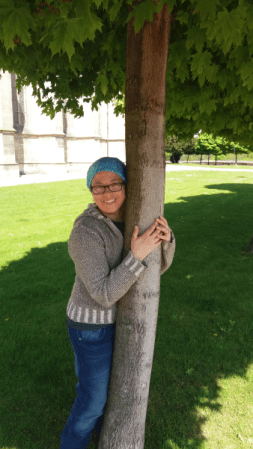
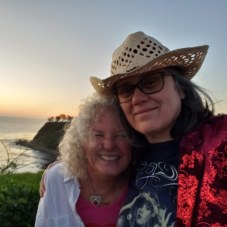
photo by Kimberly Esslinger

1.

The papaya, the lemon, the squash.
The everything going bad—not yet.
I can pickle anything I can save—still. And I am never still.
Still…at sixty-four here I am. Rise. This is age—still.

2.

I have a passport to somewhere that does not
exist. As a white skin person with color
roots that do not show. My grandfather could not
have had the chance I have to walk at night
in a white neighborhood and nobody knows who I am,
until they know. And still… I am here. This is race—still.

3.

An ivory castle, an ant hill teeming with fire ants, a
stop sign, the rich woman’s house my grandmother
cleaned, the rich woman was my English teacher. My
father beat me for wanting to go to the Ivy League
school, Sarah Lawrence—I could not want to go
where he did not go. So, I went—to the state school.
But, I went, and I did, and I still…I’m
never still. This is possession.
This is wanting—still.

4.

The dark room without a light. The stars
blink at me to move along. I am less
afraid of a coyote than a man out
with my dog at night walking
it off. Walking off the fear of a pandemic virus.
Walking off the fear of—everything—
where are we headed?
Somewhere.
Walking somewhere – my dog ahead of me,
Her ears pointing. She is…I am
never, ever still.

*

I am a rape survivor many times over, and I survived
to be this woman with a pen. And I am…
never still. Stillness as location.
For this is location—still.

5.

A red apple on the teacher’s desk is never
enough if you are not in the class.
The guy said I wouldn’t get the job at seventeen
because it had to go to a boy even though I
created the job the summer before—
a park director in a dangerous neighborhood that I made
a park because no one wanted it. But I did. And I did.
I knew he was wrong, but it would be twenty years
before the words sexual harassment became a
tool I could use. Because…and still. I am
now. I am never still. This is gender—still.

6.

I am a wave, a crash, a body among bodies
among bodies. I believe in people
fighting for what’s right. My wife and I
got married in 2008 and two days later
the state shut down gay marriage and we
spent our honeymoon protesting.
Her first protest sign,
“When do I get to vote on your marriage?’

*

And here I am. Still. Still protesting this shit, is
a sign I would use later. Still. I am never.
I am never still. And this is relationship—still.

*

It’s a long life, I say to students.
A lot can happen. Miles to go before you sleep.
A long road. At sixty-four I think, yes. Maybe yes, it isA Wonderful Life.
And still…
I am never still.
This body I am. This story I am
is to be continued. And still.
For I am never…I am never still.

–Marie Cartier
  January 9, 2021
With thanks to LA’s Cuties Coffee Shop, Poetry Workshop


Marie Cartier has a Ph.D. in Religion with an emphasis on Women and Religion from Claremont Graduate University.  She is the author of the critically acclaimed book Baby, You Are My Religion: Women, Gay Bars, and Theology Before Stonewall (Routledge 2013). She is a senior lecturer in Gender and Women’s Studies and Queer Studies at California State University Northridge, and in Film Studies at Univ. of CA Irvine.
About Bridgerton: A Different Feminist Perspective by Christine Irving


First of all, I’m grateful to Bridgerton for providing several spirited conversations between my friends and me, not to mention the POVs penned recently in these pages.  It was fun to take part in exchanges that did not highlight or veer off into either politics or the COVID-19 epidemic.

What first drew me to Bridgerton was the fun of it – the blatant over the top spoofery and satire so like the Commedia dell’arte it so brilliantly imitates.  The Commedia got away with its mockery of society because it disguised it beneath a froth of opulent, frippery, and coarse buffoonery that distracted the rich (but not the poor) from its real message about the foolishness and vanity of the ruling class.  So does Bridgerton, but in this case, the culture being satirized and unveiled is ours.  Unlike those earlier dramatists, in our age we fortunately and so far, at least in this country, still enjoy much greater leeway in making mockery.  “Huzzah!” I say. Continue reading “About Bridgerton: A Different Feminist Perspective by Christine Irving”

Bridgerton: The Next Wrong Thing in Misogynist Television


Why can’t we have nice things? Because the porn industry has infected media, that’s why.

I have read several of Julia Quinn’s fanciful romance novels. They contain entertaining and sympathetic stories about the economic and social pressures on gentlewomen of early 19th century Britain. The females are creative, courageous, intelligent, and honorable. The males are… well, they are somewhat sexist, of course, but no more sexist than most men I know. The books do a mediocre job of challenging gender roles or stereotypes (especially in their cookie cutter portrayals of male heroes), but they directly challenge overt sexism and misogyny. Quinn calls herself a feminist. Continue reading “Bridgerton: The Next Wrong Thing in Misogynist Television”

Good(?) Grief by Esther Nelson

The current pandemic has kicked our collective butt by putting a huge dent in our ability to maintain relationships so necessary for keeping our social gears greased and running smoothly.  Grabbing coffee with a friend or meeting up for lunch in order to “catch up” with one another are activities that in times past we took for granted.  Meetings nowadays (both work related and social) are done primarily via Zoom.  Even a doctor’s visit can be accomplished electronically—a mode that, in my opinion, leaves much to be desired.


Besides feeing socially deprived over the past year, I’ve experienced a number of other losses.  I’ll mention a few of them, but am not prepared to write about the ones that sting the most. I gave up my house in Richmond, Virginia, and moved to a high-rise condominium just down the road.  I’ve yet to make it “home.”  Halfway through the Spring semester, all classes at the university where I taught went online. The Fall semester followed suit, delivering classes (mainly) online.  I didn’t want to box myself in on a screen.  I find classroom interaction meaningful in a way that I cannot replicate on Zoom.  I gave up teaching.  In August, I drove to Las Cruces, New Mexico, and have been here ever since except for a brief visit in September to New Jersey for my brother’s funeral—another loss. Continue reading “Good(?) Grief by Esther Nelson”

In These United States: Georgia is on My Mind by Marie Cartier

Photo by Ted Fisher and Douglas Mcculloh. Author, mixed media installation, “the story of ohhh.”

Georgia on my mind, so goes the song, and right now the road leads back to you, Georgia.

The run-off election which could make two senators blue and give control of the Senate to the Democrats, remove a Republican as speaker, and Goddess willing, and the creek don’t rise…make America kind again… is happening now.

Early voting started December fourteenth and the federal election will be January fifth.

And then we will know. For right now, Georgia is on our minds in these United States.

There are white Southern political leaders who treat the Southern states they work in as if…

it is an acknowledged fact that the states are racist. But states are made up of people,

and all of those people are not racist. Racism may have worked as political strategy,

but the times they are a’changing. Continue reading “In These United States: Georgia is on My Mind by Marie Cartier”

Restoration by Molly Remer


In 2014, I sat on a low wooden bench nursing my 6 week old baby boy while wet plaster strips were laid across my face to create a mask. The final activity of the Rise Up and Call Her Name program, a women’s spirituality curriculum by Elizabeth Fisher that I’d been guiding over the course of an entire year, I had shown all of the women in my living room how to make masks and now it was my turn to have the mask material applied. My back was sore and I felt tired and lonely within my plaster shell. As my face faded from view, the women began to talk around me as if I suddenly wasn’t there and as my lips were covered, I became voiceless and closed in, shrouded and silent. When the plaster dried and I emerged again, I saw a dear friend sitting in the recliner drinking tea. While I was not sorry to have finished my commitment to the group and to have closed out the year-long program, I was suddenly awash with a deep longing for rest, a deep longing to be the one in the chair being brought tea, instead of the one to lead the group, baby dangling from her breast, tugged in a million directions by questions and needs.

This moment, this snapshot of maternal priestessing, has recurred for me many times over the last few years, a wondering of why I could not permit myself to be the tea-drinker instead of the hostess, the person to enjoy instead of the person to teach, the person to rest instead of the person to create experiences. Continue reading “Restoration by Molly Remer”

Sappy modern carols won’t cut it; Gritty Advent Hope is what we need this year. — by Trelawney Grenfell-Muir

As we careen toward ever more terrifying surges in the Covid pandemic, with experts predicting apocalyptic catastrophes by Christmas time, I find myself reacting to the vast majority of modern Christmas songs, stories, movies, and cultural norms with increasing distaste. In these scary, painful weeks leading up to Christmas, my culture has very little to offer other than distraction and superficial jollity. Ho ho ho, Santa Claus is comin’ to town.

Distraction does help, a little. It’s addictive, of course. We turn more and more to social media, with its carefully designed dopamine boosts from each “like” and “love” reaction, each funny cat video, each smug political joke, to keep us from confronting the terror and trauma of our current reality. It’s a legitimate coping mechanism, a crutch that can be useful in many ways. Continue reading “Sappy modern carols won’t cut it; Gritty Advent Hope is what we need this year. — by Trelawney Grenfell-Muir”

A Thanksgiving Litany for Living through Fractious Times by Alla Renée Bozarth

Alla Renée Bozarth, Philadelphia 11, Philadelphia ordinations
All things being relative, remember
that collective and individual histories
are cyclical but open-ended, and discern
the kind of moment you are in and part of.

Remember how to make it better
by holding on to all that is dear in life,
and becoming more prayerful and thoughtful.

When deprivation comes, return to what is essential—
first, beauty, so look for and create beautiful behavior 
and encourage it.

Continue reading “A Thanksgiving Litany for Living through Fractious Times by Alla Renée Bozarth”

Breathing Life into the Women of Chayei Sarah by Ivy Helman.

One of the basic tenants of feminist methodology in religion is the recovery of women’s history.   There are many ways to approach such a task.  In religions with sacred writings, one avenue for recovery may be reinterpreting them.  This could come in the form of a critique.  For example, traditional interpretations may overlook or undervalue women, who appear in the text, reaffirm sexist, patronizing, and/or misogynist viewpoints already found in the text, or develop new ones.  In order to recover women’s history, feminists working with their sacred texts would then call out these interpretations for their sexism.  They would correct phrasing, understanding, and even translations, when necessary.   

In addition to critiquing, feminist interpretations of scripture could also be constructive.  Religious feminists may highlight values, teachings, and images that affirm women’s lives.   They may incorporate documented history into their interpretations as proof of expanded roles for women.  That would then contextualize or negate later traditions that deny women such roles.  

Continue reading “Breathing Life into the Women of Chayei Sarah by Ivy Helman.”

Feminist Parenting Part 3—Les Misérable Mothers, why is this so %$@# haaaaard?! by Trelawney Grenfell-Muir

Life has been challenging lately – I’m sure you can relate. Normal emotional and financial stress are worsened by COVID-19 and the election— and I’ve often said that there’s nothing like motherhood for making us feel like failures…  It’s as though our brains are incapable of seeing anything but the things we have left undone or done badly. And it is often excruciatingly hard to be a calm, patient parent when the kids start getting wild, or someone breaks something, or the <expletive> online form won’t <expletive> work on my <expletive> phone.

…Why is it so hard to feel “good enough?” Could it be because patriarchy benefits from making the female class feel constantly insecure and unworthy? Continue reading “Feminist Parenting Part 3—Les Misérable Mothers, why is this so %$@# haaaaard?! by Trelawney Grenfell-Muir”