A Modern Pilgrimage to the Isle of Lewis & Harris, Part 1
For a long time, I felt a soft but insistent tug to go to the Isle of Lewis & Harris, on the west coast of Scotland. Third time lucky, because the trip got cancelled twice due to Covid-19. Even this time was a challenge, with flights being pulled, and airport strikes causing last minute changes. It was as if the Goddess was asking me, “how serious are you about this, daughter?”
Eventually I managed to get to Edinburgh on time, all the way by train from our small sleepy village in France, to catch the connecting flight to the island.
In this post (Part 1), I write about meeting the Triple Goddess in the Land. Part 2: The Stones, focuses on my Equinox ceremony in the Callanish Stone Circle.
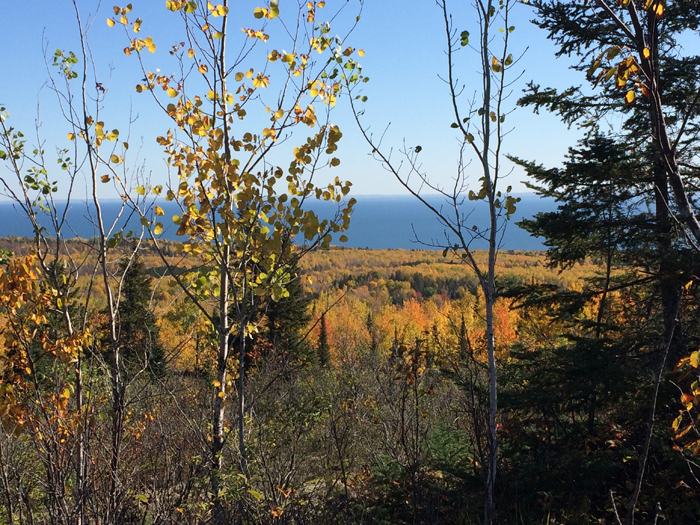
The leaves have finally begun to turn. I’ve been longing for the trees to reveal their true beauty in all their colorful array, and am glad for this beginning. Soon the woods will be filled with the golden, amber, scarlet, and orange glow of the maples, aspen, birch, and oaks of the northern forest.
Hawk Ridge
It is the time of year I would take my Women and Spirituality students to a sacred spot on a ridge high above Lake Superior to explore their spiritual connections with the earth. They would share a particular way they felt a connection to the natural world – often a lake, or a place from their childhood, a tree they loved to climb, their dog, or a stone they carried. We would circle the large pine and invoke Starhawk’s “Open-Eyed Grounding” practice.[i] They would read and comment on their favorite passages from the readings – selections from Susan Griffin’s Woman and Nature and Carol Christ’s “Rethinking Theology and Nature.”[ii] Then they would disperse across the ridge for their solo encounters with nature, before gathering together again, each returning with something they had discovered during that time. Then we would talk about the changing colors of the leaves surrounding us and talk about how these were the true colors of the leaves, finally emerging now that the chlorophyll that had disguised them in green was beginning to wane. Taking our cue from the leaves, we would talk about authenticity – about their coming into their own true colors. For that is the work of spiritual growth and transformation — to emerge as our own true selves. Yet, how often our unique and precious beings are taught to mask our true color, blend in — be “green” like everyone else. What a vivid and beautiful world when we come into our own and share our unique gifts and being with the world.
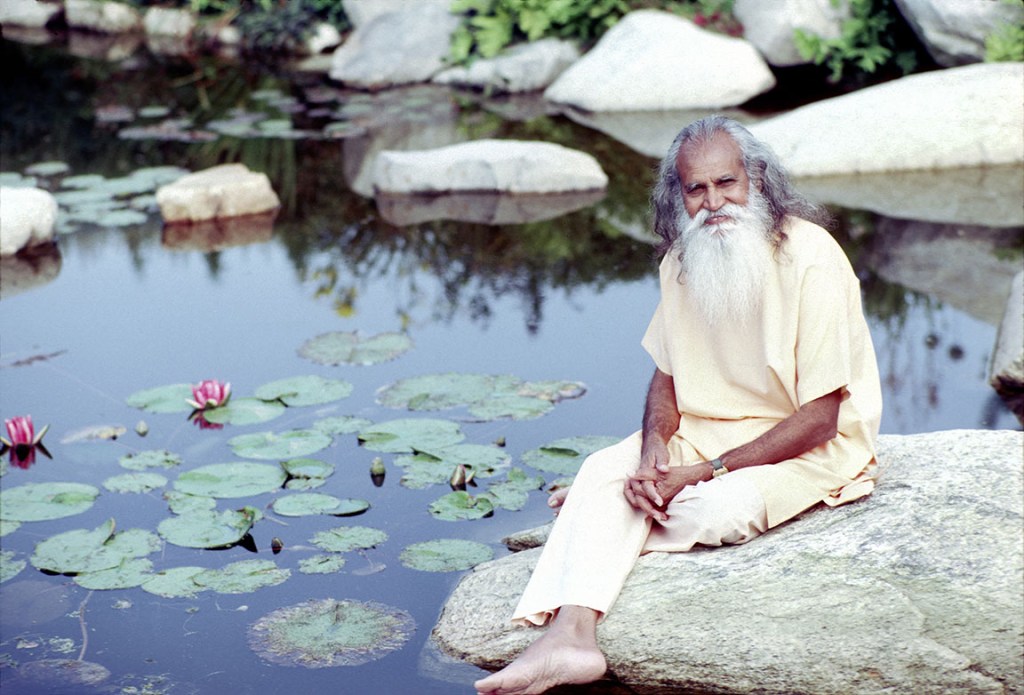
A few weeks ago, I received a phone call from one of my spiritual teachers, a senior disciple of Sri Swami Satchidananda, whom I had immediately recognized and accepted as my guru when I first encountered him in the Summer of 1965. I was initiated by him in 2001 and received a mantra that I repeated daily for all these years. Yet here was Sary telling me I needed to adopt a new mantra, a prayer or praise and veneration for the fierce Hindu Goddess Kali. Here is exactly who I need these days, brandishing her ten arms, beheading demons and absorbing their blood, in a sari made from the skin of a Bengal tiger. She wears a belt of skulls and manifests her fierceness with a red tongue hanging from her lips. Creator and Destroyer, she is impeccable she catches their blood so that they don’t proliferate. Precisely who I need know after my diagnosis, six months ago of glioblastoma.
One of my oldest friends who I met when I was eight years old reached out to me the other day saying that if there was ever anything she could do, please let her know. She lives in another state far away but is a subscriber to one of my blogs so she has been aware of the various things going on in my life (second divorce, so many changes and transitions in my life yet again, etc.)
Her note said if there was ever anything she could do to help, just let her know.
And I thought to myself: hmmmmmm.
You see I just put a new feature on my app where it emails local events to local users, and one of the first steps in getting this to work is having those local events on the app. So I asked her if she would mind helping me put local events on the app.
We had not actually talked in a long time, and when we had a zoom call to discuss this, I broke down crying.
I felt the pity from her. I also saw just how far I had departed from ‘normal.’
The phrase, “separation of church and state,” crops up frequently in conversation these days. I hear it most often when someone wants to clinch their argument on a politicized subject. Lately, it’s been concerning one’s “right” to an abortion. “It doesn’t matter what your church says, we have separation of church and state in this country.” That phrase, though, is not in the Constitution. It was Thomas Jefferson (1743-1826) who paraphrased the Constitution in a letter to the Danbury Baptists, “…building a wall of separation between church and state.”
The first part of the 1st amendment states: “Congress shall make no law respecting an establishment of religion, or prohibiting the free exercise thereof….” All manner of questions have been raised with this statement. What does it mean to establish a religion? What is religion? Is religion something intrinsically good? Most Americans think of religion in terms of God. What/who is God?
TRIGGER WARNING: Post divorce, I find myself redefining my relationships and want to share some discoveries I have made about sex and intimacy, and how that relates to my spirituality and identity as a feminist. I freely admit they might be a bit shocking.
Post divorce, I have had three ‘relationships’. Okay who am I kidding, I’ve had sex with three men. I suppose you could call them ‘relationships’. We talked. We texted. We fucked.
All three were painful in their own way. All three were pleasurable in their own way.
I’m redefining this area of my life just like I am redefining all the areas in my life. ‘Cernunnos’ points the way. This is one of my favorite cards in my Druid Craft Tarot deck, and I pull it often.
‘Cernunnos’ is the Lord of the Animals. “This card represents the raw power of the instincts and of Nature, and also the dangers of delusion and excess, but offers the potential for achieving both freedom and abundance.”
Like so much else in life, it’s all about the balance.
Early morning lap swim at the local pool is generally a peaceful space for me. It’s usually pretty uneventful. I try to go three times a week; I don’t always feel like going, but I always feel better after I do. The other day, though, something happened that upset my equilibrium and got me thinking.
When I showed up at the pool, ready to mind my own business and get a good workout in, I was happy to see three empty lanes. I don’t mind splitting a lane when needed, but it is a nice little luxury to have a lane all to myself. I chose one of the empty lanes, and in the next few minutes, two other swimmers arrived and filled in the other two. I did a long, leisurely warm-up and then stopped at the wall to find that another swimmer had joined me in my lane.
As he swam back and forth on the right side of the lane and I did the same on the left, I realized that he was taking up more than his fair share of the lane. I felt a little annoyed and disrespected. But it didn’t seem like a big deal. I started on my next set.
I am a few months out of my second marriage. There will be no third. I know my task right now is to become self-sufficient.
Thanks to my second husband, I have valuable Project Management skills. He set up an S-Corporation when he was out of work in Illinois and handed it over to me when he found a salaried job. I gained needed self-confidence over the past eight years and figured out that I am good at Project Management.
Now I need to convince another company of that. Because I am not good at sales and no longer have my main client in my company and with my divorce, I need a steady income.
I thought I had found one.
I was reached out to by a supposedly Swiss company called HAND-Lease that leases and sells extremely large equipment from $25,000 up to $55 million. They had just established a Pennsylvania office and were now opening a Birmingham office. I was phone screened by a customer service employee who said if they were interested, the Human Resource department would reach out to me for a longer interview.
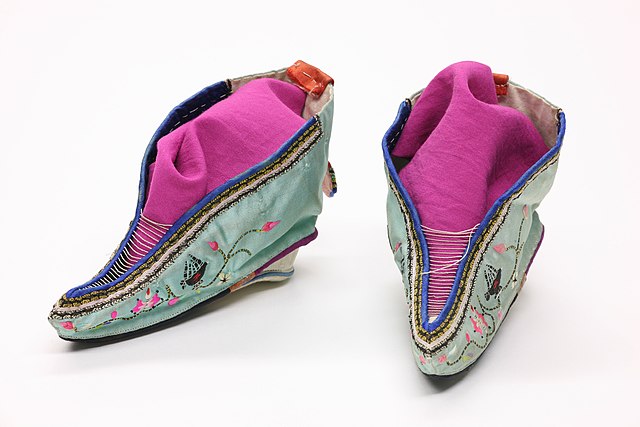
My husband, Marty, is a retired podiatrist. He worked in pockets of New York City that were poor and largely immigrant. When he first started his practice, he treated women from China whose feet had been bound. Despite being officially outlawed 1912, footbinding was still being practiced well into modern times. He saw these patients in the 1970s and 80s.
For those who don’t know what it is, young girls, as young as 3-5 would have the bones in their feet broken and then the feet bound with cloth strips. Every few years, the feet would be broken again until the desired result was created. To create that affect, the toes would be flattened against the bottom of the foot and arch would be so broken and damaged that the heel would curl back to the front of the foot. At each of the breakings the girl would need to learn to walk again. One can only imagine that pain of walking on foot bones that had been repeatedly broken. And here is an especially chilling part. The mothers would do it to their own daughters. I won’t go into further gruesome details because they can be easily looked up on the internet. It left the girls crippled for life.