 Scene: A comfy lecture hall in the temple on the summit of Mount Olympus. The feminist historians have taken their seats. The eldest Olympians rise to speak. Let us attend to their words.
I am Hera, Queen of All, Daughter of Gaia, Daughter of the Great Mother, whose body is our holy earth, whose bodily fluids are our springs and oceans, whose mind is our precious air and holy fire. I am Mother of the Fates, Sister of Hestia, protector of homes, and sister of Memory, whose daughters are the Muses, sponsors of our culture. I live in contentment with my wife, Zeusina.
I am Zeusina, Co-Queen of All, Wife of Hera, Co-Mother and Sacred Guardian of all lands. You’ve heard the stories of that rapacious lecher who usurped my place? Don’t believe them! That dirty dog stole my throne, my wife, and even my name. Now one of my constant duties is to battle against the armies that are invading our peaceful lands and bringing their thunder-gods to cast us down and stand in dominion over us. The generals of those armies are bringing ruin and desolation to our lands and cities. Another of my tasks is to correct the stories the speakers for the thunder-gods tell. I rescue young women like Leda and Danae and Europa from their greedy fathers, who would sell them to the highest bidders. So many young women have I had to rescue!
I am Poseidis, Queen of Waters. When I was young, I swam and played with mermaids and seals and dolphins and whales. Now I find I must protect them from the ravages of royal navies and ruthless fishermen. I spend my days and nights working to clean up after the careless men who discard their trash in my waters. I yearn to swim and play again. Can you help me clean our waters?
I am Demeter, Queen of Crops and Farmlands. You perhaps know the story of my daughter Persephone. Men have told how she was kidnapped by my little brother, Hades. Don’t believe it! She went to visit the lands beneath the earth because she could hear the crying of souls caught in boredom in the Elysian Fields. She visited them to sing to them and to teach them to protect and fertilize the roots of plants that grow on the surface of the earth. Friends, let us work to save our lands from harm. And let us always celebrate Our Holy Mysteries.
I am Athena, Queen of Holy Wisdom. From my birth among the Amazons of Libya and my childhood among the Amazons who live near the Black Sea, I have sought learning and inspired humans to think and write. You have no doubt heard of my so-called friendship with Odysseus, that hubristic king of such a tiny island. Don’t believe what you’ve read about him! My perpetual chore is to cleanse him of that sneaky cunning and to teach him to be friendlier to the people he meets in his travels. Actually, he needs to stay home with his family.
I am Apolla, Queen of Music and Sunlight. When your day is bright and the sun is shining down upon you, think of me. When you hear a lyre or a lute or a guitar, think of me. I invented all musical instruments, and my greatest joy is the symphony orchestra. Perhaps you’ve heard the tale about how I “conquered” Delphi and took over the oracle? Don’t believe it. Like her sister sibyls, the oracle was growing elderly. I went to help her interpret some obscure riddle and liked that vale so much I bought a timeshare and now spend much of my time there. The oracles and I are aging gracefully together.
I am Ares-ma, Queen of Armies. I am so angry! Warriors should not be mercenaries working for greedy kings. They should be honorable explorers. I am so angry that kings prefer to abandon justice and their goddess-given healing touch and sit on higher and mightier thrones. I am so angry at the armies and their thunder-gods that all I want to do is fight against them and defend our ancient mothers against their burning weapons. I am so angry!
I am Aphrodite, Queen of What Is Best of Love. I am the Great Creatrix of gardens and landscaping. I inspire your poets and bring colors to your world. You’ve no doubt heard about my so-called girdle. Well, it’s really just a fancy golden belt. It’s supposed to strike men and women with profane love, to make women surrender to godlets and men who think they’re gods. Don’t believe it! I use my belt to draw magical borders between peaceful realms and teach humans about compassion and charity.
I am Hephaestia, Queen of Forges and Crafts. I have taught people to fashion metal into works of art…but some turned my lessons inside out and used my forges to create weapons. Oh, shame upon them! Do you engage in any craft? The roots of all crafts lie in my smithy, and I teach humans to do clever things with ordinary materials. We bring beauty to the world.
I am Hermia, Queen of Written Languages, Messenger between the divine worlds and the ordinary ones. You’ve heard the old tales that “Hermes” and his son Autolycus are thieves? Well, maybe they were, but I am not…well, sometimes I borrow things to show to humans and give them pleasure. I am forever speeding with messages between the worlds and lands. So much fun!
I am Dionysia, Drama Queen. Oh, yes, indeedy…I invented drama. Plus tragedy and comedy. That was when someone told me about consensual reality and I found it soooo boring. Let’s have our stories acted and sung and danced on stages (which I also invented). Let’s have elevated reality and great festivals. Hooray for Shakespeare, Moliere, and Chekhov. And the Gershwins and every performer who’s ever stepped on a stage and brought entertainment to the people!
Note: This bit of nonsense woke me up at 4:00 this morning. I’m pretty sure I wasn’t dreaming. Voices in my head? Who could resist? They were telling me that most of the Greek myths we’re familiar with are patriarchal fantasies. So there, Robert Graves—you’ve written the phallocentric versions. Now it’s our turn.
Barbara Ardinger, Ph.D. (www.barbaraardinger.com), is a published author and freelance editor. Her newest book is Secret Lives, a novel about grandmothers who do magic. Her earlier nonfiction books include the daybook Pagan Every Day, Finding New Goddesses (a pun-filled parody of goddess encyclopedias), and Goddess Meditations. When she can get away from the computer, she goes to the theater as often as possible—she loves musical theater and movies in which people sing and dance. She is also an active CERT (Community Emergency Rescue Team) volunteer and a member (and occasional secretary pro-tem) of a neighborhood organization that focuses on code enforcement and safety for citizens. She has been an AIDS emotional support volunteer and a literacy volunteer. She is an active member of the Neopagan community and is well known for the rituals she creates and leads.
 As a feminist, I have learned how important it is to limit the scope of my claims to a reasonable space, demarcated by some genuine historical or current investment, connection, or participation. There are many things in this world about which I passingly feel or think something. And, even if I think about something quite a bit, if I have nothing but opinion, even an informed one, I find it best to keep to myself. I therefore tread lightly here. Nevertheless, I do have some opinions born out of years of studying the relationship between Christianity and slavery, professional risk in dealing with these subjects, and my own different, but very real, history of abuse by which I analogically understand some measure of pain and exploitation.
 “Love is patient, love is kind.” – 1 Cor 13:4.
 I don’t do well being cooped up (staying at home) all day and every day. Thankfully the state of Virginia, where I currently live, has kept their parks open during the COVID-19 pandemic. For two months, I intentionally scheduled a “green space” time into my daily routine. Usually I’d hike. Sometimes I’d just sit in the car and look at the natural scenery in front of me.


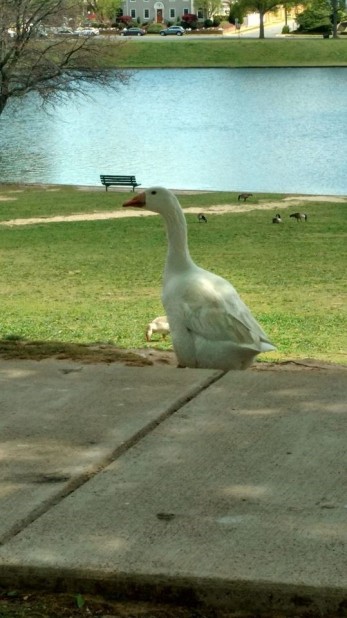


 I began to follow Kimberlé Crenshaw a little more than five years ago when I first learned of her theory of intersectionality as a more concise description of oppressions stemming from race, age, gender, sex/sexual orientation, religion and socio-economic status.
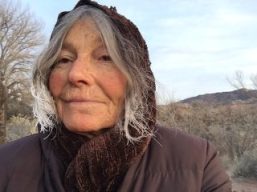 Returning home to Maine in April has allowed me to experience winter turning her ancient wisdom filled face towards the maiden of spring. Although the month has been chilly, and until two days ago snow covered tree stripped mountains still held a dusting of snow, all nature is celebrating renewal.
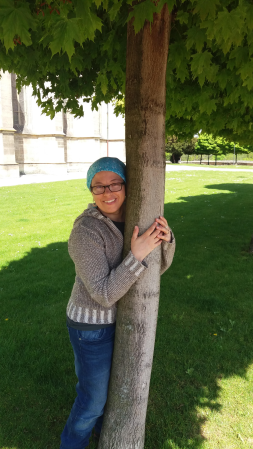 A few weeks ago a Slovak journalist reached out to me about the new Netflix four-part series entitled Unorthodox. In the email, the journalist wrote that they had read about my work as a Jewish feminist and wanted some insight into the new series. Their main question was: how accurate is the portrayal of the Satmar community?
 I am an annoying feminist. I annoy pretty much everyone about it, because I’m never NOT applying a feminist lens to every aspect of life: science (looking at you,
 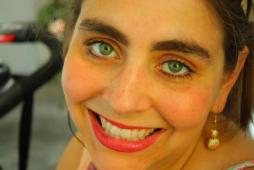 My eleven-year-old son, Nathan, a fifth grader, is doing his best to deal with changes the coronavirus pandemic has brought to his life. Before this time, Nathan’s biggest daily worries have been keeping his school papers organized and staying on top of his sometimes rigorous homework assignments. Nathan has ADHD, which poses certain challenges to his learning and behaviors, making some tasks that have many intermediary steps nearly intolerable for him. Nathan’s learning is complicated by the fact that, while it has always been apparent that his learning style was different, his teachers and family (including me) have not always had the skills or patience to see Nathan’s exceptional gifts and insights from Nathan’s own point of view.
  My previous post on this site,