 I hardly knew you.
We always met at
the meadow,
the one alive in
your imagination.
Last fall you told me
how beautiful
it would look
when wildflowers bloomed.

Exploring the F-word in religion at the intersection of scholarship, activism, and community.

I hardly knew you.
We always met at
the meadow,
the one alive in
your imagination.
Last fall you told me
how beautiful
it would look
when wildflowers bloomed.

The word apocalypse keeps coming up when I talk to friends about how our present times feel. We’ve all noted how cracks in our society are tearing open and fault-lines are rising to the surface. It is disorienting yet also potentially transforming. I realized I’ve felt this way before:
In January 1997, I became an apprentice to a husband and wife shaman team. They ran an old-style mystery school with regular weekend workshops in Maine and a 4-day in the summer. In August 1997, we met on forested private property that was far from any “civilization.”
Regular weekend meetings began after dinner which gave our small NYC area contingent plenty of time for a leisurely drive up the coast. In August, our teachers wanted us to arrive earlier. We arranged to take the Long Island Sound ferry to Connecticut to avoid the time-consuming drive around the city. About ½ way through our 1 ½ hour ferry ride, a shocking event happened. An elderly woman sitting near us dropped like a rock to the ground. Her daughter began screaming. No one could rouse her. The ferry returned to NY where an emergency crew tried and failed to revive her. She had literally died at our feet. By this time, I was not only thoroughly rattled, I was also deep into contemplating issues of life and death. Because of our delayed arrival in Conn, we began hitting evening rush hour along the major cities of our route. We did not arrive in Maine until well after dark. Continue reading “An Outrageously Strange, Bizarrely Weird, Completely True Tale by Janet Maika’i Rudolph”
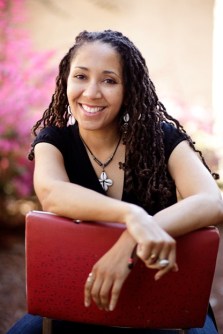 In national quarantine and sheltering-in-place or is it “safer-at-home,” all I could think about was that we were living in a scene from the late Afrofuturist writer Octavia Butler’s book Parable of the Sower. So I texted my friend, Afrofuturist writer Tananarive Due and said: hey let’s do a webinar on this. And this turned into weekly – then monthly – free webinars on the wisdom we can glean from Octavia Butler as we live through these political days.
Here, I share a recent workshop and dialogue that lifts up Octavia’s Parable of the Sower and highlights themes of prophecy, dystopia, theology and a way forward in times like these.
If you are interested in engaging more intimate work centered on Octavia’s work, visit OctaviaWebinar.com for more information.
Dr. Monica A. Coleman is Professor of Africana Studies at the University of Delaware. She spent over ten years in graduate theological education at Claremont School of Theology, the Center for Process Studies and Lutheran School of Theology at Chicago. Coleman has earned degrees from Harvard University, Vanderbilt University and Claremont Graduate University. She has received funding from leading foundations in the United States, including the Ford Foundation, the Andrew W. Mellon Foundation, and the Woodrow Wilson Fellowship Foundation, among others.
Dr. Coleman offers workshops, lectures and books for your organization, university or church. She warmly connects with people as she shares principles for growth and liberation. Read her story here.
 A conversation I often have with students is focused on the ways mission and purpose are inextricably linked with our roles as human beings. Understanding what it means to say that human beings have a specific purpose can feel overwhelming and spiral us into an existential crisis; a hallmark of a “Messina class,” according to one of my students.
Regardless of religious or spiritual beliefs, we must know that we are called to a particular mission within our lives. We are gifted with knowledge and abilities that contribute to a greater whole. And when we are willing to see our own missions through, we become part of a collective effort that honors the humanity of all.
For many of us, we have a mission; an understanding of our purpose and how we can engage our communities to work toward positive social change. But as time passes, we grow, our circumstances shift, and we gain insight; as a result, our missions need to reshape.
For women, and particularly women of color, our ability to understand and engage our missions have been bogged down with oppressive structures that devalue our contributions. Dualism has forced women into roles of passive care takers who always put themselves last. Acknowledging the critique of white feminism, women of color experience such roles in a far more damaging way, expected to not only care for their own families; but also serve those who society has claimed to have a higher status based on race and wealth. Although we too are made in the image of God, our full humanity is often denied, with intersecting identities determining our level of worthiness in this broken world. Continue reading “In Search of Insight by Gina Messina”
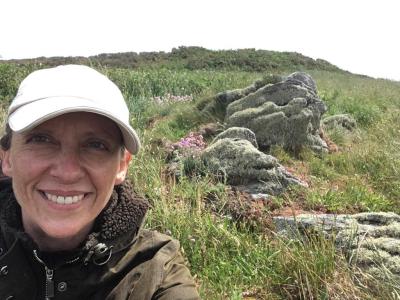 Exactly a year ago on May 22th, I didn’t join the ancestors. I had a very close shave after an undiagnosed ectopic pregnancy, and I was rushed into hospital for a life-saving operation. Ectopic pregnancy means that the foetus nested in my fallopian tube instead of my womb. This is a dangerous condition, and one of the leading causes for maternal death in the first three months. According to the doctors it had been a window of two hours. Any longer, and I would no longer be here.
I am so grateful that I could give space and attention to the healing journey, which was intense and multi-layered. I went through deserts of despair, oceans of grief, volcanos of rage… with open eyes, as much as possible. Writing poetry, journaling, painting, ceremony, and being out in nature were some ingredients that helped me integrate this experience. Continue reading “Not yet time to join the ancestors…by Eline Kieft”
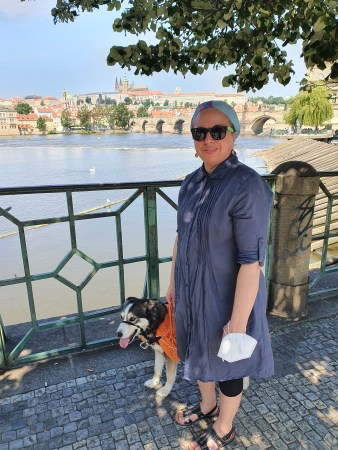 This month more than most, I feel like I have so much to say that I don’t really know where to begin. It doesn’t help that next door they are remodelling an apartment and, outside my window, there is a crew drilling up the sidewalk and another roofing the house across the street. The noise and its echoing are overwhelming on Prague’s narrow streets.
Perhaps the best place to start is with a similarly loud occurrence. On June 27th, Prague commemorated the 70th anniversary of the execution of Milada Horáková using the city-wide intercom system. Minute-long excerpts from her trial and execution were broadcast throughout the day. Horáková, the only woman to be executed during the Communist regime in Czechoslovakia, was a long-time proponent of democracy and women’s rights. In the field of women’s rights, she focused on the status of women and children, spending considerable effort on women in the workplace and reconciling their work with family responsibilities. She was also an outspoken critic of the Nazi Regime, having spent time as a political prisoner in Terezin. When the war ended, she joined parliament, but resigned right after the communist take-over. After continuing to speak out against the Communists, she was arrested in September of 1949 and charged with attempting to overthrown the government. She along with 12 others were interrogated and tried. Four of them, including Horáková were sentenced to death. She was publicly hanged on the 27th of June 1950. Eighteen long years later, she was posthumously exonerated, and in 2000, the Czech Republic unveiled a commemorative tombstone for her in the National Cemetery at Vyšehrad Castle. In 2017, a film was made about her life and legacy. Continue reading “Listening to the Noise: The Connections between Milada Horáková, Anti-Semitism, and the Black Lives Matter Movement by Ivy Helman.”
 The Predator
dug a hole
in turtle’s wake
scooped and
sucked down
pulsing life
one dark night.
An empty pit
and shriveled eggs
mark the theft .
Her children are dead.
Vulnerability
and violence
are bedmates
She bears
thirteen squares –
Round House
hovers above her.
Natures Protection.
But how can she
puncture the balloon of
his lies
with her body
to feel the strength
of the shield
she owns?

Sara is a naturalist, ethologist ( a person who studies animals in their natural habitats) (former) Jungian Pattern Analyst, and a writer. She publishes her work regularly in a number of different venues and is presently living in Maine.
 Every year I bring back wood frogs, peepers or toads to this property to increase my amphibian population… this year with a drought underway the peepers captured my heart because a bizarre heat wave hit Maine just after the coldest freeze I ever remember. The poor peepers froze and then steamed and fried under a relentless solstice sun, their vernal pools rapidly disappearing from under them.
Intervening, I scooped up about a thousand and took them to the pond, brought some here to the shaded vernal pool that I dug here many years ago. Amphibians are the most endangered species on earth and I liked the idea of providing a temporary home for some. Continue reading ” Letting Go by Sara Wright”
, A few years ago, I visited the family farm founded by ancestors from Germany in the Pokonos with a newly discovered cousin. The woman I met was delightful: warm and friendly and very much connected to family still living in the area. Her mother had vivid memories of the farm. In contrast, my great-grandmother left home to marry in Brooklyn. My father had fond memories of visiting the farm as a child, but lost touch with the relatives there when his family moved to California in the 1930s.
My cousin was working as a department manager at Walmart. She seemed smart as a button, so I asked her why she had not gone to college. She said that though she had the grades no one encouraged her to do so. Her response made me wonder if I would have gone to college if my part of the family had remained close to the family farm. I was stunned by the roles chance and the choices of others play in our lives. Though I had more education than my cousin, I was not sure that mine was a happier life. I envied the family ties that shaped and defined her days.
About two weeks ago my cousin wrote on facebook:
I have often wondered about why Whites are racists, and no other race is. Someone finally said it. How many are actually paying attention to this? Continue reading “Dear Cousin: Can We Talk about Structural Racism? by Carol P. Christ”
 (With apologies to Jean de La Fontaine for significant changes to his fable)
Note: I first posted this story in 2016 and posted it again in 2019. As the pandemic drags on and the huge orange Tyrannosaurus Rex in the White House has not only endangered the lives of everyone in the land but also models and encourages all the awful “isms” that we need more than ever to leave behind, I’ve decided this story might make someone’s day a bit cheerier. Yes, we need lessons in kindness more than ever before. I bet you agree with me!
“Curses on that grasshopper!” exclaimed the ever-busy Madame Fourmi. “All he ever does is play. He’ll be sorry when winter comes.”
And so it went. Every day, Mme. Fourmi spent the morning scrubbing her front steps. And Monsieur Cigale?
“Partaaaaayyyyy!” Every day, he sped by on his skateboard. “Hey, Auntie Ant, stop cleaning the concrete and come and play with us. We’re gonna start a band!” Continue reading “Practical Lessons in Kindness from the Grasshopper and the Ant by Barbara Ardinger”

