Coronavirus is revealing many truths to this world – a world grounded in the patriarchal consciousness of domination and separation for millennia. Though still on the fringes of social awareness, the ancient wisdom of community and connection remains alive and growing.
Our commitment should be to the wellbeing of all; our own wellbeing is dependent upon it. This virus does not recognize borders or walls, nor racial or religious divides. Oppressive structures have caused our communities to crumble; and yet, it is only through a collaborative community effort that we can hope to “flatten the curve.”
We are in the midst of a global crisis unlike anything we’ve seen during our lifetime. Admittedly, I gave the situation little attention, even when relatives were under forced quarantine in Italy and cases were piling up in California where many of my family and friends live. It’s typical; we often don’t realize the seriousness of a particular issue until it is one we experience ourselves — we can empathize, but can’t fully understand something that hasn’t hit home.
I wasn’t afraid when the NBA suspended its season, or when March Madness was canceled. When I received an email that a child at my daughter’s school had been quarantined, I told myself it was precautionary. Still, when a neighbor who is a nurse in an ER had provided care to a patient who tested positive for COVID-19, I thought how scary it must be for her — but assumed that nurses of all people know how to protect themselves from getting sick.
Once school was suspended in my state and people started to panic, buying up every last roll of toilet paper and hand sanitizer pump, my concern was not COVID-19, but instead what I deemed overreaction. Nonetheless, I jumped on the bandwagon and stocked my pantry just in case…although I was too late for the toilet paper. Continue reading “Community and Social Distancing by Gina Messina”
In 2016, Zlinszky (Zlinszky/Molnar/Barfod) and his team released another study demonstrating that birch trees go to sleep at night (now we know that all trees – at least all the trees that have been studied so far – do sleep at night).
Trees follow circadian cycles responding primarily to light and darkness on a daily cycle. The researchers believe the dropping of birch branches before dawn is caused by a decrease in the tree’s internal water pressure while the trees rest. With no photosynthesis at night to drive the conversion of sunlight into simple sugars, trees are conserving energy by relaxing branches that would otherwise be angled towards the sun. Trees increase their transpiration during the morning, decreasing it during the afternoon and into the night. There is a change in the diameter of the trunk or stem that produces a slow pulse. During the evening and the night tree water use is declining, while at the same time, the stem begins to expand again as it refills with water.
When trees drop their branches and leaves its because they’re sleeping. They enter their own type of circadian rhythm known as circadian leaf movement, following their own internal tree clock. Continue reading “Trees Sleep? by Sara Wright”
In a recent blog on Feminism and Religion,“Insights on Sisterhood,” Eirini Delaki opened a dialogue about problems that arise in women’s circles. According to her, many of us are reacting against the poisonous pedagogy of control which is all too familiar in patriarchal families and patriarchal cultural, religious, and economic institutions. Desiring to be free of hierarchical structures that inhibit our growth and happiness, we often react against all structures.
We imagine that groups without structure will provide a space where we can learn and grow together. We begin with a vision of sisterhood in which everyone’s voice will be heard. In practice, however, groups without structure usually end up being dominated by those with the loudest voices and the biggest egos. The quieter and less sure members of the group find themselves dominated again. When the vision of sisterhood is not realized, the group is likely to dissolve. Continue reading “Women’s Circles Need Well-Established Structures to Ensure that Everyone’s Voice Is Heard by Carol P. Christ”
Five years ago, before peer pressure made me reach for the henna.
When I turned forty, my hair started going seriously gray. Fearing that this would make me look “old,” I drank the Koolaid and hopped straight onto the wheel of hair dyeing samsara, getting my hair professionally colored every six to eight weeks. This, alas, proved to be a very expensive and time-consuming obligation. I am not one of those women who views going to the salon as “pampering.” Quite the contrary. I would much rather be writing novels or pampering my pony.
The salon I frequented in those days, which has since gone out of business, had an alarming tendency to play nonstop Miley Cyrus videos. Sitting under a heat lamp with dye on my hair, I was truly a captive audience and could not run away, and the volume was so loud, it was impossible to read or even think. Subjected to such horrors, I could feel my brain cells slowly and painfully dying off, even as my hair was being dyed. I tried changing salons, but they all seemed to have the same loud, annoying soundtrack.
To compound this, my hair grows so fast, the gray roots would be visible two weeks after each dye job and then I had use root concealer to hide the evidence. Finally my scalp would take no more and I developed a skin intolerance to commercial hair dye. That, and one Miley Cyrus video too many, tipped me over the edge. I decided to jump off the hair dyeing merry-go-round and go naturally gray. By this time, I was approaching fifty. Continue reading “Embracing Gray by Mary Sharratt”
I have been facilitating women’s circles in Europe since 2006. This has involved years of deep, challenging, thankful, and fun teaching and learning. During that time, I have collaborated with different facilitators in the fields of art and spirituality and connected with different cultures, experiences that have reinforced a vision of SISTERHOOD.
Let me clarify that in no manner am I excluding men from these reflections. On the contrary, I believe that many dysfunctional and suffering men have been shaped by women who haven’t managed to stand up for themselves. They harm their children through manipulation while not directly challenging an oppressive system out of fear or a need to feel accepted and to belong.
My students and I are going through an important transition. Most of us come from parents who have spent their lives seeking material possessions, safety, comfort, and success in terms of competition enforced through harsh discipline. Then we moved to the other extreme: we have a reactive attitude towards the previous patterns that is manifested as procrastination, avoidance of tasks that involve responsibility towards ourselves and others, being too permissive, confusing freedom with doing whatever feels right at the moment, and so on. Continue reading “Insights on Sisterhood: An Offering to the Great Goddess by Eirini Delaki”
Scientist Diana Beresford Kroeger proved that the biochemistry of humans and that of plants and trees are the same – i.e. the hormones (including serotonin) that regulate human and plant life are identical. What this means practically is that trees possess all the elements they need to develop a mind and consciousness. If mind and awareness are possibilities/probabilities then my next question isn’t absurd: Do trees have a heartbeat?
According to studies done in Hungary and Denmark in 2017 (Zlinszky/Molnar/Barfod) trees do in fact have a special type of pulse within them which resembles that of a heartbeat.
To find this hidden heartbeat, these researchers used advanced monitoring techniques known as terrestrial laser scanning to survey the movement of twenty-two different types of trees to see how the shape of their canopies changed.
The measurements were taken in greenhouses at night to rule out sun and wind as factors in the trees’ movements.
As the results from America’s Super Tuesday election primaries came in, I found myself feeling disoriented. I could not focus on any task and found myself obsessively reading the news and checking my Facebook timeline. Many of my friends who had supported Elizabeth Warren were embracing Biden as the next best hope to defeat Donald Trump. Sometime on Thursday, I came across Starhawk’s Facebook post on the grief and disappointment so many of us were feeling following the latest primary results.
In the post, Starhawk spoke of her disappointment that Bernie and Elizabeth did not do better and that Biden did so well. She spoke first of her grief that Elizabeth’s campaign never took hold. No doubt she, like me and many of you, had heard feminist friends express the fear that a woman could not win, saying that as much as they wanted to vote for her, they probably would not. Starhawk said that we simply do not have enough archetypes of female power to enable people to imagine a woman as President. Continue reading “Grief, Disappointment, and the Big Comforting White Guy Who Can Make It All Right by Carol P. Christ”
The Tanakh, Jewish scriptures, predominately call the deity king and lord and use the masculine pronoun. These images evoke a certain level of power. Just how powerful the deity is in then multiplied when “he” is addressed as “G-d of Gods,” “Lord of Lords,” judge, almighty, all-powerful, and warrior-like with vengeance, fury and flaring nostrils. Events like war, army invasion, disease, drought, and famine are often described as divine punishments for wrongs done throughout the Tanakh.
All of these images bring forth a certain mindset regarding who the divine is and what “he” does. Indeed, such images may well have been crucial in those ancient days when famine, drought, war, and disease were ever present and, day-to-day survival was often extremely difficult. People sought understanding as to why they were suffering, and the workings of divine beings offered such explanations. Continue reading “What We Lost When We Became Monotheists by Ivy Helman”
My son asked me to discuss with him the theological problem of the dual natures, i.e., the divine and human natures, coexisting in the person of Jesus. He asked me to begin by assuming the premises that 1) Jesus was a real, historical person and 2) that Jesus was both human and divine. The question then became, “Did Jesus know he was God?”
Of course, as a theologian, I was delighted to have this conversation with my son. It was fascinating to see how his mind worked, to hear him evaluate the strengths and weaknesses of high and low Christologies, to hear how he resolved the question himself, and to have an opportunity to share my own thoughts with a genuinely engaged, truly curious, and attentively listening dialogue partner in the person of my teenage son. Not too shabby a victory for any parent!
As we talked, he continued to provide context for the question, which began as a classroom debate in his high school theology seminar. Apparently, the students were tasked with taking some element from their in-class discussion, evaluating it, and then applying it practically by a twofold retrospective reflection in which the students were 1) to identify a specific situation in their life that could have gone better and 2) to share how their insight drawn from class would have made all the difference. Now, my son expressed a bit of frustration with this assignment because he would have preferred to discuss how today’s insights might help him in the future, rather than to dwell in the past. As his wheels turned, I left him alone to puzzle out his assignment, with the promise that I eagerly would return in an hour to see what he produced, accompanied by my own essay on the same task.


 Coronavirus is revealing many truths to this world – a world grounded in the patriarchal consciousness of domination and separation for millennia. Though still on the fringes of social awareness, the ancient wisdom of community and connection remains alive and growing.
 We are in the midst of a global crisis unlike anything we’ve seen during our lifetime. Admittedly, I gave the situation little attention, even when relatives were under forced quarantine in Italy and cases were piling up in California where many of my family and friends live. It’s typical; we often don’t realize the seriousness of a particular issue until it is one we experience ourselves — we can empathize, but can’t fully understand something that hasn’t hit home.
 This post follows last week’s post:
  In a recent blog on Feminism and Religion,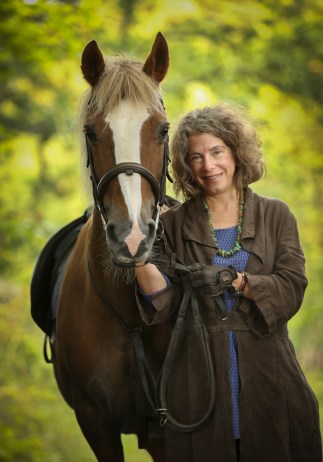
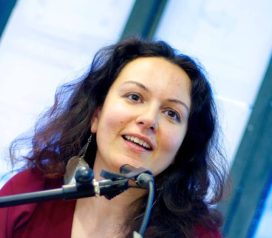 I have been facilitating women’s circles in Europe since 2006. This has involved years of deep, challenging, thankful, and fun teaching and learning. During that time, I have collaborated with different facilitators in the fields of art and spirituality and connected with different cultures, experiences that have reinforced a vision of SISTERHOOD.
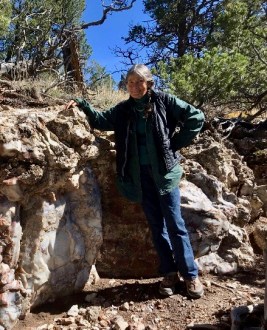 Scientist Diana Beresford Kroeger proved that the biochemistry of humans and that of plants and trees are the same – i.e. the hormones (including serotonin) that regulate human and plant life are identical. What this means practically is that trees possess all the elements they need to develop a mind and consciousness. If mind and awareness are possibilities/probabilities then my next question isn’t absurd: Do trees have a heartbeat?
 As the results from America’s Super Tuesday election primaries came in, I found myself feeling disoriented. I could not focus on any task and found myself obsessively reading the news and checking my Facebook timeline. Many of my friends who had supported Elizabeth Warren were embracing Biden as the next best hope to defeat Donald Trump. Sometime on Thursday, I came across Starhawk’s
  The Tanakh, Jewish scriptures, predominately call the deity king and lord and use the masculine pronoun. These images evoke a certain level of power. Just how powerful the deity is in then multiplied when “he” is addressed as “G-d of Gods,” “Lord of Lords,” judge, almighty, all-powerful, and warrior-like with vengeance, fury and flaring nostrils. Events like war, army invasion, disease, drought, and famine are often described as divine punishments for wrongs done throughout the Tanakh.