The Shakespearean quote, “something is rotten in the state of Denmark,” comes from a palace guard. After watching Prince Hamlet walk away with the ghost of Hamlet’s murdered father, the former King, the guard has a sinking feeling about how screwed up things are in his country.
And if you remember the play at all, things were pretty rotten. By the end of the story just about everybody dies. Revenge, misunderstandings, accidents, and lust for power are just a few of the causes of death. The guard was right. Something was rotting away at his country—something that was vacating people’s integrity and trust, something that was not afraid to use violence and lies to get its way, something that was blind with a hunger for more and more power no matter the cost.
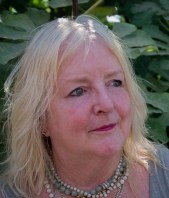
When I was in graduate school, I learned to doubt myself. Despite having won Danforth and Woodrow Wilson graduate fellowships that paid for my tuition and living expenses, I was continually told by professors and male students alike that I would not finish my degree and that if I did I would get married, have children, and never use the degree I had earned. I tried hard to maintain my confidence in myself, but it was difficult when I was the only woman in the program. There was one other woman my first year, but she was older than I was, a nun, and I never saw her in class or at social events. My self-esteem was gradually eroded. If I had not had a fellowship, I would probably have dropped out.
Fast forward a few years. There were several more women in the program, but only one in theology, my friend Judith Plaskow, and she too struggled. I was working on my comprehensive exams and wondering if I had what it takes to pass them and then write a Ph.D. thesis. After the initial shock of being treated as if I was not the equal of the male students in the program, I began to look around me. A few of the male students seemed really bright, many of them were average, and some of them were plodders. I hate to admit it, but I looked at the least competent among them and said to myself, “If he can do it, then surely I can.” And I did. I passed my exams. A few years later my Ph.D. thesis was approved.
If contributions to the field are any indication, Judith Plaskow and I were not only as good as the most mediocre men in our graduate program, we smarter than the average ones, and at least as smart as the smartest ones. But we didn’t know that then. Men have been getting degrees and being promoted and moved up that ladder because other men like them, identify with them, feel sorry for them, and for lots of other reasons having nothing to do with excellence, and sometimes not even do do with competence.
Last week I heard Cecile Richards say something to Lawrence O’Donnell that reminded me of this. Speaking of the huge numbers of women who—inspired by the women’s marches–will be voting, registering voters, campaigning, and running for office in 2018 and beyond, she said women “totally understand that they can do better than who’s in office now.”
photo by Marie Cartier
For far too many years women have been held back by lack of self-confidence and self-esteem. We didn’t think we could and we didn’t. We don’t think we can and we don’t. We thought men were smarter than us or had more time or more drive. The founder of the Society of Women Engineers at San Jose State told my classes that women who got even one B+ in an engineering class were likely to drop out of the program, while men graduated who graduated with C averages went on to get great jobs. Now we see truly mediocre white men holding public office all across the country and in its highest offices. The harm they are doing to women, to children, to the elderly, to people of color, to the environment has been a wake-up call for all of us. There are so many mediocre white men in office that women–of all colors and ethnicities–are realizing that we can do better than that! Once we begin to see what we can do when there are large numbers of us holding office all across the country, there will be no stopping us!
On Sunday, January 7th, a highly visible and poignant protest and stance was made. The 75th Golden Globes was the frontline to which the privileged Hollywood A-Listers took a stance. They collectively drew a line, a call for change. A straightforward act of wearing the color black, spoke volumes. Gone were the entertainment commentators stating which color was bold or trendy. The focus was on the collective statement that was being made on the red carpet. Countless actors voiced their own stories of #WhyWeWearBlack, they called out executives who are complicit in maintaining pay inequality, in hiding sexual abuse and intimidation, in the unequal job opportunities, and even in the lack of recognition.
We, Goddess types, are getting ready to celebrate Imbolc, beginning on the evening on February 1st through the following day, until dusk. Many ask, “well, just what is Imbolc?”
To give you a quick etymology …. From Old Irish it means “in the belly” referring to the pregnancy of ewes. It might also mean “to wash or cleanse oneself” and finally, perhaps, “budding.”
The easiest way for me to understand it is in remembering when I carried each of my children “in the belly.” There was this magical moment when I felt them move for the very first time. This is an event called “quickening,” a stirring of the unborn child in the womb. Every woman who has given birth, remembers this moment with her child. Continue reading “A Time to Make New by Deanne Quarrie”
If you don’t know how to flirt, you shouldn’t be having sex with anyone.
I admit it… I used to love flirting. It can be incredibly fun. I flirted outrageously with guys I had no intention of dating, and guys flirted with me who weren’t interested in dating me. It wasn’t about sex, either. It was just awesomely fun. The only time I minded was if it turned out they were married/in a committed relationship.
Flirting is like dancing. Both people have to agree to participate. It involves a lot of asking the other person what s/he is comfortable with. Sometimes it is kind of sexual, sometimes it is beautifully spiritual or exciting intellectually. Sometimes it’s tequila body shots, sometimes it’s holding a gaze just a little longer than normal, sometimes it’s making witty but not cruel jokes at the other person’s expense. But it has to be fun, it has to be happy. Like sexual intimacy. If at any point, one party becomes uncomfortable, the other party has to back up and figure out why, and what is needed now.
I spent the winter holidays in Rio de Janeiro with my sister. It was wonderful to experience the warmth of both the Brazilian people and summer in the Southern Hemisphere but a little odd to miss the quiet, dark time of winter back home. One huge bonus to the trip was to be in a place where the worship of Yemayá is alive and active. I was blessed to witness a ceremony to her on New Year’s Eve held by Afro-Brazilian practitioners of the Candomblé religion on the beach of Copacabana.
When I was in my late teens, I discovered midrash: the Jewish exegetical process by which commentators weave creative and additive interpretations into the sacred text. Midrash comes from the word “to ask,” “to seek,” or “to divine.” For example, the tale in which a well follows the prophetess Miriam through the wilderness is an ancient midrash. The story in which God stops the angels from singing as the Egyptians drown in the Sea of Reeds is a midrash. Each of these stories derives from a particular close reading of text, whether a Torah text or a verse elsewhere in the Bible. Each of them allows a new generation to add its own perspectives to the tradition.
Contemporary feminists, and many other contemporary artists, writers, and exegetes, have used a modern form of midrash to add liberatory perspectives to Jewish tradition and to biblical lore. From Miriam to Vashti, female biblical characters shine in the creative interpretations of feminist midrashists. Judith Plaskow’s “The Coming of Lilith” made a huge impact on the reading of the story of Eve and the legend of Lilith. Anita Diamant’s The Red Tent changed the conversation on Dinah forever. Alicia Ostriker, Norma Rosen, Veronica Golos, and many others have joined in this creative play which highlights marginalized voices within the text. Wilda Gafney has made contributions to a Christian and womanist form of midrash. Voices like Andrew Ramer and Joy Ladin have invited us to see queer and trans themes in the text. And of course many others, from poet Yehuda Amichai to bibliodramatist Peter Pitzele, have added to this rich tapestry.
When I learned about the Navajo Beauty Way, I understood it to be a path in which human beings respect all beings in the web of life and live in harmony with them. But I didn’t understand why this path was called the “Beauty Way.” As a young woman, I knew that my worth was defined by many in terms of my ability to conform to ideals of female beauty promulgated in movies, tv, and advertising. I didn’t believe the Navajos were talking about beauty in that sense, but because of my conditioning, I was not yet able to fully grasp what they might mean by beauty. I would have called the way they were describing a “Way of Harmony” or a “Way of Respect for Life.”
Still, I wondered: why the Beauty Way?
Marija Gimbutas described the societies of Old Europe as peaceful, settled, agricultural, highly artistic, matrifocal and probably matrilineal, and worshipping the Goddess as the power of birth, death, and regeneration in all of life. Though I am impressed with the beauty of the many small works of art Gimbutas reproduced and interpreted in The Language of the Goddess, I sometimes inadvertently omit the words “highly artistic” when repeating in her definition of the culture of Old Europe. I have tended to view the fact that Old Europe was peaceful and matrifocal as more important than the fact that it was highly artistic.Yet this judgment is wrong. In calling the cultures of Old Europe “highly artistic,” Gimbutas was trying to convey her understanding that appreciation of the beauty of life was fundamental within them.
We have been taught that “high” or “great” art is most often monumental in size. The Pyramid of Giza is over 230 meters (756 feet) tall. The Great Sphinx of Giza is 20 meters (66 feet) high. The Parthenon rose to 14 meters (45 feet) and the statue of Athena inside it was 9 to 11 meters (35-40 feet). It is telling that we use the words “high” and “great” (originally measures of size) to describe the value of artistic creations.
Statue of Athena in Parthenon reproduction in Nashville, Tennessee
The purpose of monumental works of art is to diminish the viewer, to make the her feel small, to induce her to bow down, to worship, and to obey a power or powers greater and higher than herself.
In contrast, the small scale of the art of Old Europe does not diminish anyone or anything. Its purpose is not to make anyone one want to bow down. Instead small works of art make the viewer feel comfortable, welcomed, and part of the beauty of life that is depicted.
Goddesses of Old Europe c. 5000 BCE
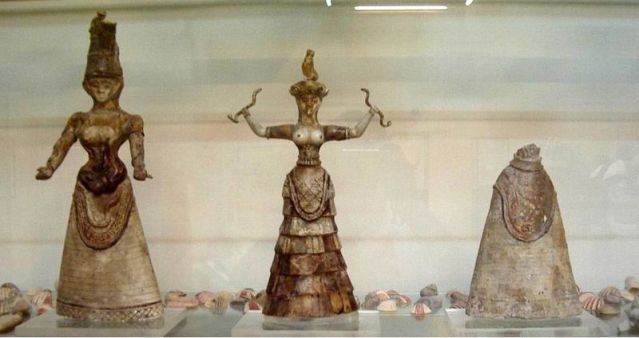
Marija Gimbutas viewed ancient Crete in the Bronze age as the final flowering of the culture of Old Europe. In Crete too, everything is on a small scale. Though the so-called Palaces or Sacred Centers are large, the rooms within them are small. There is not a single room where crowds could have bowed down to a King or Queen. Nor are there images of deities larger than life. The famous Minoan Snake Goddesses are less than 15 inches tall and the well-known pitcher Goddesses are even smaller. Such objects would have been held in hands during rituals or set on low benches in small rooms lit by oil lamps.
Snake Goddesses of Bronze Age Crete c. 1500 BCE
When my friend’s daughter Klia was seven years old, she spent her afternoons collecting stones by the sea. One day I asked her if the stones spoke to her. “Of course,” she replied. “What do they say?” “They say, ‘we are very beautiful.’”
Heart of stones in Lesbos
Klia intuited the meaning of the Beauty Way. It has nothing to do with artificial beauty standards. It has nothing to do with size. It is recognizing beauty everywhere and in everything. When we do so, we walk in beauty, in the grace and joy of life. And yes, the Beauty Way has ethical implications, for no one who truly recognizes beauty could want to harm it. This was understood by the Navajos, the Old Europeans, and the ancient Cretans, and many others. Only we seem to have forgotten. We can remember.
Like many in the FAR community, I participated in the world-wide 2017 Women’s March. So did Madge, the bodacious cartoon character who took me by surprise in 1990 and went on to become the narrative character of The Maeve Chronicles. Her life in print, as the first century Celtic Magdalen, satisfied her until….November 8th, 2016 when Madge returned, mouthy as ever, to rejoin us in our own times.
On the first anniversary of the historic march, I’d like to share a little of Madge’s millennia-spanning story and a few images from her two books of cartoons, now published in one volume.
Madge first appeared to me in 1990 as a line drawing of an ample woman sitting naked at a kitchen table drinking coffee. I had recently finished writing a novel, The Return of the Goddess, A Divine Comedy, and felt I had nothing more to say. I decided to play with magic markers for a while. Madge, as the naked woman introduced herself, was far from done with words. Fleshed out with peach magic marker, Madge told me she wanted “fiery neon orange” for her hair color. She also required speech balloons for her theological queries. (For example: If we are all members of the body of Christ, who is the twelve-year molar, the kneecap, the colon?) Enchanted with her sass, I invited her to be in my next novel. I pitched ideas to her. She rejected them all as too dull and said, “I want my own book of cartoons first.” Continue reading “Happy Anniversary, Women’s March, with love from Madge by Elizabeth Cunningham”



 When I was in graduate school, I learned to doubt myself. Despite having won Danforth and Woodrow Wilson graduate fellowships that paid for my tuition and living expenses, I was continually told by professors and male students alike that I would not finish my degree and that if I did I would get married, have children, and never use the degree I had earned. I tried hard to maintain my confidence in myself, but it was difficult when I was the only woman in the program. There was one other woman my first year, but she was older than I was, a nun, and I never saw her in class or at social events. My self-esteem was gradually eroded. If I had not had a fellowship, I would probably have dropped out.
 On Sunday, January 7th, a highly visible and poignant protest and stance was made. The 75th Golden Globes was the frontline to which the privileged Hollywood A-Listers took a stance. They collectively drew a line, a call for change. A straightforward act of wearing the color black, spoke volumes. Gone were the entertainment commentators stating which color was bold or trendy. The focus was on the collective statement that was being made on the red carpet. Countless actors voiced their own stories of #WhyWeWearBlack, they called out executives who are complicit in maintaining pay inequality, in hiding sexual abuse and intimidation, in the unequal job opportunities, and even in the lack of recognition.
 We, Goddess types, are getting ready to celebrate Imbolc, beginning on the evening on February 1st through the following day, until dusk. Many ask, “well, just what is Imbolc?”


 When I learned about the Navajo Beauty Way, I understood it to be a path in which human beings respect all beings in the web of life and live in harmony with them. But I didn’t understand why this path was called the “Beauty Way.” As a young woman, I knew that my worth was defined by many in terms of my ability to conform to ideals of female beauty promulgated in movies, tv, and advertising. I didn’t believe the Navajos were talking about beauty in that sense, but because of my conditioning, I was not yet able to fully grasp what they might mean by beauty. I would have called the way they were describing a “Way of Harmony” or a “Way of Respect for Life.”


 Like many in the FAR community, I participated in the world-wide

