

 Be still, and know that I am God.
During this season of Advent, I have found great comfort in one biblical passage, Psalm 46:10, which translates as “Be still, and know that I am God.”
I take comfort here, when the rest fails me. I find myself, especially during this season, often unable to pray in the way I think prayer is supposed to be offered. Even though I know quiet, non-cognitive prayer that thrums like one’s heartbeat is as legitimate as a dozen rosaries or impassioned petitions, I sometimes struggle to affirm myself in this. Like many academic theologians, I get lost in my mind that knows too many critiques, deconstructions, and rational responses. I teach on the theology of suffering, and I spend hours every week with spiritual caregivers, healthcare providers, funeral directors, and chaplains, who discuss hospice, childhood cancers, car accidents, and stunning grief. I teach on pastoral care, spirituality, and addiction, where we explore the complicated nature of hope in the face of largely hopeless circumstances. I am not sure I ever believed in miracles or lucky rabbit feet. I am in equal parts terrified and dumbfounded by humanity’s divine pleas that go unanswered. I am, in addition to a dozen other descriptors, depending on the time of day, a critical realist, an empiricist, a stoic, perhaps an epicurean, definitely an existentialist, and, Lord, have mercy, a feminist. Prayer in both traditional ecclesial and fiery personal senses often struggles in this company. Continue reading “Be Still by Natalie Weaver”
 I always felt curiously distant from the figure of Mary. I always sensed that there is so much there and yet, I could never connect to it emotionally.
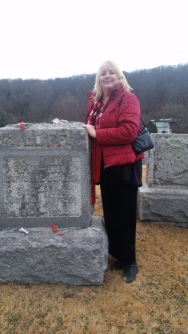 In the past week I visited Cherry Ridge, Honesdale, Wayne, Pennsylvania in the Pokonos, where I was welcomed by my third cousin Marcia Perry Gager whose family never left the place where our ancestors settled. Marcia and I have been corresponding about our family’s history since Ancesty.com connected us about three years ago. During that time, together with another cousin, Debra Ball, we have managed to decipher the complicated history of
 Santa Claus is really a shaman. He wears red and white and black (the three sacred colors of the so-called ancient triple goddess) and he’s fat because he’s well-fed. (A traditional shaman once told me never to trust a skinny shaman; if his people don’t provide for him, he’s not doing his job.) Santa flies from the frozen north, where the Saami (or Lapp) shamans still wield their full traditional powers. He’s drawn through the air by magical reindeer whose antlers symbolize the surging force of life. The Christmas tree is the world pole. From Mongolia to the American Southwest, shamans traditionally ascend the world pole to make their astral journeys. Santa knows everything, especially if we’ve been good or bad, and like karma itself, he brings us our just desserts. His gifts are the gifts of the spirit made material. His attendants, the toy-making elves, are the Old Ones who help the deserving and play tricks on the undeserving. Santa is not a god, but let’s honor him along with the solar gods and goddesses in our midwinter ritual.
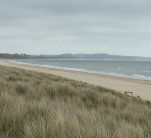 As the winter months approach, at least one “Christmas” gathering will be on my schedule. As this holiday has been co-opted by consumerism as evidenced by my memory of the throngs of sales and shoppers in large shopping centers to get “the perfect gift,” I wonder how to give the perfect gift to Mother Earth simultaneously. At the December meeting of my local chapter of the Sierra Club, one of the members passed out a list of gift ideas for a “low-impact” season. Some of the items on the list include or have inspired the following:
 I am tired.
 I just got home from the first yoga class I’ve attended since the recent (11/8/16) U.S. presidential election. I cried for the entire 75 minutes—through forward folds, downward facing dogs, exalted warriors, and especially shavasana (corpse pose). The young man (probably in his thirties) doing his yoga practice next to me asked after the closing Namaste, “Are you all right?” “No, not really. I’m very upset.” He nodded his head as if to say he understood.
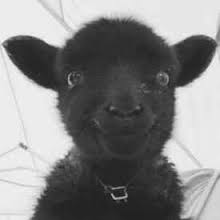 At Thanksgiving and the solstice holidays many of us are reminded that we are the “black sheep” of our families. In my case this means that I am too “assertive,” too “aggressive,” too “demanding,” too “political,” too “willing to upset my father,” too “opinionated,” too “feminist,” and so on.
 As per my last month’s FAR

