

 There is significant historical scholarship demonstrating that women’s public lives were coming under increasing restriction during the first few hundred years of Islam. Despite the differing modes of analyses and conclusions of such scholarship, there seems to be agreement that the Qur’an, Hadith, legal, and biographical literature advocate for increasingly restricted public social and religious engagement for women.
While piety and Sufi literature may have called for and depicted women in seclusion, in practical terms, the available historical sources suggest that women’s “secular” public activities–such as manual labor, buying and selling, teaching, and socializing–could not be controlled. Likewise unofficial religious activity such as pious and Sufi men and women visiting each other, attending mixed-gender gatherings, and, in some extreme cases, women setting up camp at the Kaaba or even preaching in the streets was not uncommon. Continue reading “Reconstructions of the Past 2: Hafsa bint Sirin (“Women’s Mosque Attendance”) by Laury Silvers”
 I recently re-read several books written by Jeffrey Raff, a Jungian analyst with a deep interest in spiritual alchemy. Raff has a Ph.D. in Psychology from Union Graduate School and a diploma from the C.G. Jung Institute in Zurich. While studying in Zurich, he was most influenced by Marie-Louise von Franz. Raff, von Franz and many others feel that Jung was most importantly a spiritual teacher and that Jungian psychology follows in the path of other western esoteric traditions such as Gnosticism, Kabbalah, Sufism and Alchemy.
 A brilliant site has been making the rounds of social media: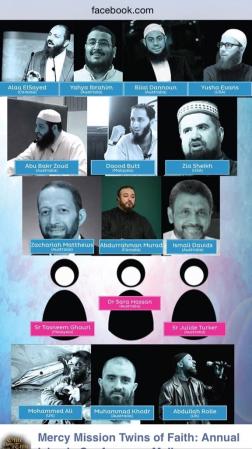





 Feminism and Religion
