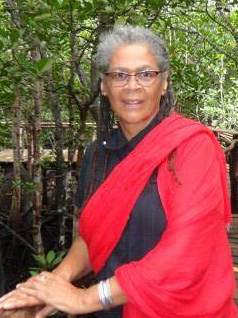
Redefining Spirituality, One Church for All by Andreea Nica

Andreea Nica, pentecostalismAs a former lover of Christ and ex-Pentecostalist, I had countless visions and dreams that one day I would be a spiritual leader. While growing up in the charismatic church, it was even prophesied that one day I would become one.

Nearly ten years after leaving the church, I carried a distrust in religion’s relationship with women and its barrier to free thought. My work as a freelance journalist led me to discover a spiritual women’s retreat held in North Bend, Washington. Inspired to experience a non-religious, spiritual gathering, I registered for the retreat held by Center for Spiritual Living (CSL) in Seattle.

CSL is described as a:

“Trans-denominational, inter-generational, not-your-usual church, that was started in 1921. A safe place for ‘the rest of us’ who are looking to connect with God/Higher Power/Universal Presence, but don’t really fit in with any one religion.”

The spiritual center’s core teaching philosophy derives from “Science of Mind” or Religious Science, a New Thought spiritual, philosophical, and metaphysical movement founded by practical mystic Ernest Holmes. The spiritual principles rely on the laws of physical science in establishing its core beliefs. Continue reading “Redefining Spirituality, One Church for All by Andreea Nica”

A Message From My Mother by Mary Beth Mosèr

Recently I traveled to Texas to receive the Kore Award from the Association of Women in Mythology for my dissertation in Women’s Spirituality at the California Institute of Integral Studies, “The Everyday Spirituality of Women in the Italian Alps: A Trentino American Woman’s Search for Spiritual Agency, Folk Wisdom, and Ancestral Values.”

Shortly after I had arrived in San Antonio, and met my younger sister and her daughter who were in town, we received word that my Mother was not well.   Although Mom had been in precarious health throughout the last year, she had pulled through several times. That night in the hotel room, we hoped for the best.  The next morning as I lay in my dream state, I felt someone come and lay beside me in bed, compressing the covers, which I have come to understand as a visitation from my Mother. Then the phone rang with the news that Mom had died peacefully that morning.  It was comforting for me to be with my sister and niece, especially since we were away from home. Together, we made it through that long, rainy day.

Later that morning, my other siblings, who were gathered around my Mother’s kitchen table, called the hotel room where I was staying. They passed the phone around to each person, voicing their consensus that I should stay in Texas to attend the conference, give my presentation, and receive the award. There was nothing I could do in the next few days if I flew to Denver, they said.  All the arrangements had already been made; the funeral wasn’t until the next week. So, reluctantly, I surrendered to their decision. My heart wanted to be with them. However, I stayed, unsure. . . . Continue reading “A Message From My Mother by Mary Beth Mosèr”

Sexism and “Jerusalem” by Ivy Helman

headshot2Three weeks ago, I played a video entitled “Kingdom of David: Rivers of Babylon” from the PBS Empires series.  The series first aired in 2003.  For the first time, and I’ve played the video in class for probably six semesters in a row, I noticed that all of the biblical scholars, archaeologists and rabbis interviewed to discuss the Torah, the history of the Jews, the Talmud, the exile and the prophetic tradition were men.  This reminds me of a few months back when a female colleague of mine discussed about an encounter she had had with the producers of another documentary about the Hebrew Bible.  They had only interviewed one woman.  When asked about this decision, the producers told her that their audience finds men more authoritative than women when it comes to explaining topics of a religious nature.

***

Two weeks ago, on a Wednesday, an older woman walked into the liquor store where I work.  She wandered around for awhile and then appeared somewhat overwhelmed, which is usually my cue to inquire if the customer needs help.  She said she was just fine.  Five minutes later she was still wandering the store apparently unsure what to purchase so again I approached her and asked if she’d like some help.  She seemed somewhat desperate at this point and asked for my opinion on the Irish Cream Liquors and which one tasted the most like Bailey’s.  I told her I wasn’t exactly sure.  I had not tried them all but the one she was holding in her arms was very popular and we sell quite a bit of it.  She continued to hem and haw explaining to me that she was having a bunch of old ladies over for lunch.  She intended to offer them sips of Irish Cream afterwards.  Then out of the blue she looked at me and said that she still couldn’t decide so she was going to ask a man for his opinion.  This man also happened to be my boss.  He said that he hadn’t tried it, but that it was very popular.  His words, exactly the same as Continue reading “Sexism and “Jerusalem” by Ivy Helman”

Book Review: Hild & The Patron Saint of Ugly by Mary Sharratt

OLYMPUS DIGITAL CAMERA

Literature touches our spirit in a way that film, television, and even art cannot. Instead of presenting the passive viewer with a visual image, good writing demands our participation and co-creation. The words become the springboard for our own imagined vision of other worlds and other lives. In this imagined space, we can experience profound insights and revelations–soul-growing experiences we carry with us forever.

Books that try too hard to be spiritual can have the opposite effect. Discerning women demand books that respect us instead of preaching to us. Too often religion has been interpreted by and for men, but when women writers reveal their spiritual truths, a whole other landscape emerges, one we haven’t seen enough of.

Marie Manilla’s The Patron Saint of Ugly (Houghton Mifflin Harcourt, June 17, 2014) and Nicola Griffith’s Hild (Farrar, Straus and Giroux 2013) are two such transporting novels. They both draw on the lives of female saints in fresh and evocative ways.

Continue reading “Book Review: Hild & The Patron Saint of Ugly by Mary Sharratt”

Love Facing by Safa Plenty

aqua and red

This piece titled, ‘Love Facing’ is a meditation on the intergenerational dynamics of family violence and our need to move beyond labels in order to understand the complexities of American violence. It begins with a narrative critic of spanking as a corrective measure and its propensity to escalate into other forms of violence. The poem continues with reflection on how male privilege and power impact the disempowerment of women and girls. It signals forgiveness as a possible means of understanding intergenerational trauma and stress, however.  The piece advocates an understanding of male privilege and dynamics of power and control, as a means of empowering women and children, affected by family violence. Furthermore, it examines our societies failure to raise healthy men and boys, who are comfortable openly expressing their emotions. In the end, the poem signals our human need for unconditional love, respect, and honor and need for religious and spiritual practice imbued with compassion, mercy, and kindness, or feminine attributes of the Divine.

“When the power of love overcomes the love of power, the world will know peace.” ― Jimi Hendrix

Continue reading “Love Facing by Safa Plenty”

Monkey See…by amina wadud

amina 2014 - cropped

When I was a little girl the Washington D.C. Zoo did not have that extra security fence between gawking spectators and the cages of certain animals.  My mother used to climb up onto the cage and hand peanuts to the monkeys.  I don’t know, maybe that was the beginning of my lifelong love of monkeys.  When I moved to Malaysia as Assistant Professor at the International Islamic University I was driving down a main roadway and along the side of the road I saw a monkey scurrying along much like we see squirrels in the US.  A new phase in my life began.  How many ways to repeat my mother’s antics?  Could I possibly top that? This introduction might seem silly but I just have to share one of the most sublime experiences of my life and for that I need to give you a feeling for just how much I love monkeys.

When monkeys are in the wild they are not always amenable to such antics as we humans can do or imagine.  I think that’s probably part of survival, don’t you?  Anyway, in Malaysia, even though they were as plentiful as squirrels and just as accessible, like squirrels they are not at our beck and call either.  We were pretty much limited to the evenings at a local park when they would come down from the trees and let us feed them. Like children do with Canadian geese at Merritt Lake Park here in Oakland, or any where they roam.  Once we climbed up more than 1000 stair-steps to the top of the Batu Caves a Hindu temple and tourist spot, to see the sights and feed the monkeys.  That time one wily monkey snatched the whole bag of food from my daughter’s hand while she wasn’t looking and that was the end of it.  No way to go back to the car and run back with more!  Continue reading “Monkey See…by amina wadud”

Boys Don’t Cry (or at least the shouldn’t when they are interviewing you for a job) by Natalie Weaver

Natalie Weaver

I want to begin by saying that I am grateful for my work.  It is no small thing to have a relatively secure academic position, especially in a climate when tenured and full-time appointments represent a disgracefully small percentage of all teaching positions throughout the country.  Nevertheless, a certain degree of professional movement is welcome for the purposes of growth and renewal if and when opportunity arises.  It is on this basis that I have been receptive on a few occasions to apply for appointments at the invitation of search committee chairpersons.  When I have been solicited for an application, I have in turn applied.

It is a curious thing because when you are contacted out of the blue you think something like… “ah, they must like me… they must know something about my work.”  And, it is true that on the occasions when I was asked to apply for something, I was invited to come in for an interview.  This furthers, of course, thoughts like… “great, this is going somewhere.”  And, in my case anyway, I start thinking about and even planning in a tentative way for what a move would constitute, the logistics of change, the impact on my family, the disruption of my current obligations, and so on.  Showing up for an academic interview midcareer involves much more than preparing a research presentation, which is also no small task.  The whole affair is psycho-socially weighty, and that reality is intensified by the fact that it drags on for months.  It can take more than six months from the time of the initial contact to the interview to receiving news of the final outcome. Continue reading “Boys Don’t Cry (or at least the shouldn’t when they are interviewing you for a job) by Natalie Weaver”

Gaming Empathy: The Spiritual Community of Journey by Sara Frykenberg

Sara FrykenbergThis past weekend I went to the annual meeting of the College Theological Society with my friends and colleagues from Mount Saint Mary’s College.   I gave a paper on the kind of spiritual community that is created within thatgamecompany’s 2012 video game release, Journey. Actually, I have mentioned the game before on this blog—but only in comments, usually when trying to defend particular genres. Today, I would like to correct this. Journey is not an apologetic; as I argued this weekend: it is an opportunity to form a kind of spiritual community within a unique and beautiful cyber-digital world. Continue reading “Gaming Empathy: The Spiritual Community of Journey by Sara Frykenberg”

Tis Babos: The Dance of the One Who Gives Life by Laura Shannon

Laura Shannon

The one who gives life, the one who gives birth: this was the original image of the Creator. Not God but the Goddess, both mother and midwife to the world. Throughout Eastern Europe, Asia Minor, North Africa and beyond, Goddess worship laid the foundation for European culture. Thousands of years later, a deep reverence for the woman who gives life – the midwife – survives in Greek and Balkan dance rituals which still echo from the distant past.1

The mamí (from mámmo, grandmother) or bábo (old woman) was a respected woman, usually older, with the wisdom and experience of age. The midwife is publicly honoured on Midwivesʼ Day, January 8th. Known as Babinden in Bulgaria, Tis Babos in Greece, this women-only celebration is an important holiday in Bulgaria and in numerous villages of displaced Thracians now relocated in Greek Macedonia. One such village is Kitros, whose inhabitants originally came from Bana, on the Black Sea coast of northern Thrace (today Bulgaria). A hundred years have passed since they left, but the womenʼs festive costumes still indicate their old Bana neighbourhoods; traditional foods, songs, dance, and other customs are kept alive despite decades of brutal loss and change. Continue reading “Tis Babos: The Dance of the One Who Gives Life by Laura Shannon”

A Tiny Life by Barbara Ardinger

Barbara Ardinger

The news is getting me down. Nearly three hundred Nigerian schoolgirls kidnapped by Boku Haram. The capsized South Korean ferry and more than 300 drowned students. Kids taking guns to school and the governor of Georgia signing a law that says anyone can carry a gun almost anywhere in the state. The ever-continuing feminization of poverty. A couple Saturdays ago, I heard an enormous noise of cawing and shrieking and wings flapping outside my window. It went on for several minutes, so I finally set my book aside (I was trying to ignore Eyewitless News), got up, and looked out into the courtyard. Two huge, noisy crows were chasing a smaller bird. I think it might have been a scrub jay. I have no idea what the jay’s crime had been in the crows’ eyes, but they were chasing it back and forth, up and down, and one of them finally speared it with its beak. The jay fell. The crows landed on the roof of the building across the courtyard and strutted back and forth for several minutes. One of them went down for a closer look at the fallen jay. Then they flew away.

I’ve seen crows attacking other birds before. They’re extremely intelligent birds, but they also get aggressive. Some years ago, I sat at a desk in an office, gazing out the window, and saw a crow destroy a hummingbird’s nest and eat the babies. Sad, yes, but this is how crows around the world find food. My coworkers wanted to storm outside immediately and (I guess) shoot the crow and maybe tear the little tree out of the ground. “No,” I said. “Leave it alone. Tennyson was right when he wrote that nature is bloody.” Continue reading “A Tiny Life by Barbara Ardinger”