Deciding To Leave the Religion of Your Birth–Or Not by Carol P. Christ

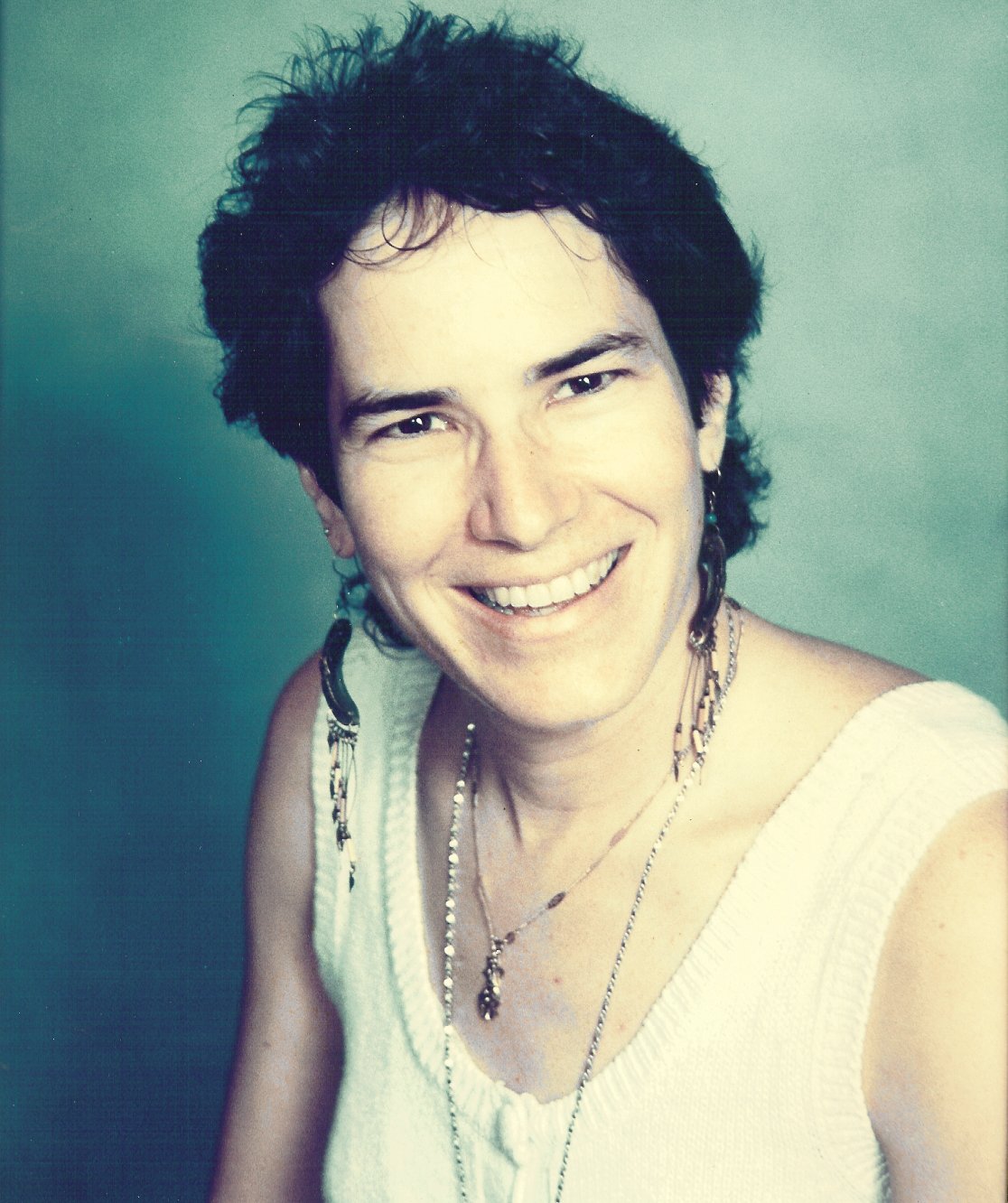
carol p. christ 2002 colorWhat factors are most important in the decisions of spiritual feminists to leave or to stay affiliated with traditional religions? My friend Jewish feminist theologian Judith Plaskow and I discuss these questions in our forthcoming book, Goddess and God in the World. In this excerpt I speak to Judith about our different choices.

For me no longer identifying with Christian tradition had a great deal to do with belief. At some point I came to the conclusion that I did not believe in Christianity’s “core doctrines” of Trinity, incarnation, and salvation through Christ. Yet these doctrines are expressed in the Nicene Creed, which is accepted by all Christians. In an interview at a Christian seminary early on in my career, I was asked to define and defend my Christology or theory of salvation through Jesus Christ. My answer that feminism had put a question mark over all doctrines for me was not considered acceptable.

Judaism, on the other hand, is not a religion that stresses belief. Indeed your husband Robert used to love to shock me and other Christians by saying that for a Jew belief in God was not required as long as he or she followed the law. Understanding this difference between Judaism and Christianity helped me to understand that the question of belief in “core doctrines” simply was not as central for you as a Jewish theologian as it would necessarily be for me as a Christian theologian.

However, my reasons for leaving Christianity did not only have to do with my lack of belief in its core doctrines. For me the issue I call the power of “core symbols” was equally if not more important. Once I began to understand the way in which the “core symbols” of the Bible had influenced people and cultures, “I” simply could not ally “myself” with traditions that continued to promote them in liturgies. Continue reading “Deciding To Leave the Religion of Your Birth–Or Not by Carol P. Christ”

Creiddylad, Welsh Goddess of Flowers and Love by Judith Shaw

judith Shaw photo

May Day/Beltane (Calan Mai to the ancient Celts) is almost here and our hearts turn to thoughts of love, flowers and the bounty of our Mother Earth. Both Beltane and Halloween/Samhain (Calan Gaeaf) were liminal or threshold days, considered to be outside of normal time. These sacred, mystic days were more important than the solstices in the Celtic world view.

Creiddylad painting by Judith Shaw

Creiddylad, Welsh Goddess of Flowers and Love, is celebrated at this time. (Her name is pronounced cree-THIL-ahd)  She is the eternal May Queen, always seeking peace and stability.  She remains eternally constant in the face of all change.  She is the promise of love, golden glowing moon-flowing love, enduring through all hardship and despair.  Creiddylad also shows us the necessity of self-love. Only by truly loving ourselves can we love another.

Creiddylad is mentioned only briefly in The Mabinogion but her symbolism reveals that she is surely an ancient and important Goddess, whose original stories have been lost to the mists of time.

Creiddylad, the daughter of Lludd Silver-hand, was promised in marriage to her heart’s desire, Gwythyr ap Greidawl. But before the marriage could be consummated she was abducted by Gwyn ap Nudd, who possessed many dark aspects akin to the Lord of the Underworld.

Gwythyr gathered together his warriors and set out to rescue his love, Creiddylad, from Gwyn.  A fierce battle ensued, during which Gwyn, who emerged as the victor, committed horrendous acts of brutality and butchery.

Continue reading “Creiddylad, Welsh Goddess of Flowers and Love by Judith Shaw”

Liminal Time and Space by Deanne Quarrie

Deanne Quarrie

The word liminal comes from the Latin word limen, meaning “a threshold.” The word threshold has several definitions.  It can be the sill of a doorway or the entrance of a building.  Ultimately, it means any place of point of entering or beginning. In psychology the term limen means the point at which a stimulus is of sufficient intensity to begin to produce an effect.

Liminal time therefore, is that moment when something changes from one state to another.  Examples would be dawn, the morning sun rising high enough in the sky to bring daylight.  Another is dusk, the evening sun sinking into the horizon bringing nightfall. Continue reading “Liminal Time and Space by Deanne Quarrie”

Birth Announcement: Baby, You Are My Religion by Marie Cartier

I want to proudly (not shamelessly) announce the upcoming birth of my book! Baby, You Are My Religion: Women, Gay Bars and Theology Before Stonewall will be published by Acumen Press, fall 2013 (October). However, it will not have the cover that is on the book as it is advertised now. I had problems with this cover as it depicts gay contemporary women in a country setting, not pre-Stonewall women in an urban setting, or identity. The photo below is the proposed (and accepted) new cover image, designed by my wife Kimberly Esslinger. And while we don’t know if the book cover will look exactly like this, the publishers are excited about this cover choice image.

 I realized as I advocated for another cover—that my book is my baby. As I sought out another image and worked to negotiate and obtain the rights for it, I realized how protective I was of my book/my baby. I am giving birth to the projects I’ve stored inside myself—I, who never gave birth to biological children, give birth now to this book. I want to have this baby and I want to protect it and set it free to do its work in the world; nurture it and cheer it on as it sets forth to do great things; hold it close and watch it fly.
New Proposed Book Cover: Carolyn Weathers in front of the ACME bar, gay bar in San Antonio, Texas, 1961.

I realized as I advocated for another cover that my book is my baby. As I sought out another image and worked to negotiate and obtain the rights for it, I realized how protective I was of my book/my baby. I am giving birth to the projects I’ve stored inside myself—I, who never gave birth to biological children, give birth now to this book. I want to have this baby and I want to protect it and set it free to do its work in the world; nurture it and cheer it on as it sets forth to do great things; hold it close and watch it fly.  Continue reading “Birth Announcement: Baby, You Are My Religion by Marie Cartier”

Why are We Troubled by a Homeless Jesus? by Michele Stopera Freyhauf

Michele Stopera Freyhauf Durham John Carroll Religion TheologyThere are standard depictions of Jesus that show a Caucasian male with blue eyes (some pictures have the occasional brown eyes), shoulder length brown hair, and usually wearing a tunic with sandals. Jesus’ demeanor is usually victorious, prayerful, inviting, and even reflects humility. Our culture creates an unrealistic depiction of Jesus so that in the United States (at least), we see a savior as a white male representative of the power structures that permeate every facet of life.

There are some variations of this image. The most common is this same image with dark skin. A depiction that makes Jesus more tangible to people of color. If we can accept this variation of Jesus, then why would we be upset when images become more culturally tangible, send a message that encapsulates Jesus’ ministry, or make us stop and think – challenging us to take our rose colored glasses off. When an artist creates an image of Jesus that is different than the standard described above, controversy occurs at varying levels. The artwork is removed or de-commissioned, protests occur, and in extreme cases, the artist will even receive death threats. Here is a small sampling of images:

Jesus-in-Jeans-by-Peter-Royle
Jesus in Jeans (Peter Royle) picture courtesy of Wikipedia http://en.wikipedia.org/wiki/File:Jesus-in-Jeans-by-Peter-Royle.

chocolatejesus
Sweet Jesus (Cosimo Cavallar) picture from Cavallaro’s website (http://www.cosimocavallaro.com/html/chocolate_page.html
Edwina Sandys: http://www.naplesnews.com/news/2008/mar/06/my-life-so-far-edwina-sandys-69-artist/
T Edwina Sandys: http://www.naplesnews.com/news/2008/mar/06/my-life-so-far-edwina-sandys-69-artist/
Crucified Woman at Emmanuel College

Continue reading “Why are We Troubled by a Homeless Jesus? by Michele Stopera Freyhauf”

Women as Stairways to Heaven by Jameelah X. Medina

In mainstream Islam, the ways and sayings of Prophet Muhammad are second in importance only to the Qur’an. There are two prophetic sayings pften quoted when speaking about the high status of women in Islam: 1) “Whoever has two daughters and treats them kindly, they will be a protection for him against the Fire;” and “Paradise lies beneath her [the mother’s] feet.”  These sayings influenced a growingly famous Islamic scholar who stated, “When she is a daughter, she opens a door to jannah [paradise/heaven] for her father. When she is a wife, she completes half of the deen [religion/way of life] of her husband. When she is a mother, jannah lies under her feet. If everyone knew the true status of a Muslim woman in Islam, even the men would want to be women.” This quote is being reposted all over social media sites by both Muslim men and women.

On the surface, the quote is lovely. It works to combat the stereotype of the lowly Muslim woman who has no standing in her religious community. It is posted as proof that women have great status in Islam. However, this quote and the prophetic sayings also have a problematic implication. When I read these quotes, I don’t see them talking about the status of Muslim women. The quotes are very specific and apply ONLY to women who are daughters, women who are wives, and women who are mothers. The implication is that, even though Muslim women and men are from a single soul and have the same essence (the Islamic perspective), women still are not sufficient enough for praise, reverence, and respect just by virtue of being women. They must be some man’s daughter, wife, or mother in order to enjoy elevated status. What does this say to women without fathers, women without husbands, and women without children? It tells them that they have not yet arrived; they are goals yet unrealized. Simply put, they are not enough. Continue reading “Women as Stairways to Heaven by Jameelah X. Medina”

The Danger of the Patriarchal Domination Mindset: Can We Do Anything About It? by Thea Iberall

The Danger of the Patriarchal Domination Mindset: Can We Do Anything About It? By Thea Iberall The Swallow and the Nightingale

At the confluence of misogyny, prejudice, homophobia, religious intolerance, environmental destruction, and violence is the patriarchy. We all know this and talk about it here from our own perspectives. I come as a scientist and writer. I have a love of history and science as well as a skill at simplifying complicated things. I abhor what some people are doing to our planet and the arrogance with which they do it. Unfortunately, because we want the stuff they are manufacturing, because there are too many of us, and because we are letting them do it, they do it with our blessings. I want to help change this situation with a novel I’ve been working on for almost 15 years.

In the year 2000, I sat in a dinghy in the caldera of the active underwater volcano at Santorini helping my geologist sister count the bubbles coming from below us. The experiment was part of my father’s research into the origins of life. I had had the seed for a novel thirteen years earlier when I heard Mimi Fariña sing The Swallow Song, talking with her about her deceased husband Richard Fariña and how lost his music has become. I began developing ideas, learning about the nightingale connection and discovering a 12th century Sufi master’s epic allegory about god. Sitting in that dinghy, everything coalesced: the story of how western civilization went off course. My book of contextual poems, The Sanctuary of Artemis, explores the roots of Western patriarchal culture and tells some of it. The novel would have a backdrop of a world collapsing as ornithologist Dr. Deborah Wright is unwittingly guided by the Sufi to figure out why the Capistrano swallows are dying. It would include an underlying history of an egalitarian world lost when this volcano erupted in 1628 BC. Richard Farina’s song would be playing throughout the pages.  Continue reading “The Danger of the Patriarchal Domination Mindset: Can We Do Anything About It? by Thea Iberall”

Whose Children Are Our Children? Whose Children Do We Care About? by Carol P. Christ

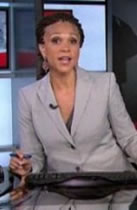
mharrisperrycarol p. christ 2002 colorMelissa Harris-Perry created a media flurry when she stated that if we as a society considered “all children” to be “our children,” we would spend more money on childhood education.  Critics at Fox News and other pundits called Melissa Harris-Perry a communist socialist Marxist, accusing her of wanting the state to take children away from their parents.

Some commentators framed their critique of Harris-Perry using the model of “ownership,” insisting that parents own their children, not the state.  To this charge Harris-Perry responded by quoting Kalil Gibran’s poem which rejects the idea that parents and by extension anyone else can “own” children:

Your children are not your children.
They are the sons and daughters of Life’s longing for itself.
They come through you but not from you,
And though they are with you, yet they belong not to you.

The poem continues:

You may give them your love but not your thoughts.
For they have their own thoughts.

This makes it clear that Gibran is telling parents that children have their own minds and individualities and will make their own choices. Children do not exist to fulfill the needs and wishes of their parents.

While in my opinion Gibran’s statement is true, this is not the main point Harris-Perry was making when she asked us to consider all children as “our children.”  Harris-Perry was asking us whose children we care about.  She was asking us to care for all children–not only the children in our own families and not only the children that look like them.

I saw this as a “teaching moment” in which process philosophy comes to the rescue—providing a way beyond a dead-end in the thinking that shapes US political debates and discussions. Continue reading “Whose Children Are Our Children? Whose Children Do We Care About? by Carol P. Christ”

Coming Out as a Shaman at Your Presbyterian Memorial Service by Elizabeth Cunningham

One morning my husband comes to my office to give me an important phone message. “Jo wants you to come and talk to her about her funeral.”

Johanne RenbeckMy friend Jo, an artist and poet, is dying of an aggressive form of cancer that is infiltrating her brain. At home in hospice care, she has already lost the use of her left side and has been told she may lose her mind and speech soon.  So I go right over to her house where she is enthroned (a tall, regal woman) in her hospital bed in the middle of her living room. All her visitors have the pleasure of being surrounded by her paintings, magical and alive, like all her work from sculpture to book arts (have you ever worn a book? Jo has!) to poetry–some of her most powerful work was composed in the hospital. Continue reading “Coming Out as a Shaman at Your Presbyterian Memorial Service by Elizabeth Cunningham”

Are Buddhist Women Happy? by Oxana Poberejnaia

0The basic question is the same as in a “A Bit of Fry and Laurie” sketch about a sour-faced champion car racer: “Are you happy?” Are we, Buddhist women, happy with Buddhism? Are Buddhist men happy with the position of Buddhist women? Are we happy with the legacy we are leaving for future generations of Buddhist men and women?

This question can be re-phrased as: Are we happy because we should be happy? Because if we are unhappy it is our failure as women? Or as Buddhist practitioners? Are we happy to keep other people happy?

Do these questions sound familiar? – Are these the same questions that women have to deal with anyway, in this patriarchal society we live in? Continue reading “Are Buddhist Women Happy? by Oxana Poberejnaia”