Truth and Consequences–This Feminist’s Perspective? by Marcia Mount Shoop

Marcia headshotIn John’s Gospel, Pilate’s response to Jesus’ self-identification as the one who “came into the world to testify to the truth” is a simple question:  “What is truth?”  His question hangs in the air as he moves from that conversation to the throngs he sought to please.  Pilate took the temperature of that crowd to decide Jesus’ fate even though he, himself, found no reason to charge Jesus with a crime.  Pilate asks the question from a position of power—literally holding life and death in the ambivalence and maybe even in the sincerity of his words.

The “t” word has been center stage in our collective conversation of late with Lance Armstrong’s Oprah-event confession  and the Manti Te‘o girlfriend-dying-of-cancer hoax at Notre Dame .   The Internet is abuzz with reactions to both confessional moments.  Lance Armstrong’s confession apparently didn’t play well with the general public.   And people are weighing in about whether Manti Te‘o could really be so naïve or if he just didn’t know how to tell everyone the truth when the story got out of hand.   Continue reading “Truth and Consequences–This Feminist’s Perspective? by Marcia Mount Shoop”

Miracles Of The Great Mother by Jassy Watson

Jassy under the Holy Myrtle tree Paliani conventjassy Panagia in tree

I was brought up in a household where attitudes to God and church were quite negative. My Nanna, however, was deeply religious, and I can still remember sitting in her dining room as a very young child staring up in awe at a painting of  ‘The Last Supper.’ I was completely mesmerised, there was something haunting about that painting that left a lifelong impression. Art became a passion very early on in life, and whenever I came into contact with images of a religious nature emotions stirred. I was spellbound by divine mystery. The most profound feelings were engendered when I met with images of Mother Mary and the infant Jesus. Continue reading “Miracles Of The Great Mother by Jassy Watson”

What Happens When Women Are Not Ordained? by Meagen Farrell

Meagen Farrell, women's ordinationWhat is a vocation to the Christian clergy? A woman or man feels a calling from God, and that spirit is tested in the community of believers. After discernment through study, prayer, and service that person submits herself for ordination. Simple, right?

Of course, as readers of the F-word blog, you know it is not that simple. Though women’s ordination is a common practice in many Christian denominations, it is far from universal. The issue has caused division within the Anglican Communion and dissension in the Roman Catholic Church. Despite the controversy, the number of women in discernment (contemplating  or preparing for ordination) and the denominations ordaining them continue to grow. Continue reading “What Happens When Women Are Not Ordained? by Meagen Farrell”

Epona, Celtic Horse Goddess by Judith Shaw

judith shaw photoEpona, Celtic Horse Goddess was worshipped by the Gauls (the Celtic French). Her worship spread to Britain and Rome from Western Europe. Hundreds of statues and shrines dating from between the first and third centuries CE have been found in France alone.

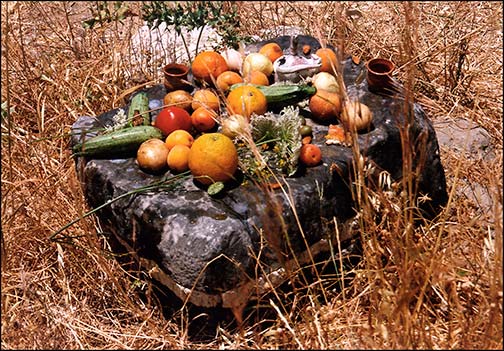
Today we can understand Epona mainly from her images, as few stories of her have survived.  She is often shown either riding a white horse side saddle or standing or sitting between two horses.  Many images show her feeding mares and foals from a cornucopia or a basket of fruit.

Epona, Celtic Horse Goddess Continue reading “Epona, Celtic Horse Goddess by Judith Shaw”

Bringing African American Churches into Reproductive Justice by Mariam Williams

Mariam WilliamsI don’t expect to hear anything in church about the 40th anniversary of Roe v. Wade during the month of January,  the month marking 40 years since the U.S. Supreme Court made the decision to legalize abortion in this country. This is for a number of reasons: 1) it’s January, and at my church the pastor always starts off the year with a series of sermons that illustrate the church’s mission statement, and women’s choice may be off the subject; 2) Martin Luther King Jr. Day is this month, and if a black church is going to honor something or someone besides Jesus in the month of January, it should probably be MLK; and 3) I haven’t heard anything about abortion from the pulpit in a long time.

A local pro-choice movement leader asked me recently about how black churchgoers feel about abortion. I didn’t know what to say. The last time I heard it mentioned was in a Sunday School class in which a woman said that she almost aborted her daughter. It wasn’t a big confessional moment, just part of a longer testimony as to why she was happy her daughter was around, and it wasn’t received with any shock or fanfare. I can remember hearing once from the pulpit of my current church that while abortion might be wrong, the law shouldn’t interfere with what a woman chooses to do with her own body. Many years before that, in the church I grew up in, a preacher said that we would never find a cure for AIDS because the person who would have grown up to discover the cure was aborted. (What made him so sure of that? Who knows.) Continue reading “Bringing African American Churches into Reproductive Justice by Mariam Williams”

The Next Liberal Prophet: What Will She Look Like? By Amy Levin

Amy2

This past Martin Luther King, Jr. day, I was privileged enough to attend the 57th presidential inauguration at the U.S. Capitol.  Spirits were high and it seemed as if we were breathing recycled air infused with the hope of four years past.  As the President approached the stage, he appeared with the confidence of a second term sage, and yet there was a newer, fresher quality about him – purified and politically born-again. As he began to speak, the religious undertones leaped out into the pews.  Beautifully crafted in diction, rhetoric, and reference, Obama pleased and inspired his dedicated supporters. Guiding us historically through Seneca, Selma, and Stonewall, we understood the meaningful tributes toward women, African Americans, and the LGBT communities. But there was an excess – another constituent represented – God had entered the stage.

Continue reading “The Next Liberal Prophet: What Will She Look Like? By Amy Levin”

From Bihar, India—The Thirteenth Sakyadhita Conference by Rita M. Gross

Rita GrossAbove and all around us is a blue and white stripped fabric tent, as, about 250 strong, we participants in Sakyadhita’s Thirteenth Conference on Buddhist Women, shiver in the cold, listening to a wide variety of papers about women and Buddhism.  We are meeting in Vaishali, in Bihar, India, at a Vietnamese nunnery that was recently founded at the place where Mahaprajapati, the first Buddhist nun, was ordained.   She is a great hero to many Buddhist women for her persistence about receiving formal ordination as a nun, thus founding an institution that has endured for some 2,500 years in various parts of Asia, and now in the West as well, so it is fitting that we should meet here.  The nunnery complex is still incomplete and under construction, which is one reason why we are meeting, essentially, in the outdoors.  The thin fabric walls over little protection from the coldest winter in north India in forty years.  That was not part of the planning for this event! So everyone, speakers and participants alike, wear all the layers of clothing we have, and cheerfully practice patience.  It is quite a sight! Continue reading “From Bihar, India—The Thirteenth Sakyadhita Conference by Rita M. Gross”

Rebekah of the Hebrew Bible: A Mormon Feminist Model by Caroline Kline

Kline, CarolineThis semester I took a class on women in the book of Genesis. I was particularly interested in learning more about the language used to describe Eve, since she is such an important model of inspired action and proactivity for Mormon women. However, I also discovered another woman in the book of Genesis whom I saw as a potentially powerful model for Mormon feminists, a woman caught in a patriarchal context, but one who decisively and creatively figures out how to insert herself, her ideas, her inspiration into the events at hand: Rebekah.

Let me recap the most crucial incident: When Isaac is old, blind, and believes he is approaching death, he determines to give a special blessing to his firstborn son Esau. When Rebekah hears of his plans, she springs into action, ordering her younger son Jacob to impersonate Esau in order to obtain this blessing. Rebekah feels so strongly that Jacob should get this blessing – and no wonder, given her revelation from God forty years before that Jacob should inherit the promise – that when he objects, fearing a curse from his father if he is found out, she says to him, “Let your curse be on me, my son. Only obey my word, and go…..” (Genesis 27:13). Continue reading “Rebekah of the Hebrew Bible: A Mormon Feminist Model by Caroline Kline”

How To Find Those Lost Ancestors by Carol P. Christ

 carol p. christ 2002 color

Over the past year I have written several blogs on ancestor connection.  In this blog I will share what I have learned about how to find ancestors.

I recommend the popular television series Who Do You Think You Are? which has US, UK, and Australian, and other versions, and the PBS series hosted by Henry Louis Gates, African American Lives and Finding Your RootsWhile you might think, as I did, that genealogical research is about finding the names and birthplaces of ancestors, these programs set the genealogical quest in the great flow of history.

Records show that I have ancestors who immigrated to the United States from Ireland, Scotland, Prussia, and Germany in the early 1850s.  Historical research tells me that more than a million people left Ireland and Scotland in the 1850s due to the “potato famine,”* which affected the rest of Europe as well.  History explains why ancestors emigrated.

Begin your search by asking parents, grandparents, aunts, and uncles, for names, dates, places of residence, stories, and other information they remember.  Continue reading “How To Find Those Lost Ancestors by Carol P. Christ”

Brigit and Patricia: Comrade-Women by Elizabeth Cunningham

Brigit is my comrade-woman
Brigit is my maker of song
Brigit is my helping-woman
My choicest of women, my guide

Brigit, celebrated by pagans and Christians alike on February 1, is a goddess who knows how to incarnate. When Christianity came to Ireland, she became a saint without missing a beat and without giving up any of her reputation for healing, poetry, or smith crafting, for being the keeper of the sacred flames and wells. The verse above is one of my favorites from “The Blessing of Brigit,” several versions of which are recorded in Alexander Carmichael’s Carmina Gadelica, Hymns and Incantations Collected in the Highlands and Islands of Scotland in the Last Century (which is to say the nineteenth!)

I adapted the verse and sang it in memory of author, educator, priestess, and visionary activist Patricia Monaghan who died November 11, 2012. Dawn Work-Makinne offered a beautiful tribute to Patricia’s life and work. Today I want to reflect on Patricia in relation to Brigit, a goddess Patricia researched and celebrated (look for the forthcoming anthology she edited with her husband, Michael McDermott  Brigit: Sun of Womanhood)—and whose spirit she embodied as vigorously as the legendary Saint Brigit of Kildare. Continue reading “Brigit and Patricia: Comrade-Women by Elizabeth Cunningham”