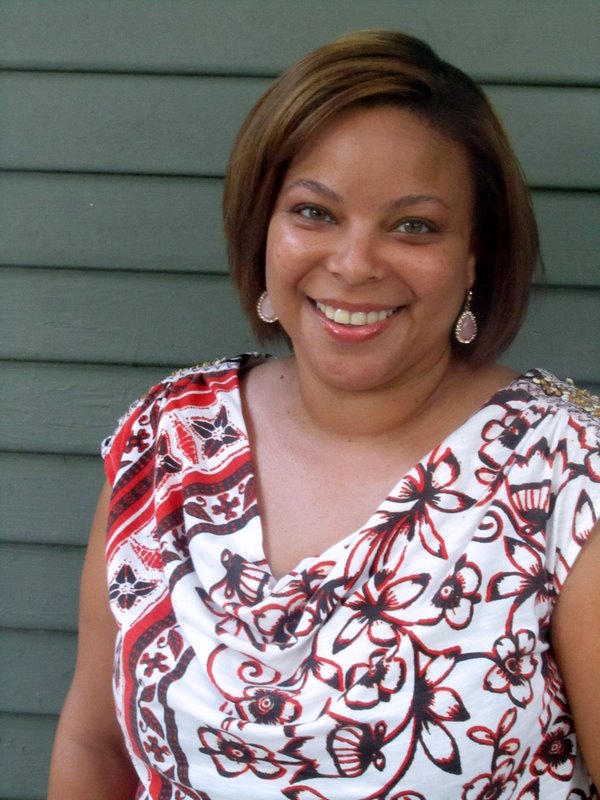
Mormonism’s Heavenly Mother: Why I Stand By Her by Caroline Kline

Unlike the amorphous God of other Judeo-Christian faith traditions, Mormonism’s Heavenly Father is literally, anatomically male. He is the god Mormons pray to, worship, and reference. However, within the Mormon tradition are teachings about Heavenly Mother, an embodied, perfect goddess, the wife of Heavenly Father and mother to all the spirits who are eventually born into bodies here on earth.

Mormon feminists such as myself embrace the existence of Heavenly Mother. We do our best to keep her alive and present in Mormon discourse and memory, despite the fact that our Church leaders and fellow members rarely mention her and despite the fact that some Mormon feminists in the 1990’s and 2000’s were excommunicated at least in part because of their refusal to stop writing and talking about Heavenly Mother. Mormon feminists like me recognize that equality for women within the Mormon tradition can never be achieved until our Mother receives recognition on par with the Father.  Mary Daly once famously said, “If God is male, then male is God.” Amen to that. Raising up Heavenly Mother in the consciousness of Mormons is a significant way to dismantle that association between maleness and godhood. Continue reading “Mormonism’s Heavenly Mother: Why I Stand By Her by Caroline Kline”

A Daughter of the American Revolution and a Daughter of Quaker Slave Owners in Long Island, New York by Carol P. Christ

I did not ever think that genealogical research would reveal that I am descended from slave owners.

My family’s early American roots are in New York and the upper Midwest—not in the American South. While watching genealogy programs that reveal slave-holding ancestors in the lines of white and black Americans with roots in the South, I have breathed a sigh of relief accompanied by the thought–not me!

I have not expended a great deal of energy researching Searing ancestors who settled in Hempstead, Long Island in the 1640s, because my Uncle Emery had already traced the family line. Bored one afternoon and wondering if my ancestor Samuel Searing had left the Hempstead Quaker community because he fought in the Revolutionary War, I entered the Searing family surname into a general internet search.

I found that my 4x great-grandfather Nathaniel Pearsall–whose daughter Sarah and her husband Samuel Searing are my 3x great-grandparents–is indeed listed for “patriotic service” in the Daughters of the American Revolution database.  As an anti-war activist, I wish there had never been a revolutionary war–we could all have been Canadians!  I would have been pleased to learn that my ancestors were all Quaker pacifists. Still, I must admit that I felt a twinge of pride to be able to trace my ancestry back to our country’s beginnings.

Continuing to follow up links to Searing ancestors, I stumbled upon the wills John and Elizabeth Searing. John was a brother of my 5x great-grandfather, Jonathan Searing.

In the name of God, Amen, April 22, 1746. I, John Searing, of Hempstead, in Queens County, being very sick. My executors are to pay all my debts. I order all my negroes to be sold, except the oldest negro boy; Also my wheat, except enough for family use. I leave to my wife Elizabeth, one bed and furniture and a side saddle, and the use of 1/2 my farm, until my children are brought up…

In the name of God, Amen, November 27, 1760. I,Elizabeth Searing, of Hempstead, of Queens County, being sick. I leave to my son, John Searing, my negro man and a bed and three blankets, etc. To my daughter, Mary Searing, a negro girl, and she is to have clothing and linen of mine so much as my other two daughters have had. …  I leave my granddaughter, Mary Searing, daughter of my son Jacob, a negro girl, and to my daughter Anne long cloak, and the rest of my apparell to my daughters.

If I am a daughter of the American revolution, I am also a daughter of Quaker slave-holders. It is well-known that the Quakers were among the most vociferous abolitionist voices in America.  Who would have thought that Quakers had also owned “negroes.” How did this come about? Continue reading “A Daughter of the American Revolution and a Daughter of Quaker Slave Owners in Long Island, New York by Carol P. Christ”

The Crying of an Ant: Finding a Theory of Change by Najeeba Syeed Miller

Qur’an 27:18: Till, when they came upon a valley [full] of ants, an ant exclaimed: “O you ants! Get into your dwellings, lest Solomon and his hosts crush you without [even] being aware [of you]!” – 27:19: Thereupon [Solomon] smiled joyously at her words, and said: “O my Sustainer! Inspire me so that I may forever be grateful for those blessings of Thine with which Thou hast graced me and my parents, and that I may do what is right [in a manner] that will please Thee; and include me, by Thy grace, among Thy righteous servants!” –

This story of the ants and Prophet Sulaiman (Solomon) is often taught to young Muslim children. The story goes on with Prophet Sulaiman hearing the cries of the chief of ants and stopping his army so that the ants may peacefully go along on with their work. Some commentaries include a further conversation between the chief of ants and the Prophet Sulaiman. I am studying this story with my five year old son and as we delved into it and the lessons one might learn as a child, I thought too about the morals I might derive from the story as an adult. Continue reading “The Crying of an Ant: Finding a Theory of Change by Najeeba Syeed Miller”

How a Woman Became a Goddess: Athena by Laura Loomis

A large part of my fascination with Goddesses has to do with images of female power in cultures that were (and are) overtly patriarchal.  Power has a tricky balance:  when it’s being abused, the struggle is to find a way to overcome the oppressor without becoming one yourself.  But to paraphrase Erica Jong, the best oppressors don’t beat you – they get you to beat yourself.  I have been thinking about this as I watch Democrats hand power over to Republicans ever since coming back into control of the government.

Which brings me to Athena.

Athena may have had her origins as a Cretan or North African mother Goddess.  But by classical times in Greece, she was firmly established as the virgin Goddess of wisdom, household crafts, and war and peace.  It’s said that Zeus, like his father and grandfather before him, feared that his child would be more powerful than himself.  So when Metis was pregnant with Athena, he challenged her to a shape-shifting contest.  She took the form of a fly, and Zeus swallowed her.  (I don’t know why he swallowed that fly…)   Continue reading “How a Woman Became a Goddess: Athena by Laura Loomis”

Narrative Textiles and Women’s Stories by Mary E. Hunt

Art, like religion, is a window into cultures. Women’s stories often find expression in narrative textiles, a medium I have long admired but never quite understood. I encountered the fabric art of Esther Nisenthal Krinitz recently. She was a Holocaust survivor who created stunning needlepoint pictures of her and her sister’s escape from Nazis in 1942. They left their Jewish parents behind and pretended to be Catholic girls from the country in order to survive. In 1977, she began to create 36 works of needlepoint in which she stitched the heart-wrenching episode with power and beauty, color and force, the memory of a child now seared in the heart of a woman.

Her daughters, Bernice Steinhardt and Helene McQuade, set up a foundation, Art and Remembrance, to show the “power of personal narrative in various forms of art to illuminate the effects of war, intolerance, and other forms of social injustice on its victims.” Their mother’s story is now available both in a book and a riveting film as well as in the art itself. These are narrative textiles of the most precious sort. Continue reading “Narrative Textiles and Women’s Stories by Mary E. Hunt”

The Crime of Being a Girl Scout: The Sin of Raising Strong Female Leaders by Michele Stopera Freyhauf

Cradle Catholic and Woman

Educated by the U. S. Vowed Religious

Support the U. S. Catholic Sisters

Support, Minister, and Live the Social Gospel

Theologian, Feminist, and Critical Thinker

Former Girl Scout Leader of Three Troops

Former Girl Scout

I am all of these things and more.  By the recent attacks by the hierarchy of the Catholic Church, I am beginning to think I am the problem.  I seem to stand for everything the Vatican and USCCB seek to silence.  Is it because of my organizational ties with the U. S. Vowed Religious and Girl Scouts, or my writings as a Feminist and Theologian?  Maybe the answer is simply – because I am a woman.

According to the criticisms launched by the USCCB and the Vatican, I seem to be part of the problem rather than the solution.  Why is this so?  It was not until I started my journey in ministry that my idealistic “Catholic” bubble popped – not so much by me, but by those in ministry and leadership, by those that did not like laity to pose questions and think critically about their faith beliefs, and by  those that do not like people who do not fit within the preconceived mold of what a “good Catholic” should be.  This ideological construct is difficult enough when you are part of a Church community, but when you begin to embrace leadership as a woman, question teachings, exercise your canonical rights, your peers and even people you thought were your friends, no longer talk or associate with you. The betrayal is vicious and runs deep – it is behavior not becoming of a minister or one who professes the Catholic faith.

If the attack on you is not enough, these same people victimize your children through their words and behavior.  It is a difficult position for anyone to survive spiritually.  For children of the Church who bear witness to this hypocritical behavior, a journey begins – they search for meaning within the spiritual realm and become disgruntled with anything that resembles organized religion.  A place where one seeks community and spiritual nourishment becomes a place of oppression and starvation.  If attacking family is not enough, let’s start attacking groups that promote community – groups like the Girl Scouts of America.

So, what is the USCCB’s problem with the Girl Scouts of America?  Basically, this organization is under fire for suspected deviant thinking and positions that stand opposed to Church teaching. Continue reading “The Crime of Being a Girl Scout: The Sin of Raising Strong Female Leaders by Michele Stopera Freyhauf”

Feminist Family Values by Gina Messina-Dysert

As a new mother, something that is constantly on my mind is how to teach my daughter morals and values.  She just turned three and has a strong awareness of what is going on around her.  Her vocabulary is vast and continues to grow daily.  I know that if I don’t start teaching her values now, I am missing out on an important opportunity.

Although I was raised Catholic and consider myself a “cultural Catholic,” I am uncomfortable with Catholic traditional prayers because of their lack of gender inclusiveness, among other things.  We don’t attend church as we have not yet found a community that we feel is a good fit for our family.

Thus, I have found myself creating new prayers to recite at dinner and bed time; prayers that encompass our family values, are feminist in nature, and are simple enough that our daughter can remember and recite them on her own.   Continue reading “Feminist Family Values by Gina Messina-Dysert”

The Way We Are Created: Eco-feminist Explorations of Bodily Hair by Tallessyn Grenfell-Lee

In the last few years, I’ve been thinking a lot about hair. It’s hard to avoid thinking about it when you are the greyest, hairiest woman in your suburban, north shore town.  Myself and the other two ‘all natural’ women in town stand out like beacons among a sea of smooth, streaked, glossy manes of gorgeously cut and styled hair. And each spring, I stare at my shorts and tank top a little longer before wearing them around town. I’ll be perfectly honest – I don’t blame those slaves to fashion one bit. Although I try to avoid what I call the ‘crazy witch woman’ look, there’s no getting around it – smooth legs look slick, and dye smooths out those grey frizzies and takes a good ten years off your age!

So, it got me wondering – what does hair have to teach us as women of faith? Is there something unique about hair that causes us to fixate on it so much? And it occurred to me that hair actually symbolizes so much about our relationship with the Creation. We exist in an interconnected matrix of the living and non-living – as a matter of fact, we rely completely on the abiotic sphere, for life and as the matrix within which relationships occur.  Our bodies exemplify that relational paradigm; our living cells are inseparable from the non-living matrices of our skin, teeth, and hair.  From our living bodies emerges a non-living, interconnected medium, symbolic of the whole ecosphere.

Continue reading “The Way We Are Created: Eco-feminist Explorations of Bodily Hair by Tallessyn Grenfell-Lee”

GREEN SOLUTIONS TO THE GREEK ECONOMIC CRISIS: WE ARE THE 99%! by Carol P. Christ

A green solution to the economic crisis insists that people and the environment can be saved together. We must dare to envision prosperity in conjunction with sustainability, social justice, nonviolence, and participatory democracy.

A rational analysis would make it clear that the Greek people did not “create” the economic crisis. Yet the poor and middle classes are being asked to “pay” for it. There is massive corruption in the public sector in Greece. But this should not blind us to the fact that the Greek people do not bear the major responsibility for creating the crisis. Those responsible include:

Still Practicing Her Presence By Barbara Ardinger

In my blog of May 11 about practicing the presence of the Goddess, I explained how Brother Lawrence of the Resurrection inspired me. Many thanks to everyone who read that blog and commented on it. One comment came via email from a friend, who said, “I kept thinking as I read about that expression ‘walking one’s talk.’” But of course. It would be lovely if anyone outside a nunnery or monastery could be as filled with their god or goddess as Brother Lawrence was. Though we try to be as mindful as we can, we obviously don’t always succeed as well as we’d like. But surely it’s better to have a positive intention than a negative one.

So let’s get practical. Instead of filling our heads with what’s been called monkey-chatter, let’s fill ourselves with the Goddess so that our thoughts of Her can go on autopilot. Instead of obsessing over, say, if the Lakers, Packers, or Cardinals are going to win their next whatever-they-play or who’s gonna win this week on Dancing With the Stars, let’s set our minds on the Goddess so our thoughts go to Her when we don’t have to concentrate on some specific, important task at hand.

Stop reading now. Listen to the Goddess Chant. Turn on your sound and click here:

  Continue reading “Still Practicing Her Presence By Barbara Ardinger”