Pride Season 2023 by Marie Cartier

Here you come again

            Twenty-three states banning drag, 100 bills being considered

Just when I’m about to make it work without you

F*** you GOP

You look into my eyes and lie those pretty lies

Abortion is settled law

Gay marriage is settled law

Continue reading “Pride Season 2023 by Marie Cartier”

Blue Ghosts: Are you Closing Your Eyes to the Mysteries of Life? by Caryn MacGrandle

I grew up north of Dallas Texas in a suburbia hell called Plano: a concrete, strip mall jungle devoid of nature and trees beyond the contrived and manicured ones.  When I married an Airforce pilot and escaped to Minnesota, Mississippi, Colorado, California and then Illinois, I learned how much I needed nature. 

Fast forward twenty years and on my second marriage, we moved just south of Huntsville, Alabama to a small valley community where the foothills surrounding it signal the beginning of the Appalachian mountain range.

Home.  My cells sighed in relief.

Soon after moving to Alabama, my troubled second marriage ended.  And I found myself, like so many other Americans, uninsured.  I was able to get my blood pressure medicine online but not the Clonazepam prescription that I have always used for my anxiety.  When my dad died suddenly in the 90’s, my panic attacks began, and since then my anxiety had been an always present force in my life. 

Continue reading “Blue Ghosts: Are you Closing Your Eyes to the Mysteries of Life? by Caryn MacGrandle”

Is A Balanced World Possible? by Judith Shaw

Are cruelty, violence and greed written into the human DNA?  Are we destined as a species to continually and for eternity create our world in a hierarchical manner where the privileged few receive almost all of the goods and services while the masses live in slavery of one form or another? 

Continue reading “Is A Balanced World Possible? by Judith Shaw”

Earth Day Remembrance by Sara Wright

“It is the Whole Earth You Are”

I was on my knees awash in the kind of grief that only people who have been torn from the same skin can begin to comprehend.

I sprinkled most of the ashes lovingly in the shallow depression that I dug into half frozen ground. I had never felt so alone. Unknown to me, once a beloved companion, my little brother’s ashes had spent 32 years stuffed into a cardboard box in my parents’ attic. Every year since his death my nightmares intensified… he was left wandering in the dark with no place to rest.

Continue reading “Earth Day Remembrance by Sara Wright”

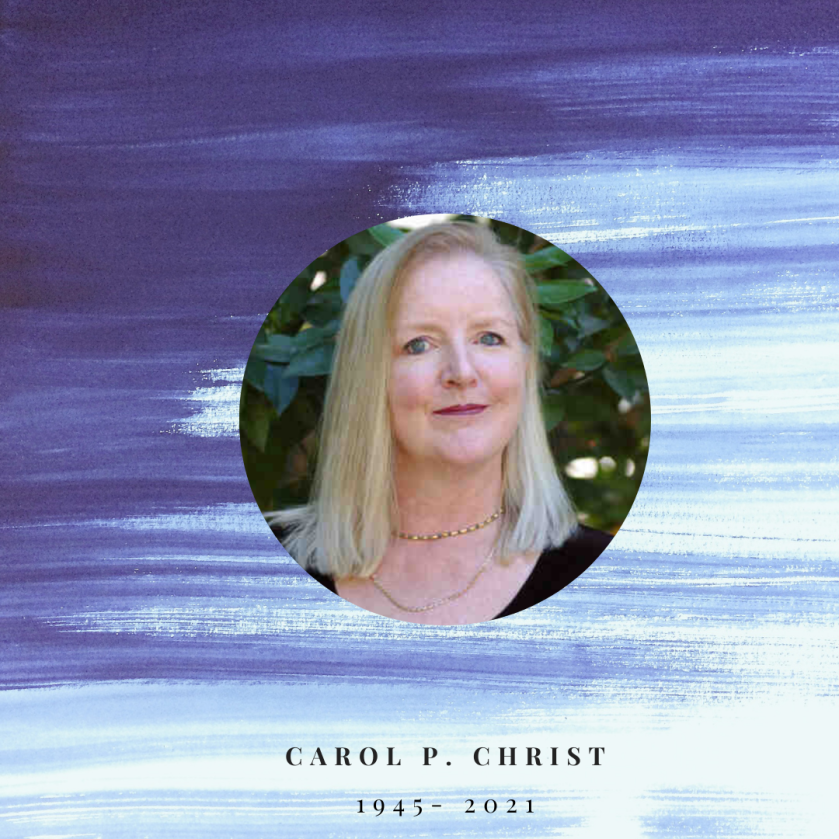
Legacy of Carol P. Christ: When Violence is Normal and Normalized

This was originally posted on January 14, 2019

Warning: this blog discusses spanking and bodily violence

“No Whips, No Punishments, No Threats: Women’s Control of Social Life” is the title of one of the chapters in Iroquoian Women, Barbara Alice Mann’s stunning reconstruction of female power in a matrilineal society. According to Mann, the European settlers were “unsettled” by the lack of strict punishment systems for children in Indian societies. “Spare the rod and spoil the child” was the backbone of European child-rearing practices. The settlers viewed Indian children as naughty, disobedient, disrespectful, and horror of horrors: self-possessed.

It is perhaps no coincidence that after reading this chapter, bodily memories of violence inflicted on me as a child began to resurface. My strongest bodily memory is of being hit repeatedly on my left upper arm by my younger brother’s fist. It is as if my arm is still stinging in that particular place. My mother wanted us to play together, but when we did, we usually ended up fighting. My brother, who was two and a half years younger, was later diagnosed with dyslexia and given “little red pills” to help him control his temper. I was a quiet child (there must have been reasons for that too), and though I soon realized that if I hit back I would only be hurt more, I learned to use my tongue against my brother. This too was a form of violence and my brother remembers my cruelty to this day. Once when I asked my mother what she wanted for her birthday, she responded, “Two children who do not fight.” I didn’t even try to give her that because I didn’t know another way.

Continue reading “Legacy of Carol P. Christ: When Violence is Normal and Normalized”

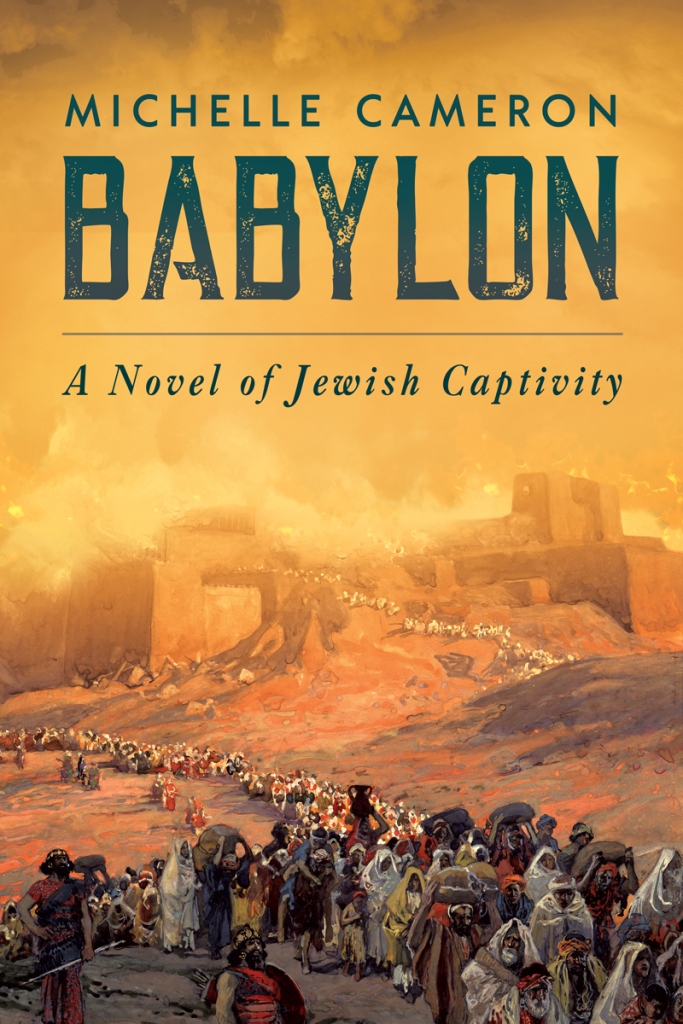
The Daughter, the Alliance-Maker (Women in the Book of Daniel, part 2) by Liz Cooledge Jenkins

Note: This is the second in a two-part series reflecting on women in the biblical book of Daniel. For part 1, see here.

The second female character I noticed while taking a deep dive into the book of Daniel appears even more briefly. Daniel 11:6-7 includes her story: “The daughter of the king of the South will go to the king of the North to make an alliance, but she will not retain her power, and he and his power will not last. In those days she will be betrayed, together with her royal escort and her father and the one who supported her. One from her family line will arise to take her place” (NIV). It is a brief story—and not a happy one, in the end. But I think it’s worth reflecting on.

In this chapter of Daniel, an unnamed supernatural messenger gives Daniel a detailed account of a long series of violent power struggles between various kings. Empires accumulate and then are broken up (vv. 3-4). One king is strong, but his commander proves stronger and overtakes him (v. 5). Attacks are victorious, and valuables are seized and carried off (vv. 7-8). Retreats are made (v. 9). Great armies are assembled (v. 10). Kings “march out in a rage” toward battle (v. 11). Armies are carried off, and thousands are slaughtered (v. 12). You get the idea. Everything is violent. Everything is bloody. Everything is one brutal war after another, one brutal kingdom after another, one brutal ruler after another. It all starts to blur together.

Continue reading “The Daughter, the Alliance-Maker (Women in the Book of Daniel, part 2) by Liz Cooledge Jenkins”

The Queen, the Memory-Keeper (Women in the Book of Daniel, part 1) by Liz Cooledge Jenkins

Note: This is the first in a two-part series reflecting on women in the biblical book of Daniel.

I recently had the chance to take a deep dive into the biblical book of Daniel. I think it’s the first time I’ve read the whole book of Daniel since I’ve started intentionally attending to the questions of feminist biblical interpretation: Where are women present? Where are women absent? What are they doing or not doing—perhaps prohibited from doing? How does this passage move its readers toward—or away from—gender equity and women’s empowerment? How does it speak to—or deny—women’s full humanity?

            The absence of women in most of the book of Daniel feels glaringly obvious to me.[1] The main characters include the Hebrew exile Daniel, Daniel’s three (male) friends, King Nebuchadnezzar, King Belshazzar, and King Darius. The angels look like men. The divinely appointed eschatological authority figure is described as being like a “son of man.” The particularly oppressive king who desecrates the temple, abolishes the ritual sacrifices, and sets up an “abomination that causes desolation”[2] is definitely male.

Where are the women?

Continue reading “The Queen, the Memory-Keeper (Women in the Book of Daniel, part 1) by Liz Cooledge Jenkins”

Channeling the Divine: A Creative Process by Brenda Edgar

Last year, I completed a life-changing yoga teacher training and spiritual development program at Supreme Peace Yoga and Wellness in Louisville, KY.  One of its components was the creation of Soul Collage cards which were prompted by facilitator Jodie Tingle-Willis’s guided meditations.

The Soul Collage process is not only a profound way of connecting to the divine within and around us; for me, it is also a powerful vehicle for channeling poetry from this same source.  My results from this multi-step creative process have led me to explore some pleasantly surprising spiritual terrain.

As an example, the card above was created after a visualization exercise around the idea of community—specifically, the small cohort of women in our training program, and the influence they had on me as we worked and learned together:

After some time had passed, I revisited the card and asked it once again to inspire me creatively.  The result was this poem, which evokes an indigenous vision quest—an experience I have not had outside of this creative journey.

Continue reading “Channeling the Divine: A Creative Process by Brenda Edgar”

In Memoriam, Rachel Pollack  JIA (8/17/45 – 4/7/23) by Janet Maika’i Rudolph

How do you speak about someone who not only rocked your own world, but those of countless others? Whose fertile imagination and generous nature inspired and transformed so many lives? My friend, teacher, and mentor Rachel Pollack died in April. It’s hard to wrap my head around what a huge loss this is, not only for me, but for the world. She had an encyclopedic knowledge at her fingertips of mythology, tarot, historical trends, cultural trends, ancient civilizations. She was a storyteller at heart, using personal stories, universal stories to teach. She encouraged and guided each of us to discover and tell our own stories. Her stories won both the Arthur C. Clarke and the World Fantasy Awards. I call her the Grandmother of the Tarot because her work in that area has been so ground-breaking, far-reaching and depthful.

I write JIA, instead of RIP, special for Rachel. JIA means Journey In Adventure.  Rachel was adventurous to her core.  Rather than resting in peace I see her continuing her immensely adventurous journey just now on the other side of the veil. I see it as a continuing wondrous, magical ride that she has earned.

Continue reading “In Memoriam, Rachel Pollack  JIA (8/17/45 – 4/7/23) by Janet Maika’i Rudolph”

Remember! by Mary Gelfand

“There was a time when you were not a slave, remember that.
You walked alone, full of laughter, you bathed bare-bellied.
You say you have lost all recollection of it, remember! ….
You say there are no words to describe it;
You say it does not exist.
But remember.  Make an effort to remember.
Or, failing that, invent.”

From Les Guerilleres, by Monique Wittig, mid-20th Century French feminist writer

The first time I heard this quote from Wittig was in the mid-1990s when I took ‘Cakes for the Queen of Heaven,’ an introduction to feminist thealogy and the Great Goddess, created by the Women & Religion committee of the Unitarian Universalist Association.  Cakes was my introduction to Carol Christ, feminist thealogy, and the Goddess.  It changed my life forever.  I’ve been teaching this program for close to twenty years now and as my understanding of women’s history and the role of patriarchy in our suppression has deepened, I continue to find new resonances with Wittig’s words.

“There was a time when you were not a slave, remember that.”  This statement is relevant to all oppressed peoples and especially to women.  History tells us that enslavement was a part of European culture long before Africans were kidnapped into slavery on this continent.  Enslavement of the defeated was a common aspect of war, dating back to Biblical times.  Many aspects of the feudal system dominant in western Europe for centuries were little better than slavery. 

Continue reading “Remember! by Mary Gelfand”