Archives from the FAR founders: Rereading Adrienne Rich’s “Compulsory Heterosexuality and Lesbian Existence” by Xochitl Alvizo 

This was originally posted on Feb 10, 2024

I recently reread the essay titled “Compulsory Heterosexuality and Lesbian Existence,” by late poet and essayist Adrienne Rich, with my students this semester. Published in the summer of 1980, on the heels of the Women’s Liberation Movement, I found that the essay still maintains its relevance and challenges us to remember that feminism is a political movement that itself must be continually interrogated.  

The essay (which you can read here, with a foreword from Rich published 23 years after the original) has four sections which are titled only with the roman numbers I-IV. I labeled these sections for my students to try and capture the focus of each: I. Compulsory Heterosexuality – The Groundwork; II. Male Power and the Inequality of the Sexes; III. Lesbian Existence as Political Identity; and IV. Woman-Identification as Source of Power and Energy.  

Continue reading “Archives from the FAR founders: Rereading Adrienne Rich’s “Compulsory Heterosexuality and Lesbian Existence” by Xochitl Alvizo “
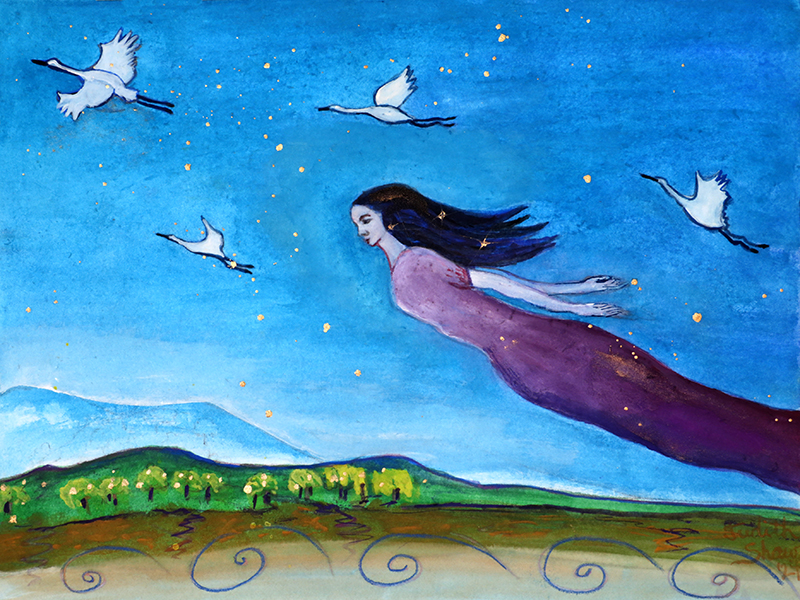
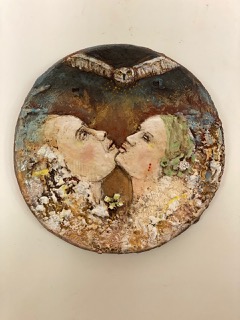
Women Fly Free by Judith Shaw

Artists tend to develop their own visual language over the course of a career, returning again and again to certain motifs. That’s certainly the case for me with trees, women and goddesses, doorways and passages, ancient symbols, flowers, and animals — in particular birds — emerging again and again.

Flying Free by Judith Shaw
Continue reading “Women Fly Free by Judith Shaw”

From the Archives: Archy and Mehitabel by Barbara Ardinger

This was originally posted on December 1, 2019

Archy the Cockroach and Mehitabel the Cat were introduced to the world in 1916 by Don Marquis, a columnist for the New York Evening Sun. Marquis was more than a mere columnist; he was a social commentator and satirist admired by nearly every famous writer of the first quarter of the 20th century. Franklin P. Adams, for example, said Marquis was “far closer to Mark Twain than anybody I know” (see note).

Continue reading “From the Archives: Archy and Mehitabel by Barbara Ardinger”

Prehistoric Feminine Icons

In this blog post I’d like to take you with me on a recent visit to the special exhibition “Arts and Prehistory”* in the Museum of Mankind (Musée de l’Homme) in Paris.**

Like the Feminine Power in London exhibition I wrote about last year, this is another ode to human imagination and creativity in connection to the mystery of life.

The exhibition features women figurines and cave paintings from dating between 26.000-34.000 years old, and I wonder how these prehistoric icons can inspire us to look at female bodies today…

Continue reading “Prehistoric Feminine Icons”

Turning Five by Sarah Frykenberg

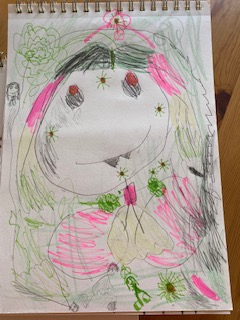
My daughter turned five years old this week. I am now a five-year-old-mother of one. Big Five <3. I’ve been thinking a lot about the fact that this is the age when children’s brains are developed enough to start creating more permanent memories of their childhood. What will my daughter’s earliest memories be when she is grown?

Four was a pretty chock-full year.

Fires—though those may seem like just another California season to her by now. Pandemic; staying home with Mommy, Daddy, and our new roommates, Auntie and Uncle for weeks on end.

Learning to ride a bike.

Pages upon pages of art, including a whole notebook almost exclusively dedicated to her “study” of “Hazel Vampire” (I blame Uncle and Auntie for this one).


Pandemic. More pandemic.

Continue reading “Turning Five by Sarah Frykenberg”

The Mask and the Mirror – Part 3 By Sara Wright

Artist Debra Fritts

One concrete way of accomplishing this change is to submerge ourselves in the rest of Nature and stay open to the appearance of animals, birds, plants, etc., and by paying close attention to images and words, nudges, synchronicities, dreams, and fantasies. Especially while caregiving, perhaps the most exhausting job of all. S/he provides us with a means to deal with the crisis of Covid 19 by staying in the present moment as much as we possibly can. Debra’s flowers/ four-leaf clovers, owls, stars, all speak to the importance of the presence of nature in different ways.

It is hard to miss the change of expression on Everywoman’s face. Held by the bear, her eyes are focused and there is a sense of peace that permeates the woman’s countenance. Clearly, Everywoman is able to be present to what is. This woman has once again found home.

To the right and below the moon there is a small leaf-like image that seems to be drifting. When I asked Debra what the image was she responded that the leaf was a simplified four-leaf clover. It symbolized the role that luck plays in the spread of an impersonal virus, but memories of being with her grandfather on Sunday afternoons searching for four-leaf clovers, and the way the two were connected with nature were also part of the reason she included this image. Once again we see the archetypal and the personal intersecting in Debra’s work. On an archetypal level, the impersonal presence of luck/trickster/fool determines viral outcomes, on a personal level this symbol attaches Debra to nature and her love for family.

Continue reading “The Mask and the Mirror – Part 3 By Sara Wright”

Moments of Beauty by Sara Frykenberg

Last week a friend of mine started a post asking people to share something that they’ve enjoyed or appreciated since shelter-at-home orders began across the country and globe. This friend was in no way trying to minimize the very difficult situations that so many of us find ourselves facing during this pandemic. Rather, the list she elicited and generated helped to create, at least for me, a moment of hope or peace—a moment that I suspect many of us need right now.

Inspired by my friend (who has quite a talent for pointing out the potential for joy or happiness), I would like to add to her list here by sharing a couple of my “moments of beauty” in the hopes I can share this hope or peace. Continue reading “Moments of Beauty by Sara Frykenberg”

The Cuisine Cards by Laurie Goodhart

Suit of Tomatoes

With every wonderful, heart-wrenching, deeply researched, and inspiring  post I read on F.A.R., I feel less inclined to share my own somewhat out-of-step contributions to this world. Nevertheless, I keep reminding myself that they are the things that I do, and I do them because I feel compelled, and have consistently been compelled in those two specific directions — art and agriculture/wildcrafting — since childhood. Also, the paintings and prints are a product of my always thinking about and feeling into both feminism and spirituality, and the fruits of the intersection of the two. So here is another offering.

I’ve always had a fondness for the visual aspect of playing cards, and collect books on them. One image of an uncut sheet of cards printed in 1585 in Frankfurt, where the black and white cards were jammed in every which way on large sheets of paper, inspired the look of these four prints, The Cuisine Cards.

They are conceived as celebrating food and cultures from various parts of the world. The face cards are non-hierarchical in terms of rank and gender. The 10 is a Table of the suit’s food, then there are the Shaper, Mover, and Taster, who, although usually carrying on in a certain sequential order, each contribute equal value to the whole experience of eating food. Two suits have all female face cards and two all male.

Continue reading “The Cuisine Cards by Laurie Goodhart”

Archy and Mehitabel by Barbara Ardinger

Archy the Cockroach and Mehitabel the Cat were introduced to the world in 1916 by Don Marquis, a columnist for the New York Evening Sun. Marquis was more than a mere columnist; he was a social commentator and satirist admired by nearly every famous writer of the first quarter of the 20th century. Franklin P. Adams, for example, said Marquis was “far closer to Mark Twain than anybody I know” (see note).

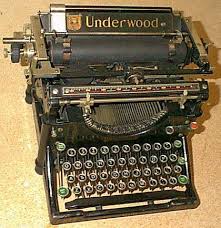
As the story goes, Marquis said he came into his office one morning to find a big cockroach jumping about on his typewriter keys. The cockroach kept climbing up the metal frame and hurling itself headfirst onto a key, one slow letter after another. He couldn’t use the shift lock (except one time when he hit it accidentally and produced an entire uppercase column), so his writing is lowercase. After about an hour, Marquis reported, the cockroach fell to the floor, exhausted after typing just one page. He never could manage punctuation, and he also had trouble with the carriage return—how many of us remember how those old typewriters worked?—but he somehow hit it every time. (My grandfather had an old typewriter like this. The keys were very stiff. I felt like my little fingers were gonna break when I tried to type.)


In his previous life, Archy was a free verse poet. As he explains to Marquis,

expression is the need of my soul

i was once a vers libre bard

but i died and my soul went into the body of a cockroach

it has given me a new outlook upon life

i see things from the under side now

Continue reading “Archy and Mehitabel by Barbara Ardinger”

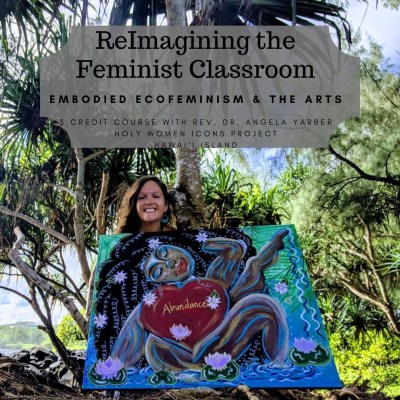
Reimagining the Classroom: Embodied Ecofeminism and the Arts Course on Hawai’i Island by Angela Yarber

“The classroom remains the most radical space of possibility in the academy.”-bell hooks

Like many academics, my “in the box” dream was to be a professor. The full-time, tenured kind. Like many queer feminist academics, I know that such dreams are rarely reality. When you’re also an artist and activist with a strong penchant for wanderlust, these dreams are simply unattainable fairytales. Never one for “in the box” living, I left the traditional academy and traditional church years ago, wandering over the garden’s walls with Lilith as my intrepid guide. I’ve told the story before. My wife and I left our jobs, sold our home, traveled full-time with our toddler, and turned the Holy Women Icons Project into a non-profit while building an off-grid tiny house on the television show Tiny House Nation in Hawai’i. It’s become old news. But since we’ve been doing this for several years now, those faraway dreams are finally starting to become reality. The academic classroom, the activist’s platform, the artist’s studio, the feminist’s megaphone, and the farmer’s orchard are fusing into one creative, life-giving, empowering space for teaching. The Holy Women Icons Project’s first academic course, “Embodied Ecofeminism and the Arts,” is actually happening. Seminarians and doctoral students from Berkeley join us in January. They’re soon followed by undergraduates from New York and seminarians from Atlanta. And I’m reaching out to more and more schools interested in creatively, subversively, and sustainably decolonizing the classroom with us for one week on the Big Island.

Continue reading “Reimagining the Classroom: Embodied Ecofeminism and the Arts Course on Hawai’i Island by Angela Yarber”