The Pleasure of Education and New Beginnings

BUT GOD/DESS—it is also enjoyable, passionate, and fun. Learning and teaching is fun; and I love having fun with my students. Even when the topics are hard and when the lessons hurt, it is the pleasure of relatedness to them, to text, to new understanding that facilitates the process. And without that pleasure, the work is unsustainable.

In graduate school, I fell in love with the book Teaching to Transgress by bell hooks. My memory of what I specifically loved about that book has blurred over time, particularly as I read more and more of her work. But what remains is a sense of how challenging and how real the writing was—how inclusive of whole experiences and truths, comfortable and uncomfortable.

hooks doesn’t shy away from the pain or pleasure of education, indicating how learning and those we learn from can induce passion: Audre Lorde’s erotic, which is so hard to distinguish from the sexual because, as Lorde explains, we are taught to limit our sense of the erotic to the sexual or pornographic.

Continue reading “The Pleasure of Education and New Beginnings”

Legacy of Carol P. Christ: Remembering Audre Lorde and “The Uses Of The Erotic”

This was originally posted on March 18, 2013

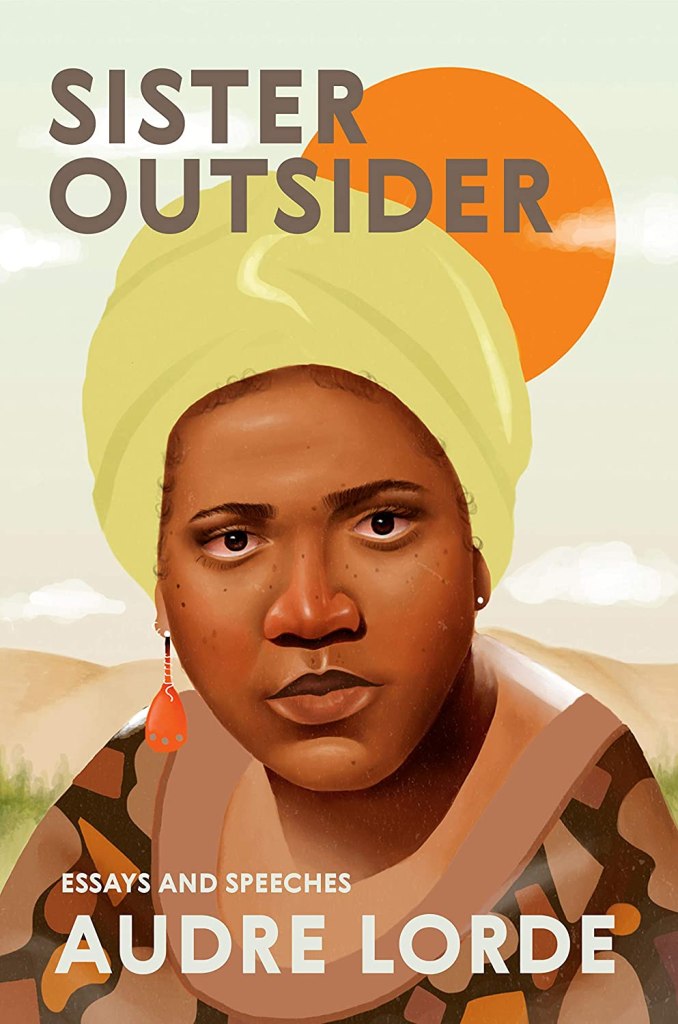
Moderator’s Note: Carol’s original essay had links to the essay which are no longer active. The essay can be found in Sister Outsider.

I was  given a copy of Audre Lorde’s essay “The Uses of the Erotic” in my first year of teaching at San Jose State by a young white lesbian M.A. student named Terry.  It was 1978.  I was in my early 30s.  This essay came into my life and the lives of my students, friends, and colleagues at “the right time.”  It became a kind of “sacred text” that authorized us to continue to explore the feelings of our bodies and to take them seriously.

The second wave of the women’s movement was about to enter its second decade. We had already been through years of consciousness raising groups.  There we learned to “hear each other to speech” about feelings we had learned to suppress because we had been told they were not acceptable for us as women to have or to express.  Those early days of the women’s movement were one big “coming out” movement.  We were bringing our feelings and ourselves out of the closet.

Continue reading “Legacy of Carol P. Christ: Remembering Audre Lorde and “The Uses Of The Erotic””

A GOOD HEART by Esther Nelson

In spite of organizations such as “Black Lives Matter” and the three or four waves of feminism over the past century, both racism and misogyny remain stubbornly alive.  We’ve made positive strides on both fronts, yet much remains to be done.  Curiously enough, I’ve noticed more sensitivity in our current society regarding racism than misogyny.  People claiming to be “woke” seem more inclined to be woke to the manifestations of racism—not so much to misogyny.

According to Merriam-Webster, the term woke is about being “aware of and actively attentive to important societal facts and issues (especially issues of racial and social justice).”  Merriam-Webster’s second definition of the term is “politically liberal (as in matters of racial and social justice) especially in a way that is considered unreasonable or extreme.” 

Continue reading “A GOOD HEART by Esther Nelson”

Hope Is Giving Birth in the Face of the Dragon by Beth Bartlett

Syrian Baby

The image of the baby born under the rubble of the earthquake in Syria has been haunting me. So has the image in my mind of her mother, giving birth to her baby while trapped after the building, where she, her husband, and their children were sleeping, collapsed.  The baby’s uncle, when digging through the debris hoping to reach his brother and family, found the baby alive, her umbilical cord still attached to her mother. When he cut the cord, the baby let out a cry.  Tragically, her mother had died after giving birth, as had her father and siblings.

Continue reading “Hope Is Giving Birth in the Face of the Dragon by Beth Bartlett”

“A new heart I will give you . . . “: Part Two by Beth Bartlett

You can read part 1 here.

Hope: What is a heart transplant if not hope? In granting the possibility of new life out of death, it is the essence of hope. Yet, hopefulness is also knowing death is imminent and finding a way to live well into that knowledge. The impulse of hope encourages us to go on despite the odds. Hope indeed seems to spring eternal. In my darkest days, something would come along and lift me up. Hope is a testimony of the human spirit, lifting us up, refusing to refuse us. This new heart brought hope to me, and I believe that in our going on together, we carry the hopes of my donor’s loved ones as well. 

Continue reading ““A new heart I will give you . . . “: Part Two by Beth Bartlett”

From the Archives: Storytelling as a Spiritual Practice by Nurete Brenner

This was originally posted on April 10, 2019

“The master’s tools will never dismantle the master’s house.” Audre Lorde

Question: What tools do we have that are powerful enough to dismantle the Master’s house?

Answer: Storytelling.

Storytelling does not belong to the “master.” Storytelling is subversive because it belongs to the collective and not to the individual; it gives agency to the powerless; it is not dependent on time or money, and it makes visible those who are overlooked and ignored in our globalized industrialized system.

We are not seeking to overthrow the patriarchy or “master,” and replace him with a queen. We are seeking something which Riane Eisler (2002) would call a partnership society or a society in which polarities are well balanced, in which the masculine and feminine values which we all hold are given equal weight.  We have become so indoctrinated in the patriarchal master’s way of thinking that we think we need some show of force, some violence, some upheaval to create the more beautiful world. But – truthfully – it won’t look like that. It might actually look like a group of women and men gathering together in a circle, in community, to tell stories. Storytelling is subversive because it belongs to the community; it is a medicine to transmute the toxins of industrialized society; it is a spiritual practice. Storytelling is the antidote to empire.

Continue reading “From the Archives: Storytelling as a Spiritual Practice by Nurete Brenner”

Radical Joy by Beth Bartlett

On Christmas mornings my brother, sister, and I had to wait patiently upstairs until we heard the music playing. Then, at last, the trumpets and voices singing “Joy to the world!” beckoned us down to the living room, with presents piled high under the brightly lit Christmas tree and stockings filled to the brim hung by the roaring fire.  As a child, I experienced Christmas as a most magical and wonderful time of year, but it wasn’t just about getting presents. Strangers greeted each other with good cheer, wishing each other a “Merry Christmas.” Children visited the homes of the elderly and housebound, brought them cookies and sang carols.  People were different – kinder, friendlier, more open-hearted, more forgiving. These are the true gifts invoked by the Christmas season, and I often wondered why we couldn’t continue these all year. I still do. 

Continue reading “Radical Joy by Beth Bartlett”

FREE OUR CHILDREN by Esther Nelson

I remember a poignant conversation with my sister when our children were young.  Our biggest fear at the time? How would we ever manage if one (or several) of our children refused to speak to us as they grew into young adulthood? Stories swirled around our social circles about a son or daughter who wanted nothing to do with their family of origin. These estranged children frequently put physical distance between themselves and their parents.

That fear eventually became my reality.  I despaired.

Like many parents, I lacked experience and maturity while raising my children. I didn’t have the wisdom to understand, trust, and apply the message of the Lebanese-American writer/poet, Kahlil Gibran (1883-1931). Had I done so, not only would I have avoided a lot of grief, but my children would probably have had an easier transition from childhood towards independent adulthood.

Continue reading “FREE OUR CHILDREN by Esther Nelson”

Spiritual vs. Material: The Middle Way? by Elisabeth Schilling

new FAR picFor much of my life, I’ve wanted experience. I think it stems from my childhood/teenage years. When I would travel (for school events, mostly), everyone my age or a bit older always seemed SO much older than me, so much more mature, and I always felt like a little kid, and that embarrassed me. I didn’t care about money or being materially successful. It seemed more admirable to take a road or overseas trip and meet a lot of different people and encounter cultures and read books that would help me grow emotionally and mentally. Recently, my friend who is younger and on his way to being a millionaire by the time he is 40 has tried to encourage me to read books about financial investments and business. I do not have the best habits with money, mainly meaning I don’t usually save or invest and just live paycheck-to-paycheck rather carelessly.

But in the Dhammapada and Upanishads, they say that neither those who only follow the material path nor those who only follow the spiritual path will reach nirvana. . . it is only those who find a balance between the material and spiritual, the mind and the body that will be able to reach nirvana, be one with Brahman and notice the true self. Continue reading “Spiritual vs. Material: The Middle Way? by Elisabeth Schilling”

Double, double… rhymes are trouble by Katie M. Deaver

I never considered myself one of those people who gets really “into” Halloween. But, as one might expect having an eight year old, especially an eight year old who celebrates her birthday shortly before the holiday, has made me much more in tune with the excitement and preparation which surrounds Halloween.

One of the traditions that I do very much enjoy is watching Halloween movies like Hocus Pocus and Double, Double, Toil and Trouble and, new to us last year, drinking warm mulled wine after coming home from a chilly (and this year possibly snowy!) night of Trick or Treating.

In my work as a church musician Halloween is book-ended by the celebration of Reformation and All Saints Day, so it tends to be a fairly busy time for my work schedule. As a result this is often the time of year that I reconsider my self-care and centering routines in the hopes of somehow preparing myself for the coming holiday season and the end of the year. This year, as I checked in on my current practices I realized that I haven’t been reading as much poetry as I used to when I was in grad school. As a result I have been trying to get back in the habit of reading some poetry a few times each week to help center myself. As luck would have it the last few weeks have found me stumbling upon poetry with connections to the Halloween season. I want to share with you a portion of two seasonal poems that I have encountered and are sticking with me.

Continue reading “Double, double… rhymes are trouble by Katie M. Deaver”