Spiritual vs. Material: The Middle Way? by Elisabeth Schilling

new FAR picFor much of my life, I’ve wanted experience. I think it stems from my childhood/teenage years. When I would travel (for school events, mostly), everyone my age or a bit older always seemed SO much older than me, so much more mature, and I always felt like a little kid, and that embarrassed me. I didn’t care about money or being materially successful. It seemed more admirable to take a road or overseas trip and meet a lot of different people and encounter cultures and read books that would help me grow emotionally and mentally. Recently, my friend who is younger and on his way to being a millionaire by the time he is 40 has tried to encourage me to read books about financial investments and business. I do not have the best habits with money, mainly meaning I don’t usually save or invest and just live paycheck-to-paycheck rather carelessly.

But in the Dhammapada and Upanishads, they say that neither those who only follow the material path nor those who only follow the spiritual path will reach nirvana. . . it is only those who find a balance between the material and spiritual, the mind and the body that will be able to reach nirvana, be one with Brahman and notice the true self. Continue reading “Spiritual vs. Material: The Middle Way? by Elisabeth Schilling”
Double, double… rhymes are trouble by Katie M. Deaver

I never considered myself one of those people who gets really “into” Halloween. But, as one might expect having an eight year old, especially an eight year old who celebrates her birthday shortly before the holiday, has made me much more in tune with the excitement and preparation which surrounds Halloween.

One of the traditions that I do very much enjoy is watching Halloween movies like Hocus Pocus and Double, Double, Toil and Trouble and, new to us last year, drinking warm mulled wine after coming home from a chilly (and this year possibly snowy!) night of Trick or Treating.

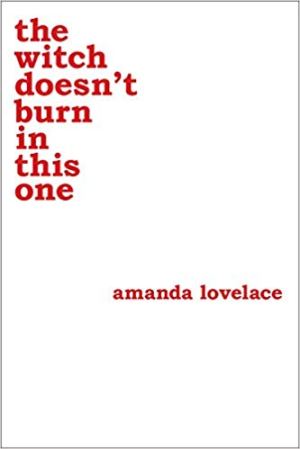
In my work as a church musician Halloween is book-ended by the celebration of Reformation and All Saints Day, so it tends to be a fairly busy time for my work schedule. As a result this is often the time of year that I reconsider my self-care and centering routines in the hopes of somehow preparing myself for the coming holiday season and the end of the year. This year, as I checked in on my current practices I realized that I haven’t been reading as much poetry as I used to when I was in grad school. As a result I have been trying to get back in the habit of reading some poetry a few times each week to help center myself. As luck would have it the last few weeks have found me stumbling upon poetry with connections to the Halloween season. I want to share with you a portion of two seasonal poems that I have encountered and are sticking with me.

Continue reading “Double, double… rhymes are trouble by Katie M. Deaver”

Storytelling as a Spiritual Practice by Nurete Brenner

“The master’s tools will never dismantle the master’s house.” Audre Lorde

Question: What tools do we have that are powerful enough to dismantle the Master’s house?

Answer: Storytelling.

Storytelling does not belong to the “master.” Storytelling is subversive because it belongs to the collective and not to the individual; it gives agency to the powerless; it is not dependent on time or money, and it makes visible those who are overlooked and ignored in our globalized industrialized system. Continue reading “Storytelling as a Spiritual Practice by Nurete Brenner”

I Celebrate Love by Elise M. Edwards

Happy Valentine’s Day!  I know, I know… so many of us do not like this holiday.  It’s too commercialized, we say.  We don’t need card-makers or florists to tell us how or when to show affection.  Some of us don’t like Valentine’s Day because it reminds us of loves we have lost or never found.  I get it.  This day can seem shallow, overhyped, and falsely sentimental.  It can be lonely.  And yet, I won’t let today pass without celebrating and honoring love.  Love is too important to concede to commercial interests.

Love, in its many forms, keep us alive and able to endure. Love is powerful because it is expansive, growing in unexpected places and ways.  We tend to separate our celebrations of romantic love, friendship, familial love, self-love, and religious devotion.  We make distinctions between our valentines and “galentines.”  Rarely do we shout for joy in ecstatic worship while also celebrating the passionate longings of our innermost desires.  But occasionally, in my religious tradition, we let our disparate loves come together.  We unite them on holy feast days, enjoying the sensual pleasures of good food and company to mark spiritual occasions.  So that’s my inspiration.  Today, I’m celebrating love by reflecting on various forms of love merged together and sharing insight from poets and mystics about the power and beauty experienced in love.

Continue reading “I Celebrate Love by Elise M. Edwards”

Knowing my Voice through Writing by Elise M. Edwards

elise-edwardsOver the summer, I’ve been writing more than I do during the traditional academic year when other tasks consume the bulk of my workday.  I have spent more time experiencing the joy of creative discovery and production, but I’ve also had more time confronting the difficulties of creative work as I’ve wrestled with some of its unique challenges.  One of those challenges has been to refine my academic writing voice. I’ve approaches the challenge of developing my voice as both a spiritual and feminist practice and this has helped me find confidence in my work.

Continue reading “Knowing my Voice through Writing by Elise M. Edwards”

Birthing a New World by Xochitl Alvizo

Yesterday I “paused” my post and left you with words from a dear friend Edyka Chilomé, a powerful “artivist” invested in the healing of our world. And our world is in need of healing indeed.

Today was another tough day of carrying the pain of our continued inhumanity toward one another: Las Vegas, Puerto Rico, Myanmar…and so many other ongoing tragedies. I find it hard to find words – to know what to offer here on Feminism and Religion. Some days it seems necessary to go on with our work as planned; la lucha is every day and we keep at it. But other days, keeping on as planned just seems absurd.  I think these are precisely the days that Audre Lorde had in mind when she wrote that poetry is not a luxury. Continue reading “Birthing a New World by Xochitl Alvizo”

On Difference by Ivy Helman.

untitled.pngThere is no correlation between difference and danger.  Yet, differences are regularly considered threatening.  In fact, much of Western society’s patriarchal energy is spent categorizing, controlling, managing and fighting difference.  Difference is so ingrained within the psyche that most differences are understood to be antithetical, perhaps even unbridgeable, opposites.  Good/bad, black/white, rich/poor, women/men and human/animal are just a few examples.  To further amplify this distinction, patriarchy considers one aspect of the difference more valuable than the other.  

Feminism seeks to end this value-laden, polarization of difference.  In its earliest days, many feminists were convinced that advocating sameness was the best solution.  Abolition, the Equal Rights Amendment (ERA) and the right to vote were parts of this liberal agenda.  While sameness worked in some respects especially in terms of ending slavery and gaining the right to vote, the sameness platform also, albeit perhaps unknowingly and considerably to a lesser degree, bought into patriarchal views of the dangers of difference.  For example, ending slavery did not end racism nor did gaining the right to vote mean that women were equipped or allowed to think independently of their husbands.  Other first-wave feminists who advocated women as pure and moral persons and elevated motherhood fared little better playing into the patriarchal ideals of biological determinism and essentialism.       Continue reading “On Difference by Ivy Helman.”

Dialogues With Our Children by Kelly Brown Douglas

Son: My friends and I were stopped for going 61 mph in a 55 mph zone, frisked and had our car searched. We thought the police were going after the car of white boys in front of us going at least 70, but they stopped us instead.

Mother: It’s not the first time.

Intergenerational dialogues are key to Alice Walker’s womanist definition. This definition includes a dialogue between a mother and a daughter in which the daughter announces that she is going to Canada and taking others with her. The mother replies that she would not be the first one to make such a journey.  During this Women’s History Month, I as a womanist am reminded of the dialogues that haven take place between black women and their children. These inter-generational dialogues have been fundamental to helping black children to “survive and be whole” in a world that looks down on their blackness and attempts to limit their ambitions. Continue reading “Dialogues With Our Children by Kelly Brown Douglas”

Remembering Audre Lorde and “The Uses Of The Erotic” by Carol P. Christ

carol p. christ 2002 colorI was  given a copy of Audre Lorde’s essay “The Uses of the Erotic” in my first year of teaching at San Jose State by a young white lesbian M.A. student named Terry.  It was 1978.  I was in my early 30s.  This essay came into my life and the lives of my students, friends, and colleagues at “the right time.”  It became a kind of “sacred text” that authorized us to continue to explore the feelings of our bodies and to take them seriously.

The second wave of the women’s movement was about to enter its second decade. We had already been through years of consciousness raising groups.  There we learned to “hear each other to speech” about feelings we had learned to suppress because we had been told they were not acceptable for us as women to have or to express.  Those early days of the women’s movement were one big “coming out” movement.  We were bringing our feelings and ourselves out of the closet.

Many of us had been exploring various forms of body and feeling based therapies broadly called “humanistic” that encouraged the open acknowledgment and expression of feelings.  It was also the time when large numbers of women were beginning to “come out” as lesbian.  Some of these were women who had theretofore not “known” or even had any idea that they were lesbian. The song by Lavender Jane Loves Women with the refrain “any woman can be a lesbian” was well-known in feminist circles.  Women who did not stay lesbian explored their sexuality with other women. Women who did not do that were naming and recognizing the importance of female friendship and its life-saving and life-transforming part in their lives—an act that was in itself transgressive.

Audre Lorde told us that all of this was not only good–it was sacred. “The erotic is a resource exists in each of us on a deeply female and spiritual plane.”  Continue reading “Remembering Audre Lorde and “The Uses Of The Erotic” by Carol P. Christ”

When Feminists Disagree by Linn Marie Tonstad

Linn Marie TonstadA while back I gave a talk on feminist trinitarian theology to an audience of mostly progressive academics, including feminist and womanist scholars of religion. In the course of analyzing what I called the ‘trinitarian imaginary’ in Christianity and its often-patriarchal and masculinist forms, I suggested that transforming that imaginary might require recognizing the hypothetical character of theological statements until the eschaton, a theme that has been developed in depth by a German theologian named Wolfhart Pannenberg. Now, Pannenberg is decidedly neither a feminist nor a progressive theologian. To name just one example: in his three-volume Systematic Theology, his few explicit references to feminist or female theologians include a brief mention of Mary Daly (volume 1, p. 262) in connection with a critique of feminist theologians for projecting (!) masculinity into God in their readings of divine fatherhood, and a critique of Valerie Saiving and Susan Nelson Dunfee’s positions on the traditional Christian doctrine of sin as pride (volume 2, p. 243). So when I mentioned Pannenberg as a resource in my talk, one of the feminist scholars in the audience audibly gasped and flinched – it became clear in the Q&A that she had significant concerns about whether I could count as a feminist at all. After all, to mine someone like Pannenberg for constructive feminist theological work might imply an endorsement of his other positions, or might entail taking over aspects of his system that would taint my own project in anti-feminist directions – all legitimate concerns.  Continue reading “When Feminists Disagree by Linn Marie Tonstad”