Slippery Package: A prayer poem by Isabella Ides

She speaks a various language.


Bound in the bardo bereft

vaguely present, almost dead.

For fucking shining aloud

let me


back in. Come again, sweet terror

Carve my shadow on your cave walls

Render me a soul, source me

mystify, crush, obscure me

in that deep gorge

confine, stretch, reveal me

Let me wobble

stand.

  Continue reading “Slippery Package: A prayer poem by Isabella Ides”

New Beginnings: Re-Birthing Myself a Million Times and One by Elisabeth Schilling

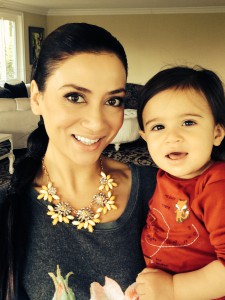
Photo 2I think being a mother must be an amazing experience. I don’t really know the glimmers and shadows of any life but mine, even though I would be more than happy to listen. Recently, I’ve been reading the poems of Carol Ann Duffy, Scottish poet, U.K. Laureate, and once partner to poet Jackie Kay, and she writes something in one of her poems (“A Clear Note”) that I resonate with: “Never have kids. Give birth to yourself.” It is not Duffy, the narrator, who says this, but a character named Moll.

In the triptych poem, three women—Agatha, Moll, and Bernadette, three generations of women, speak to and about each other through time and space. The quote is just something Moll recalls saying to her daughter, Bernadette one night when she is drunk. I of course do not think a woman cannot give birth to herself if she has children. But it is certainly a good (in my opinion, for I wish it so) excuse for myself, revising this line of verse in my own voice: I will never have kids; I need the entirety of life to birth myself.

Continue reading “New Beginnings: Re-Birthing Myself a Million Times and One by Elisabeth Schilling”

A Meditation on Revolution In the Vagina Monologues by Marie Cartier

Photos by Kimberly Esslinger

“It’s like feminist summer camp, except it’s in February,” said Shaina, the director, “I’m not sure how to re-enter the world.”

I agreed. How to re-enter the world where vaginas have little voice? Where asking a woman what her vagina would wear does not make sense. Or what would it say? It’s not just what would it say, it’s not having a voice at all.  My vagina.

I have performed in West Hollywood, California’s production of the Vagina Monologues (to benefit Planned Parenthood, check it out here and here) for the past three years. This year we raised over $5,000.

Continue reading “A Meditation on Revolution In the Vagina Monologues by Marie Cartier”

Eulogy for My Father by Natalie Weaver

Fourteen years ago, I was pregnant with William Valentine.  I had no idea what to expect.  I knew only that I was in a body, and it was pregnant.  Things happened to me, to my body, that seemed extrinsic to my person, so much so that for most of those forty weeks, I felt as though the doctor’s office was having the baby, and I was a mere observer.  But, when the time came to deliver the baby, I realized it was my body that was trying to make passage for another’s.  The particularities of myself and the baby’s self seemed to fade away into something more vital and primordial in the process of the transmission of life.  After a safe delivery, I felt a deep and curious gratitude that was beyond the gratitude I had for my child or for our health.  This strange gratitude was born of the passage I had been so fortunate to experience, that is, this novel yet ancient, essential yet unparalleled dimension of human being-ness.  I had given live birth, and I was grateful to know what that was like.  In that experience, I was more connected to my human brothers and sisters than I had ever been before, including to this new baby, who I knew in my deepest self was more fundamentally a brother human than even he was my own child.  I knew that in this transmission, I had helped a fellow traveler, and that transmitting life was simple even while it was giant in scope.  The experience was and would always be about walking with each other, from the cradle to the grave, in our vulnerability, in our fragility, in our humility, and in that walk, to find our strength, our dignity, and our luminescence, as persons, as creatures that think and speak and love.  To have been a party to another’s coming to be, this was an occasion of the greatest gratitude I had known.

In accompanying my father in this final stage of his life during these challenging and difficult months as he journeyed toward his death, I felt that same vital and primordial passage of being that I had in giving birth.  While it was not my body that this time labored and worked, I was party to his experience.  I witnessed his courage and another kind of transmission of life.  For, I saw a man go from self-concern to other-concern; from hope of getting well to hope to of making things better for others; I witnessed a man move from verbal complaint to silent focus; and I heard his relocation of worry for himself to concern for me because he knew I was hurting as I was watching him, mostly powerless to do anything but sit next to him. I saw a man graduate from a regular man to an elder and then to naked spirt in God’s care, and I was honored to be one of his midwives on that journey.  In his final hours, he became full of grace, and he fulfilled the trajectory of becoming the father and man he always intended to be.  It was an honor to behold, and I am grateful.

Continue reading “Eulogy for My Father by Natalie Weaver”

Get Compassion: Reflections on Childbirth and Privilege by Katey Zeh

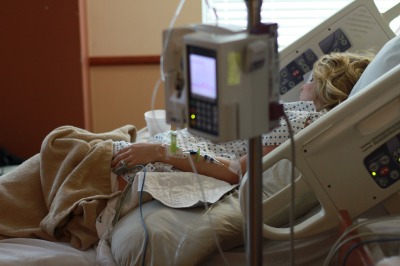
hospital-840135_1920

Jessi Klein wrote an Op-Ed in last Sunday’s New York Times entitled “Get the Epidural” in which she takes on the arguments for “natural” childbirth and makes an astute point about its premise: “It’s interesting that no one cares very much about women doing anything ‘naturally’ until it involves their being in excruciating pain.”

Thinking back to the months leading up to my daughter’s birth, I remember occasions similar to the one Klein describes in this article in which I was asked about my pre-natal care and plans for the birth, though admittedly they did not often come from strangers in the grocery store line. While Klein’s response was different from mine (I birthed without pain medication, and as you might have guessed from the title, she planned for an epidural), we each experienced feeling judged by others when they heard about our intended plans for birthing.

Klein alludes to this childbirth debate as symptomatic of our increasingly competitive culture around motherhood. I agree with her. But I worry about what happens when we talk about birth as primarily a parenting event rather than a physical one. When we divorce our intentions for our babies from what we desire for our bodies.

As with any piece having to do with childbirth, this article made the rounds on my Facebook feed and incited the usual divisiveness that all social media posts seem to do, splitting my friends and acquaintances into those who felt affirmed by Klein’s words and those who felt silenced by them. My reaction was to applaud that we have the ability to make different decisions about our health care, and that no matter how we plan our births—or how they turn out in the end—that is something to celebrate.

In my attempt to be diplomatic, I also quickly overlooked the assumptions of privilege at play in Klein’s piece and in my own response. Let’s start with the concept of a birth plan. A plan assumes that different options are available and acquirable. I’ve often written about how my pregnancy was one of the times when I felt my white, educated, middle-class privilege most acutely. I was able to have an intervention-free birth in large part because my family could afford to pay a doula on top of covering the costly medical fees related to the pregnancy and birth.

I wonder among my circles of privileged parents, why do we occupy so much of our time and expend so much of our energy arguing over which school of medically-sound thought regarding childbirth is best when there are so many people who bring life into world with inadequate or no health care at all?

Years before I got pregnant I began working with faith communities as an advocate for the full range of reproductive health care needs that people have throughout their lives, including safe and respectful childbirth. I’ve spent a lot of time reading and retelling the biblical stories of women giving birth and comparing them to the stories of global women today who face enormous challenges in their labor and deliveries. Tragically each year hundreds of thousands of women lose their lives as they bring new life into the world.

Pieces like Klein’s remind me of how easily people like me get caught up in our own spheres of experience and become blinded by the privilege that affords us the ability to fixate on details of our own lives rather than turning our gaze toward the world’s immense suffering.

As a faith-based advocate for gender justice, I’m currently working on a book with the FAR Press called Women Rising in which I look at the lives of ten biblical women through the lens of our current struggles for women and girl’s freedom and well being around the globe. One of my chapters focuses on the story from the book of Genesis in which Rachel dies in childbirth, and another looks at Mary’s delivery of Jesus as the miracle of maternal survival. My hope is that those of us who identify with the sacred stories of the Jewish and Christian scriptures will re-encounter them in a way that leads us back to a place of compassion for one another rather than judgment.

Katey Zeh, M.Div is a strategist, writer, and educator who inspires intentionalKatey Headshot communities to create a more just, compassionate world through building connection, sacred truth telling, and striving for the common good.  She has written for outlets including Huffington Post, Sojourners, Religion Dispatches, Response magazine, the Good Mother Project, the Journal for Feminist Studies in Religion, and the United Methodist News Service.  Find her on Twitter at @kateyzeh or on her website www.kateyzeh

Spring by Deanne Quarrie

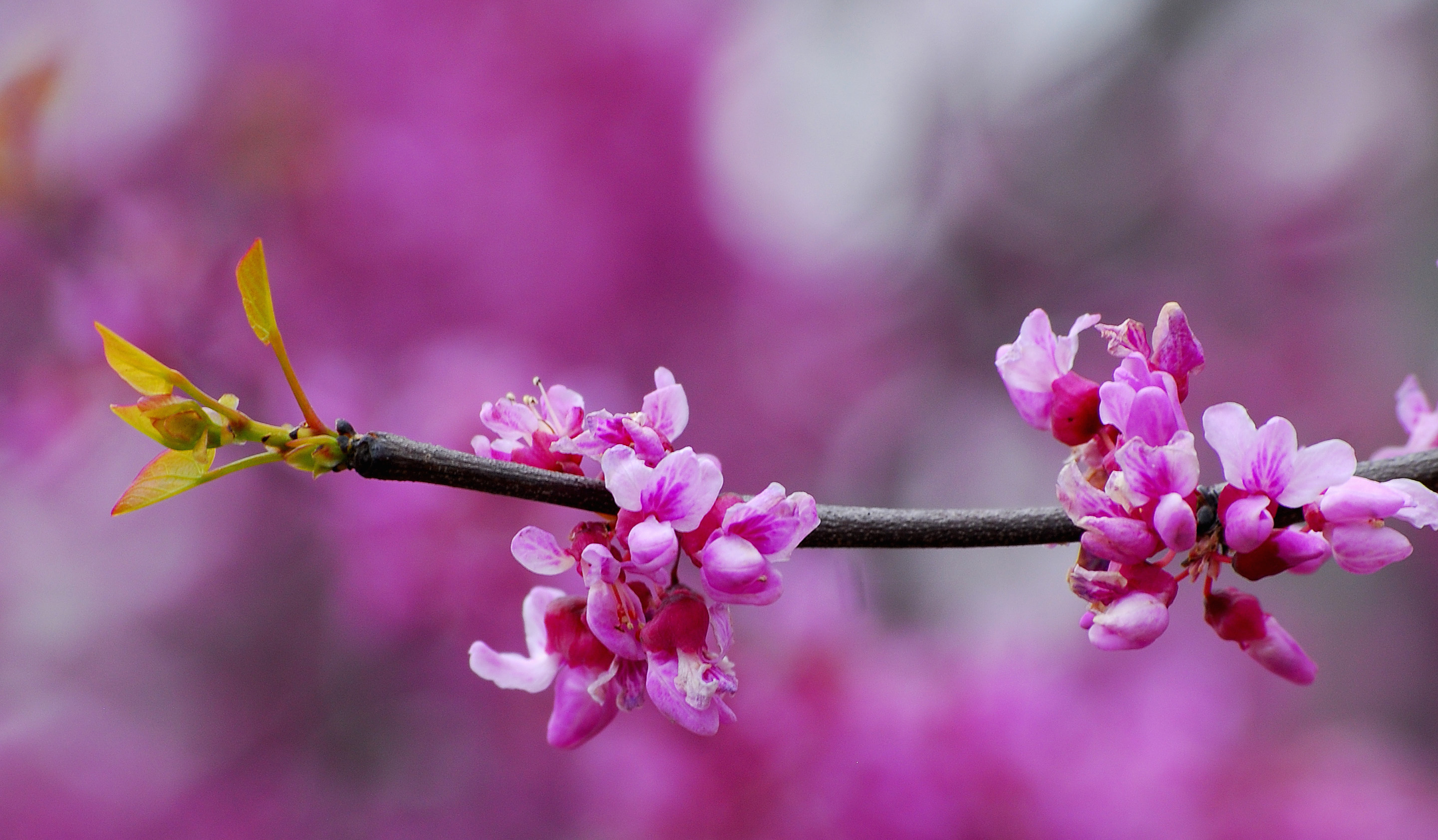
deanne_2011_B_smWe celebrate the Spring Equinox as a reflection of the birthing time of the year. We have made it through the winter’s cold and ice, experienced the warming of the Earth and the flood waters that prepared for the birth of all that is new. Seeds are germinating and beginning to sprout. We see that around us, depending on where we live. Here in Texas the red buds are in bloom and some of the trees have their fresh green leaves opening up at the tips. Just seeing these indicators, brings an internal feeling of birth. My heart expands in joy when I see my first red bud tree in bloom – the first buttercup opening to the sun!

Red BudThis is the time that the Goddess makes herself known by birthing all into existence. She first creates day and night and on this day they are equal, only to rise and fall as the year changes. Then She creates the stars, the heavens, the green things upon the earth, the animals and us – all Her children. All of us glistening in Her birth waters, ready to dance in Her rhythms.

I see the creation of day and night in equal portions coming first, as a lesson for all that follows; balance, a moment of equilibrium, manifesting everything else. We attempt to have that place of balance in our lives, but know from experience it never stays exactly in the center. All we can do is hope to bring it back as we move between states. It is like the pendulum, swinging back and forth from one side to the center then to the other side, but always seeking center.Balance Continue reading “Spring by Deanne Quarrie”

Mother of All Buddhas by Oxana Poberejnaia

oxanaQueen Maya, the Mother of the Buddha of our age, who before his Enlightenment was known as Siddhartha Gautama, died shortly after his birth. So the future Buddha was raised by his aunt and stepmother. It is said that the womb of the Buddha’s Mother needed to remain unsullied by further pregnancies. This is similar to the belief that Mary Mother of Christ did not bear any more children after Jesus, which is held by some Christian traditions.

280px-Dream_Queen_Maya_BM_OA_1932.7-9.1In addition, the Buddha’s conception and birth were both miraculous, according to the legend and some Mahayana texts (such as the 44th chapter of the Gandavyuha Sutra). The Buddha was conceived when a white elephant entered Queen Maya’s right side, or, in the Sutra, light entered the Queen’s body. The Buddha was born from his Mother’s right side. The light was emanating from every pore of the body of the Bodhisattva Buddha, while he resided in the Tusita (joyous) heaven before descending to earth. This light reminds us of the golden rain form that Zeus took to reach Danaë in her cell to conceive Perseus, and links these two Indo-European patriarchal discourses. Continue reading “Mother of All Buddhas by Oxana Poberejnaia”

One Year After Giving Birth- My Story by Valentina Khan

valantina I sat at the bottom of my stairs exhausted, lost, not knowing what day it was or rather not really caring what day it was. I was the overtired mother, who was still getting the knack of breastfeeding around the clock. Panicking each and every time I heard the baby cry. As soon as I heard his cries, I would think to myself, hurry and grab the boppy, the burb cloth, the iPhone so I could click on the breastfeeding app! Hurry, hurry, hurry….!

My first child was born in March 2013. I thought I prepared myself for his birth. The diapers were stacked, the crib was pristine, his clothes were neatly arranged, the stroller was the best on the market, what else could being a mom be about? This was my naïveté as I entered motherhood at probably not the best time in my life (but when is?). I was in my last year of grad school at the Claremont School of Theology, I also had on my to-do list to take the bar exam and become a licensed attorney should I ever decide to practice, and because my fitness hobby turned into a “job” over the last 4 years, the same year my son was born, my husband and I opened my first brick and motor business- UpLift- body, life, community. Too much too soon? Yes, indeed. Crazy? Absolutely.

Continue reading “One Year After Giving Birth- My Story by Valentina Khan”

BOOK REVIEW: Amy Wright Glenn’s Birth, Breath, & Death by Natalie Weaver

Natalie WeaverAmy Wright Glenn’s Birth, Breath, & Death: Meditations on Motherhood, Chaplaincy, and Life as a Doula is a mid-life memoir of the author’s personal encounters and professional insights drawn from her work in the spaces of birth and death.  Glenn gleans from her formative experiences as a daughter and sister, her trained experiences as a teacher and doula, and her wisdom experiences as a mother, chaplain, and friend.  In an accessible voice, Glenn reflects compassionately on her early life in a Mormon family.  She considers critically the nature of religious worldviews that are doctrinally dualistic and apocalyptic.  Glenn further describes the therapeutic and illuminating value she found in the scholarly study of religions as an anthropological phenomenon.  Glenn explores how religious discourse both expresses human joy and grief and also aids us in our encounters with life and death.  Glenn intertwines her academic study with personal narrative and achieves a professionally-informed and experientially-based “thinking out loud” about the bookends of human life.   Her writing is tender, and her vision is thought-provoking.
Continue reading “BOOK REVIEW: Amy Wright Glenn’s Birth, Breath, & Death by Natalie Weaver”

THE DIVINE DRAMA AND THE UNIVERSALITY OF DEATH by Carol P. Christ

carol christIn Greece the liturgies of lent and especially of the week before Easter are known as the “divine drama,” in Greek theodrama.  This may refer to the “drama” of the capture, crucifixion, and resurrection of Jesus and to the suffering of God the Father and Mary.

However, it is important to recall that the drama in ancient Greece referred to both the tragedies and comedies, most specifically, those that were performed in the theater of Dionysios in Athens.  While we have been taught that the Greek tragedies celebrated “downfall of the hero” due to his “tragic flaw,” it is important to remember that Dionysios was the original protagonist of the Greek tragedy: it was his death and rebirth that was first celebrated.

Some have argued that the Greek tragedies should never be “read” alone, for they were always “performed” in tandem with the comedies, which were followed by the bawdy phallic humor of the satyr plays.  The tragedies end in death and irreparable loss.  But if the comedies and satyr plays are considered an integral part of the cycle, death is followed by the resurgence of life. Continue reading “THE DIVINE DRAMA AND THE UNIVERSALITY OF DEATH by Carol P. Christ”