

 (Note: this story was inspired by a blog written by Carol P. Christ. But she’s not responsible for the nonsense I write.)
Once upon a time there was a woman named Carol who lived in the largest house on the Island of Crete and had the largest flower garden and the largest herd of cattle. Because of her riches, not to mention her common sense, she had been elected chief of the Council of Mothers, the government of the island. The Council had searched and searched for a proper title for their leader and finally, reluctantly, decided that Queen was as good as anything else…as long as everyone remained politically correct and understood that Queen was merely a handy title. Queen Carol had a husband named Minos who tried and tried to assume the title of King, but no one ever paid any attention to his pretensions. Because he had nothing else to do, he spent most of his time lounging in the front parlor and reading the Knossos Times-Myth-Dispatch.
“Look here,” he said one day, waving the newspaper at his wife. “The Greeks are ramping up for a war over in Troy. They’re calling for kings and armies to join them.”
Carol laid her feather duster aside for a minute. “Well, if you really want to,” she said, “you can go. It’ll be better for you than sitting around here all the time and complaining that you’re bored. But you’d better not come back here and set yourself up as a warrior king! None of those huge statues like they’ve built in Egypt. None of those huge temples with carvings of conquering armies on them, either. We mothers won’t stand for it!”
Continue reading “Knossos: The Truly True Story by Barbara Ardinger”






 This “Mountain Mother” painting is an ode to women’s earth wisdom and is my prayer for reclaiming of that wisdom to heal the earth and all her beings.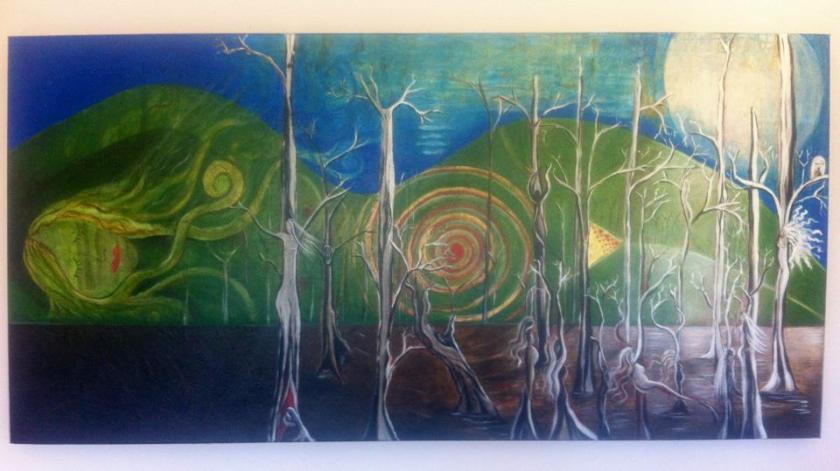

 Feminism and Religion