My father died on July 6, 2017, 98 years, 4 months, 12 days. The last time I saw him was in the spring of 2004. During that visit, he gave me “the silent treatment” (refused to look at me or speak to me) when I stepped over an invisible line. That was not the first time, but it would be the last. When I gave lectures in California in 2008 and 2010, I agonized and yet made the decision not to visit him. I did not want to give him the chance to hurt me again.
My father and I kept in touch at Christmas and birthdays. In recent years we found our mutual interest in the family genealogy to be safe ground on which we could make contact. I was pleased to be able to tell him that I found the place of origin of our branch of the Christ family in Unterpreppach, Lower Bavaria when I visited Germany in the spring of 2016 with my cousin Bill. My father was with me in spirit when I visited the Christ family graves at Most Holy Trinity Roman Catholic Cemetery in Williamsburg, Brooklyn in the winter of 2016.
When my father had his first heart attack a few years ago, I agonized again and made the decision not to visit. I did not want to give him the chance to hurt me again. This time the decision was final. Continue reading “Grief and Healing by Carol P. Christ”
Our first ritual on the Goddess Pilgrimage to Crete is a death ritual in which we honor the memory of those who have gone before us. Like so many things on the pilgrimage, the death ritual evolved. I did not consciously plan to begin with death. Rather, the death ritual inserted itself at the beginning of the tour. Now I understand that the timing is right.
As we begin our pilgrimage, seeking new insight about the meaning of our lives, about the meaning of life and death, we pause to remember those who have gone before us.
Before the ritual begins, I discuss the communal burials in round tombs of the ancient Cretans, sharing my belief that the purpose of their rituals was not to secure immortality or eternal life for the individual, but rather to affirm and ensure the regeneration of life in the community and in nature. I add that though I have no desire for personal life after death, I care deeply about the continued flourishing of life for human and other than human beings.
In our book Goddess and God in the World, Judith Plaskow and I discuss and debate our contrasting and conflicting views of the nature of divinity and the cause of evil. In the passage that follows, I respond to Judith’s questions.
This brings us to the major philosophical issue that divides us: the nature of divine power and the relation of divine power to the world. It is fair to say that our major difference in this regard is whether the divine power is personal, conscious, intelligent, loving, and good. You ask, “If all we know of that exists is a mixture of the good and the bad . . . , if our creativity and the creative power that births and sustains the world brings forth both good and evil, then how can the Goddess be less than ambiguous? How can the Goddess be ‘the ground of all being’ if she does not ‘form light and create darkness, make weal and create woe’ (Isa. 45:7)? This question lies at the heart of our differences.
When we seek immortality or spiritual “rebirth,” are we not saying that there is something wrong with the “birth” that was given to us through the body of our mothers? In She Who Changes and in “Reading Plato’s Allegory of the Cave as Matricide and Theacide,” I asserted that our culture is “matricidal” because it is based on the assumption that life in the body in this world “just isn’t good enough.”
What is so wrong with the life that our mothers gave us that we must reject it in the name of a “higher” spiritual life? The answer of course death.
Raised in an evangelical, Protestant Christian tradition, I was repeatedly told that “God is love.” God is love. While much of my Christian experience was difficult and even abusive, I have always interpreted this teaching—while sometimes confusing to me, and other times, fueling my spiritual inquiry—as a positive thing. When learning to shed the abusive contexts in my life, I did so encouraged by those who knew that love and god/dess shouldn’t be abusive. When challenging and responding to abusive paradigms within Christianity through my dissertation writing process, I reflected on how leaving an abusive cycle can feel like a hiccup from love, a frozen breathlessness and confusion on how to access love in new ways; but I also had to conclude that love hadn’t really been absent, even if hard to find.
God/dess is love—even when the dominating power celebrated within a particular religion, family or society distorts access to god/dess-loving. Yet, this issue with access, the trained approach to receiving love that is taught in an abusive context, is a habit that I have had to continually and consciously shed. I catch myself falling into patterns of get-love-through-control or get-love-through-performance behaviors. I try to be someone or something to ensure my access to what I perceive as love, sometimes finding it hard to accept that I am loveable without performance, role-playing or being someone that somebody else wants me to be. The more I experience mutual loving—or as Carter Heyward puts it, “godding” –the less I fall into this trap of performance; and the more I realize that my “performing” who I think others want me to be actually hinders my most loving relationships. However, while living outside of the abusive context has become easier in my life, sometimes I panic. Sometimes I hold on too tightly, afraid of the reality of loving without (the illusion of) control. Continue reading “Holding On Too Tightly by Sara Frykenberg”
We find our versions of home in these communities and it is within these spaces where our home not only begins to define who we are but we, as a reflection of that space, begin to outwardly redefine the spaces we exist in. If we slowly begin, through our experiences to shape our homes based on privilege and power without self-reflection and acknowledgment of others, then we are no better than those oppressive forces we say we’re against.
This post is a response to a recent blog entry titled “Who is Gender Queer?” on this site from Carol Christ. The post can be read by clicking here.I want to thank my friend, advocate, and upcoming scholar Martha Ovadia for reasons only she knows! Stay brave, speak up, be heard! _________________________________________
It is terrifying to know that something is wrong but not be able to speak truth to power.
It is even more terrifying to know something is wrong, be able to speak to it, and then silence those voices that do not have that same privilege, power, or position.
The struggle that many of us in positions of privilege and power face is not just that of being ostracizing and essentializing forces—it is that we, as allies, members of communities, or even those dedicated to a cause, can ourselves participate in the oppression we are fighting against and can do harm.
It’s taken me a long time to not only be comfortable with who I identify as, but also how I go about fighting and defining my life based on said identity and experience. However, the one thing that I have the ability to do is choose that identity more freely than others. Unlike Leelah Alcorn, Ash Haffner, Aniya Knee Parker, or Yaz’min Shancez pictured above, I did not have to face the types of oppressions they did, to which they sadly lost their lives, as a result of the fact that we exist in a society that can’t deal with the inability to leave things undefined or to allow people to define who they are on their own terms.
It is vital that although my lived experiences could never meet nor match the same types of oppression that these brave individuals had to face, I, as a white, cisgendered gay male, do not become part of their oppression through my own position and privilege.
As a man who exists in the world of feminism and within various women’s communities, I walk a daily tightrope of privilege and power to insure that I do not silence those that I consider allies, friends, mentors, or colleagues. As a man who exists in the world of the LGBTQ community, I walk an additional tightrope to additionally not take away from or diminish the experiences of those members of our community that do not have the same type of lived experiences as myself. Even within minority communities, there are positions of hierarchy and within these hierarchies of knowledge, identity, or power, comes a responsibility to insure that the oppressed do not become the oppressors.
We find our versions of home in these communities and it is within these spaces where our home not only begins to define who we are but we, as a reflection of that space, begin to outwardly redefine the spaces we exist in. If we slowly begin to shape our homes based on privilege and power without self-reflection and acknowledgment of others, then we are no better than those oppressive forces we say we’re against.
I can’t speak for what identity feels like –I can only speak for what essentializing does, and what it does is reflected in the deaths of Lelah, Ash, and the many others who die nameless. It is our responsibility, as allies, members of communities, and those fighting to end sexist, patriarchal, and, even now, homonormative oppression, to make sure that no more deaths occur on our watch or that truth is spoken to power even when power is masquerading around as truth.
John Erickson is a Ph.D. Candidate in American Religious History at Claremont Graduate University. He holds a MA in Women’s Studies in Religion; an MA in Applied Women’s Studies; and a BA in Women’s Literature and Women’s Studies. He is a Non-Fiction Reviewer for Lambda Literary, the leader in LGBT reviews, author interviews, opinions and news since 1989 and the Co-Chair of the Queer Studies in Religion section of the American Academy of Religion’s Western Region, the only regional section of the American Academy of Religion that is dedicated to the exploration of queer studies in religion and other relevant fields in the nation and the President of the University of Wisconsin Oshkosh’s LGBTQA+ Alumni Association. When he is not working on his dissertation, he can be found at West Hollywood City Hall where he is the Community Events Technician and works on policies and special events relating to women, gender, sexuality, and human rights issues that are sponsored or co-sponsored by the City of West Hollywood. He is the author of the blog From Wisconsin, with Love and can be followed on Twitter @JErickson85
In my last post, I shared with you my wonderment at the power of music to speak for us when we lack speech and to touch us when we are beyond reach. Now, I experience wonderment at the power of silence. For, it was silence that in the end helped my father-in-law, who was truly my father, to shed his mortal coil. After the noise of caregivers and nurses, of talking and encouraging, of wailing and whispering, there was a window of silence when I sat alone with him, stroking his forehead lightly. I knew he would be free in that quiet to exhale, and with that final breath, he too became silent.
Silence then filled the house, until it was punctuated by the tidal sounds of grief. And, just like the tides, the grief now ebbs and flows between moments of gentle motion and moments of crushing force. Behind that grief, though, and behind the rituals we perform to externalize that grief, there remains a giant silence. It is strange to me that the silence is not experienced as emptiness. It is not a void or a vacancy or a nothing. It is an active presence, that is, the silence itself. It is a deep mystery to be experienced in its own right, without the error of imposing upon it the productions of noise. For, the silence of bereavement is a fathomless place from which to hear something we could not have heard before. The silence is holy. Continue reading “A Moment of Silence by Natalie Weaver”
On the recent Goddess Pilgrimage to Crete women had the option of riding up a winding road on a mountainside in the back of a farm truck singing “She’ll Be Comin’ ‘Round the Mountain” or could choose to go with the guard in his closed automobile.
That evening one of the older women who had chosen to ride in the car said, “I saw how much fun you were all having, but I have done that before. This time I was happy to let the rest of you do it.”
“That’s exactly how I feel about death,” I responded. “Some people want to live on after death, but I don’t. I am happy to let others do it. The only thing that would upset me would be if life did not go on after me.” Continue reading “The Ancestors Live in Us by Carol P. Christ”
A dear friend of mine is dying. Yes, the saying might be true—we all die alone. But we all are not necessarily lonely when we die. How can we die happy…with our self-respect intact?
We are all alone, born alone, die alone …I do not say lonely — at least, not all the time — but essentially, and finally, alone. This is what makes your self-respect so important, and I don’t see how you can respect yourself if you must look in the hearts and minds of others for your happiness. —Hunter S. Thompson
Many of the women that I interviewed in my book Baby, You Are my Religion: Women, Gay Bars, and Theology Before Stonewall lived a closeted gay life. Their respect for their gay self had to be hidden in order to survive. It was how they respected the gay inner self—it is how they protected that self’s very survival.
Many of them, as many of us do, had friends that affirmed their inner identity even as it was hidden to a majority of the outside world. As they grew older, their friends (as many of our friends will do) died. That meant that the friends they had in the gay bars died holding the secret of their gay lives. Many of these women grew up into adulthood without the benefit of a community. For them “gay pride,” “coming out,” and even the word “lesbian” were not words they would ever use in their common conversation. Continue reading “Old and Gay – Dying Alone and Rae’s Friends by Marie Cartier”
Amy Wright Glenn’s Birth, Breath, & Death: Meditations on Motherhood, Chaplaincy, and Life as a Doula is a mid-life memoir of the author’s personal encounters and professional insights drawn from her work in the spaces of birth and death. Glenn gleans from her formative experiences as a daughter and sister, her trained experiences as a teacher and doula, and her wisdom experiences as a mother, chaplain, and friend. In an accessible voice, Glenn reflects compassionately on her early life in a Mormon family. She considers critically the nature of religious worldviews that are doctrinally dualistic and apocalyptic. Glenn further describes the therapeutic and illuminating value she found in the scholarly study of religions as an anthropological phenomenon. Glenn explores how religious discourse both expresses human joy and grief and also aids us in our encounters with life and death. Glenn intertwines her academic study with personal narrative and achieves a professionally-informed and experientially-based “thinking out loud” about the bookends of human life. Her writing is tender, and her vision is thought-provoking. Continue reading “BOOK REVIEW: Amy Wright Glenn’s Birth, Breath, & Death by Natalie Weaver”


 My father died on July 6, 2017, 98 years, 4 months, 12 days. The last time I saw him was in the spring of 2004. During that visit, he gave me “the silent treatment” (refused to look at me or speak to me) when I stepped over an invisible line. That was not the first time, but it would be the last. When I gave lectures in California in 2008 and 2010, I agonized and yet made the decision not to visit him. I did not want to give him the chance to hurt me again.
 Our first ritual on the Goddess Pilgrimage to Crete is a death ritual in which we honor the memory of those who have gone before us. Like so many things on the pilgrimage, the death ritual evolved. I did not consciously plan to begin with death. Rather, the death ritual inserted itself at the beginning of the tour. Now I understand that the timing is right.
 In our book
  When we seek immortality or spiritual “rebirth,” are we not saying that there is something wrong with the “birth” that was given to us through the body of our mothers? In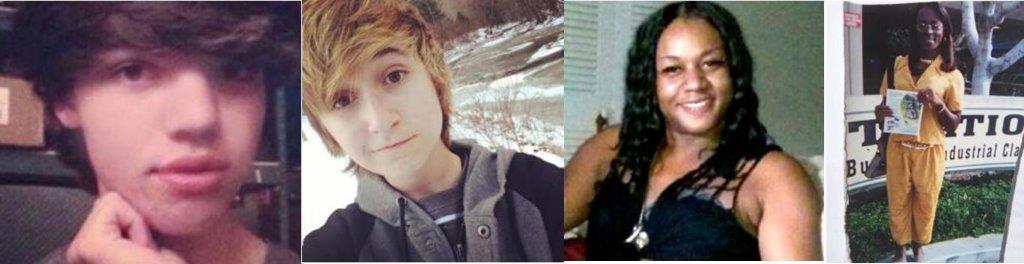
 In my last post, I shared with you my wonderment at the power of music to speak for us when we lack speech and to touch us when we are beyond reach. Now, I experience wonderment at the power of silence. For, it was silence that in the end helped my father-in-law, who was truly my father, to shed his mortal coil. After the noise of caregivers and nurses, of talking and encouraging, of wailing and whispering, there was a window of silence when I sat alone with him, stroking his forehead lightly. I knew he would be free in that quiet to exhale, and with that final breath, he too became silent.

 Feminism and Religion