Caravanserai and Other Poems by Annelinde Metzner

This set of poems reflects on ways we humans have responded creatively, expansively and artistically to the challenges of our times.  Of course, two of the poems center upon music, one of the strongest themes of my own life.  The first and last poems are ways that the natural world is always knocking at the door, saying, “pay attention.”

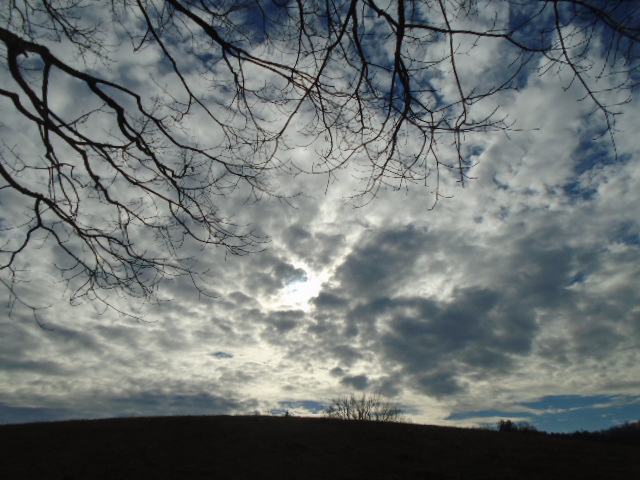
Winter Sky

Like this

“Like this,” says the titmouse,
     hanging upside down to get at the suet.
“If you really want it, there it is.”
“Like this,” says the January sun,
     one day icing us to our bones,
     and today like Spring,
     warm enough for rides
     on little boys’ new scooters.
“Like this,” say the squirrels,
     entranced with each other,
     whirling ’round the branches,
     twining fluffy tails,
     intent on making new Squirrel babies.
“Like this,” says the chickadee,
     landing near my toe,
     tiny and brave, ready to eat,
     scolding me to get out of the way.
“You are here to live,
     so live.”

Continue reading “Caravanserai and Other Poems by Annelinde Metzner”

The Littlest Balsam by Sara Wright

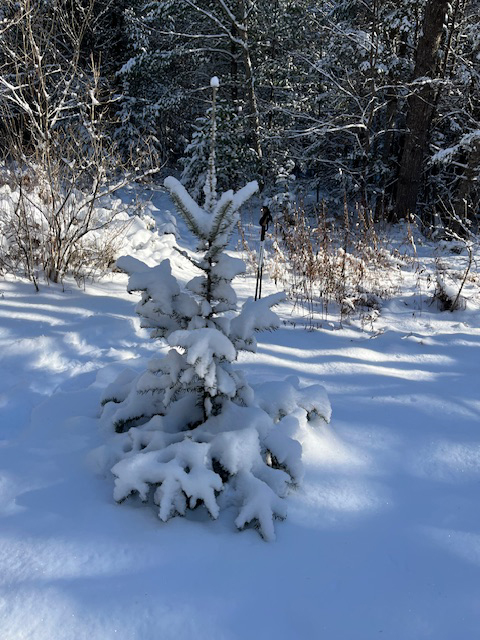
Five years ago
I dug a seedling
in protest
ki’s deep green
needles
slender trunk
and roots
yielded
to sweet
spring earth
with prayers.

I believed.

One winter night
I will celebrate
your life
the lives of
thousands
with a
candlelit
spiral
of tiny white lights.

Tonight
white flames
adorn you
old longings
and heartbreak
we share the same
root
stilled by
simple beauty
a single
reflection
of Love.

Continue reading “The Littlest Balsam by Sara Wright”

Honeysuckle Jewels and Women with Wings by Sara Wright

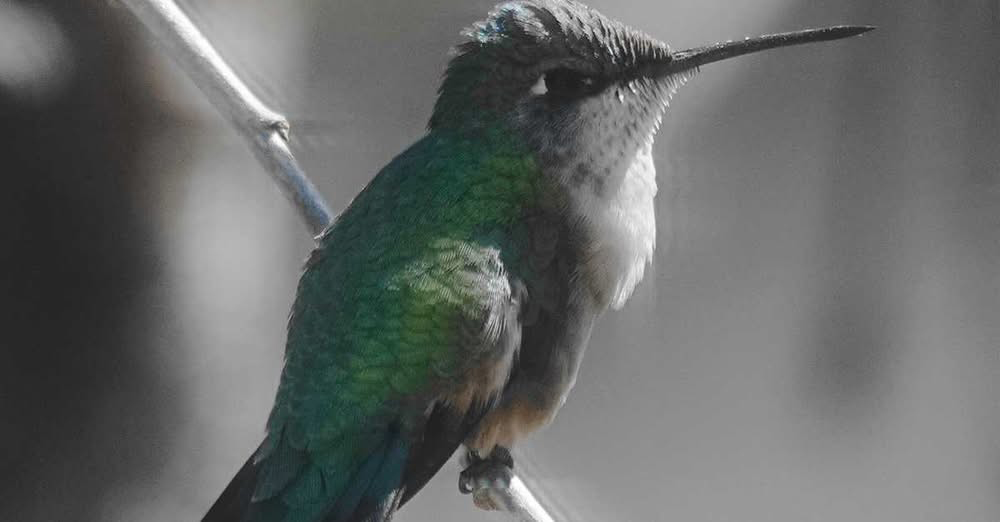
Female Hummingbird in Maine, April 26

Initially I wrote this article for publication at a plant site but was forcibly struck by the reality that what we are doing to plants is exactly the same thing we are doing to humans, women in particular. Separating, Othering, Judging, Dismissing, Eradicating. I could go on here. When you read this article about invasives think about how we are being treated as women. It alarms me that no matter I turn I see the same story played out with humans (women and children suffer most overall), trees, plants, and the animals we are so busy annihilating if not physically then in some other monstrous way. Fill in the blank with your own story.  Then imagine yourself as a bird with wings who carries the seeds of new life into unexpected places.

When I first moved to this area many years ago, I used to spend most of the time in the forests that surrounded my house except in the spring. Then I walked along what used to be a country road to see the wild trilliums, arbutus, lady slippers, bunch berry, violets and columbine that peppered the road edges. 

All the trees and flowers were so plentiful and so beautiful that it took me a few years to pay closer attention to the bushes like the various pussy willows and wild cherries, beaked hazelnut, witch hazel and hobblebush that I also came to love. 

Continue reading “Honeysuckle Jewels and Women with Wings by Sara Wright”

Diana Beresford-Kroeger: Integrating Celtic Wisdom and Science, part 2 by Theresa Dintino

Part 1 was posted yesterday

Combining ancient wisdom and western science

At age sixteen Beresford-Kroeger was graduated from her mentorship of the Lisheens and went on to become a scientist, learning medical biochemistry and botany. Eventually she saw that many of the things she learned from the Lisheens elders could be scientifically proven. This offered her delight and reassurance.

One of the first of these was the plant Chrondrus crispus or seaweed named Irish moss. Her Great-Aunt Nellie taught her that it cured tuberculosis and how to prepare and use the gel-like mucilage it released upon being boiled.

In the lab Beresford-Kroeger later discovered that this mucilage has antibiotic properties.

“The feeling this confirmation of Nellie’s teaching gave me is hard to describe. I loved my teachers in Lisheens, but I hadn’t completely ruled out the idea that the things I’d been taught there were just old superstitions. I needed to confirm them for myself. There was always the chance that there would turn out to be nothing of import in the plants they’d emphasized to me, and nothing more to the ancient knowledge than beautiful clouds of vapor”(96).

She began to understand that what she had been taught was an oral tradition and that it existed in no other format and that she was meant to be a bridge between “the ancient and the scientific”(97).

“My teachers in the valley might have indicated that a particular plant was good for poor circulation, which I’d taken to mean heart trouble. I would then know to keep a particular eye out for the presence of any chemical known to benefit the heart. “Well, Diana,” they might have begun, while cradling a small, five-pointed yellow flower in the crook of two fingers. “St. John’s Wort, as you see here, has a strong medicine for nervousness and mental problems.” I would later find out that St. John’s Wort contains phytochemicals such as hyperforin, which increase the effectiveness of dopamine and serotonin in the brain. The plant is as effective as many prescription anti-depressants, and may in some cases be more effective”(98).

Continue reading “Diana Beresford-Kroeger: Integrating Celtic Wisdom and Science, part 2 by Theresa Dintino”

Diana Beresford-Kroeger: Integrating Celtic Wisdom and Science, part 1 by Theresa Dintino

Moderator’s Note: This post is brought to you by a collaboration by FAR and Nasty Women Writers written and hosted by Maria and Theresa Dintino. This post originally appeared on their website on Sep 12, 2023

In her book To Speak for the Trees: My Life’s Journey from Ancient Celtic Wisdom to a Healing Vision of the Forest, Diana Beresford-Kroeger  shares her origin story, the humble beginnings of the famous scientist, the activist and crusader for the planet she became. We learn on what forge that will, strength, brain and consciousness were smelted. And it is one of beauty, strength and love, one that takes the breath away.

I loved this book. I loved going deeper and deeper into Beresford-Kroeger’s life story, into the rich depths of her Celtic heritage and medicine lineage. To learn the secrets and the wisdom. Beresford-Kroeger offers sacred transmission in this book, revealing another part of herself. It is a vulnerable telling and an irreplaceable gift.

Continue reading “Diana Beresford-Kroeger: Integrating Celtic Wisdom and Science, part 1 by Theresa Dintino”

So, You Think You’re a Feminist? The Culturally Palatable ‘Feminism’ of The Barbie Movie by Tallessyn Zawn Grenfell-Lee

People are often surprised to learn that I actually love Barbie. Years ago, I heard a BBC interview with Ruth Handler, the creator of Barbie. In a world of baby dolls for mothering creative play, she wanted her daughter – Barbara – to have the opportunity to imagine other things, too. A computer scientist. A top executive. An astronaut. (The film shows a bit of this early intent.) Of course, no one would support her idea. Then, one day in Switzerland, she was walking past a toy shop and saw a small, plastic, adult, female doll. She had finally found a prototype! 

Unfortunately, this original Lilli doll had been created to depict an alluring, sassy, provocative “golddigger, exhibitionist, and floozy.” And Ruth specifically didn’t want her doll to be stereotypically ‘beautiful,’ because she didn’t want it to hurt girls’ self-esteem. But the only manufacturer willing to create the dolls was in Japan; their English was so limited, she finally picked up a file and literally filed off the plastic nipples in order to explain that she didn’t want the doll to have nipples. 

Continue reading “So, You Think You’re a Feminist? The Culturally Palatable ‘Feminism’ of The Barbie Movie by Tallessyn Zawn Grenfell-Lee”

On Terumah: (Eco)Feminist Reflections on the Tent of Meeting.

The Torah portion for March 1, 2025 is Terumah, consisting of Exodus 25:1-27:19. Terumah in Hebrew means contribution, and the parshah begins with the deity requesting donations from the willing hearts of men (yes, only men) of precious metals and stones as well as dyes, linens, wools, and skins.  Terumah then provides the instructions for how to build the Tent of Meeting and all of its components.  In this post, I want to focus on four aspects of the post from the perspective of ecofeminism and feminism: beauty; the misuse of nature, the concept of home, and the indwelling or immanence of the divine.

Continue reading “On Terumah: (Eco)Feminist Reflections on the Tent of Meeting.”

Legacy of Carol P. Christ: Why I am Running In The Greek National Parliamentary Elections On May 6

This post was originally published on April 30th, 2012. Perhaps some of us may be inspired to run for office next! 

Carol P. Christ, a founding mother in the study of Women and Religion and Feminist Theo/a/logy, has been active in anti-racist, anti-poverty, anti-war, feminist, pro-gay and lesbian, anti-nuclear, and environmental causes (in that order) for many years.  All of these issues have informed her teaching, her scholarship, and her politics. 

Greece is in the throes of a terrible economic crisis. National elections were called last week and will be held on Sunday May 6.

I am one of the 5 candidates for the Greek Parliament on the Green Party ticket in electoral region of Lesbos. We are a small country of only about 10 million people. The Lesbos district includes about 100,000 people. It is truly amazing that I as an immigrant have been asked to run. It is also amazing that though most of our politicians are corrupt, our electoral system has not yet been completely bought. No polls are allowed during the last 2 weeks of the election. The final poll indicated that the Green Party will have a voice in parliament for the first time on May 7. No Green candidate from Lesbos is likely to become a member of parliament, but all of the votes we gather will be counted towards the party’s total representation. Unfortunately two right wing fascist parties are also likely to get seats, and no party looks poised to gain a ruling majority. What will happen next is anyone’s guess.

Ecofeminist Petra Kelly was one of the founders of the European Green Party of which we are part. Due in part to her good work, the Green Party’s goals include: sustainability, social justice, nonviolence, and participatory democracy. Not a hard platform to run on! Continue reading “Legacy of Carol P. Christ: Why I am Running In The Greek National Parliamentary Elections On May 6”

Morning Prayer For December by Sara Wright

 Walk lightly
pay keen attention…
practice gratitude
but not at the expense
of truth
take sparingly
 share

 an Underground Web
writes the Story
but my roots
belong to earth
at the crossroad –
I choose
‘both and’

 Listen to
feathered voices
keep breathing deep
into the forest floor
feel that luminous Light
hidden beneath my feet
Balance fear and pain
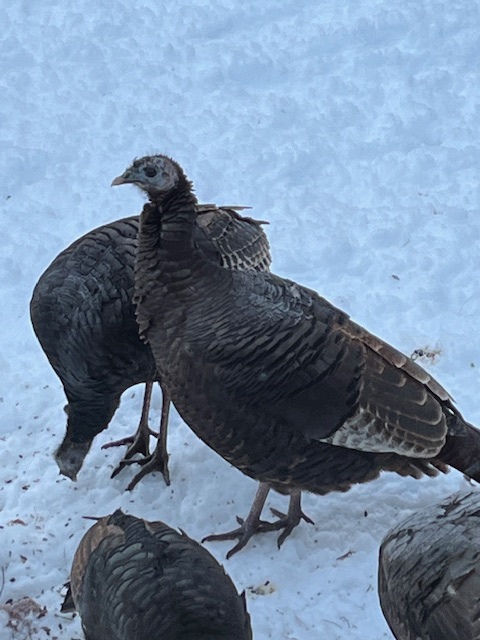
with turkey flight.

Continue reading “Morning Prayer For December by Sara Wright”

On Noach and its Ecofeminist Potential.

The Torah portion for November 2, 2024 is Noach.  The portion includes the stories of Noah’s ark and the tower of Babel and ends with Abraham and Sarai settling in the land of Canaan.  In my feminist analysis of Noach, I will focus on the ecofeminist potential of divine acknowledgements and how the divine is portrayed.

As ecofeminists at the intersection with religion, one task we have is to interpret those sacred texts which have something to say about nature and animals.  Within Judaism, there are numerous such texts, and parshah Noah is one of them.  Afterall, most of Noach revolves around a great flood in which the deity destroys the earth and most of its inhabitants, animal and human.  

The divine destruction of the material realm is problematic.  The deity blames the divine decision to destroy creation on the rampant corruption of the flesh: human and animal alike (6:13).  In feminist thinking, linking material existence to corruption is unsettling since patriarchy often disavows material existence by linking it to evil.  In addition, in Noach, an aspect of the material world, water, is used in bringing about that destruction.  However, water is also ironically what all flesh depends on for life.    

Continue reading “On Noach and its Ecofeminist Potential.”