CrossFit, Spirituality, and Trauma: An Introduction by Stephanie Arel with Ashleigh Gibb

We met online. Saram College hosted a theology and trauma workshop that Stephanie taught. Ashleigh asked a question. An immediate connection emerged.

The connection consists of mutual interest and passion around bodies, their strength, their vulnerability; around the spirit, its expressions and its intrinsic materiality; and trauma, what violations to our bodies cause to disrupt and annihilate us. Our interests intersect. Stephanie teaches Scripture and the Human Response to Trauma at Fordham; Ashleigh is a Crossfit Coach and Personal Trainer currently pursuing her PhD. She has nine years of experience working with survivors of trafficking and sexual violence. Together, we recorded a few YouTubes on CrossFit and Spirituality, on Crossfit and Community, and one forthcoming with a topic in the works.

Continue reading “CrossFit, Spirituality, and Trauma: An Introduction by Stephanie Arel with Ashleigh Gibb”

Fear and Need in the Absence of Mother God, part 2 by Caryn MacGrandle

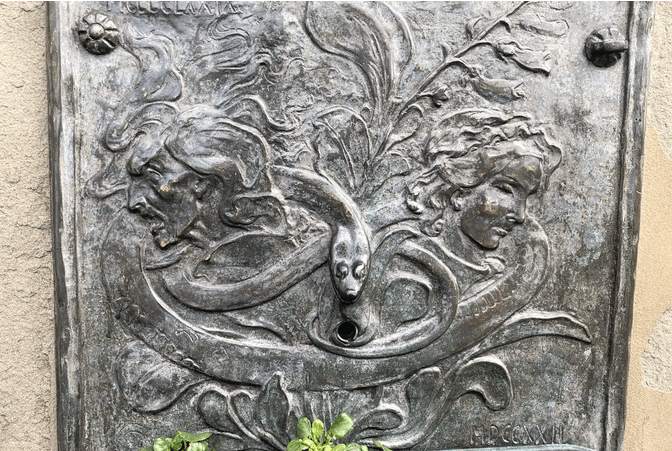
Yesterday’s part 1 post quoted from the book, The Malleus Maleficarum

Witches Well in Edinburgh, Scotland, …the Roman numerals for 1479 on one side and 1722 [years when witch persecution was most prominent]

The book wasn’t just a message for women but for all. The tenets that formed the backbone of colonial culture:

  • Paddle your own canoe. 
  • Success comes with hard individual effort when you stay within the lines that we draw. 
  • And if you fail?  Well, that’s on you. 
  • Maybe you will get another shot if you are lucky, work relentlessly and act as you should.
  • And never ever forget that your worth is defined by the number of 0’s in your bank account.
Continue reading “Fear and Need in the Absence of Mother God, part 2 by Caryn MacGrandle”

Redemptive Forgetfulness by Marcia Mount Shoop

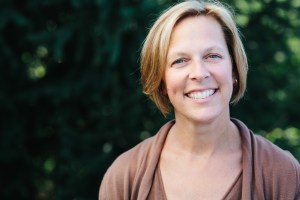
MMS Headshot 2015Have you forgotten yet? Have you forgotten what it felt like to go about your life pre-pandemic?

My brain has switched to a different filter system. If I watch a movie or see an image from the pre-pandemic world, the first thing I notice is that people are standing too close to each other. Or I notice that they are touching each other. People are supposed to be in proximity to each other only in the boxes of Zoom or in the confines of their home or in a hospital where the staff has on protective equipment. That pandemic filter overlays itself onto everything now, even memories.

It’s hard to access the joy of greeting someone with a hug or handshake, because those things are something we must tell our bodies not to do. We have to resist that urge. We have to rewire our impulses. There are tiny threads of shared trauma in it all—how will we ever feel like we can be together again and not be afraid? Continue reading “Redemptive Forgetfulness by Marcia Mount Shoop”

The Ability to Feel and to Feel the Feelings of Others by Carol P. Christ

The term “panpsychism” is made up of two Greek words: pan, meaning all, and psyche, often translated mind or soul. Panpsychism is the view that (forms of) soul or mind or consciousness are found throughout the web of life. This view is in contrast to the traditional western philosophical and theological consensus that having a soul or a mind is what sets human beings apart from other forms of life. In contrast, mystics, children, and many indigenous people assume that human beings are not the only form of life with consciousness.

Traditional western thinkers believed that God created the world out of nothing according to principles in his mind. Those principles included the idea that minerals, plants, and animals are “lower” unconscious forms of life, while humans, angels, and the deity are not only “higher” forms of life, but are the only forms with consciousness or mind.

This view was still widely held when I was in graduate school in the late 60s and early 70s. My professors mocked anyone who dared to suggest that animals—including family pets—had any form of consciousness or feeling. However, the notion that human beings are essentially different from other forms of life creates an unanswerable question for evolutionary theory: how did human beings with consciousness or mind evolve from forms of life that had no consciousness or mind? Continue reading “The Ability to Feel and to Feel the Feelings of Others by Carol P. Christ”

The Fierce Initiation of Menopause by Mary Sharratt

Modern Western culture despises aging. Aging women are held in particular contempt. Menopause is meant to be something embarrassing and uncomfortable. The pharma industry peddles hormones and other drugs meant to mask our symptoms. Few women see menopause as something to even talk about, let alone celebrate. But some women are reclaiming the dignity and transformation of menopause as a passage to power. Author and herbalist Susun Weed portrays menopause as a spiritual awakening. She likens the fierce waves of heat traveling upward to our brains to the Eastern concept of a Kundalini awakening that ultimately leads to enlightenment and spiritual liberation. Whether or not you agree with this, you will not make it through menopause without some kind of radical change taking place inside you.

I’ve experienced menopause as an initiation by fire. Having chosen not to have children, menopause has proved the most intense and radical embodied experience and transformation I’ve undergone since menarche and puberty. When a hot flash seizes me, I can no longer continue my train of monkey-mind thinking or be an efficient worker bee of global capitalism. All my old ingrained thought patterns are interrupted and come to a halt as I’m forced to focus on the embodied experience of burning up from within. What if this internal fire is literally burning through old ways of thinking and being that no longer serve me? Maybe we’re supposed to be rattled and disturbed so we can change. It’s even called The Change. So many tired old patterns are falling away from me, because I can’t keep up with them anymore. There’s this profound deepening. A sense of what truly matters.

I resist change so much. I long to remain in the comfortable old rut of the familiar, but menopause makes that impossible. It’s a take-no-prisoners wake up call to the reality of passing time and impermanence. It forces me to reexamine my values, where I truly want to spend the remaining time I have on earth. I’ve always been spiritual, but menopause has deepened my commitment to daily spiritual practice. It’s also taught me to embrace my own fierceness. To say what I mean and mean what I say. Menopausal women might find themselves losing the superficial prettiness of youth. We can no longer pass as objectified eye candy in male-stream culture. With our wrinkles and gray hair, we become something scary but also powerful. Crones and witches. We truly do become wise women if we answer the spiritual call of menopause. If we resist the lure of male-stream medicine to brainwash us into reframing this profound transformation and path of power into a disease that must be treated with hormones and face lifts. While some women benefit from hormone therapy and allopathic medicine, I’m against the generic medicalization of the natural processes in women’s lives.

Pregnant women give birth to new souls. Menopausal women give birth to their wiser selves. Like motherhood, menopause sidelines us on the relentless march towards capitalist achievement and forces us to reexamine our true priorities. We live in a 24/7 culture that expects us to be switched on and working at maximum efficiency every day of the year, as if the cycles of the seasons, sun, and moon didn’t exist. Menopause is an invitation to live in harmony with the tides and seasons of our lives. To claim our time and attention and take our lives back.

If older women truly knew how fierce and powerful we were, we could change the world.
Readers might also want to check out my essay: “Life Begins at 42: Saint Hildegard’s Guide to Becoming a Midlife Powerfrau.” 
 

Mary Sharratt is on a mission to write women back into history. Her most recent novel Ecstasy is about the composer Alma Schindler Mahler. If you enjoyed this article, sign up for Mary’s newsletter or visit her website.

 

Reimagining the Classroom: Embodied Ecofeminism and the Arts Course on Hawai’i Island by Angela Yarber

“The classroom remains the most radical space of possibility in the academy.”-bell hooks

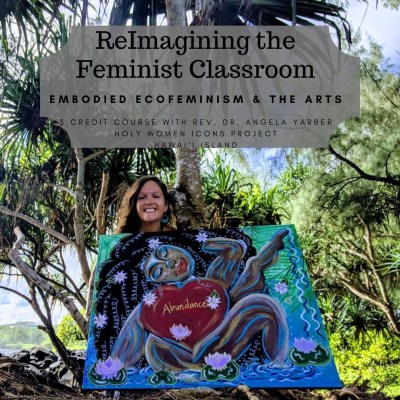
Like many academics, my “in the box” dream was to be a professor. The full-time, tenured kind. Like many queer feminist academics, I know that such dreams are rarely reality. When you’re also an artist and activist with a strong penchant for wanderlust, these dreams are simply unattainable fairytales. Never one for “in the box” living, I left the traditional academy and traditional church years ago, wandering over the garden’s walls with Lilith as my intrepid guide. I’ve told the story before. My wife and I left our jobs, sold our home, traveled full-time with our toddler, and turned the Holy Women Icons Project into a non-profit while building an off-grid tiny house on the television show Tiny House Nation in Hawai’i. It’s become old news. But since we’ve been doing this for several years now, those faraway dreams are finally starting to become reality. The academic classroom, the activist’s platform, the artist’s studio, the feminist’s megaphone, and the farmer’s orchard are fusing into one creative, life-giving, empowering space for teaching. The Holy Women Icons Project’s first academic course, “Embodied Ecofeminism and the Arts,” is actually happening. Seminarians and doctoral students from Berkeley join us in January. They’re soon followed by undergraduates from New York and seminarians from Atlanta. And I’m reaching out to more and more schools interested in creatively, subversively, and sustainably decolonizing the classroom with us for one week on the Big Island.

Continue reading “Reimagining the Classroom: Embodied Ecofeminism and the Arts Course on Hawai’i Island by Angela Yarber”

Trial by Fire, Healing by Water by Carol P. Christ

It wasn’t really fire. I came home to Lesbos from a soulful Goddess Pilgrimage to Crete and a discouraging emergency meeting of the Green Party Greece totally exhausted and wanting nothing more than to rest. It was the hottest June on record and my house with its many windows felt like a furnace. Due to a dispute with the installer, it took eleven days to get the air-conditioning fixed. My little dog who could see when I left for Crete, was blind when I returned. I wondered if I would have to put her down and could not bear the thought. I was so tired and so hot that I could not think straight. It was beyond my capacity to even consider moving to a hotel. I didn’t have the energy to unpack. And I didn’t have a car as the old one had been sold and the new one was still at the dealership in Crete. So I couldn’t escape. Instead I tried to hold back tears.
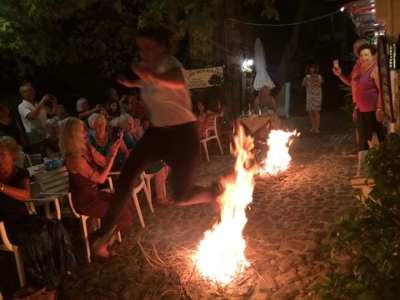
After the air-conditioning was finally fixed, I was able to unpack, wash my clothes, and repack for my return to Crete. The night before I was to leave, I jumped the St. John’s day (midsummer) fires. The locals say they jump the fires for fertility (jumping fires does warm the nether parts) and health. In the photo I am sitting at a table directly behind the first fire, but I soon got up and jumped all three of them, affirming the powers of birth, death, and regeneration.

Continue reading “Trial by Fire, Healing by Water by Carol P. Christ”

Windigo by Sara Wright

Windigo,

the Potawami Nations call him.

Malignant,

this spirit thrives

in the Northern Woods,

within the human soul.

Hatred for self or other

hidden

under Lies.


Windigo, the

Potawami Nations call him

He thrives

on greed.

Empty

He can never

Be filled.

Continue reading “Windigo by Sara Wright”

Pleasure, Touch, and Spirituality by Chris Ash

Sitting in front of the computer, I slowly and intentionally insert earbuds, click to start my favorite writing playlist, and open up Microsoft Word. I feel the tips of my fingers resting lightly on the keys, and notice the slight give of each printed square, glossy in the middle from months of 80 words per minute. I lightly tap my fingers on the keys, not pressing enough to type a letter, body motionless except my fingers, watching the absolute stillness of the screen, exploring the edge between pressure and performance with slow, shallow breaths, finally noticing the moment when the edge is breached, the key catches, and a letter appears on my screen, taking it in with satisfaction.
This is how all my writing starts, with a ritual of simple pleasure and partial attempt at channeling. My partner recognizes this move when he sees it. It’s one I repeat throughout the writing process, as I’m waiting (hoping) for the next words to come to me. I’ll stop, lift my head and close my eyes, and allow my fingers to wiggle lightly over the keyboard as if inviting the unseen to move through me and write my piece. If that still doesn’t produce words, I might run my hands from thigh to knee, fingers pressing with increasing depth into denim-covered flesh. Or I might bring my hands up to my face, fingers resting on my hairline, palms lightly covering my eyes, as I experience the instant soothing of darkness and warming effect over closed eyelids, connecting to the me-within so she can help me bring forth missing concepts. Continue reading “Pleasure, Touch, and Spirituality by Chris Ash”

La Llorona by Sara Wright

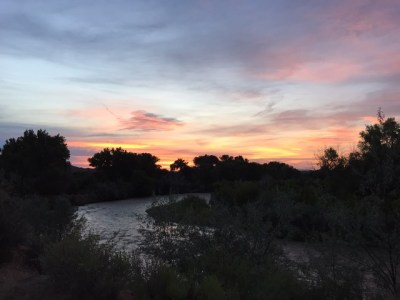
The legend of La Llorona has been a part of Hispanic culture in the Southwest since the days of the conquistadores. Though the tales vary from source to source, the one common thread is that La Llorona is a woman named Maria who is always dressed in a white gown, the spirit of a young Mexican mother who drowned her children in the river in a moment of rage or abandonment by her lover and then took her own life in her deep shame and sorrow. La Llorona’s disembodied spirit is said to haunt the rivers at night – especially the Rio Grande – where she can be heard weeping in remorse for her dead children. Children are cautioned not to go out after dark because La Llorona might murder or drown them too. Because the tale of the Weeping Woman originated with the Patriarchal Spanish conquest I have always been suspicious of the various versions of this story believing that its meaning has been distorted.

Immediately what comes to mind is the Mater Dolorosa, Our Lady of Sorrows, or Mother of Sorrows. All refer to the Virgin Mary, the only goddess left in Christianity. Our Lady of the Seven Sorrows is another name used to refer to this goddess. The Mater Dolorosa is also a key subject for Marian art in the Catholic Church.

Continue reading “La Llorona by Sara Wright”