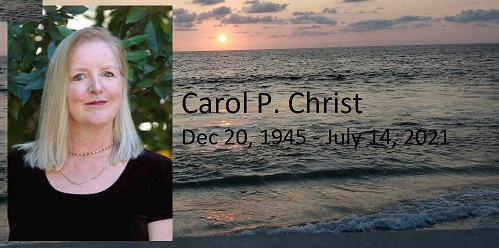
The Legacy of Carol P. Christ: Sappho Chose Love Not War, What Will You Choose?

This was originally posted on November 12, 2012

We have been taught to speak of war and the heroes of war in hushed tones. We have been told that evil Helen’s choice was the cause of the Trojan war.  2600 years ago Sappho, known as the greatest lyric poet of ancient Greece, spoke truth to power and unmasked the lies told at the beginning of western tradition.

*

In a poem addressed to Anactoria, Sappho writes:

            Some say a cavalry corps
            some say infantry, some, again,
            will maintain that the swift oars
            of our fleet are the finest
            sight on dark earth …

Here, Sappho invokes the heroic tradition celebrated in the epic poems of Homer that shaped the values of ancient Greek culture and all the cultures that followed it, including our own.  This tradition tells us that to serve in a war and to be remembered as a hero is the highest goal to which a man can aspire.  Sappho does not agree:

             …but I say
             that whatever one loves, is.
Continue reading “The Legacy of Carol P. Christ: Sappho Chose Love Not War, What Will You Choose?”

The Daughters of Zelophehad and the Five Feminine Powers of the Kabbalah by Rabbi Jill Hammer

Jill anointing her daughter. photo by Shoshana Jedwab

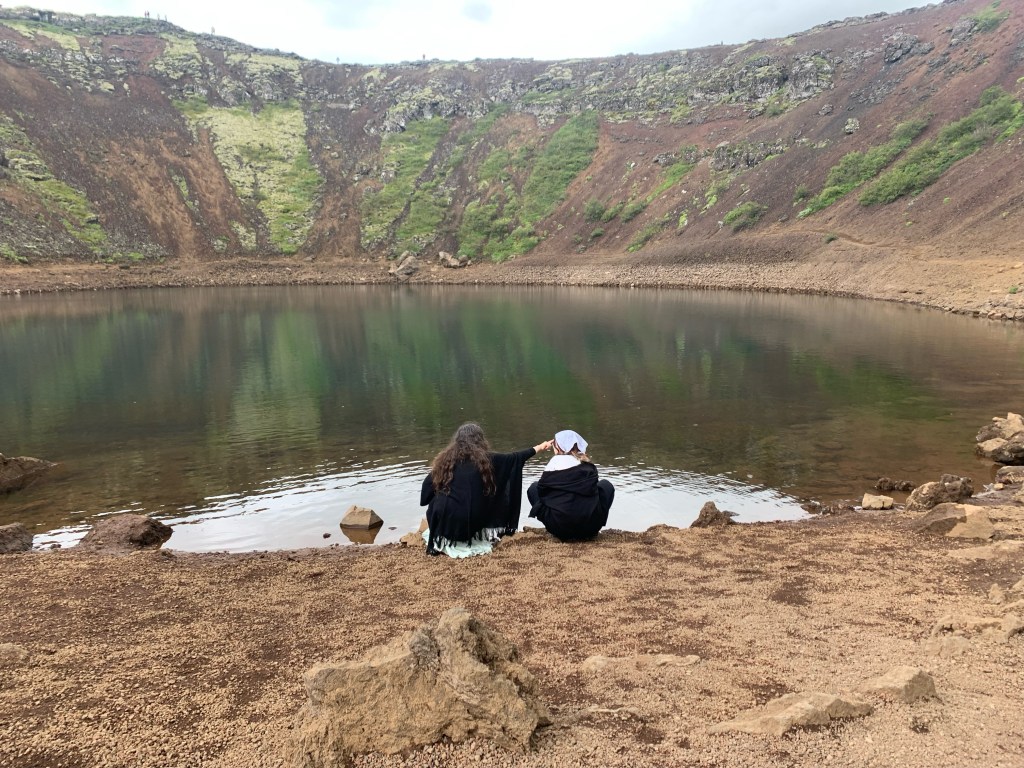
This summer, I visited Iceland, a beautiful and magical land.  While I was there, I saw the Kerid Crater, which is a caldera: a volcanic crater with a lake inside.  My family and I hiked around the edge of the crater and then down close to the lake.  The perfect roundness of the crater-lake gave the impression of a circular container—a jewel-box shaped by some immense hand— or else a massive eye looking up from the earth.  My daughter and I sat by the lake’s waters and anointed one another, having the sense we were in a sacred place.

Later that summer, I grappled with a story that reminded me of the crater. In Numbers 27, five sisters—the daughters of a man named Tzelafchad—approach Moses with a question.  Their father had daughters, not sons, and it seems this means his family will receive no land allotment in Canaan.  The daughters ask that they be given land allotments: “Let our father’s name not be lost to his clan just because he had no son!” (Numbers 27:4).  Moses takes their complaint to God and brings back an answer: the daughters have spoken rightly, and will receive a land allotment as they request.  However, they must marry men of their own tribe so that the tribal land is not lost— if the women married men of another tribe, their heirs would belong to that other tribe and so the land would change its tribal designation.  Thus, patriarchy is mitigated but not ultimately contradicted—the women become heirs to their father, but primarily for their father’s sake, not their own. 

Continue reading “The Daughters of Zelophehad and the Five Feminine Powers of the Kabbalah by Rabbi Jill Hammer”

Moses and the Rambo Problem by Janet Maika’i Rudolph

Moses is an interesting character is in the pantheon of religious leaders. He is such a major personage, considered the founder of Judaism and yet there are no extra-biblical accounts of his life and his deeds. He only exists in the bible. You’d have thought that such a major event as leading a whole class of people away from Egyptian slavers, would have shown up on the radar of other written or mythical accounts from the time. Nothing!

Even his name is interesting. When the Egyptian princess gathered Moses out of the waters she said:

She named him Moses, explaining,

“I drew him out of the water.”

Exodus 2:10

This is one meaning of his name. But there are others. In Egypt, the land where he was born and raised, the M-SH (variations: m-s or m-ss) root simply means “son.” Or it can mean “child” in a non-patriarchal sense. We see this in other Egyptian names Ramses is the child of the sun god Ra. Tutmose is the child of Tut. 

Continue reading “Moses and the Rambo Problem by Janet Maika’i Rudolph”

The Legacy of Carol P. Christ: Dance of the Bees: Reading the Language of the Goddess

This blog was originally posted on December 1, 2014

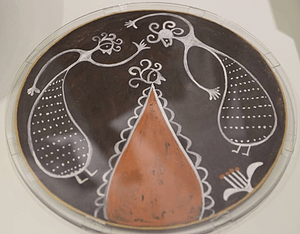
The image from an ancient Cretan bowl (c.1700 BCE) from the Sacred Center of Phaistos pictured here has often been interpreted as an early depiction of Persephone’s descent or rising. But are clues from later Greek mythology pointing in the right direction in this case?

Recently, my colleague Mika Scott posted the Phaistos bowl image on our Goddess Pilgrimage Facebook site in conjunction with the bee pendant from Mallia. This juxtaposition led me to think again about the importance of bees and pollination in agricultural societies and to offer an alternative reading of the symbolism on the bowl.

Continue reading “The Legacy of Carol P. Christ: Dance of the Bees: Reading the Language of the Goddess”

Remembering Rosemary Part 2 by Janice L. Poss and Theresa A. Yugar

Editor’s Note: A more formal memorial to Catholic Feminist Theologian Rosemary Radford Ruether was posted here at Feminism and Religion at the time of her passing. Now we are delighted to share these memories of her by two scholars, Theresa A Yugar and Janice L. Poss, who knew her well, especially in her last months. Therese’s reflection is below and Janice’s will appear tomorrow. As Janice notes in her post, “More than any deep theological concept, doctrinal exegesis, or other hyper-scholarly thought, she taught me simply by being who she was – a woman – and she gave me the ultimate gift, the gift of herself.” Through these posts, Theresa and Janice pass on some of Rosemary’s wise and caring gifts to our FAR readers. Part 1 was posted yesterday. You can read it here.

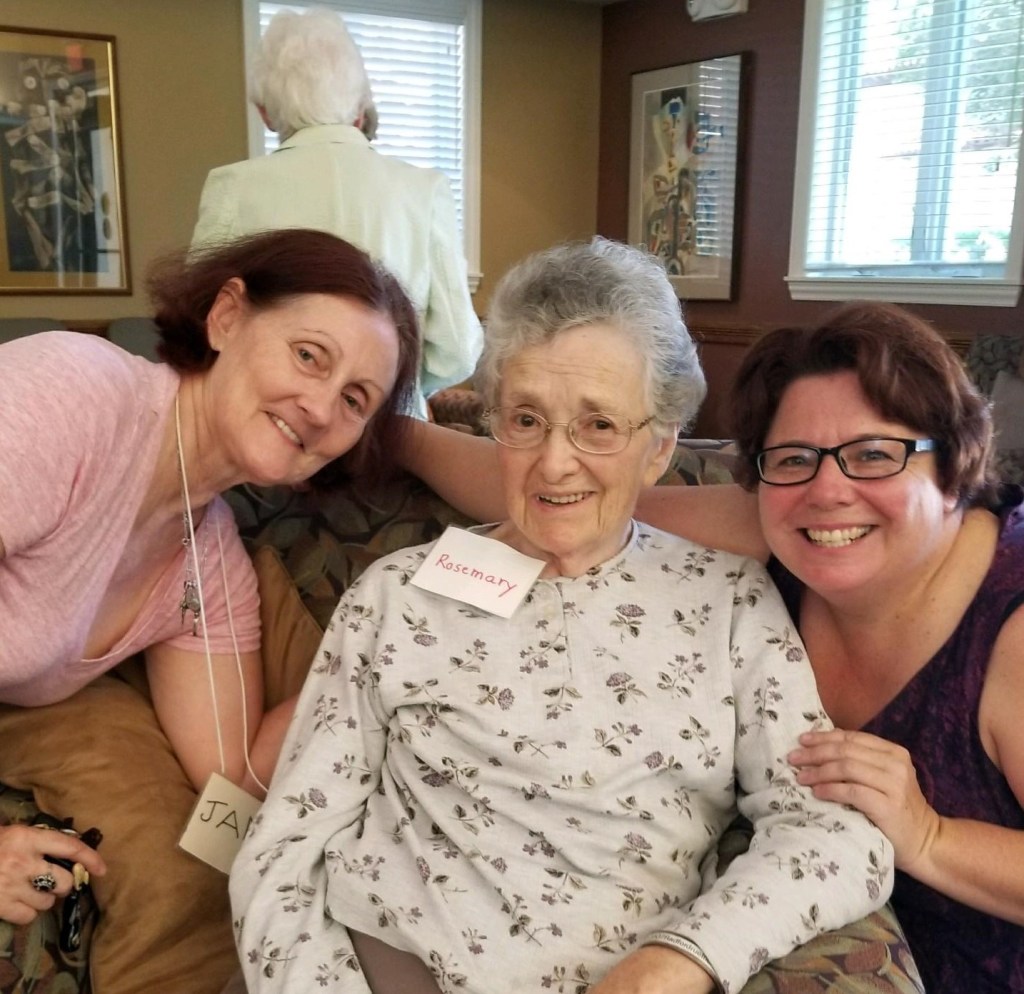
Janice, Theresa with Rosemary

Almost five years ago, Rosemary Radford Ruether suffered a devastating stroke that left her partially paralyzed and no longer able to speak or write, activities that were integral to her life as a writer, teacher, activist, and scholar. During her difficult last years Janice and I learned new ways of engaging her that were academically stimulating and fulfilling for her. We became advocates for her during her disability as she had been an advocate for us. Thus, out of pain grew blessings.

Janice and I dedicate and share with you these two short reflections that reflect our struggle to find our way without her. We know there will be many more reflections composed and shared by others whom she mentored, influenced and touched. Now—in the midst of our grief and sadness at her loss—we offer our personal memories of how she enriched our lives every day until she passed from our midst at 2pm, on Saturday, May 21, 2022.

Continue reading “Remembering Rosemary Part 2 by Janice L. Poss and Theresa A. Yugar”

Remembering Rosemary Part 1 by Janice L. Poss and Theresa A. Yugar

Editor’s Note: A more formal memorial to Catholic Feminist Theologian Rosemary Radford Ruether was posted here at Feminism and Religion at the time of her passing. Now we are delighted to share these memories of her by two scholars, Theresa A Yugar and Janice L. Poss, who knew her well, especially in her last months. Therese’s reflection was posted yesterday and Janice’s is below. As Janice notes in her post, “More than any deep theological concept, doctrinal exegesis, or other hyper-scholarly thought, she taught me simply by being who she was – a woman – and she gave me the ultimate gift, the gift of herself.” Through these posts, Theresa and Janice pass on some of Rosemary’s wise and caring gifts to our FAR readers.

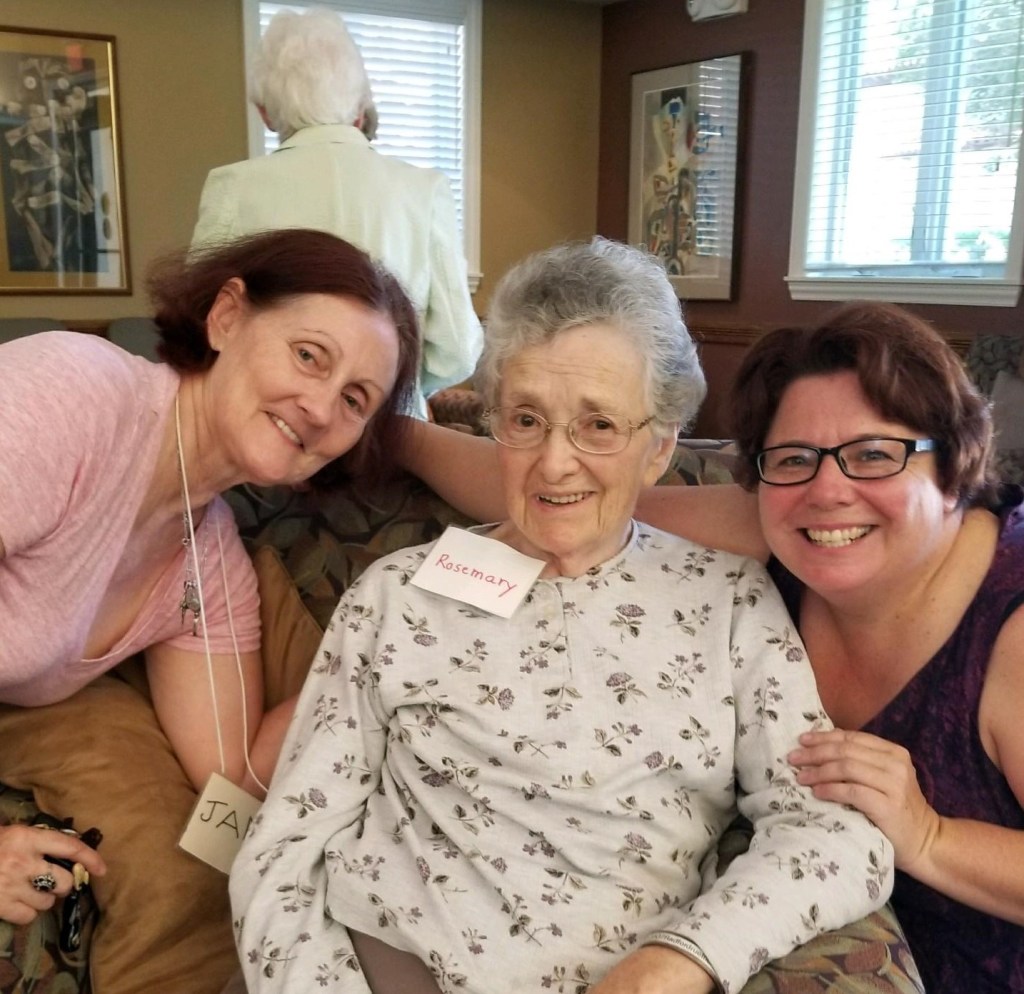
Janice L. Poss, Rosemary and Theresa A. Yuger

She’s gone, but not forgotten. She is there, presence felt. The Spirit, as they say, works in mysterious ways. I knew about Rosemary for several years after attending two presentations  on feminist topics that she gave at Loyola Marymount University in 2005 and 2008. In 2006, I also recall hearing about her while organizing the first Roman Catholic Women Priests (RCWP) Mass in Los Angeles. Once I entered Claremont Graduate University as a Ph.D. student I heard quite a bit about her because my colleague and friend, Theresa Yugar, mentored me through orientation until she graduated. Occasionally I would see Theresa and Rosemary at Pilgrim Place when I attended Women Church Services. Although Rosemary was still teaching one class a semester, I could never attend because I was working full-time.

Continue reading “Remembering Rosemary Part 1 by Janice L. Poss and Theresa A. Yugar”

The Magic of the Labyrinth by Janet Maika’i Rudolph

Labyrinths are magical. I’ve always been drawn to them. About two years ago, a local Episcopalian Church rebuilt their beautiful outdoor labyrinth and opened it to the public. In concert with them, I have been delighted and honored to offer guided walks there. Doing these walks, both in leading them and in walking myself, have given me the opportunity to reflect deeply on what they mean from many perspectives: historical, personal, spiritual, philosophical, experiential.

When I walk a labyrinth, it feels like I am mirroring the universe while expanding my internal journey. Teresa of Avila agrees with me (or, more accurately, I with her). She wrote, “If we learn to love the earth, we will find labyrinths, gardens, fountains and precious jewels! A whole new world will open itself to us. We will discover what it means to be truly alive.”     


Continue reading “The Magic of the Labyrinth by Janet Maika’i Rudolph”

The Legacy of Carol P. Christ: June 25th or “June Unteenth”: A Sad Day For All Americans

This was originally posted on July 1, 2013

Kelly Brown Douglas wrote recently on Feminism and Religion about the celebrations in black communities on Juneteeth when the emancipation of slaves became a reality in the formerly Confederate states.  Sadly, on June 25th 2013 the Supreme Court announced its decision striking down section 4 of the Voting Rights act of 1965, the most important Civil Rights legislation of the 20th century.  The Supreme Court gave a “green light” to states with previous and on-going records of introducing laws with the effect of preventing minority voters from voting to “proceed straight ahead.”  I name this day June Unteenth and call on all Americans to mourn it in sackcloth and ashes.

For every American concerned with Civil Rights this indeed is a sad day. It means states and municipalities—particularly those in the former Confederacy—will in the days following the decision be introducing new legislation which will have the effect of disenfranchising black voters.  Those of us who consider the right to vote fundamental in a democracy must rise up, with time, with money, and if necessary with our bodies in peaceful protest.

Continue reading “The Legacy of Carol P. Christ: June 25th or “June Unteenth”: A Sad Day For All Americans”

In Memoriam: Rosemary Radford Ruether by Elizabeth Ann Bartlett

Yet another of my great feminist and spiritual teachers has died.  Rosemary Radford Ruether, ecofeminist Catholic theologian, died on May 21st.  Her work challenged my thinking and gave me new understandings and perspectives. She was a prolific writer, authoring hundreds of articles and 36 books, and was the quintessential scholar and historian of world religions and ecofeminist thought and theologies. A scholar of the scholastics, she examined the three strains of Western thought: the Hebraic tradition; Platonic-Gnostic; and Pauline-Augustinian in all their complexities to develop an understanding of the nature of Western thought and its implications for the domination of women, nature, and colonized others. As she described her own approach, she drew out the contradictions and complexities in these theologies, careful “to see both negative and positive aspects . . . and to be skeptical of exclusivist views on either side.”[i] Her thought and writing was ever-expanding, and always striving “to see the dominant system of patriarchy, including its racism, classism, and colonialism, in critical perspective,” and to put herself “in places where in solidarity with its victims, I can see it from its underside.”[ii]To this end, she brought together the ecofeminist theologies of women from around the globe, particularly the global south.[iii] Her thought also grew to include critiques of militarism and corporate globalization.  Needless to say, I cannot begin to encompass all of her contributions here. So I will focus on the ways her thought has most deeply influenced and inspired my own, as well as my students’.

Continue reading “In Memoriam: Rosemary Radford Ruether by Elizabeth Ann Bartlett”

The Legacy of Carol P. Christ: GOD AND WOMAN AT YALE*

This was originally posted on June 25, 2012

As a graduate student, I was told in every way possible that I could not be a woman and a theologian.

When I was studying for my Ph.D. at Yale in theology in the late 1960s and early 1970s, my skirts were short as was the fashion of the day.  The male faculty and students and their wives dressed in ways that would not call attention to themselves or their sexuality.  I was also over 6’ tall.  When I walked into a room, I was consciously and unconsciously perceived as a threat to a world which these men had simply assumed was “theirs.”  Their response was to categorize me as a sexual being (I was once introduced as “our department bunny”) and to erase my mind.  I was to discover that the male graduate students were making bets in the dining hall about “where she will sit today.”  One of my friends frequently fell down and feigned to “worship” me when I passed him in the hallways.  I had never received so much attention from men before and it was flattering.

Continue reading “The Legacy of Carol P. Christ: GOD AND WOMAN AT YALE*”