Why It Matters That Simone Biles Won Times Athlete of the Year Award by Janet Maika’i Rudolph

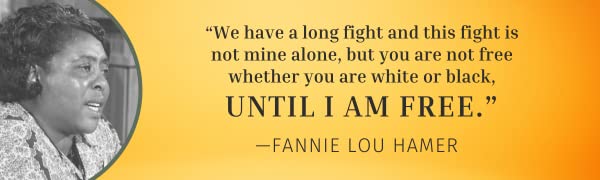
I remember my first feeling’s of disappointment when Simone Biles pulled out of so many events at the 2021 Olympics. But then I quickly realized that here I was falling for the patriarchal lines that are so much a part of our reality that they become unconscious. Simone Biles taught me. Winning isn’t about slaying your foes (although someone who watches politics here in the US would think so). When Biles withdrew, there were many angry tweets and letters that she wasn’t living up to her promises. Let’s review that. She has been called the GOAT (Greatest Of All Time) of her sport. She is the most decorated gymnast in history. She is only 24. What promise has she broken? To whom? And who are we (meaning the public) to even determine what her promise is?

Continue reading “Why It Matters That Simone Biles Won Times Athlete of the Year Award by Janet Maika’i Rudolph”

Writing Women Back into Jewish History: Interview with Michelle Cameron by Mary Sharratt


My friend Michelle Cameron’s powerful new novel, Beyond the Ghetto Gates, is a deep dive into women’s history that I thoroughly enjoyed.

This is a passionately compelling saga of an ancient way of life on the threshold of radical change. Young Mirelle longs to dedicate her life to running her aging father’s workshop, but her rabbi forbids her on account of her sex. Chafing against the constraints of both her gender and the suffocating strictures of the Ancona Ghetto, Mirelle sees no way forward but dutiful arranged marriage. Yet Napoleon’s armies, sweeping across Europe, threaten to change her way of life forever.
I learned so much from reading Michelle’s novel and from my conversation with her below. I hope my readers are likewise compelled! Reading is our great solace in this time of lockdown.


Mary Sharratt:  Michelle, tell us about your new novel, Beyond the Ghetto Gates.

Michelle Cameron: Beyond the Ghetto Gates is a historical novel set during Napoleon Bonaparte’s Italian campaign (1796-97). When French troops occupy the port city of Ancona, freeing the city’s Jews from their repressive ghetto, two very different cultures collide. Mirelle, a young Jewish maiden, must choose between her duty – an arranged marriage to a wealthy Jewish merchant – and her love for a dashing French Catholic soldier. In the meantime, Francesca, a devout Catholic, must decide if she will honor her marriage vows to an abusive and murderous husband. Beyond the Ghetto Gates depicts how the Jews and Catholics of Ancona wrestle with ancient traditions, prejudices, and the challenges of a rapidly changing world.


MS.: How does your faith inspire your fiction?

MC: People often ask if I’m religious, because my historical novels focus on Jewish characters, issues of antisemitism, and the deep conflict between religious tradition and assimilation. I believe it’s precisely because I am a non-observant Jew with deep roots in my ancestral traditions and culture that I can wrestle with these issues in ways that a more religious writer could not. I’ve felt the attraction of being part of “the norm,” much as my characters do, that tug-of-war between religious identity versus being accepted in a secularized society, which is a constant theme in my fiction.


MS: What is the most surprising fact you’ve gleaned from your research into women in Jewish history?

MC: That Jewish women could divorce if their husbands fail in their marital duties. These are spelled out in the marriage contracts (ketubot) that Mirelle’s father creates:

Be my wife according to the law of Moses and Israel. I will work, honor, feed, and support you in the custom of Jewish men, who work, honor, feed, and support their wives faithfully. I will give you the settlement of ______ as well as your food, clothing, necessities of life, and conjugal needs, according to the universal custom.

The shocker here is “and conjugal needs.” Once, when speaking about my previous novel, The Fruit of Her Hands, I was questioned on the pleasure that Shira’s rabbi husband gave her in bed. There’s a common misconception that intercourse is a duty whose sole purpose is procreation. Luckily for me, the group included the rabbi’s wife, who explained that men are actually taught in the Talmud how to satisfy their wives sexually.

But since observant women are discouraged from studying Talmud, men who aren’t adequate to the task aren’t always condemned for their failures. But the fact remains that men are supposed to make the act pleasurable for both parties – and that they can be divorced if they don’t do so.

MS: How do you hope your work might inspire your readers to gain new insights about history and faith?

MC: I hope that, by learning about the cultural underpinnings and the historical struggles of my Jewish characters, my novels might promote greater understanding between all faiths.

MS: What is the one question you never get asked in interviews, but wish you did?

MC: Did you always want to write Jewish historical fiction?

In fact, I did not. My first book, In the Shadow of the Globe, a verse novel about William Shakespeare’s life and loves, was actually the type of book I thought I’d be writing. But then I discovered that I could trace my roots back to my 13th Century rabbi ancestor – Meir of Rothenberg – and realized his life story was the stuff of a novel. Writing that book set me on this path. It helps that I had a much more thorough grounding in Jewish history than most, because I lived in Israel during my high school years.


MS: What are you working on now? Will you continue to explore themes of women and Jewish history?

MC: I’m working on the second book in the series – which takes Napoleon and his troops on a bizarre expedition to Egypt and Israel. Many of the same characters from Beyond the Ghetto Gates will be part of this novel. So yes, I’ll be continuing to explore these themes.


MS: How would you like readers to connect with you?

MC: Via my website. This includes my various social media links, as well as a contact page, allowing readers to write me directly.


Author, Michelle Cameron


Mary Sharratt is on a mission to write women back into history. Her most recent novel Ecstasy is about the composer Alma Schindler Mahler. If you enjoyed this article, sign up for Mary’s newsletter or visit her website.


Embracing Darkness: All Hallows Eve in Old Lancashire


Come Halloween, the popular imagination turns to witches. Especially in Pendle Witch Country, the rugged Pennine landscape surrounding Pendle Hill, once home to twelve individuals arrested for witchcraft in 1612. The most notorious was Elizabeth Southerns, alias Old Demdike, cunning woman of long-standing repute and the heroine of my novel Daughters of the Witching Hill.

How did these historical cunning folk celebrate All Hallows Eve?

All Hallows has its roots in the ancient feast of Samhain, which marked the end of the pastoral year and was considered particularly numinous, a time when the faery folk and the spirits of the dead roved abroad. Many of these beliefs were preserved in the Christian feast of All Hallows, which had developed into a spectacular affair by the late Middle Ages, with church bells ringing all night to comfort the souls thought to be in purgatory. Did this custom have its origin in much older rites of ancestor veneration? This threshold feast opening the season of cold and darkness allowed people to confront their deepest fears—that of death and what lay beyond. And their deepest longings—reunion with their cherished departed.

Continue reading “Embracing Darkness: All Hallows Eve in Old Lancashire”

Missing from History: Women Composers by Mary Sharratt


Clara Schumann


To a large extent, women have been written out of history. Any surviving record of female accomplishment is often trivialized or dismissed. This seems especially true in the male-dominated world of classical music. When asked to name a single female composer, many people draw a blank. This isn’t because they’re ignorant, but because women’s music has been buried and neglected for far too long. Even pioneering women composers themselves lived and worked in ignorance of their foremothers.

Clara Wieck Schumann, wife of Robert Schumann, composed her first piano concerto at the age of fourteen and wrote a significant body of work in her early life. Mother of eight children and family breadwinner, she became the foremost concert pianist of 19th century Europe. In her sixty-one-year performance career, she interpreted the work of contemporary composers such as Robert Schumann and Johannes Brahms. Yet when it came to establishing herself as a composer in her own right, she was crippled with self-doubt. “I once believed that I had creative talent, but I have given up this idea,” she wrote in her diary in 1839. “A woman must not wish to compose—there never was one able to do it.” She was only twenty when she wrote these words that condemned her music to obscurity. Continue reading “Missing from History: Women Composers by Mary Sharratt”

Three More Herstorical Divas to Die For by Mary Sharratt

Last month I blogged about Three Herstorical Divas to Die For. But since herstory is teeming with heroines whose praise needs to be sung and whose legacies deserve to be remembered, I now present three more Herstorical Divas to inspire us.

The Urban Dictionary defines a diva as a woman who exudes great style and confidence and expresses her unique personality without letting others define who she should be. In my mind, a diva is a woman who stands in her sovereignty and blazes a trail for other women. We all need to claim our inner diva to truly dance in our power.

Continue reading “Three More Herstorical Divas to Die For by Mary Sharratt”

Thus Saith Eve BOOK REVIEW by Katie M. Deaver

“I am the Queen of Sheba and I am not impressed.”  This is the first line of one of the monologues from chris wind’s book Thus Saith Eve.  This book features 18 stories of biblical women, and a 19th, Lilith, from Jewish mythology.  Each monologue offers a new interpretation and gives a voice to the women that we think we know.

In this book the voices and personalities of women such as Noah’s wife, Mary of Bethany, Zipporah, and Vashti are reimagined in an exciting and empowering way.  Each of the stories also features an appendix where the reader can learn more about the biblical or mythological context of the woman who is telling her story.

As in her other works, wind uses historical people, events, and understandings to build a truly wonderful source of feminist fiction.  In addition to being an extremely enjoyable and thought provoking read, the monologues can also be used for audition and performance pieces.  On her website wind explains that two of the monologues, “I am Eve” and “I am Mary” can be performed with specific musical selections in the background.  You can find those selections linked to her website above.


Continue reading “Thus Saith Eve BOOK REVIEW by Katie M. Deaver”

If this be Madness … by Vanessa Rivera de la Fuente

Shams

Shamima Shaikh (1960 – 1998) was South Africa’s best-known Muslim women’s rights activist. She was also a brave anti-Apartheid activist, notable Islamic feminist, community worker, journalist and devoted mother who died, 37 years old, from breast cancer. After the Holy month of Ramadan in 2016, I spoke with Islamic Feminist Shehnaz Haqqani about the new-to-me figure of Shamima. I was very excited to know about her and inspired by her fierce and at the same time compassionate moral courage. That year I wrote some pieces about her.

I asked, 18 months ago, Na’eem Jeenah, who was married to late Shamima, if there was a book about her where I could amplify my knowledge about her activism. He said, so far, there wasn´t. Later, I commented to my friend and Chilean feminist comrade, Rocio A., that the idea of an anthology book for Shamima Shaikh had arisen in me.

You must be mad, completely mad, you know? – she said

I am a feminist claiming that we women are people in a patriarchal world – I replied – of course I am mad. Continue reading “If this be Madness … by Vanessa Rivera de la Fuente”

Weaving and Spinning Women: Witches and Pagans by Max Dashu: Reviewed by Carol P. Christ

carol p. christ photo michael bakasMax Dashu’s  Witches and Pagans: Women in European Folk Religion 700-1000 challenges the assumption that Europe was fully Christianized within a few short centuries as traditional historians tell us. Most of us were taught not only that Europe became Christian very rapidly, but also that Europeans were more than willing to adopt a new religion that was “superior” to “paganism” in every way. Careful readers of Dashu’s important new work will be challenged to revise their views. When the full 15 volumes of the projected series are in print, historians may be forced to hang their heads in shame. This of course assumes that scholars will read Dashu’s work. More likely they will ignore or dismiss it, but sooner or later–I dare to hope–the truth will out. Continue reading “Weaving and Spinning Women: Witches and Pagans by Max Dashu: Reviewed by Carol P. Christ”

Book Review by Mary Sharratt: ESTHER by Rebecca Kanner

esther


We have been lost to each other for so long. My name means nothing to you. My memory is dust. This is not your fault or mine. The chain connecting mother to daughter was broken and the word passed into the keeping of men, who had no way of knowing. That is why I became a footnote, my story a brief detour between the well-known history of my father and the celebrated chronicle of my brother.

-Anita Diamant, The Red Tent

To a large extent, women have been written out of history. Their lives and deeds have become lost to us. To uncover the buried histories of women, we must act as detectives, studying the clues left from ages lost.

At its best, historical fiction can write women back into history and challenge our misconceptions about women in the past. Anita Diamant’s novel, The Red Tent, became such an iconic classic because she turned our stereotyped image of women in the Old Testament on its head by allowing the biblical Dinah to tell her own story in her own voice. Continue reading “Book Review by Mary Sharratt: ESTHER by Rebecca Kanner”

Painting Herstory: Our Lady of Silver Lake by Angela Yarber

angelaIt has become my new routine during the first phase of my queer little family’s year-long journey. After completing my chores, I run along the trails surrounding Silver Lake and once I’m thoroughly drenched in sweat, I grab a book and push our enormous 15-foot canoe into the frigid waters of the little lake we’re calling home for three months. With a smile that has yet to wipe off my face, I paddle fiercely. I’m typically the only person on the lake.

It’s a steep mile hike from the trailhead, and we’re the only ones “living” here for the summer, so my giant green canoe ripples the silvery waters in solitude. Once I find the right spot, I stuff my life vest behind my head and cozy down into the belly of the canoe, book in hand, goofy grin still spread across my flushed face. In the warmth of the sun, I read. In the belly of the canoe, I drift into the history of the lake, the unwritten annals lapping alongside my rocking boat, the portions on record filling the book in my sun-warmed hands.

The author who wrote the history of Silver Lake, William Powers, hiked up with several autographed copies in his rucksack several days after our arrival. He’s a nice man who wrote a nice book. There’s nothing like reading about the history of a place while in the place. Hear me say this clearly: there’s nothing wrong with the nice book this nice man wrote. The stories of Frank Chandler feeling a call from God to build a place for religious camp meetings along Silver Lake’s shores are fascinating, an interesting part of the history of camp meetings that filled the Awakenings throughout the United States. But as I read about Frank Chandler and the various men who the logged roads hikers now hike and built the buildings that haven’t existed for years due to fire, I couldn’t help but notice who was missing. Continue reading “Painting Herstory: Our Lady of Silver Lake by Angela Yarber”