Esther’s Choice — And Ours by Joyce Zonana

The Book of Esther tells a story in which women’s power is not so much repressed as asserted. The king who banishes one queen finds himself submitting to the will of another. Numerous women writers of various ethnic, religious, and racial backgrounds in the nineteenth, twentieth, and twenty-first centuries have found inspiration in the stories of both Esther and Vashti’s disobedience to an autocratic king.

jz-headshotThis year, February 28th, the 14th of Adar on the Jewish calendar, is the first night of Purim, a holiday the orthodox Chabad organization blithely calls the “most fun-filled, action-packed day of the Jewish year.” Purim is celebrated with two full readings of the Megillah–the Book of Esther–in synagogues; whenever the tale’s villain Haman is mentioned, congregants drown out his name with noisemakers and foot-stomping. Children and adults masquerade and often cross-dress. Plays are performed; Haman is burned in effigy. After a daylong fast, everyone shares a festive meal, where drinking is encouraged, even mandated:

A person should drink on Purim until the point where he can’t tell the difference between “Blessed is Mordechai” and “Cursed is Haman. (Talmud – Megillah 7b; Code of Jewish Law 695:2)

It all sounds like great fun. But what exactly are we celebrating when we celebrate Purim?

Continue reading “Esther’s Choice — And Ours by Joyce Zonana”
Sheep, Goats, and a Donkey Named Balthazar by Joyce Zonana

JZ HEADSHOTA few days ago, at the New York State Sheep and Wool Festival in Rhinebeck, NY, I purchased a six-ounce skein of fine, reddish-pink mohair bouclé, directly from the woman who’d dyed it using the natural pigments cochineal and logwood. My plan is to make a soft, long winter scarf with it.

I recently started knitting again, lured by some thick, heathered purple wool yarn I’d glimpsed in a farm store in upstate New York. “Is this wool from your sheep?” I asked the farmer. “No, but it’s from a farm down the road,” she assured me. “Her sheep and mine are related, and I know those sheep well.”

I was delighted to be knitting an afghan with wool carded and spun from the fleece of Continue reading “Sheep, Goats, and a Donkey Named Balthazar by Joyce Zonana”

A Healing Home of Dreams by Joyce Zonana

I had few expectations before my visit in the winter of 1999 to Cairo’s Rav Moshe Synagogue, also called the “Rambam.” I only knew it to be an obscure synagogue and yeshiva associated with the renowned twelfth-century theologian, sage, and physician, Moses Maimonides.
I left Egypt as an infant with my parents in 1951. Now I was finally back, hoping to experience the place that had shaped my family. Accompanied by a Muslim Egyptian friend, I walked the streets my parents had walked, attended services in the elegant downtown synagogue where they’d been married, tasted the familiar foods of my childhood, listened with delight to the melodious sounds of Egyptian Arabic. But seeking the Rambam was little more than a whim, sparked by a few lines in a Guide to Jewish Travel in Egypt. “Not on any tourist itinerary,” the brief blurb stated about the derelict synagogue in ‘Haret al Yahud, the city’s medieval Jewish quarter, far from where my parents had lived. Still, I had to go.

Continue reading “A Healing Home of Dreams by Joyce Zonana”

Writing Through the Body: Betty Smith’s A TREE GROWS IN BROOKLYN by Joyce Zonana

 TreeGrowsInBrooklynIn her 1975 manifesto, “The Laugh of the Medusa,” French feminist Hélène Cixous urges women to write: “Writing is for you, you are for you; your body is yours, take it. . . . Women must write through their bodies, they must invent the impregnable language that will wreck partitions, classes, and rhetorics, regulations and codes . . .”

“The Laugh of the Medusa” remains a thrilling essay, challenging and inspiring women to “return to the body” and to language.  “Woman must write woman,” Cixous insists, “for, with a few rare exceptions there has not yet been any writing that inscribes femininity.”

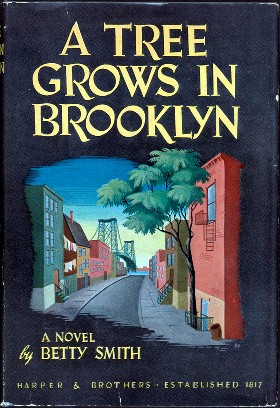
Although Cixous may not have been aware of it, Betty Smith’s beloved, perennially popular 1943 novel, A Tree Grows in Brooklyn is one of those “rare exceptions” that “inscribes femininity” in precisely the way she advocates. This autobiographical novel, so often dismissed as sentimental or as a children’s book, is actually written through the female body—which may explain its lasting popularity and power. Continue reading “Writing Through the Body: Betty Smith’s A TREE GROWS IN BROOKLYN by Joyce Zonana”

We the People by Joyce Zonana

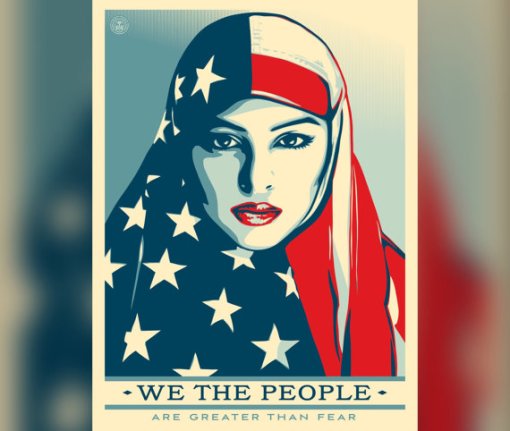
jz-headshotDuring the January 21st Women’s March in New York City, I was inspired and delighted by so many of the signs women and men had crafted to express their opposition to the current disastrous regime in the United States: “Grab America Back,” “Support Your Mom,” “Sad!,” “Miss Uterus Strikes Back.”  But one image stood out, mesmerizing me:  that of a woman proudly wearing an American flag as hijab, with a message below—“We The People Are Greater Than Fear.”  For several blocks as we made our way up Fifth Avenue, I walked beside a woman carrying that sign, and it became, for me, the most powerful symbol of the resistance we must all wage during the dark time ahead.

il_570xn-1174082361_2sxw
Poster by Shepard Fairey
images-1
Munira Ahmed photo by Ridwan Adhami

The image, based on a photograph of Munira Ahmed by Ridwan Adhami, was created for the Women’s March by graphic artist Shepard Fairey (who also designed the iconic image of Barack Obama, “Hope”).  It offers a striking visual challenge to a long-held orthodoxy, now brought to the fore by Donald Trump and his gang:  that Western-style liberal democracy (epitomized by the United States) is incompatible with Islam.  And, perhaps even more specifically, that Islam is incompatible with feminism.

Many Western women—including feminists—are still bound by the Orientalist worldview that encumbered our liberal feminist foremothers.   Continue reading “We the People by Joyce Zonana”

This Time by Joyce Zonana

jz-headshot

And the new sun rose bringing the new year.

Alfred, Lord Tennyson, “The Passing of Arthur,” Idylls of the King

It’s arbitrary, of course, this designation of January 1st as New Year’s Day on the Gregorian Calendar, but it’s also unavoidable.  Everywhere around us, people are gathering, celebrating, making resolutions, ringing out the old, ringing in the new.

The Jewish calendar’s Rosh Hashanah, near the Autumnal Equinox, always feels like the real New Year to me, with its time-honored rituals of renewal and return.  The ancient Persian New Year, observed at the Vernal Equinox and recalled in in the Jewish and Christian celebrations of Purim and Mardi Gras, also moves me.  And, like so many of my brother and sister pagans, I experience the Winter Solstice as a truly numinous moment, a time to release the past and welcome the future as the sun dies and is reborn.

This year, it’s especially meaningful to find Chanukah so close to the solstice, filling the week between Christmas and New Year’s.  I’ve been lighting my candles each night with particular pleasure.  Yet I’m happy, too, to join the rituals associated with the secular, popular New Year.  In my view, there can never be too many moments of renewal and return.

Continue reading “This Time by Joyce Zonana”

The Tremble of Love: A Novel of the Baal Shem Tov by Ani Tuzman – Reviewed by Joyce Zonana

jz-headshotNever has it been more difficult for me to affirm that “love trumps hate” as during this unprecedented United States election season.  After watching the Republican Convention last July in mute horror, I took to bed for several days, overwhelmed by the presentiment that everyone–blacks, women, Jews, Latinos, Muslims, queers– other than a certain breed of white American males was doomed to shameless malignment and persecution.  The palpable hatred in Donald Trump’s acceptance speech seared me, arousing my ancestral memory of various persecutions of Jews, Muslims, and others–not something I usually think about or choose to foreground.  For several months now, I have been haunted (and almost paralyzed) by fear.
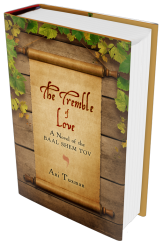
tremble-of-love-cover-3d-for-webHence Ani Tuzman’s The Tremble of Love: A Novel of the Baal Shem Tov has come as an especially welcome, healing antidote, affirming as it does the power of “unshakeable faith even in the presence of inhumanity” (473).  I cannot say that I fully have such faith, but this novel, if anything can, leads me towards it. Page after page is filled with compelling examples of love’s power to disarm hatred and assuage pain.

Early on, a tale is told of a young man fearlessly facing three would-be highwaymen who have stopped the wagon in which he is riding with a rabbi’s wife and her three children, one of whom is disabled:

Continue reading “The Tremble of Love: A Novel of the Baal Shem Tov by Ani Tuzman – Reviewed by Joyce Zonana”

Our Ladies of Sea, Earth, and Sky by Joyce Zonana

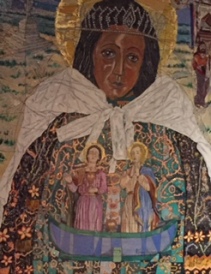
Sara and the Marys
Sainte Sara encompassing Sainte Marie-Salome and Sainte Marie-Jacobe

O Sainte Marie-Jacobe, priez pour nous.

O Sainte Marie-Salome, priez pour nous.

O gardeures de la Provence, priez pour nous.

The priest intoned the words in deep, liquid accents, his voice echoing from the ancient stone church in the remote village of Les Saintes-Maries-de-la-Mer, in the Camargue region of Southern France, where the waters of the Rhone River meet the Mediterranean Sea in a wild, wide, flat expanse populated by black bulls, pink flamingos, and white horses.

“O, Saint Mary-Jacobe, pray for us.”
“O, Saint Mary-Salome, pray for us.”
“O, guardians of the gates of Provence, pray for us.”

I could feel the words resonating through me, bringing sudden, hot tears. The people gathered in the small village square repeated the priest’s chant, their voices rising above the low, white-washed houses into the sunlit sky, out towards the shimmering sea where legend tells us the two Marys had drifted two thousand years ago in a boat without rudder or sail.

Continue reading “Our Ladies of Sea, Earth, and Sky by Joyce Zonana”

A New Covenant by Joyce Zonana

4
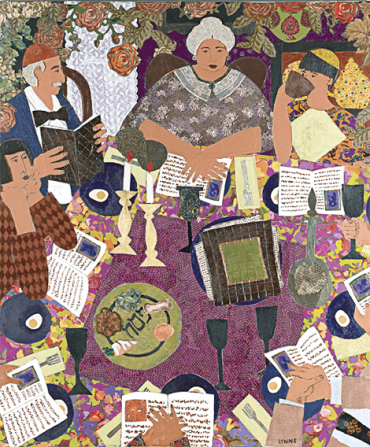
“The Seder Table” by Lynne Feldman

As the Jewish High Holiday of Passover draws to a close, I have been reflecting on this seasonal ritual so central to collective Jewish identity and so significant to me personally.

The Haggadah, the script for the Seder gathering, enjoins all Jews to experience the Exodus—the liberation of the ancient Hebrews from slavery in Egypt —as if it were happening to each of us in our own time.  Because I was born in Cairo to an Arab Jewish family that left Egypt when I was two, I always felt Passover to be mine.  No need for “as if”: our Exodus was all too real. Yet, from my parents’ accounts, life in Egypt had been delightful. I could not reconcile the Haggadah’s dreadful representation of ancient Egypt with my family’s treasured memories of contemporary Cairo: I could not understand why we celebrated deliverance from an Egypt we loved.

Continue reading “A New Covenant by Joyce Zonana”

The Hebrew Priestess: A Book Review by Joyce Zonana

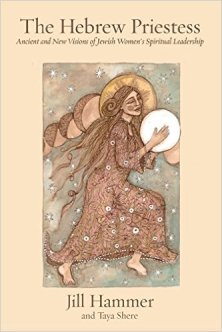
Hebrew Priestess coverWeaver, Prophetess, Shrinekeeper, Witch; Maiden, Mother, Queen, Midwife; Wise-Woman, Mourning-Woman, Seeker, Lover, Fool . . . . Thirteen possibilities for the female self, thirteen aspects of the Goddess, thirteen archetypes for the Hebrew (or any other) Priestess . . . thirteen fact- and dream-filled chapters in Jill Hammer and Taya Shere’s thrilling—and much-needed—new book, The Hebrew Priestess: Ancient and New Visions of Jewish Women’s Spiritual Leadership.

Nearly fifty years ago, anthropologist Raphael Patai introduced readers to the Hebrew Goddess, documenting the influence of Near Eastern Goddess religions on the practices and beliefs of the ancient Israelites. Since then, feminist scholars of religion, along with poets and novelists, have offered brilliant new interpretations of Torah and Talmud, creating feminist midrash and liturgy that open the ancient patriarchal faith to modern (and perhaps also ancient) notions of female authority and autonomy. At the same time, the increasing presence of women rabbis has transformed the congregational, communal Jewish experience for many women and men.

But what we have not had is a shamanic, visionary form of Jewish practice—“earth-based, embodied, ecstatic, energetic” (9)—that integrates ancient and contemporary Goddess spirituality with Judaism: while we have had female rabbis, we have not had formally trained and recognized Hebrew Priestesses.

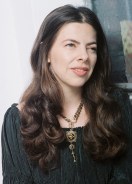
Jill Hammer
Jill
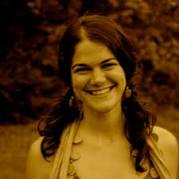
Taya Shere
Taya

Enter Jill Hammer, who in the compelling Introduction to her book recounts with passion and precision her own meandering but steady journey to the Goddess and her establishment, with co-author Taya Shere, of the Kohenet Hebrew Priestess Institute, a school dedicated to ordaining contemporary Hebrew Priestesses, kohanot.Kohenet,” although it does not appear in the Bible, is the ancient Hebrew word for “priestess.” Continue reading “The Hebrew Priestess: A Book Review by Joyce Zonana”