Our visit to Poland coincides with the Feast of the Assumption, a time when tens of thousands of pilgrims arrive on foot to pay homage to Our Lady of Częstochowa, Poland’s Black Madonna. I too am a pilgrim, visiting the sites, not of miracles but of martyrdom. As I make my way through what Pope John Paul II called “this Golgotha of modern times,” I am overcome; like him, I “am here kneeling down” to implore Our Lady to help us heal the vast, still open wound that is our life on this earth.
I had never imagined visiting Eastern Europe, a place toward which I felt no attraction, or, if anything, a deep aversion. To my mind, these were the killing fields, where six million Jews, Roma, political prisoners, homosexuals, and others were massacred by the Nazis during World War II. As a bisexual Jew, a dark-skinned Middle Easterner sometimes taken for a gypsy, why would I want to go there?
But my husband, who was raised Catholic in Chicago, is of Polish and Lithuanian descent. He and his two sisters have talked for years about visiting the villages from which their grandparents, escaping economic hardship and military conscription, had emigrated early in the twentieth century. It remained wistful talk until Mike and I made plans to attend a yoga retreat in rural Denmark. We’d be so close, we reasoned, why not cross the Baltic to explore his ancestral homes? His two sisters readily agreed to join us. Continue reading ““This Golgotha of Modern Times” by Joyce Zonana”
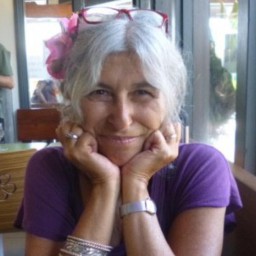
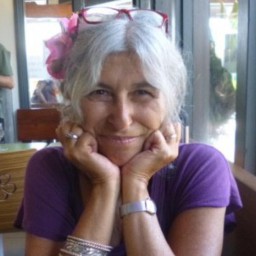
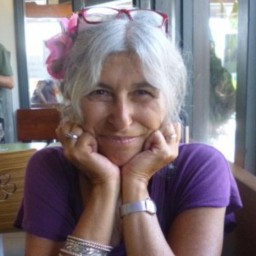
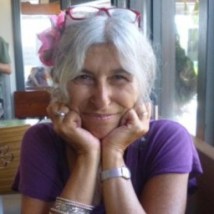
In Europe and Mexico, younger women and men of all ages regularly offer me their seats on buses and metros. I usually refuse, although at home in New York City, I’m always a little miffed when no one bothers to make a place for me. Yet cashiers never balk when I ask for a senior ticket at the movies or in museums. At first I was surprised: how do they know, I wondered. But of course it’s the gray hair, along with the wrinkles and sagging skin that now mark me.
I first decided to let my hair be gray fourteen years ago, in the immediate aftermath of Hurricane Katrina. I was on the road, blindly driving north with my laptop, my passport, two cats, and a friend beside me when I knew it was time to let nature run its course. For some ten years before that, I’d been religiously dying my hair dark brown or black, visiting a hair salon every four to six weeks for long hours of “treatments,” compulsively keeping my hair in a meticulously trimmed pixie cut. But the storm emphatically taught me how life can definitively change us: we are transformed, sometimes in an instant, both internally and externally, by our experiences–and I no longer wanted (or needed) to hide that change. I enjoyed letting my hair return to its natural colors, and took pleasure in the new measure of respect some people gave me. Continue reading “Embracing Elderhood by Joyce Zonana”
Although Goddess traditions invite us to embrace a world of immanence and change, rather than to seek to escape into transcendence—which some yoga teachings seem to point toward—I have come to believe that the “still point,” is, as Eliot writes, where “the dance is.” In other words, daily practice might grant us the capacity to always move through the world with grace and joy. The mind will be steady as it encounters and embraces the turning world. We will be whole.
When I was growing up, I was fascinated to see my father each day recite the morning blessings mandated for Jewish men. While the rest of the household bustled sleepily—my mother in the kitchen, my brother and I taking turns in the bathroom, my grandmother slowly getting dressed—my father, still in his pajamas, would stand in the center of our small living room, yarmulke on his head, tefillin wrapped around his arm and forehead, tallitdraped over his shoulders. Using a tattered old siddurhe had brought with him from Cairo, he would face the east and begin the ancient Hebrew prayers: “Blessed art thou, Lord our God, King of the Universe . . .”
I never knew then the content of what my father intoned, but I knew how committed he was to his practice: he prayed every morning without fail, from the day of his bar mitvahat the age of eleven (the rabbi in Cairo had decided to initiate him early because he had lost his father as a young child) until he a few years before his death at 84, when he became debilitated by Parkinson’s Disease. Ours was not a traditionally Orthodox Jewish family—we did not observe the Sabbath or keep kosher—but my father’s faithful performance grounded him and all the rest of us, bringing us us to what T.S. Eliot called “the still point of the turning world.”
Passover is a holiday of remembrance, of ritual re-enactment: this, we say, is what our ancestors experienced. This is what they felt and knew, what they tasted in their blood. The movement from slavery to liberation, from the soul’s winter to spring. We must never forget, we say, we must always remember, be thankful for our freedom, never take it for granted. “In each generation,” the Haggadah enjoins, “we should feel as if we personally had come out of Egypt.”
This year, I celebrated the Jewish feast of Passover on March 31st–almost three weeks before the holiday’s official start on the evening of April 19th, the 15th of Nissan. It turned out to be my best Passover yet.
Because I’d been accepted for a residency at an artists’ colony beginning on April 17th, I had known since last Fall that I would not be home for the holiday. Given Passover’s importance for me–a Jew who left Egypt in her own lifetime, part of what some have called the “Second Exodus”–I had thought I might postpone the residency and even considered turning it down. But the colony could not change the dates, and, after much deliberation, I decided that my work as a fledgling translator was worth missing my usual gathering of family and friends. I told myself I could mark the arrival of Passover internally.
And so is born the “monster” most people associate with the name Frankenstein–a lone and lonely terrorist who lashes out against a world that has no place for him. One by one, he strangles all the people his “maker” holds dear: his brother William, his best friend Clerval, and his cousin/bride Elizabeth. Yet the novel invites us to have compassion for the creature, even while it condemns the society that makes him as he is. Victor, raised by a devoted mother and tenderly loved by a doting cousin, should have known better. As should we.
A few weeks ago, a former colleague invited me to visit one of his classes, to discuss Mary Wollstonecraft Shelley’s 1818 novel Frankenstein; or, The ModernPrometheus and the essay I’d published about it almost thirty years ago, “‘They Will Prove the Truth of My Tale: Safie’s Letters as the Feminist Core of Mary Shelley’s Frankenstein.” To prepare for that visit, I’ve spent the past few days re-reading the book, and I’m overwhelmed anew by the beauty of Shelley’s language, the brilliance of her plot, and the profoundness of her themes. The book moves me even more today than when I first read it.
As I follow my program, I grow clearer and stronger. I know exactly what I want and I take it. When I sit down to eat, I feel my appetite, healthy and strong. I feed that appetite, choosing just what I need and what will truly nurture me. When I get up from the table, I am complete and whole within myself. Whether I reach my “goal weight” or not, I’ve already succeeded. And so, this New Year, I won’t be making any new resolutions. I’m already on my path, shedding shame.
At the lovely small Chanukah party I attended earlier this month, I did not taste the latkes, those delicious potato pancakes fried in oil and typically served with sour cream and applesauce. My hostess offered them to me repeatedly, proudly noting that she’d used her Polish grandmother’s recipe. But I politely said “no thank you,” I’d just started a diet. “Who starts a diet in December?” someone asked. Someone else pointedly wondered “How can you not eat latkes at Chanukah?” but I quietly insisted that I needed to refrain. I promised, though, that I’d have some next year, once I’d shed the extra pounds that were making me uneasy in my own body.
In my Middle Eastern Jewish home it was the height of rudeness not to partake of what someone offered you to eat. So my refusal was difficult on many levels. But in fact, we never ate latkes at Chanukah. Instead we had deep-fried beignets, little balls of dough, sticky-sweet and drenched in rosewater-scented sugar syrup. I wouldn’t be having any of those this year either. And though another friend at the party assured me I didn’t need to lose weight— “You’re zaftig and beautiful just as you are,” she said—I’d decided a few weeks earlier that, Chanukah or no Chanukah, Christmas or no Christmas, this December was exactly when I wanted to begin my journey to what I believe is, for me, a healthier body weight.
Samhain is upon us. Halloween. The Day of the Dead. All Saints’ Day. All Souls’ Day. That liminal time of year when the doorways to what the Celts called the Otherworld, Annwn in Welsh, are open. In New York City, we have the 45th annual Village Halloween Parade, a queer extravaganza of puppetry, masquerade, and cross-dressing that draws some 60,000 participants and over 2 million onlookers. Elsewhere, we have children in costume and lawns covered with plastic skeletons and illuminated ghouls. Everywhere, if we’re lucky, we might catch a glimpse of “the piper at the gates of dawn,” the vision granted Rat and Mole in Kenneth Grahame’s The Wind in the Willows: “something very surprising and splendid and beautiful”—Pan the goat-god, boundary-crosser, Friend and Helper, trans-being.
Just last week—a few days after the New York Times reported on the Trump administration’s efforts to define transgender out of existence—I read for the first time Welsh writer Arthur Machen’s 1894 novella, The Great God Pan, today considered a classic of horror fiction. Condemned as “morbid” and “abominable” by most critics when it was first published, the tale was hailed as “un succès fou” by Oscar Wilde, recuperated in the 1920s by H. P. Lovecraft, and particularly praised more recently by Stephen King, who called it “maybe the best” horror story “in the English language.”
Original edition with cover illustration by Aubrey Beardsley
The “queer” tale (the word “queer” recurs frequently throughout) is told by a series of straight-laced Victorian men, each of whom is horrified by the unspecified behavior and bearing of a mysterious woman, Helen Vaughan. Readers are led to suspect that Helen is guilty of some sort of sexual excess or transgression, but nothing is specified until after her suicide, when the medical examiner reports that he was “privileged or accursed” to see the “skin, and the flesh, and the muscles, and the bones, and the firm structure of the human body that I had thought to be unchangeable, and permanent as adamant, beg[i]n to melt and dissolve”: Continue reading “Lifting the Veil – #WontBeErased by Joyce Zonana”
What does it mean to be an Arab-Jew in the twenty-first century? For me, it means recognizing and honoring Arab culture: the music, food, language, and customs my parents brought with them when they emigrated from Cairo in 1952; it means feeling a strong bond with other Egyptians, North Africans, and Middle Easterners, refusing efforts in the U.S. and elsewhere to demonize and “other” any of us. It means respecting the claims of displaced Palestinians and protesting Israeli occupation of Palestinian territories. It also means not seeking to equate our displacement with Palestinian displacement, as some Jews from Arab countries have sought to do, in a transparent effort to discredit Palestinian suffering.
When I was growing up in 1950s Bensonhurst, in Brooklyn, NY, my identity as a Jew was often called into question. “You mean you’re Jewish? And you don’t know about gefilte fish?” my best friend’s Eastern European (Ashkenazi) Jewish mother asked, shocked to discover that our family ate stuffed grape leaves rather than stuffed cabbage. “What kind of a Jew are you?” schoolmates challenged. When I answered “Sephardic . . . from Egypt,” they would reply. “But all the Jews left Egypt a long time ago, isn’t that what Passover is about?” “No,” I would say, having been taught the words by my father. “Some Jews returned to Egypt when they were expelled from Spain.” [Later I would learn that some Jews actually lived in Egypt for millennia, never having left.] “There are no Jews in Egypt,” my little friends would retort. “We never heard of any Jews in Egypt. You can’t be Jewish.”
It was puzzling, I knew, but I could find nothing further to say. Aside from a handful of relatives, I did not know any other Jews from Egypt either. An Egyptian Jew. To my neighbors, it seemed a contradiction in terms, an oxymoron. To myself as well. What was the Egyptian part, what the Jewish? How did they fit together? Maybe I wasn’t really Jewish. Later, when acquaintances continued to wonder about my identity, I was similarly stymied. “You mean you don’t speak Yiddish?” they would ask after I had painstakingly explained that my grandparents spoke Arabic and French.
In order to transform what is happening at the Mexico/U.S. “border” (and elsewhere) we must first break down the borders within our heads—all the borders in all our heads. Mr. Trump tells us “If you don’t have Borders, you don’t have a Country”; my response today is: “Who needs countries? Who needs genders? Who needs races or competing religions? What we need is Coatlicue.”
As so many of us recoil in horror at the Trump administration’s cruel attempts to enforce an impenetrable border between the U.S. and Mexico, I find myself struggling to understand what he and his supporters mean by “borders,” and why they are so invested in maintaining them. The administration’s vicious immigration policy, recently epitomized in a brief tweet on June 19th, 2018—Juneteenth, the day in 1865 when slaves were finally freed throughout the U.S. at the end of the Civil War—“If you don’t have Borders, you don’t have a Country” has sent me back to Gloria Anzaldúa’s visionary 1987 book, Borderlands/La Frontera: The New Mestiza.
Grounded in her experience as a queer mestiza raised in the Texas/Mexico borderlands, Anzaldúa’s bilingual, cross-genre manifesto argues for the transformative role of the mestiza, no longer “sacrificial goat” but “officiating priestess at the crossroads”:
“There is no such thing as a bad blessing,” Mama Donna tell us, “no rules . . . no recipes, no prescriptions, no instruction manuals,” no “one-size-fits-all” House Blessing. Yet it’s not so much “anything goes” as “everything matters”: “The only thing you can do wrong in a ritual is to not pay attention to your true intentions.”
Donna Henes, familiarly known as “Mama Donna,” is a national treasure. From her “House of Many Altars” in what she mischievously calls “Exotic Brooklyn,” she serves as an exuberant, irrepressible urban shaman: holding outdoor public rituals at each solstice and equinox for over forty years; blessing and leading New York City’s annual Halloween Parade; creating meaningful, personalized ceremonies for funerals, weddings, new babies, new homes, and new businesses. In 2009, the governor of New York State called on her to bless the fleet during the quadricentennial celebration of Henry Hudson’s voyage to the New World. She is the author of five books, including The Queen of Myself and Celestially Auspicious Occasions, and publishes a monthly e-newsletter, The Queen’s Chronicles, that offers “meaning, moxie, and magic for midlife women.”


 I had never imagined visiting Eastern Europe, a place toward which I felt no attraction, or, if anything, a deep aversion. To my mind, these were the killing fields, where six million Jews, Roma, political prisoners, homosexuals, and others were massacred by the Nazis during World War II. As a bisexual Jew, a dark-skinned Middle Easterner sometimes taken for a gypsy, why would I want to go there?
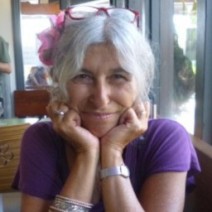 In Europe and Mexico, younger women and men of all ages regularly offer me their seats on buses and metros. I usually refuse, although at home in New York City, I’m always a little miffed when no one bothers to make a place for me. Yet cashiers never balk when I ask for a senior ticket at the movies or in museums. At first I was surprised: how do they know, I wondered. But of course it’s the gray hair, along with the wrinkles and sagging skin that now mark me.
 When I was growing up, I was fascinated to see my father each day recite the morning blessings mandated for Jewish men. While the rest of the household bustled sleepily—my mother in the kitchen, my brother and I taking turns in the bathroom, my grandmother slowly getting dressed—my father, still in his pajamas, would stand in the center of our small living room,
  A few weeks ago, a former colleague invited me to visit one of his classes, to discuss Mary Wollstonecraft Shelley’s 1818 novel Frankenstein; or, The Modern Prometheus and the essay I’d published about it almost thirty years ago, “
 At the lovely small Chanukah party I attended earlier this month, I did not taste the latkes, those delicious potato pancakes fried in oil and typically served with sour cream and applesauce. My hostess offered them to me repeatedly, proudly noting that she’d used her Polish grandmother’s recipe. But I politely said “no thank you,” I’d just started a diet. “Who starts a diet in December?” someone asked. Someone else pointedly wondered “How can you not eat latkes at Chanukah?” but I quietly insisted that I needed to refrain. I promised, though, that I’d have some next year, once I’d shed the extra pounds that were making me uneasy in my own body.
 Just last week—a few days after the New York Times reported on the Trump administration’s efforts to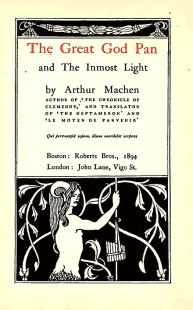
 When I was growing up in 1950s Bensonhurst, in Brooklyn, NY, my identity as a Jew was often called into question. “You mean you’re Jewish? And you don’t know about gefilte fish?” my best friend’s Eastern European (Ashkenazi) Jewish mother asked, shocked to discover that our family ate stuffed grape leaves rather than stuffed cabbage. “What kind of a Jew are you?” schoolmates challenged. When I answered “Sephardic . . . from Egypt,” they would reply. “But all the Jews left Egypt a long time ago, isn’t that what Passover is about?” “No,” I would say, having been taught the words by my father. “Some Jews returned to Egypt when they were expelled from Spain.” [Later I would learn that some Jews actually lived in Egypt for millennia, never having left.] “There are no Jews in Egypt,” my little friends would retort. “We never heard of any Jews in Egypt. You can’t be Jewish.”
 As so many of us recoil in horror at the Trump administration’s cruel attempts to enforce an impenetrable border between the U.S. and Mexico, I find myself struggling to understand what he and his supporters mean by “borders,” and why they are so invested in maintaining them. The administration’s vicious immigration policy, recently epitomized in a brief tweet on June 19th, 2018—Juneteenth, the day in 1865 when slaves were finally freed throughout the U.S. at the end of the Civil War—“If you don’t have Borders, you don’t have a Country” has sent me back to
  Donna Henes, familiarly known as “
