On the basis of modern Matriarchal Studies, we can develop the vision of a new matriarchal, egalitarian form of society. This is called “Matriarchal Politics.”
The path to such a society has to combine matriarchal spirituality with politics, to create another kind of economy and another society. How this can be achieved is clearly portrayed by traditional matriarchal societies. Their economy, politics, social life and spirituality are inseparably connected: their goal is to provide a good life for all and this is assured through their structure and conventions.
Of course, we cannot go back and simply transfer historical patterns to the present. It is unlikely that we will return to societies based on the blood-relatedness of clans or sole dependence on agriculture. History and its social development cannot be turned backwards. But for our own path into new matriarchal, egalitarian societies, we can gain much stimulation and great insights from patterns which have been tried and tested for millennia. Continue reading “Matriarchal Politics by Heide Goettner-Abendroth”
In their purest form, “egalitarian matriarchies” place the mother principle at the center of culture and society. Their highest values are the love, care, and generosity they associate with motherhood. These values are not limited to women and girls. Boys and men are also encouraged to honor mothers above all, to practice the traits of love, care, and generosity, and to value them in others.
“Egalitarian matriarchal” societies are matrilineal which means that family membership and descent are passed through the female line. They are also usually matrilocal, which means that women live in their maternal home all of their lives. Family groups are usually extended rather than nuclear. Often there is a “big house” in which groups of sisters, brothers, and cousins live together with mothers, aunts, grandmothers, and great-aunts. In what I imagine to have been the original form of the system (still practiced by the Mosuo of the Himalayas), men also live in their maternal house, visiting their lovers at night, and returning home in the morning.
Mosuo women at festival
These societies practice small-scale agriculture. The women are owners and guardians of the land, which is held in common by maternal clans. They are also the guardians of the secrets of agriculture, food storage, and food preparation, which are passed down from mothers to daughters through songs, dances, rituals, and stories that celebrate the Earth as a great and giving Mother. The powers of women as birth-givers and as the guardians of the mysteries of the agricultural cycles are symbolically related to the powers of birth, death, and regeneration in nature and in all creative processes.
Women seated under trees in place of honor at Minoan festival
These social and cultural systems must have first developed at the beginning of the Neolithic era, when “woman the gatherer” first discovered the secrets of agriculture that allowed people to settle down and farm the land. If women discovered agriculture, then it makes sense that they would have been leaders in the first settled communities and guardians or owners of the land they farmed. They would have been the ones to build the first homes on or near the farmland. Sons as well as daughters would have been born in these early settlements.
The males of the families or clans continued to hunt. Over time they became responsible for building and heavy farm labor and for grazing flocks and seeking raw materials away from the settlement. It makes sense that they would be the ones to venture away from the community to gather information and to trade. In a recent documentary, Mosuo men stated that they don’t work as hard as women. This may not have been the case in the past. Today products and raw materials are brought in through the capitalist economy: traditional roles of traders are obsolete. Information gathering was an important part of trade expeditions: this is how new technologies spread rapidly in the Neolithic era; religious and cultural symbols were also shared by traders. Today there are books, newspapers, television, and the internet. Nor are Mosuo men involved in inter-clan negotiations in the People’s Republic of China.
From the division of labor in these societies, an egalitarian system of governance developed in which the elder women or grandmothers supervised the “internal” life of the house or clan. The “internal” domain included family and farm and all of the rituals surrounding birth, puberty, and death, as well as planting and harvesting. Women played central roles in creating and enacting all of these rituals. Through their expeditions and trade activities, elder men, the brothers of the grandmothers and uncles of the next generations, became responsible for the “external” relations of the clan, meeting people from other cultures when they were away from home, and welcoming visitors who arrived on their home territory.
Because of this division of labor, the elder men would have been the ones to meet and greet colonists and invaders and also to speak with storytellers, historians, and anthropologists, most often also men, who were interested in learning about their culture. If foreign men came from patriarchal cultures, they would have assumed that the men who met them were the leaders of their groups. The party line in the field of anthropology, which is followed by academics in other disciplines, is that “men wield the power” in matrilineal societies. I was disappointed to read this when I first started learning about matrilineal societies as a graduate student and to find it repeated in a recent article arguing that Minoan culture might have been matrilineal and matrilocal.
Those of us who have been socialized in patriarchal societies in which “men wield the power” cannot easily imagine alternative systems. When we begin to think about female power, we immediately conjure up pictures where “women wield the power” by going to war, keeping men as slaves, sexually abusing and raping them, and forcing them into subordinate positions. Such images are so abhorrent that we may conclude that patriarchy is not so bad after all. And this stops us from looking for or wanting to envision alternatives.
In 1981 anthropologist Peggy Reeves Sanday challenged these conventional views in her ground-breaking Female Power and Male Dominance. Examining all of the pre-urban societies documented in anthropological records, she discovered that societies that celebrated and valued female power were not female dominant but egalitarian. She also found that societies that celebrated and valued male power were almost always male dominant. They tended to develop in times of external threat (when men became warriors) or environmental crisis (when the female power of the earth was viewed as having failed the community). Though Sanday’s arguments are convincing, they failed to change that anthropological consensus that “men wield the power” in all human societies, including those that celebrate female power and are matrilineal and matrilocal.
What the consensus that “men wield the power” in matrilineal, matrilocal, and matrifocal societies does not recognize is the power women hold in the internal relations of the group. For example, in the Iroquois culture, the councils of female elders that managed the day to day life of the clan were just as important as the councils of male elders that through their “chief” met with European settlers and invaders. In fact, the councils of female elders were slightly more powerful than those of the male elders. Iroquois women could remove male leaders they did not approve of and reject decisions of the male council to go to war. This power of the female council did not mean that Iroquois women dominated Iroquois men. Rather it was an important check-and-balance ensuring that men’s councils could not unilaterally take actions that would negatively affect the internal relations of the clan.
What should we call societies such as these? Obviously we should continue using the terms “matrilineal” and “matrilocal” where they apply. But what term should we use to describe these cultures as a whole? Archaeologist Marija Gimbutas called the egalitarian societies of Old Europe “matrifocal” because she recognized that the term “matriarchal” is usually (mis)understood to mean female dominant; this decision did not protect her work from being criticized for its challenges to the patriarchal consensus.
I dared to use the “m” word after reading Peggy Reeves Sanday and Heide Goettner-Abendroth. I define egalitarian matriarchy as a society and culture organized around the mother principle of love, care, and generosity, in which mothers are honored and women play central roles, and in which men also have important roles and every voice is heard. My new suggestion is that the “m”word always be preceded by the “e” word, in other words that we not use “matriarchy” unmodified, but always write and speak of “egalitarian matriarchies” in order to make it clear that we are not talking about female-dominated societies. This will be my practice in the future.
In egalitarian matriarchal cultures gift-giving is not something reserved for birthdays and holidays. It is a way of life rooted in the primary understanding that life is a gift that is meant to be shared.
Our lives are a gift from our mothers. Our individual lives have are not something we create or created for ourselves. We all emerged from the body of a mother. We were all given the gift of care and feeding by a mother or others. Our mothers did not create themselves. They emerged from the bodies of mothers and were cared for and fed by mothers or others. And so on back to the original mother of the human race, known as the African Eve.
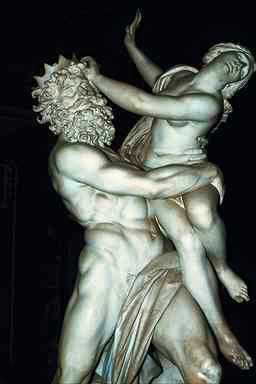
Many women are drawn to the image of the Sacred Marriage—perhaps especially those raised in Roman Catholic or Protestant traditions where sex is viewed as necessary for procreation but nothing more, and who learn that the naked female body as symbolized by Eve is the source of sin and evil. In this context, the positive valuing of sexuality and the female body found in symbols of the Sacred Marriage can feel and even be liberating.
Jungians have claimed that the Sacred Marriage is an archetype of the wedding between the “masculine” and the “feminine.” Many women have been attracted to this idea as well. It “softens” the radical feminist critique of patriarchy and male dominance. Rather than “castrating” the “phallocracy” as Mary Daly urged, we can think in terms of the “marriage” of qualities traditionally associated with male and female roles. Women, it is said, can use a good dose of ego and assertiveness traditionally associated with the masculine, while men need to have their dominating rational egos tempered by feminine qualities like care and compassion. Continue reading “Sacred Marriage or Unholy Cover-up? by Carol P. Christ”
Greek women dancing, attributed to a vase in the Museo Borbonico, Naples. From The dance: Historic Illustrations of Dancing from 3300 B.C. to 1911 A.D. London, 1911
Traditional women’s dances of Greece, the Balkans and the Near East come from cultures which have survived countless periods of upheaval, and teach skills which can help us through difficult times. I see their gifts as a precious inheritance from the ancestors, passed down through many generations. One particularly valuable skill which the dances emphasizes is that of mutual support and shared leadership among women.
Leadership in traditional dance is not limited to a few who have garnered social rank and power. Dance leadership is shared according to the occasion, and everyone must be prepared to lead dances at important events in their lifetime.
On Greek islands such as Lesvos, a small parea or group of women will typically dance the Syrtós together in a short line or open circle. The first dancer may express herself through turns and graceful flourishes of her free hand, varying her handhold and body position to dynamically interact with the other dancers. The women continually change places in the circle, encouraging one another to take the first position so that everyone eventually has a chance to lead. Continue reading “Shared Leadership: The Hidden Treasure of Women’s Ritual Dance by Laura Shannon”
“All children are our children.” As I was posting my recent blog about the shooting of black men by the police, these words came into my mind with the force of revelation. At the time I was looking at a photograph of Philando Castile, taken at his place of work. Yes, I thought, my heart opening: “he is my child too.” This widening of the heart is at the center of the maternal values of ancient and contemporary matriarchal cultures around the world. It is a feeling some of us who were mothered well enough or who mothered children—including children not our own—carry within us. Is this the healing balm our world needs today?
Maternal values? So many of us turn up our noses at such a “gendered” term. Perhaps we were not mothered enough in our families of origin. Perhaps we still feel un-mothered. Perhaps we don’t want to be told that we have to become mothers. Perhaps we fear that if we become mothers, we will be only mothers—all of our other ambitions and desires will have to take second place.
In recent years “the Sacred Feminine” has become interchangeable with (for some) and preferable to (for others) “Goddess” and “Goddess feminism.” The terms Goddess and feminism, it is sometimes argued, raise hackles: Is Goddess to replace God? And if so why? Does feminism imply an aggressive stance? And if so, against whom or what?
In contrast, the term “sacred feminine” (with or without caps) feels warm and fuzzy, implying love, care, and concern without invoking the G word or even the M(other) word–about which some people have mixed feelings. Advocates of the sacred feminine stand against no one, for men have their “sacred feminine” sides, while women have their “sacred masculine” sides as well.
Nothing lost, and much to be gained. Right? Wrong.
Perseus with the Head of Medusa: Sacred Masculine and Sacred Feminine?
When Goddess feminism emerged onto the scene early in the feminist movement, it had a political edge. It was about women affirming, as Meg Christian crooned in “Ode to a Gym Teacher,” that “being female means you still can be strong.” Goddess feminism arose in clear opposition to patriarchy and patriarchal religions. It was born of an explicit critique of societies organized around male domination, violence, and war; and of the male God or Gods of patriarchal religions as justifying domination, violence, and war. In this context, “the sacred masculine” was not understood to be a neutral or positive concept. To the contrary, the male Gods of patriarchy were understood to be at the center of symbol systems that justify domination.
The terms “the masculine” and “the feminine” were floating around and sometimes evoked in early feminist discussions, but when examined more closely, they were rejected by most feminists as mired in sex role stereotypes. The psychologist Carl Jung, for example, associated the masculine with the ego and rationality and the feminine with the unconscious. True, he argued that modern western society had developed too far in the direction of the masculine and needed a fresh infusion of the feminine in order to achieve “wholeness.” This sounded good, but when feminists looked further, they discovered that Jung and his followers harbored a fear of the uncontrolled feminine.
Jungians consider the unconscious to be the repository of undisciplined desires, fears, and aggressive feelings that require the rational control of the ego. Though strong and intelligent women were among Jung’s most important followers, Jung and his male companions retained a fear of independent women, speaking of women who developed their rational sides fully enough to argue with men and male authorities as “animus-ridden,” a term not meant as a compliment.
Hades Abducting Persephone: Marriage of Sacred Masculine and Sacred Feminine?
Jungians, following Erich Neumann, understand the progress of history through an evolutionary model in which humanity began in a matriarchal stage in which the unconscious reigned. This period of culture, which spawned the image of the Great and Terrible Mother, was primitive and irrational. Matriarchy was naturally superseded by patriarchy, in which the individual, the ego, and rationality emerged. In the patriarchal stage of culture, male Gods and heroes were the primary symbols, and rationality reigned supreme.
The patriarchal stage of culture had its limitations, which were revealed in the two World Wars of the twentieth century and the nuclear and environmental crises that followed. Rational man, Jungians argued, had come to the point where he needed to reconnect with his feminine side. The unconscious feminine was now understood to be a nurturing matrix that included the body, nature, and feeling, from which rational man should and could never fully separate himself.
The great archaeologist Marija Gimbutas also spoke of two cultures within Europe, an earlier matrifocal one she called Old Europe and a later patriarchal one. The Jungian Joseph Campbell endorsed Gimbutas’ work, leading some to assume that Gimbutas and Jungians hold similar theories of human history. In fact they do not: Gimbutas did not subscribe to an evolutionary theory of culture. She would never have said that the earlier matrifocal culture “had to be superseded” by the later patriarchal culture “in order for civilization to advance.” The clear conclusion to be drawn from Gimbutas’ work is that the patriarchal culture was in almost every way inferior to the one it replaced.
For Gimbutas, the agricultural societies of Neolithic Old Europe were peaceful, egalitarian, sedentary, highly artistic, matrifocal and probably matrilineal, worshiping the Goddess as the powers of birth, death, and regeneration. These societies did not evolve into a higher stage of culture, but were violently overthrown by Indo-European invaders. The culture the Indo-Europeans introduced into Europe was nomadic, patriarchal, patrilineal, warlike, horse-riding, not artistic, worshiping the shining Gods of the sun as reflected in their bronze weapons. Gimbutas did not look forward to a new “marriage” of matrifocal and patriarchal cultures. Rather she hoped for the re-emergence of the values of the earlier culture. Her theories had a critical edge: she did not approve of cultures organized around domination, violence, and war.
This critical edge is exactly what is lost when we begin to substitute the terms “sacred feminine” for “the Goddess” or “Goddess feminism” and “sacred masculine” for “patriarchy” and “patriarchal Gods.” When we allege that we all have our “masculine and feminine sides,” and that it is important “to reunite the masculine and the feminine,” it is easy to forget that in our history, the so-called sacred masculine has been associated with domination, violence, and war.
If we hope to create societies without domination, violence, and war, then we must transform the distorted images of masculinity and femininity that have been developed in patriarchy. We must insist that domination, violence, and war are no more part of masculinity or male nature than passivity and lack of consciousness are part of femininity or female nature. It may feel good to speak of reuniting the masculine and the feminine, but feeling good will not help us to transform cultures built on domination, violence, and war.
Recently in a conversation with a noted archaeologist and his male graduate student assistant, I proposed that the absence of war and the trappings of war, including images of larger than life-size warrior kings, suggested to me that we should not understand the social structure of ancient Crete on the model of patriarchal kingship. “Kings are always warriors,” I said, “yet there is no clear and convincing evidence of organized warfare in ancient Crete. And,” I continued, “because warrior kingship is not a ‘natural state,’ but one achieved through warfare and domination, kings must legitimate and celebrate their power through larger than life-size images of themselves. Such images were common in ancient Sumer and in ancient Egypt, but are not found in ancient Crete.”
Why is it so important to take only what we really need? Because everything we take harms another life. I included this Native American teaching as one of the Nine Touchstones I offered as a counterpoint to the Ten Commandments in Rebirth of the Goddess.
Recently, I have begun to realize that the concept of taking only what you need is the heart* of sustainability ethics, an ethical system that can orient us to living in harmony with others and the natural world. The practice of great generosity is its counterpoint. When you have worked for, received, or accumulated more than you need, you should give it away.
The reason these principles are important is because “taking what you need” is “taking” from the web of life. We “take” other lives (whether plants or animals) in order to eat, to clothe ourselves, to build houses, and in agricultural societies to clear land to plant, to remove unwanted plants (weeds) from cultivated land. In our industrial age, we “take” so much more to fuel our cars and to provide electricity. To take more than we need is to do unnecessary violence to the web of life. When we give away what we don’t need we help others to survive, and we also help to ensure that no more lives than necessary are taken.
On the first Goddess Pilgrimage to Crete, we decided to incorporate the give-away as part of our closing ritual. It is nice to give and receive a gift at the end of an intense two weeks spent with other pilgrims. However, I am coming to realize that in comparison with the deeper meaning and intention of the ritual, our give-away, like the practice of giving presents in our wider culture, is superficial. When we give gifts to friends we try not to give too much or too little. When we give to children we often do so without regard to what they really need. When we receive gifts, we may feel burdened with one more thing we don’t want or need.
Being raised in acquisitive and throw-away cultures, it is not surprising that few of us have any real idea what the principles of taking only what you need and giving away mean. In traditional cultures, there are constraints on accumulation. If women in your family had to weave and sew and embroider all of your clothing, and if this process was time-consuming and involved time taken from other tasks, you would not be likely to have been given or to have learned to demand more clothes than you really need. Similarly, if all of the food for a clan is produced by its own labor, people would be unlikely to grow more than they needed to eat and store for the winter.
I suspect that all of this changed when wars of conquest became integrated into social structures. When other groups were conquered, their precious goods, including ritual items and ritual clothing and jewelry, were appropriated by the victors as “the spoils of war.” Land and people too were “the spoils of war,” and with the introduction of slave labor and the acquisition of lands that belonged to others, an excess of everything could be produced for the benefit of the ruling class, or to be more accurate, the war lords. This is another story, and I have discussed it elsewhere.
To return to the question at hand, I am suggesting that if we wish to live sustainably on planet earth, we must return to the values of our ancestors, distant and not so distant, who practiced taking what you need and sharing what you don’t need. These values are not the exclusive property of Native Americans, but are the values of the ancestors of all of us, if we go back far enough. As I have discussed, these values are still practiced in rural Crete.And they are the foundation of living matriarchal cultures. Many of us who have traveled have met people in rural cultures who have little, yet seem happier than anyone we know at home.
At some level we know that accumulating things does not make us happy. At the same time, prodded by advertising, we continue to shop compulsively and to buy things we don’t need. It will not be an easy task to change our patterns of consumption. If we could do so, our economic system would collapse, because it is based on creating needs for more and more things. This is why chosen or forced “austerity” threatens the capitalist system. You and I may not need all of the things we are used to buying, but if large numbers of us stop spending, the makers and sellers of goods suffer. On the other hand, the world will not survive if we carry on as we are, because we are depleting the world’s resources.
Dream Closet
What would happen if each of us, like the subjects on the popular reality programs on hoarding, went through each of the rooms of our homes and designated the things we really need and gave the rest away? What if we then took a good look at our homes and asked if we really need the space we have. I presume this would be a long term process in which we would continually discover that we don’t need things we have always thought we could not live without.
Hoarder’s Home
What if we stopped buying what we do not need and gave a large portion of our income and savings to others? Would we discover what it means to live in harmony with others and the whole web of life? Could we learn how to flourish with others, not at the expense of others?
*I am not saying these are the only ethical touchstones we need to build an ethics of sustainability, but I do believe they are at its center.


 Matriarchies are not just a reversal of patriarchy, with women ruling over men – as the usual misinterpretation would have it. Matriarchies are mother-centered societies: they are based on maternal values: care-taking, nurturing, motherliness, mutual support, peace keeping and building by negotiation, which holds for everybody: for mothers and those who are not mothers, for women and men alike. Matriarchal societies are consciously built upon the maternal values and motherly work, and this is why they are much more realistic than patriarchies. They are, on principle, need-oriented and not power-oriented, they are gender-egalitarian societies, and most of them are fully egalitarian. Their precepts aim to meet everyone’s needs with the greatest benefit. So, in matriarchies, motherhood – which originates as a biological fact – is transformed into a cultural model.
  Today’s blog is a sequel to:
  In their purest form, “egalitarian matriarchies” place the mother principle at the center of culture and society. Their highest values are the love, care, and generosity they associate with motherhood. These values are not limited to women and girls. Boys and men are also encouraged to honor mothers above all, to practice the traits of love, care, and generosity, and to value them in others.


 Many women are drawn to the image of the Sacred Marriage—perhaps especially those raised in Roman Catholic or Protestant traditions where sex is viewed as necessary for procreation but nothing more, and who learn that the naked female body as symbolized by Eve is the source of sin and evil. In this context, the positive valuing of sexuality and the female body found in symbols of the Sacred Marriage can feel and even be liberating.
 “All children are our children.” As I was posting my
  ears “the Sacred Feminine” has become interchangeable with (for some) and preferable to (for others) “Goddess” and “Goddess feminism.” The terms Goddess and feminism, it is sometimes argued, raise hackles: Is Goddess to replace God? And if so why? Does feminism imply an aggressive stance? And if so, against whom or what?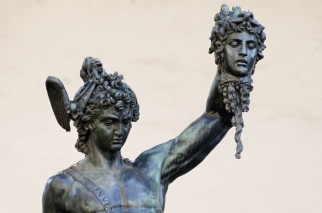
 A Serpentine Path: Mysteries of the Goddess


 Feminism and Religion