Corona: Reclaiming Sovereignty in a Culture of Addiction by Eirini Delaki

The moment we live right now is one of its kind in the history of humanity. There´s an expansive wave of uncertainty, fear of death, panic and, at the same time, an expansive wave of creativity, hope, compassion and unity. We´ve never been so isolated from each other and yet so close…
I believe that there´s a great opportunity in what is happening right now. The opportunity that the fear of death will awake us in realizing that we’ve already been living our lives “infected” by all sorts of habits that were taking life away from us.

There´s a symbolic frequency in the word Corona, like in Corona virus, that holds the key to transformation through this experience. Corona means crown. It also refers to the aura of plasma that surrounds the sun and other stars. When a baby is born, we call that “crowning”, since its head comes out first, if all goes well. This pandemia is a radical wake up call to recuperate our sovereignty, to shine, to be reborn into our authenticity. The seventh chakra, that is the vortex of our energy system, situated at the top of our head, is called Crown Chakra. When that vortex is balanced, we experience unity, the knowledge that there´s an intrinsic law underlying all of existence, serenity, joy, and deep peace about life, beyond intellectual knowledge. Continue reading “Corona: Reclaiming Sovereignty in a Culture of Addiction by Eirini Delaki”

Where the Dance Is . . . On Cultivating a Daily Practice by Joyce Zonana

Although Goddess traditions invite us to embrace a world of immanence and change, rather than to seek to escape into transcendence—which some yoga teachings seem to point toward—I have come to believe that the “still point,” is, as Eliot writes, where “the dance is.” In other words, daily practice might grant us the capacity to always move through the world with grace and joy. The mind will be steady as it encounters and embraces the turning world. We will be whole.

jz-headshotWhen I was growing up, I was fascinated to see my father each day recite the morning blessings mandated for Jewish men. While the rest of the household bustled sleepily—my mother in the kitchen, my brother and I taking turns in the bathroom, my grandmother slowly getting dressed—my father, still in his pajamas, would stand in the center of our small living room, yarmulke on his head, tefillin wrapped around his arm and forehead, tallit draped over his shoulders. Using a tattered old siddur he had brought with him from Cairo, he would face the east and begin the ancient Hebrew prayers: “Blessed art thou, Lord our God, King of the Universe . . .”

I never knew then the content of what my father intoned, but I knew how committed he was to his practice: he prayed every morning without fail, from the day of his bar mitvah at the age of eleven (the rabbi in Cairo had decided to initiate him early because he had lost his father as a young child) until he a few years before his death at 84, when he became debilitated by Parkinson’s Disease. Ours was not a traditionally Orthodox Jewish family—we did not observe the Sabbath or keep kosher—but my father’s faithful performance grounded him and all the rest of us, bringing us us to what T.S. Eliot called “the still point of the turning world.”

Continue reading “Where the Dance Is . . . On Cultivating a Daily Practice by Joyce Zonana”

A Meditation on Revolution In the Vagina Monologues by Marie Cartier

Photos by Kimberly Esslinger

“It’s like feminist summer camp, except it’s in February,” said Shaina, the director, “I’m not sure how to re-enter the world.”

I agreed. How to re-enter the world where vaginas have little voice? Where asking a woman what her vagina would wear does not make sense. Or what would it say? It’s not just what would it say, it’s not having a voice at all.  My vagina.

I have performed in West Hollywood, California’s production of the Vagina Monologues (to benefit Planned Parenthood, check it out here and here) for the past three years. This year we raised over $5,000.

Continue reading “A Meditation on Revolution In the Vagina Monologues by Marie Cartier”

Mantra and Meditation in Buddhist Hospice Chaplaincy to Alleviate Anxiety by Karen Nelson Villanueva

Karen Nelson Villanueva has recently successfully defended her doctoral dissertation, “Invoking the Blessings of the Tibetan Buddhist Goddess Tara Through Chanting Her Mantra to Overcome Fear,”

Mantras are not just the prescribed sound formulas or sentences found in Eastern religions, but they can also be thought of as the words or phrases that we continually repeat to ourselves. The word mantra comes from Sanskrit and its roots are manas-, meaning “mind,” and -tras, which can be translated as “tool.” Thus, mantra is a tool to protect the mind.

How often do we engage in negative self-talk like “It’s my fault” or “I’m to blame for what’s happened to me” or “No one loves me”? These expressions can become mantras, as we believe their messages from constant repetition. In hospice and hospital settings, one often finds patients who have convinced themselves that “This is God’s punishment” or “Everyone has forgotten me” or “I’m so scared.” These phrases, rather than protect the mind, become what is believed by the mind and may lead to increased anxiety, stress, and depression, and consequently the need for spiritual and emotional support.

Chaplains, as members of the care team in hospice and hospitals, provide spiritual and emotional support to patients and their families. Most often, chaplains attentively listen to patients and their caregivers (often family members) about the patients’ life story, their relationships, their dreams unfulfilled, and their wishes for those whom they are leaving behind. Chaplains take part in family meetings where decisions are made about patients’ care, sometimes interjecting to ask for clarification of medical terms and to ensure that the family understands. Sometimes, the chaplain will lead prayer with the patients and their families, and at other times, the chaplain will pull other tools from her toolbox such as mantra meditation.

Continue reading “Mantra and Meditation in Buddhist Hospice Chaplaincy to Alleviate Anxiety by Karen Nelson Villanueva”

Inner Garbage (Fear) vs. Inner Goddess (Love) by Vanessa Soriano

I’m sitting on my meditation pillow for the thousandth time searching for clarity.  Initially, going within feels like traversing a jungle; swinging from one thought branch to another.  I’m itching for some peace and I’m almost certain this isn’t the way to it.  But, I’ve been here before and I won’t quit breathing through the discomfort.  I know I will greet the inner goddess soon enough.  Getting past the noise is part of accessing her wisdom.  The noise teaches me discernment (if I allow it to).

Eventually, the monkey mind gathers up all the branches and turns them into a prodigious figure that blocks the sun inside.  Hello darkness my old friend.  Inner garbage (fear) makes her entrance.  I’m still breathing.  Eyes closed.  Determined through slow, rhythmic breaths, to move past her.  I know I cannot run from her.  She’s faster and outwits me every time.  Continue reading “Inner Garbage (Fear) vs. Inner Goddess (Love) by Vanessa Soriano”

In the footprints of Machig Lapdron by Mary Sharratt


Machig Labdrön with Padampasangye

Machig Lapdron, female Tantric Buddhist mystic and lineage founder

I’ve just returned from an illuminating trip to Bhutan, high in the Himalayas. Bhutan is a Buddhist kingdom and the world’s youngest democracy.

On our last full day in this enchanting land, my husband and I drove with our guide over the nearly 4000 meter pass of Chelela and into the Haa Valley which doesn’t see that many tourists. Our goal was the Hermitage of Juneydrak, where Machig Lapdron (1055-1145 CE), the famous female Tantric mystic, master, and lineage founder, once meditated.

Continue reading “In the footprints of Machig Lapdron by Mary Sharratt”

Babies and Bathwater by Oxana Poberejnaia

Since patriarchy is atrocious, and capitalism is currently driving the earth to a very real catastrophe, we can get passionate about these issues. We can get angry. We can get self-righteous.
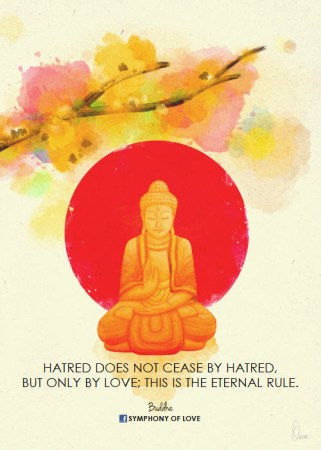
However, as one of the most famous verses of Dhammapada goes:

Hatred is never appeased by hatred in this world. By non-hatred alone is hatred appeased. This is a law eternal.

Dhp I:5, translated by Acharya Buddharakkhita

 We may ask: why should we be patient and kind while we are the ones who are being oppressed and wronged? I don’t have an answer for that, only that through history positive change has ever been affected only by people who made more effort than the ones who wanted to keep the status quo.

Abolitionists, Suffragettes, Socialists and Civil Rights activists all had to be more altruistic, better educated, and more open-minded than their contemporaries. Continue reading “Babies and Bathwater by Oxana Poberejnaia”

Mindful of the Bond We Share in these Trying Times by Vibha Shetiya

vibpicI’m sitting in my parents’ balcony in Pune, India, on a quiet morning. Well, this being a bustling Indian city of six million, it can’t really be quiet. As I sit with cup of tea in hand, I try and meditate – I’ve been practicing mindful meditation of late, and so, rather than block out the noises, I embrace the various sounds that make up this Monday morning.
I count the variety – sparrows gently chirping away while a noisy crow tries to outdo them in a contest he easily wins, a street hawker starting his day (and ours) on a rather cacophonous note, the sweeper from the neighbouring complex pouring his heart and soul into cleaning the grounds that will need re-sweeping in an hour or two, the put-putting rickshaw carrying squawking kids to the school down the alley, chirping chipmonks that temporarily develop wings as they fly from branch to branch in a cheerful chase, the honking car warning of its over-the-limit speed (reaffirming the fact there are two things we Indians especially love: honking for no reason, and breaking traffic rules), my mother’s footsteps as she peers out to see what I’m doing by myself…nine in all.

In the past I would have tried hard to block these out, straining to keep my mind on my breathing, worrying I’ll never find a quiet enough spot to help me master (hah!) the art of meditation. But today, I am grateful. Grateful that I am a part of a larger picture. And as I scan my body from head to toe, feeling the tension most in my shoulders while the cold mosaic tiles below keep me momentarily grounded to the fullness of living, I remind myself that I am just a speck in this montage called life. Continue reading “Mindful of the Bond We Share in these Trying Times by Vibha Shetiya”

Meditating on Woman by Oxana Poberejnaia

oxanaI decided to run a little experiment and to explore the notion “woman” from inside meditation. I practice Anapanasati Meditation, or mindfulness of breath. I learnt it from Theravada teachers. However, through my Buddhist career I have studied in various Buddhist centres and from various schools. The latest one with which I went on retreats is the Western Chan Fellowship (Chan is one of the Chinese schools of Buddhism, from which Japanese Zen developed).

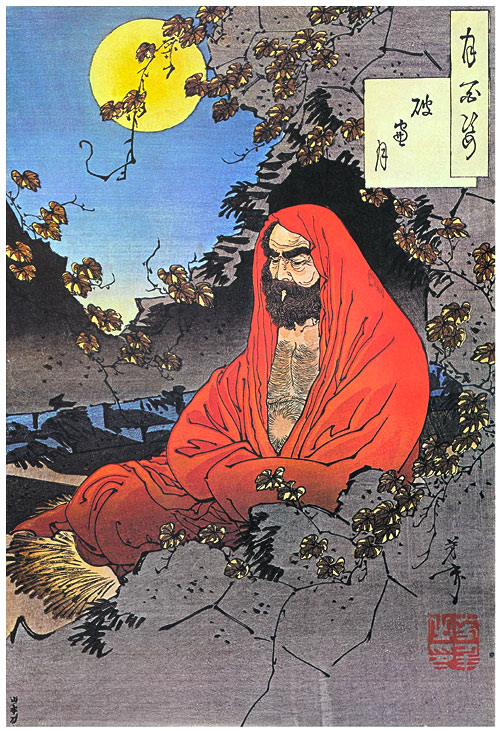
BodhidharmaYoshitoshi1887 Anapanasati meditation involves mindfully staying with your breath and following it as it goes in and out of your body. It is supposed to both quieten the mind and to lead to more clear vision, or insight. In Chan tradition there is also a practice of asking one simple question in meditation, for instance: “What is this?” or “Who am I?” Sometimes exploration of other topics from within the mind which has been quietened and made clearer by meditation is also practiced.

Continue reading “Meditating on Woman by Oxana Poberejnaia”

Meditating on Oneness by Amy Wright Glenn

Utah native Amy Wright Glenn will talk about her book: "Birth, Breath, & Death: Meditations on Motherhood, Chaplaincy, and Life as a Doula." Courtesy Amy Wright GlennAt the age of fourteen, I began to question the Mormon faith of my family. I embarked on a life long personal and scholarly quest for truth. While teaching comparative religion and philosophy, I was drawn to the work of supporting women through labor and holding compassionate space for the dying.

In my book, “Birth, Breath, and Death,” I share moving tales of birth and death while drawing on my work as a doula, hospital chaplain, and mother. I weave together these stories with philosophical reflections on truth, meaning, and Spirit.

This is an excerpt taken from the first chapter entitled “Search.”

I spent much of my early twenties traveling throughout The Middle East and India. I lost track of time gazing at an ancient copy of Homer’s Iliad at a museum in Cairo. I remember sleeping through a freezing cold night on Mt. Sinai and awakening to a brilliant sunrise over the Arabian Peninsula. I climbed the pyramids in Egypt and protested the Israeli occupation of the West Bank with Arab and Jewish women peace activists. For a year, I studied in Jerusalem. Later, I dedicated myself to the practice of meditation at an ashram in the Himalayas.

A lively mix of debate and discussion characterized my Hebrew University days. In the evenings, I worked illegally as a waitress in the Jewish Quarter of the Old City. Adorned in Roman attire, I served fantastic platters of Middle Eastern cuisine and performed folk songs and dance routines for photo-snapping tourists. I was nineteen and living in Jerusalem, a place saturated in religious symbolism. Known as Al-Quds in Arabic and Yerushalim in Hebrew, Jerusalem is a city renewed and ravaged due to contested paradigms of poetry and politics. Continue reading “Meditating on Oneness by Amy Wright Glenn”