Miriam Is For the Girls by Zoe Carlin

The Book of Exodus is a well-known scripture, and it is one that many Jews, Christians, and even people who are non-religious are very familiar with. Growing up, our family continued to tell this story year after year during Passover. It was one of many classic Torah readings shown to us in our temple. So, one of the key figures in this story is Miriam, Moses’ older sister. Most remember that she helped her mother deliver Moses in secret at the Nile River when he was an infant due to the Pharaoh setting an order to kill every Hebrew son because of concerns of the population growing too much (Exodus 11:5-6). She also assisted in leading the Israelites across the Red Sea when Moses opened it up for the Hebrews to cross (Exodus 14:21-22). An article titled “Miriam: Midrash and Aggadah” shares a deeper analysis of the roles that Miriam upheld as a sister, a daughter, and a woman during this time. It has also informed my understanding of Miriam’s story.

Continue reading “Miriam Is For the Girls by Zoe Carlin”

Miriam Speaks by Janet Maika’i Rudolph

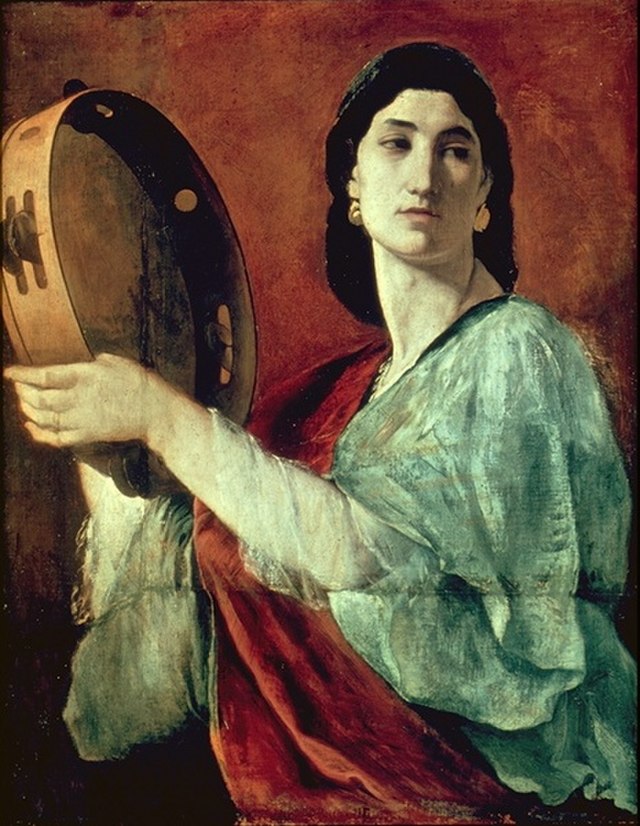
Wikimedia Commons: Anselm Feuerbach

Intro:  I have been working on a project inspired by Charlene Spretnak and her book Lost Goddesses of Early Greece. I am writing biblical stories through the eyes and words of the women. The scribes who wrote down the tales of the bible, wrote mostly from men’s point of view. And they had their own which was to destroy evidence of the Goddesses. I tell Noah’s story through Naamah, his wife. Abram and Sarai’s journey to Egypt through the eyes of Sarah. Exodus in Miriam’s voice. In my telling, Miriam went to Midian with Moses and, while there, experienced the Burning Bush and worked with Moses’ wife Zipporah to protect knowledge of the Goddesses. Below is an abridged version of this section of Miriam’s tale.  

I look around at your world today. You, yes you, are my descendants. My beloveds. I mourn for what you’ve lost. No, I am angry, how could things have gotten this bad? I dare you, I dare any of you to challenge my work. We did everything we could. It should not have taken this long to find our clues. But then I see the job the scribes did. It was better and more thorough than even we, who saw so much, could have imagined. I look around at this precious earth we bequeathed to you and see how damaged it is.

Continue reading “Miriam Speaks by Janet Maika’i Rudolph”

Moses and the Rambo Problem by Janet Maika’i Rudolph

Moses is an interesting character is in the pantheon of religious leaders. He is such a major personage, considered the founder of Judaism and yet there are no extra-biblical accounts of his life and his deeds. He only exists in the bible. You’d have thought that such a major event as leading a whole class of people away from Egyptian slavers, would have shown up on the radar of other written or mythical accounts from the time. Nothing!

Even his name is interesting. When the Egyptian princess gathered Moses out of the waters she said:

She named him Moses, explaining,

“I drew him out of the water.”

Exodus 2:10

This is one meaning of his name. But there are others. In Egypt, the land where he was born and raised, the M-SH (variations: m-s or m-ss) root simply means “son.” Or it can mean “child” in a non-patriarchal sense. We see this in other Egyptian names Ramses is the child of the sun god Ra. Tutmose is the child of Tut. 

Continue reading “Moses and the Rambo Problem by Janet Maika’i Rudolph”

Chukat: Miriam, Feminists, and the Power of Water, by Ivy Helman.

This week’s Torah portion is Chukat.  It covers a lot of ground.  There are the mitzvot concerning purification with a red cow, the deaths of important individuals, and the continued wanderings in the desert, which are rife with complaining Israelites, plagues of snakes and destructions of enemies.  It would be impossible to cover all of these events well in the length of this post, so instead I will am going to concentrate on a theme: water.  I also want to explain some of the ways Jewish feminists have enriched our connection to water. 

Water is first associated with the prophetess Miriam.  Miriam is first called a prophetess in Exodus 15, when she takes the women of the community out to sing about their deliverance from Egypt by way of the Re(e)d Sea.  Her “Song of the Sea” is thought to be, by many scholars, one of the oldest written texts of the Torah.  Yet, the connection between Miriam and water starts earlier in the Torah.   Miriam is Moses’ and Aaron’s sister and the one who watches over Moses when his mother, Joheved, hides him in a reed basket on the edge of the Nile (Exodus 2:4).  She approaches the Pharaoh’s daughter to secure a milkmaid for her brother (Exodus 4:7).  

Continue reading “Chukat: Miriam, Feminists, and the Power of Water, by Ivy Helman.”

Painting Miriam by Angela Yarber

 We are your subtlest instruments:
no music branches to your breast
that does not sound in us,
no music dies away from you,
that in us lives not,
and even in your absence
your cadence journeys…

Allen Mandelbaum, Chelmaxioms

The path to freedom is often muddy.  Water sloshes through your sandals and the soles of your shoes stick, clinging to the past, weighing down the future.  No one said dancing in wet sand was easy.  But it is very holy.  Just ask the brave prophetess who celebrated liberation by dancing on the shores of a reedy sea.

Often relegated to the submissive role of sister, the character of Miriam is typically overshadowed by the triumphs of her younger brother. Like many of her canonical contemporaries, Miriam receives little attention in scripture. Her name is only mentioned twice and the story of her song is left unsung by the writers of Exodus.  Yet she is there, her song hidden in the crevices of the canon, her dance demanding that we notice the ritual event of liberation, her courageous voice prophesying, leaving a legacy for all the dancing women who will follow in her intrepid food steps. Continue reading “Painting Miriam by Angela Yarber”