Truth and Consequences–This Feminist’s Perspective? by Marcia Mount Shoop

Marcia headshotIn John’s Gospel, Pilate’s response to Jesus’ self-identification as the one who “came into the world to testify to the truth” is a simple question:  “What is truth?”  His question hangs in the air as he moves from that conversation to the throngs he sought to please.  Pilate took the temperature of that crowd to decide Jesus’ fate even though he, himself, found no reason to charge Jesus with a crime.  Pilate asks the question from a position of power—literally holding life and death in the ambivalence and maybe even in the sincerity of his words.

The “t” word has been center stage in our collective conversation of late with Lance Armstrong’s Oprah-event confession  and the Manti Te‘o girlfriend-dying-of-cancer hoax at Notre Dame .   The Internet is abuzz with reactions to both confessional moments.  Lance Armstrong’s confession apparently didn’t play well with the general public.   And people are weighing in about whether Manti Te‘o could really be so naïve or if he just didn’t know how to tell everyone the truth when the story got out of hand.   Continue reading “Truth and Consequences–This Feminist’s Perspective? by Marcia Mount Shoop”
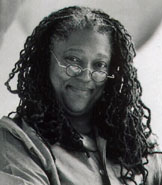
Monthly Highlight: Emilie M. Townes


Emilie M. Townes

“In my teaching I want to get students excited about that notion of, you know, you’re not just here to get a Yale degree and have it on your diploma and be able to hang it on your wall…You should be here thinking about what kind of contributions can I make to society….What are you doing that helps enhance the lives of all of us, as opposed to (our) own little idiosyncratic research interests.”  – – Emilie M. Townes

Emilie Townes is a pivotal person in the field of Womanist and Christian ethics as well as a foremother and pioneer in Womanist theology. Cornel West of Princeton University said:

“Emilie Townes is the towering womanist ethicist of our time….In this ice age of indifference and evasion, her powerful voice and viewpoint summon us. And we thank her for her vision and courage.”

At an opening address at the Convocation in 2005, Townes stated that there is a need to live in a “deep walking hope” that shapes lives “in ways that are not always predictable, not always safe, rarely conventional” and protests “with prophetic fury the sins of a world, and sometimes theological world views, that encourage us to separate our bodies from our spirits, our minds from our hearts, our beliefs from our actions.” Continue reading “Monthly Highlight: Emilie M. Townes”

Building a Bridge toward the Future: Will You Meet Me in the Middle? By Ivy Helman

On Tuesday, President Obama’s acceptance speech included the following statement about coming together as a country across differences of opinion.  He said, “We will disagree, sometimes fiercely about how to get [toward the future we hope for]…by itself, the recognition that we have common hopes and dreams won’t end all the gridlock or solve all our problems or substitute for the painstaking work of building consensus and making the difficult compromises needed to move this country forward…”

How do we really do this work?  How do we come together across difference to make change?  How do we foster productive dialogue that produces genuine and real results?  In this dialogue, what principles do we use?  What values do we honor?  What criteria do we use to judge opinions of others?  When is an opinion wrong or when is an opinion just different from our own? Continue reading “Building a Bridge toward the Future: Will You Meet Me in the Middle? By Ivy Helman”

IN THE NEWS: Religious, Atheist, and Political Feminists – Unite?

This post is the first of a new weekly feature on Feminism and Religion that will be published every Wednesday. “In The News”  is designed to invite discussion on topics that are showing up in news and media outlets and are relevant to feminism and religion

Diane Winston recently wrote an op-ed piece for the Los Angeles Times regarding the role of faith in politics. She comments that recent poll results give the impression that religion is not playing a significant role in the current elections, for how else does one make sense of the fact that the Republican Party’s ticket is made up of a Mormon and a Roman Catholic? However she is quick to point out that although religious labels may be passé, “the religious values that inform who’s taxed, what’s regulated, how jobs are created and when or where we help those in need,”  are still very much the driving force behind how people vote and with whom they form coalitions. Thus, in the U.S. seemingly incompatible religions as well as denominations within those religions have come together in an effort to control and legislate women’s bodies and autonomy. As the editors of the Religious Dispatches asserts, “the Moral Majority couldn’t have come together without a big interfaith effort.”  

But theirs are not the only religious voices on the scene. Continue reading “IN THE NEWS: Religious, Atheist, and Political Feminists – Unite?”

Rape is Not a Political Platform – Rape is a Violent Crime! By Michele Stopera Freyhauf

Just when you think you have heard it all, here we go again – another politician with “open mouth-insert foot” syndrome.  Discussing his zero-tolerance policy for abortion, Missouri Representative Todd Akin made the following statement last Sunday about pregnancies that result from rape:

“from what I understand from doctors, that’s really rare.  If it’s a legitimate rape, the female body has ways to try to shut that whole thing down.  But let’s assume that maybe that didn’t work or something.  I think there should be some punishment, but the punishment ought to be on the rapist and not attacking the child.”

In an inadequate attempt to apologize and clarify his words, Akin stated that he meant to say “forcible rape.” This clarification fares no better nor does the fact that he later acknowledges that women “do become pregnant” during a “forcible rape.”  It is interesting to note what Akin considers to be “rare.”  According to the Washington Post, approximately 5% of rape victims become pregnant.  Akin reduced this to a statistic – 1 out of 32,000 women.  This, for Akin, is a rare occurrence.

Stating that a woman’s body is capable of preventing pregnancy in the case of “legitimate rape” demonstrates how out of touch politicians are and further (re)affirms the bigotry that exists within our political system.  The same politicians who have waived a “war against women” this year, try to promote policies that exercise control over what a woman can and cannot do with her body; policies that are  based on ill-advised misinformation.  Decisions politicians make for a woman – what she can and cannot do with her body – are rooted in personal faith beliefs, party-line agendas, and supporters (campaign financing dollars and lobbyists).  This year, a woman’s body has become a platform for votes.

Inasmuch as I would like to think Akin’s statement is an isolated event, Garance Franke-Ruta points out that this is not the first time a politician made a statement about rape victims and pregnancies: Continue reading “Rape is Not a Political Platform – Rape is a Violent Crime! By Michele Stopera Freyhauf”

Why Men (and Women) Can’t Have It All by John Erickson

Can women have it all? Possibly. Can men ever have it all? Maybe. Regardless of however we put it, the are ills to every good deed in the world and we need to get back to understanding how and why we use each other in order to fully understand that behind every good man might be a good woman but also behind every good women there might also be a good man.

Growing up, my favorite movie was The Associate staring Whoopi Goldberg as a woman at a Wall Street firm attempting to climb her way up the corporate ladder through hard work and dedication.  Her character Laurel Ayres does all the work and comes up with the ideas that clients eventually invest in, her partner Frank takes all the credit and eventually surpasses her at work by getting the promotion she had been vying for.  In a prodigious scene that I still vividly remember from my childhood, Laurel quits her job and starts an investment firm on her own; betting every cent and piece of property she has on the eventual success of her new business adventure.

In an attempt to break through the proverbial glass ceiling and play with the big boys of Wall Street, Laurel eventually discovers that although she can be (and is) the genius behind many of the great ideas that would save companies millions, she still needs to have her ideas expelled by a man she creates in order to win over clients, which eventually leads her to become successful.  However, while Laurel is reaping in the benefits of having Mr. Cutty, her made up business partner, by her side, she eventually learns that no matter what she does she will always be secondary to her male business partner. Continue reading “Why Men (and Women) Can’t Have It All by John Erickson”

“Vaginas are Everywhere!”: The Power of the Female Reproductive System by John Erickson

Nice girls don’t say the word vagina.

I have a beautiful picture of vagina hanging on my wall.  However, for the longest time it was in the back of my closet, with a plastic bag covering it.  I wasn’t ashamed of it but my ex-boyfriend, like most gay men, refused to have it on the wall where he could see it.  He is now long gone; the vagina is now out and proud.

I bid on the picture one fall during a showing of the Vagina Monologues at Claremont School of Theology.  One of my best friends was in the show and I had always loved its powerful message.  I walked out of the theatre, waiting for my friend, and there it was: the picture of the vagina.  I found myself caught up in its beauty.  Its gaze had mesmerized me.  The outlying layers of red, the contours of its shape, they all began to mold into a figure before my eyes.  While I have never thought of myself as a religious person, I realized that at that moment I was no longer looking the old photo but rather I was staring at the outline of the Virgin Mary.  At that moment, I realized that I had to have the picture.

My ex boyfriend was ashamed of the photo.  I let him shame me into putting it in the back of my closet and cast it away like it was nothing.  Like the experience, call it religious or not, had never happened.  When we ended our relationship, I found myself inconsolable and pacing up and down my stairs in a never-ending cycle of sadness and downheartedness.   As I was pilfering through our items, I came about the picture.  I saw it and for a split second, I was no longer sad. Continue reading ““Vaginas are Everywhere!”: The Power of the Female Reproductive System by John Erickson”

BOOK REVIEW: Jonathan Merritt’s A Faith of Our Own by Gina Messina-Dysert

Have you been a victim of the “Culture Wars”?  Jonathan Merritt was, and it inspired him to write his latest book A Faith of Our Own: Following Jesus Beyond the Culture Wars.  According to Merritt, the culture wars have led each of us (who identify as Christian) to define Christ in terms of our political party.  The Religious Right have claimed a political and pietistic Christ who must be protected from liberals who have sought to chase Jesus out of our “God-Blessed” nation.  And Christians on the left have fought against the oppressive theocracy they believe the right wing seeks to implement.  Neither side’s Jesus likes the other, and according to Merritt, neither represents the Jesus of the Bible.

Merritt argues that participating in politics foolishly gets churches into trouble and results in a divide within community.  Christians must answer Jesus’ question, “Who do you say I am?” for themselves.  By transcending the culture wars, we can return to the Bible, see Jesus with “fresh eyes,” and find a “faith of our own.”  Merritt explains Christians who are reclaiming their faith are doing so in search of life transformation and unity among those once divided by politics. Continue reading “BOOK REVIEW: Jonathan Merritt’s A Faith of Our Own by Gina Messina-Dysert”

Power and Wealth in The Hunger Games by Lisa Galek

Unless you have been living in grim, dystopian world for the past few months, you’ve no doubt seen or heard something about The Hunger Games. The movie, which is based on the first in a best-selling trilogy of novels by Suzanne Collins, debuted several weeks ago to mass acclaim. It has already had the biggest opening weekend ever for a non-sequel and its advanced ticket sales eclipsed that of the most recent installment in the Twilight Saga.

Feminists can rejoice a little in the fact that this movie, which tells the story of strong, female protagonist, Katniss Everdeen, has surpassed the Twilight movies in ticket sales. Unlike the Twilight movies, the plot of The Hunger Games does not revolve entirely around a romantic love triangle. Though two suitors do vie for Katniss’s attentions, the heroine has much more pressing concerns – like whether or not she will be able to survive until morning.

But, aside from the good news that tough, well-drawn female characters can perform well at the box office, the movie has also spawned some interesting discussions about government and politics. In fact, both liberal and conservative commentators have claimed The Hunger Games supports their personal viewpoints (See “Liberal, conservatives embrace ‘Hunger Games’ for very different reasons”). For me, the books and movie fall more squarely onto the liberal side of the fence for one reason – they call into question wealth and power and those who are unwilling to change existing structures of oppression. Continue reading “Power and Wealth in The Hunger Games by Lisa Galek”

No One Is Safe from the Parodist (Part 2) by Barbara Ardinger

I suppose I should be ashamed to admit this, but I once worked as a freelance copywriter for a multi-level marketing company.

I suppose I should be ashamed to admit this, but I once worked as a freelance copywriter for a multi-level marketing company. (Okay—I needed the money. It was a job.) I wrote the following piece one day when I was supposed to be writing real advertising copy. They were not amused. A few years later, when I was writing Finding New Goddesses (ECW Press, 2003), I pulled it out of my three-ring binder, renamed it Dr. Lucre’s Whoopee Pack, and Found (i.e., made up) Panglossolalia, the Found Goddess of Infomercials. Today, if we want to be politically correct, we recycle and reuse, so here we go again. I’ve changed the names in this infomercial and brought it up to date. When November comes, be sure to vote for the candidate of your choice.

Dr. Mittens’s Whoopee Pack

Good evening, friends, and welcome to my secret garden. I’m your friendly political commentator. I’m so glad you could visit me tonight as we take a short break from biased documentaries and endless negative commercials. Friends, tonight’s movie, Attack of the Jobless Economist, will begin in a minute. But first, this.  Continue reading “No One Is Safe from the Parodist (Part 2) by Barbara Ardinger”