Patriarchy, Thy Name is Cruelty by Janet Maika’i Rudolph

Andrew Young famously said that ‘anything is legal if 100 businessmen decide to do it.” I would add a more modern take. Nothing is too low, too immoral, too illegal if 5 or 6 Supreme Court justices decide to allow it. 

Their recent decisions could fill a book on how corrupt they are. (I’ve discussed this before. But this post is looking at immigration and the cruelty that this administration is fomenting. We have always been a cruel nation. Patriarchy has honed cruelty as its worked to crush women’s bodies while silencing women. How else would women have agreed to our loss of power? Carol Christ has written eloquently about this. Immigration policy has blown the lid off this pot. Perhaps because it is too new, too shocking. Because ICE is in our faces with agents flooding neighborhoods and engaging in unfettered cruelty.
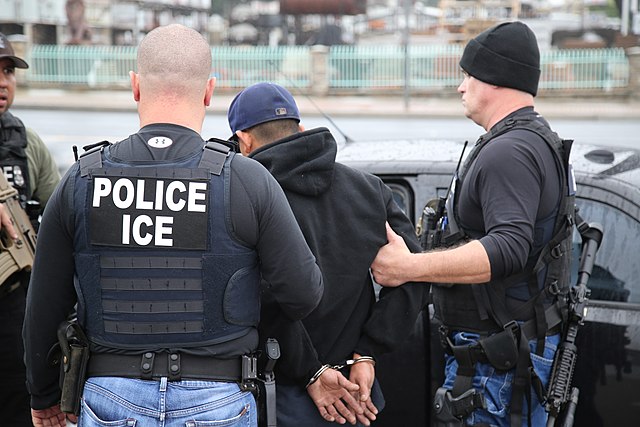
For example, when ICE raided an apartment building in the Bronx on Feb 24th, they arrested 19 year old Merwil Gutiérrez. When they realized they had the wrong person, their response was “take him anyway.” Read that again, “take him anyway.”

Merwil Gutiérrez was then deported to the notorious prison CECOT in El Salvador. For months, his family couldn’t find him.  He was eventually sent to his native Venezuela.

Continue reading “Patriarchy, Thy Name is Cruelty by Janet Maika’i Rudolph”

This is the time for good trouble by Marie Cartier

Marie Cartier performing this rant poem at the John Lewis Good Trouble Lives On Rally in Lakewood, CA July 17th. Photo by Mel Saywell

This I can guarantee you: there will come a day when it seems you cannot stop crying.

When will that day come? Today it came for me reading The Atlantic while I drank my morning coffee:

This is what they are reporting: the Trump administration has given the order to incinerate food instead of sending it to people abroad who need it. Nearly 500 metric tons of emergency food—enough to feed about 1.5 million children for a week—are set to expire tomorrow…the food, meant for children in Afghanistan and Pakistan, will be ash.

There will come a day.

And here we are in these United States with people in hiding, speaking of food. Why are they hiding? They are hiding from immigration officials and some of us are sending those people in hiding – food. Toiletries. Macaroni and cheese boxes line my grocery cart,

In these United States, we are building more prisons. And I read the detention center known as Alligator Alcatraz puts thirty-two people in a cage. Each person/prisoner costs the United States taxpayer approximately $275 a day. I guess I mean not prisoner, immigration detainee.

Continue reading “This is the time for good trouble by Marie Cartier”

To Childless Cat Ladies by Janet Maika’i Rudolph

I feel you. In a patriarchy where women’s reproductive abilities determine our worth, to be childless is a curse. We can thank VP candidate JD Vance for revealing this truth in all its ugly fullness. He is a walking billboard for patriarchy. Bottom line: Patriarchy is all about women’s bodies, our reproductive abilities and men’s desire to control them. We saw this in the Dobbs decision where it was declared that women have no constitutional right to the basics of healthcare, in Texas where it’s pretty much illegal to have a poor pregnancy outcome, and in Ohio where raped children are expected to give birth to their abuser’s child. Its endless 

But it is JD who made it plainer than plain what this is all about. Besides childless cat ladies being an old trope, just think of the judgement involved. Who is JD to decide on anyone’s family constellation? Or their pets? He also made disparaging remarks about the “childless left,” who have no “physical commitment to the future of this country.” That is a statement that only a person who totally lacks empathy can make. He is making a sweeping generalization that people without children don’t care about the future. This statement is more confession than truth. He reveals that until he had children, he had no care about the future of our world. It’s beyond egocentric. If only his kids are the center of his “caring,” that shuts out most of the world’s other children.

Continue reading “To Childless Cat Ladies by Janet Maika’i Rudolph”

Women’s Rights: How Far Back in Time Will our Legal System Go? by Janet Maika’i Rudolph

Wikimedia Commons

I was in the process of writing this blogpost last week when the Arizona supreme court decided to turn abortion rights back to the civil war era (1864). This was a time when women had no rights at all and abortion from conception was illegal. But civil war era laws are downright quaint and modern compared the legal underpinnings of the supreme court’s Dobbs decision.  

In his decision, Mr. Alito cited four “great” and “eminent” legal authorities, Henry de Bracton, Edward Coke, Matthew Hale, and William Blackstone. For perspective here are their dates. 

Henry de Bracton  c. 1210 – c. 1268
Edward Coke 1552 – 1634
Mathew Hale 1609-1676
William Blackstone 1723 –1780

To help me understand Alito’s logic, I read up on some conservative commentary. Here is what I learned: When the founding fathers needed to create legal documents, they didn’t create them out of thin air. They relied on the logic of the four men (and others) listed above. Yes, they did pick some enlightened aspects of these thinkers of the time, esp. in regard to the rights of the common people in relation to royalty. The thought of commoners having rights was revolutionary in its day. But as we have learned so painfully, our founding fathers limited who those rights applied to. They did not take into consideration the rights of anyone other than landowners, which at the time meant white men.

Continue reading “Women’s Rights: How Far Back in Time Will our Legal System Go? by Janet Maika’i Rudolph”

Archives from the FAR Founders: A Time for Organized Rage by Gina Messina

This was originally posted on October 20, 2018. This is part of a project to highlight the work of the four women who founded FAR: Xochitl Alivizo, Caroline Kline, Gina Messina, and Cynthia Garrity-Bond

With the recent confirmation of Brett Kavanaugh and the torturous treatment of Christine Blasey Ford, we are reminded that we continue to live in a rape culture and very often, Christianity — and religion in general — is used as means to perpetrate misogyny and control the lives of women.

While there were many moments of the Kavanaugh hearing that made me gasp, one in particular was when Senator Kennedy asked the now Supreme Court Justice if he believes in God. Kennedy used Kavanaugh’s Catholic faith as the basis to vote in his favor. Rather than using his time to explore critical information revealed through testimony and investigative reports, Kennedy decided that God should be the focus of his questions and that Kavanaugh’s affirmative response meant that he did not assault Ford. 

Continue reading “Archives from the FAR Founders: A Time for Organized Rage by Gina Messina”

Who Gets to Define What it Means to be Pro-Life? by Janet Maika’i Rudolph

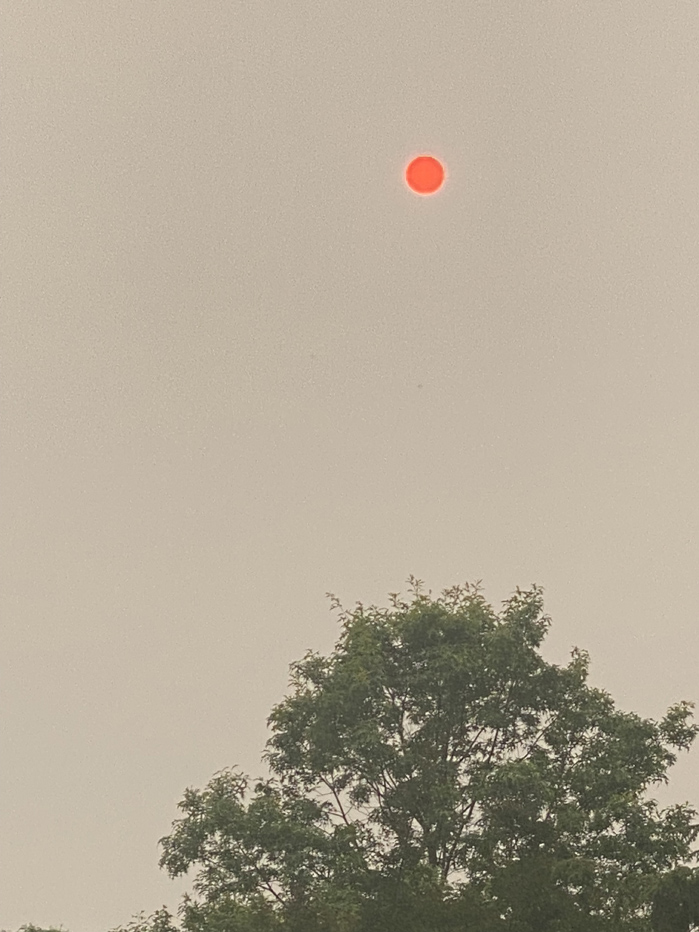
The sky and sun on June 7th in the afternoon on Long Island.

Today I am coughing and choking here on Long Island because of our unhealthy air quality.  The smoke from the wildfires of Canada have reached us. We, here in NY, are not alone in dealing with air so polluted that breathing is at risk. I think of the CA wildfires, the SpaceX rocket that exploded in April, the Ohio train derailment in Feb. No place is safe.

While coughing and thinking about this, two bits of news came into my consciousness, The first was the Supreme Court ruling narrowing the scope of the Clean Water Act.

My first thought was, do they and their children not have to live in this world too?  Do they think they can buy a clean environment for themselves and their families and the rest of us be damned? 

The next report I heard was from a prominent conservative commentator who explained how “prolife” he is and went on to describe his “deep concern” for life.

Continue reading “Who Gets to Define What it Means to be Pro-Life? by Janet Maika’i Rudolph”

Seeds of Hope: Part One by Beth Bartlett

Author’s Note: This piece was inspired by Janet Maika’i Rudolph’s wonderful FAR post of December 15th, 2022, “Ode to Seeds.”

“. . . I know, yes, there is renewal, /because this is what the seeds ask of us/ with their own songs/ when we listen to their small bundle of creation,/ of a future rising from the ground . . .” – Linda Hogan

The first seed catalogs started arriving in the mail even before the turn of the new year.  In an annual ritual of hope, in the depths of winter we turn our thoughts and dreams to growing things – seeds of heirloom tomatoes, cucumbers, squash, carrots, and beans that will feed us and grace our tables in the summer and fall, and colorful marigolds, nasturtiums, and zinnias that will delight all summer long with their beauty. Is this the invincible summer of which Camus wrote?[i] 

Continue reading “Seeds of Hope: Part One by Beth Bartlett”

A Poem for Our Abortion Rights by Marie Cartier

Fecundity: the ability to produce an abundance of new growth, but also the ability to produce new ideas

And now in the hour of our discontent, we are asked to worry about

fecundity. I suppose we can call it that—have we made enough babies yet?

As a people. A people ruled by patriarchy. No small thing. “A social system in which males dominate and hold primary power.”

Oh my god—am I sick of it? Anyone with a brain is sick of it…I want to think.

But they have brains, right? The afore mentioned patriarchs? Who are

creating this new social system?

A meme goes out on social media—I’m not pro-murder I’m pro-Ellen, thirteen years old and pregnant by her father

I’m pro-Margaret, with five kids and I cannot to afford to feed another

I’m pro-Eliza, pregnant with a baby known to have serious birth defects

I’m pro– you get the idea.

Continue reading “A Poem for Our Abortion Rights by Marie Cartier”

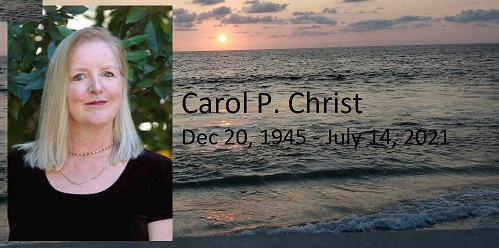
The Legacy of Carol P. Christ: June 25th or “June Unteenth”: A Sad Day For All Americans

This was originally posted on July 1, 2013

Kelly Brown Douglas wrote recently on Feminism and Religion about the celebrations in black communities on Juneteeth when the emancipation of slaves became a reality in the formerly Confederate states.  Sadly, on June 25th 2013 the Supreme Court announced its decision striking down section 4 of the Voting Rights act of 1965, the most important Civil Rights legislation of the 20th century.  The Supreme Court gave a “green light” to states with previous and on-going records of introducing laws with the effect of preventing minority voters from voting to “proceed straight ahead.”  I name this day June Unteenth and call on all Americans to mourn it in sackcloth and ashes.

For every American concerned with Civil Rights this indeed is a sad day. It means states and municipalities—particularly those in the former Confederacy—will in the days following the decision be introducing new legislation which will have the effect of disenfranchising black voters.  Those of us who consider the right to vote fundamental in a democracy must rise up, with time, with money, and if necessary with our bodies in peaceful protest.

Continue reading “The Legacy of Carol P. Christ: June 25th or “June Unteenth”: A Sad Day For All Americans”

I’m Not “Fit” to Judge Another Woman’s “Fit”ness by Liz Cooledge Jenkins

In recent conversations around abortion rights—spurred by a leaked draft of a Supreme Court decision that would overturn Roe v. Wade—everyone has opinions. The financially comfortable, often-white, often-evangelical women in my circles have opinions. And these opinions often involve the lives and choices of materially poor women and women of color.

            In her recent book The Trouble with White Women: A Counterhistory of Feminism, Rutgers University professor Kyla Schuller profiles seven pairs of feminist activists over the last two hundred years. Each pair includes one woman who operated from a framework of white feminism—a framework that, according to Schuller, “consistently…wins more rights and opportunities for white women through further dispossessing the most marginalized.” And each pair includes a woman who embodied intersectional feminism—a feminism that “expose[s] sexism to be a powerful structure of systemic inequality and attempt[s] to untangle its deep threads with other forms of domination, while also building new practices of care, coalition, faith, and solidarity.”[1] This is not just history but a live tension in the present day.

Continue reading “I’m Not “Fit” to Judge Another Woman’s “Fit”ness by Liz Cooledge Jenkins”