A Beltane Story by Barbara Ardinger

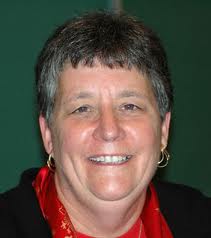
Barbara ArdingerOnce upon a time there was a beautiful princess—NO, stop right there. Tales like this do not require princesses. Let’s try again. Once upon a time there was a sturdy young woman who lived in a small town in Mitteleuropa not too far from the castle of the Holy Roman Emperor.

The girl’s name is Madchen. Her parents are a Farmer and a Cunning Woman. She is proud to say that just last fall she actually saw the Emperor, who is a stiff, elderly man who always wears a fussed-up military uniform and a pince nez and has enormous sidewhiskers. The Emperor did not, of course, notice the girl as he sat in his carriage and waved stiffly to his subjects. But what Madchen doesn’t know is that Crown Prince Rufus, whose uniform and sidewhiskers are considerably more modest than his father’s and who was riding on a great red Royal coachstallion in the parade behind his father’s coach, noticed her immediately. That girl, he said to himself, is a girl I must have! Continue reading “A Beltane Story by Barbara Ardinger”

Let’s Build an Altar for Springtime by Barbara Ardinger

Barbara ArdingerWith spring springing up all over and warm days coming back in the colder climates, let’s build an altar to celebrate life. Now don’t worry—I’m not advising you to worship idols and do anything to insult your god. We’re not building a churchly altar, but one based on the concept of love respect for the earth we live on, the powers of Mother Nature, and the indisputable fact that we are all kin. This altar represents no disrespect for any religion, faith, sect, or denomination. Its purpose is to focus our awareness that the galaxy, the universe, the earth, the continent we live on, the town we live in, and spaces where we live and work are all sacred. The purpose of this altar is to remind us every day that every religion is sacred and that even the most humble among us have a place on the planet.

We start by considering the four elements—fire, air, water, and earth—which go back at least as far as classical Greek philosophy. Long ago, people believed that everything partook of these four elements. They looked around and saw the elements in action every day: ovens and lightning, soup and rivers, breezes and birds, gardens and hills. The four elements became the four humours, which came to the principles of medieval medicine that ruled our temperaments. The elements are also prominent in alchemy and astrology. Continue reading “Let’s Build an Altar for Springtime by Barbara Ardinger”

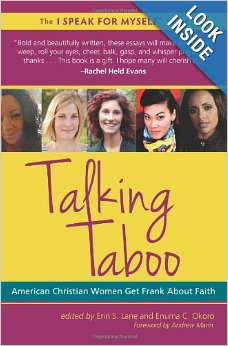
“Talking Taboo”: Register for WATER’s Feminist Conversations in Religion Teleconference

Talking-Taboo-Part-TwoWATER’s Feminist Conversations in Religion Series

Presents

“Talking Taboo”
Part Two

An hour long teleconference with

Grace Biskie
Gina Messina-Dysert
Tara Woodard-Lehman
Katey Zeh

Wednesday, February 5, 2014 1-2PM EST

The book, Talking Taboo: American Christian Get Frank About Faith edited by Erin Lane and Enuma Okoro, is creating lots of conversation. WATER is excited to feature two teleconferences to start 2014 by looking at the issues many people consider taboo. Join authors Grace Biskie, Gina Messina-Dysert, Tara Woodard-Lehman, Katey Zeh, and let’s “talk taboo.”

Grace Biskie is a passionate, big-dreaming, extroverted communicator. She holds a bachelor of arts in speech communications and is half way through a Masters of Divinity from Western Theological Seminary. She has served high school and college students in the nonprofit sector for over fifteen years. She blogs regularly at http://www.gabbingwithgrace.com. Currently, Grace is working on her first book entitled, Detroit’s Daughter, a memoir.

Gina Messina-Dysert, PhD, is Dean of the School of Graduate and Professional Studies at Ursuline College. Gina is also Co-founder and Co-director of Feminism and Religion, an international project that explores the “F-word” in religion and the intersection between scholarship, activism, and community. She is the author of the forthcoming book Rape Culture and Spiritual Violence, and coeditor (with Rosemary Radford Ruether) of the forthcoming anthology Feminism and Religion in the 21st Century.  Gina’s twitter is @FemTheologian and her website is http://ginamessinadysert.com.

Tara Woodard-Lehman is an ordained Presbyterian minister. Since 1998 she has ministered to and with young adults and university students. Over the past four years Tara has served as the executive director of Westminster Foundation and Presbyterian Chaplain at Princeton University. Tara also serves on the pastoral staff of Nassau Presbyterian Church in Princeton, New Jersey.

Katey Zeh is an advocate for reproductive justice in faith communities. She wrote her honors thesis on theology, ritual, and motherhood at Davidson College. In 2008, she graduated from Yale Divinity School with her Masters of Divinity. Currently, she directs a grassroots education and mobilization initiative focused on improving global maternal health for The United Methodist Church. Katey serves on the Board of Directors for the Religious Coalition for Reproductive Choice in Washington, DC.

TalkingTabooA recommended resource is the book Talking Taboo, in particular the following chapters:

  •      “A Woman Undone,” by Grace Biskie, pp. 191-198
  •      “No Women Need Apply,” by Gina Messina-Dysert, pp. 93-97
  •      “Broken in Body, Slain in the Spirit,” by Tara Woodard-Lehman, pp. 74-79
  •      “A Pregnant Silence,” by Katey Zeh, pp. 186-190

HOW TO REGISTER

Email “Register Me Teleconference” towaterstaff@hers.com by Tuesday, February 4, 2014 in order to receive dial-in information.

WATER, The Women’s Alliance for Theology, Ethics and Ritual
8121 Georgia Avenue, Suite 310 | Silver Spring, MD 20910
301.589.2509 | water@hers.com | www.waterwomensalliance.org

Please consider making a secure online donation to WATER. Thank you!

Extending Compassion and Vegetarianism by Xochitl Alvizo

“I did not know to recognize you as individuals when I bought you, but I know to recognize you as individuals now…”

I had been a vegetarian, and sometimes pescatarian, for more than 10 years before becoming vegan. Despite the length of my vegetarianism, in all that time I had not been inclined to go vegan. First, I really didn’t know too much about veganism and only began meeting a few vegans about five or six years ago here in Boston, none of whom had shared a compelling enough reason for their choice (at least not compelling to me). Further, I had no imagination for life without cheese or Cherry Garcia ice cream(!), and so I happily continued with my vegetarian ways. Then enters Carol Adams…

In a teleconference that WATER had with Carol Adams on March 14, 2012  (Women’s Alliance for Theology, Ethics and Ritual), the beauty of her veganism moved me to a new understanding of my food choices. I listened to the WATER audio recording some months after the actual event (these teleconference audio recordings are a great resource you should all access), and although I had been familiar with some of her work and had heard her speak before, I had not heard her talk about the compassion element of veganism. Her emphasis on increasing compassion, which I witnessed in action during her conversation with one of the listeners, was what moved me to my new practice. Continue reading “Extending Compassion and Vegetarianism by Xochitl Alvizo”

Sustaining Feminist Spiritualities in the Seeming Absence of Community by Elisabeth Schilling

LaChelle Schilling, Sustaining Feminist SpiritualitiesThe spirituality I cultivated during my teens through evangelistic Pentecostal Christianity was based on possession, hierarchy, and exclusivity, although I would not have said that at the time.

As I gradually moved away from that faith community in my mid-20s, no longer wanting to equate a rewarded closeness to God with being set apart from others, I began finding myself participating in quiet conversations with the readings of Thomas Merton, Elaine Pagels, and with poetry by writers such as Olga Broumas.  The words I was drawn to might not have been expressly or consistently religious, but they offered spiritual nourishment in their eroticism, earthiness, and sacred metaphor.

It was also around that time when I decided that feminist theologies were healing in their questions and re-visions of God and concepts of salvation and sin. To understand that being a spiritual and/or religious person could mean being aware of and pursuing my desires and connections to other people instead of being a gatekeeper was redemptive. Continue reading “Sustaining Feminist Spiritualities in the Seeming Absence of Community by Elisabeth Schilling”

And Thus God made a Covenant with Hagar in the Wilderness by Michele Stopera Freyhauf

Freyhauf, Feminism, Religion, Durham, Old Testament, Blogger, BibleWe are familiar with the covenant God made with Abraham and Moses, but are you aware that God also made a covenant with Hagar?

In the wilderness Hagar encounters a deity at the well named Beer-lahai-roi (Genesis 16). Water and wells are important because they symbolize fertility and life. Wells for women are common places where they met their future spouses. Because wanderers in the desert need water to survive, water itself becomes a symbolic of life-giving or life.

In the seemingly barren dessert, the fertile Hagar finds out that she is pregnant and going to be the mother of many children. Hagar is promised progeny in a motherless state.  According to Pamela Tamarkin Reis, this is called the “after-me” descendants, which guarantees Hagar that her children will live for “immeasurable generations;” a pattern that fits within the scope of this promise. This same promise of progeny is also given to Eve in Genesis 3:20, providing and interesting parallelism between Eve and Hagar.

It is worth pointing out the irony exists in this promise.  Sarai uses Hagar to “build her up.” According to Nahum Sarna, to be built up in terms of the number of children that you have, implies that you are mother to a dynasty.  In this pericope, however, it is Hagar, not Sarai that is built up through this divine promise.

This patterns of promise exists within the birth narrative through the annunciation of Ishmael and the promise of progeny.  It is through this narrative that Hagar enters into a covenantal relationship with the deity.  According to J. H. Jarrell, birth narratives have six common elements that establish this relationship:  mother’s status, protest, offer, son’s future forecast, Yahweh naming, and acceptance of the contract. Hagar’s story contain these elements:

  1. Mother’s Status:  Hagar is without child because she is a virgin (16:1).
  2. Protest:  Hagar flees from her mistress (16:8).
  3. Offer:  Return to your mistress and submit to her authority (16:9).
  4. Son’s Future Forecast:  He will live at the east of all his brothers (16:12).
  5. Yahweh Naming:  You will bear a son Ishmael because the Lord has given heed to your affliction (16:11).
  6. Acceptance of the Contract:  She called the name of the Lord (16:13).

Continue reading “And Thus God made a Covenant with Hagar in the Wilderness by Michele Stopera Freyhauf”

SPECIAL AAR SERIES Part I: Re-envisioning the Academy as ‘Open Source’ Community by Kate Ott with introduction and response by Mary Hunt


Kate OttMary HuntIntroduction:

This is one of four papers presented in Chicago at the Annual Meeting of the American Academy of Religion, November 17, 2012, in a session entitled  “Feminism, Religion and Social Media: Expanding Borders in the Twenty-First Century,” organized by Gina Messina-Dysert and chaired by Rosemary Radford Ruether with Mary E. Hunt as the respondent. What follows is the general response followed by, after each of the contributions, Hunt’s appreciative analysis. Two of the papers will be posted here on Feminism and Religion and two will be posted on the Feminism in Religion Forum

General Remarks by Mary Hunt:

The stated purpose of the panel is to discuss “how digital projects are remapping the feminist theological terrain and creating opportunities for a wide range of voices to participate in ongoing and new conversations related to feminist issues in religion.” These writers have done that and more. Continue reading “SPECIAL AAR SERIES Part I: Re-envisioning the Academy as ‘Open Source’ Community by Kate Ott with introduction and response by Mary Hunt”

Monthly Highlight: Mary E. Hunt

As a Catholic feminist theologian, activist, teacher, and writer Mary Hunt has made a massive impact in the field of feminism and religion.  Following the completion of her graduate education (MA, Harvard Divinity School, M.Div., Jesuit School of Theology, Ph.D., Graduate Theological Union), Mary recognized a strong need for theological, liturgical, and ethical development by and for women and responded by co-founding WATER (The Women’s Alliance for Theology, Ethics, and Water) in 1983.  Over the last 3+ decades, she has been instrumental in addressing social injustice and creating change in religion and community. Continue reading “Monthly Highlight: Mary E. Hunt”

Catholic Feminists Meet, Strategize by Rosemary Radford Ruether and Theresa Yugar

During July 8-11, 2012 twenty Catholic feminist leaders met in a retreat center near Baltimore to discuss their concerns and hopes in the light of the recent and ongoing attacks of Catholic bishops on women and especially on feminist work in the church. The group consisted of representatives from many sectors of Catholic institutions and movements.  There were the founders of a peace and justice movement of the Sisters of Charity and the Institute for Communal Contemplation and Action. There was a pastor and leadership trainer from an alternative parish and a writer for the National Catholic Reporter.

Many in the group were professors of theology or ethics at Catholic, Protestant or state schools. Among them were teachers at Whittier College, Claremont School of Theology, Santa Clara University and San Jose University in California, Loyola University in Chicago, St. Catherine in Minnesota, Drew University in New Jersey and Boston College. Catholic reform movements were well represented, with leaders from Dignity, the Women’s Ordination Conference, Call to Action and RomanCatholicWomenPriests. There was a teacher at Marymount School in New York City, the President of Marymount School in Los Angeles and a doctoral student in theology. Continue reading “Catholic Feminists Meet, Strategize by Rosemary Radford Ruether and Theresa Yugar”