
Witch Power? part 2 by Sara Wright

You can read part 1 here
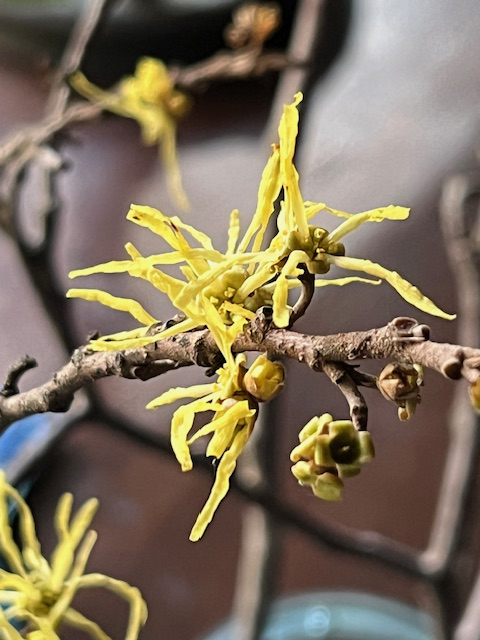
Witch hazel flower

After being nailed as a witch I separated myself from the word and witch power in general. The word witch had a very dark side and could be used in the same frightening manner as it had been during medieval times to label and to expel any woman who lived on the edge (source of my original sense of unease). Especially one who lived alone in the woods and loved animals like I did.

 Why had I been singled out? I was an outsider whose crime was to animate nature. Anything associated with nature was suspect if not ‘evil’.

 Feminists beware. If you claim to be a witch – recall that the word is loaded. Personally, I think the label has backfired reducing our overall power as women. Perhaps making us more suspect than we already are.

Continue reading “Witch Power? part 2 by Sara Wright”
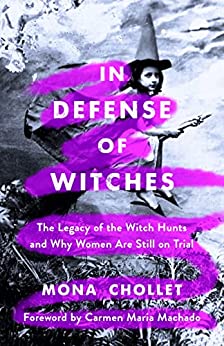
Life Still Shaped by the Witch Hunts? by Eline Kieft

In this article I reframe my understanding of feminism through the lens of Mona Chollet’s In Defence of Witches, and reflect on how my psyche as a woman today is still deeply influenced by the effects of the witch hunts in mediaeval times. 

Continue reading “Life Still Shaped by the Witch Hunts? by Eline Kieft”

The Swan-Bone Flute by Rachel O’Leary: Reviewed by Max Dashu

A girl leaps out of her tree perch to warn a pregnant doe that a hunter is drawing his bow against her. For this act of defending the mother deer, who should never be hunted, her uncle beats her. And so this novel drops us into the world of East Anglia in the year 598, in the wake of the Saxon invasions and enslavement of some of the British population. In this world, the old folkmoot councils are threatened by the rising power of the thanes, a hierarchy of lords under the new Saxon kings. And these lords are eroding women’s power at a rapid pace. Continue reading “The Swan-Bone Flute by Rachel O’Leary: Reviewed by Max Dashu”

Why am I a witch? By Zsuzsanna E. Budapest

Zsuzsanna E. Budapest is the founder of the Dianic tradition and the Women’s Spirituality Movement and is the author of seven books including Holy Book of Women’s Mysteries.

I was born to a witch mother, who happened to be an artist of sacred art, creating simple home altars that the peasants used in their “clean” room; used only on special occasions. We made our living from selling these Madonna’s with child, Triple Goddess altars. Goddess loving, primitive city folk and country folks bought them to pray in front of. Her art re-inspired an ancient pagan faith. Mother’s sacred art was legendary. Nobody ever bought an image of a male saint or even St. Joseph to pray in front of. When the hardships were upon Hungarians, they turned to the great Mother. Our pre-Christian Boldogassznony (Glad Woman).

All this happened during the so called Communists occupation, which lasted many decades. I grew up in a city that was filled with statues of the Goddesses and Dianads. With all the churches we have in Hungary, not one of them is dedicated to Jesus Christ, but they are dedicated to his mother Goddess, Mary and her relatives; St. Ann, St. Kathryn, St. Elizabeth (a homegrown saint), along with St. Margaret.

During the bombing, much of this art was destroyed, but enough of them remained to pass on to the new generation the message: We stand proud on our past, we knew once  beauty and civilization. Continue reading “Why am I a witch? By Zsuzsanna E. Budapest”