Incredibly! The Inquisitional Cultural Mechanism Rears its Hydra Head by by Elisabeth Sikie

As a young witch hungry for feminist sisterhood and spiritual wisdom in the 90s, before the blooming of the internet, I discovered a mag called The Beltane Papers. I remember devouring an article featuring channeled material of women killed during the European witch hunts. This transmission revealed past voices of everyday people living their lives until they were snagged by the slow creep of an increasingly oppressive cultural trajectory. What struck me was the normalcy of their voices, the deceased echoes of regular women trying to make sense of events beyond their control until they were taken by a system that destroyed them. What stayed with me is the author’s observation that even at their violent end these women’s voices remained “incredulous”. 

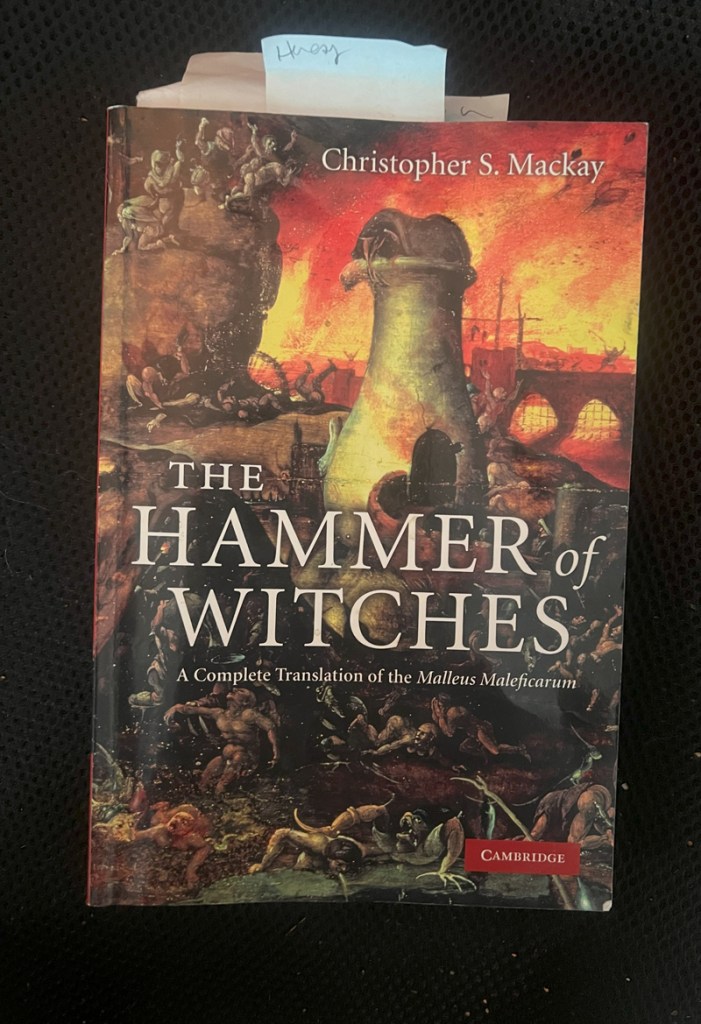
Decades, and seemingly lifetimes later, I completed my dissertation for my PhD in Religion and Philosophy in which I excavated some of the subaltern history of my European Ancestors and their female shamanic practices. At one inevitable point in my research – kicking and screaming – I reluctantly faced the inquisitions and witch trials. After waving a sage wand and cracking a sacred beer, I cracked open the Malleus Maleficarum, the infamous “Hammer of the Witches”.[1] This notorious guidebook, a how-to for career Christian Inquisitors written by two Dominican Friars[2] during the Middle Ages, details moral arguments supporting the legalized suppression, interrogation, and eradication of women designated by the church-state as heretics.

Continue reading “Incredibly! The Inquisitional Cultural Mechanism Rears its Hydra Head by by Elisabeth Sikie”
Women’s Rights: How Far Back in Time Will our Legal System Go? by Janet Maika’i Rudolph

Wikimedia Commons

I was in the process of writing this blogpost last week when the Arizona supreme court decided to turn abortion rights back to the civil war era (1864). This was a time when women had no rights at all and abortion from conception was illegal. But civil war era laws are downright quaint and modern compared the legal underpinnings of the supreme court’s Dobbs decision.  

In his decision, Mr. Alito cited four “great” and “eminent” legal authorities, Henry de Bracton, Edward Coke, Matthew Hale, and William Blackstone. For perspective here are their dates. 

Henry de Bracton  c. 1210 – c. 1268
Edward Coke 1552 – 1634
Mathew Hale 1609-1676
William Blackstone 1723 –1780

To help me understand Alito’s logic, I read up on some conservative commentary. Here is what I learned: When the founding fathers needed to create legal documents, they didn’t create them out of thin air. They relied on the logic of the four men (and others) listed above. Yes, they did pick some enlightened aspects of these thinkers of the time, esp. in regard to the rights of the common people in relation to royalty. The thought of commoners having rights was revolutionary in its day. But as we have learned so painfully, our founding fathers limited who those rights applied to. They did not take into consideration the rights of anyone other than landowners, which at the time meant white men.

Continue reading “Women’s Rights: How Far Back in Time Will our Legal System Go? by Janet Maika’i Rudolph”

Life Still Shaped by the Witch Hunts? by Eline Kieft

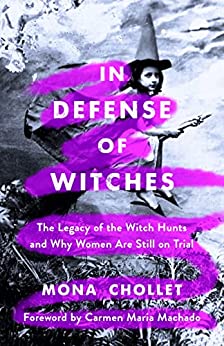
In this article I reframe my understanding of feminism through the lens of Mona Chollet’s In Defence of Witches, and reflect on how my psyche as a woman today is still deeply influenced by the effects of the witch hunts in mediaeval times. 

Continue reading “Life Still Shaped by the Witch Hunts? by Eline Kieft”

Mother Demdike, Ancestor of My Heart, Part 2 by Mary Sharratt

mary sharrattContinued from Part 1. As I sought to uncover the bones of the cunning woman Mother Demdike’s story, I was drawn into a new world of mystery and magic. It was as though Pendle Hill had opened up like an enchanted mountain to reveal the treasures hidden within. Every stereotype I’d held of historical witches and cunning folk was dashed to pieces. Continue reading “Mother Demdike, Ancestor of My Heart, Part 2 by Mary Sharratt”