The Second Skin: Lipstick, Lies and Lead part 2 by Sabahat Fida

part 1 appeared yesterday

It is mind-boggling to consider how standards for women’s bodies have been normalized over time. Centuries ago, practices like binding women’s feet in ancient China or forcing the use of corsets to narrow the waist which are now universally condemned as cruel and uncivilized. Throughout history, women have been subjected to extreme and often harmful beauty standards.  Foot binding created tiny “lotus feet,” causing lifelong pain and disability, while in Europe, tightly laced corsets compressed ribs and displaced organs to produce an exaggerated hourglass figure. In parts of Southeast Asia, neck rings elongated the neck but weakened muscles over time, and in Africa, South America, and Asia, lip and ear stretching permanently altered tissue as a marker of beauty or status. Pale skin was prized in ancient Egypt, Asia, and Europe, often achieved through toxic powders containing lead or arsenic, while teeth were filed, blackened, or inlaid to meet local ideals. Women were also expected to meticulously shape or remove hair and conform to strict weight norms, whether forced thinness or fattening, depending on the era. Across centuries, these practices reveal a clear pattern: women’s bodies were controlled, altered, and harmed in the name of beauty ,  a coercion that, in many ways, continues today through cosmetic interventions and socially enforced aesthetic standards.

Continue reading “The Second Skin: Lipstick, Lies and Lead part 2 by Sabahat Fida”

The Second Skin: Lipstick, Lies and Lead part 1 by Sabahat Fida

A woman’s body has become a site of commodification to such extreme that even her most basic necessities are not spared. Products meant for hygiene or comfort ; razors, deodorants, tampons, shampoos  are packaged, scented, and coloured in ways that signal femininity, pushing them into a hyper-aesthetic zone of the departmental store. This creates a glaring economic contradiction: men’s products, often identical in function, are sold cheaper, while women pay a premium simply for their gender. But the exploitation is not merely financial. By demanding that her essentials adhere to socially approved standards of beauty, the market sends an unambiguous message: a woman’s needs, her very body, are only legitimate when they are commodified, beautified, and consumed in accordance with society’s expectations. The Pink Tax is thus not just a matter of inflated prices, it is a subtle enforcement of control, conditioning women to invest continuously in an ideal that is neither natural nor negotiable.

But this exploitation extends far beyond commercialized markets and seeps into the routines of everyday life. A tailor may charge different rates for the same shirt depending on the gender it is intended for, while a simple haircut at a salon can cost women far more than men, despite the identical service. Men’s consumption remains largely practical, functional, and unembellished, whereas women are expected to pay for aesthetic compliance at every turn. This raises the question: is the female market driven merely by trends or gullibility, or is it a reflection of deeper societal pressures — an unspoken demand that a woman’s body and appearance must conform to rigid standards of femininity in order to be socially acceptable?  Is the answer  in the very language and design of advertising  Taglines like “You’re worth it” or “Strong is beautiful” which  carry a psychological imperative, subtly instructing women to compare, conform, and continually invest in their appearance as a measure of worth ? These subliminal marketing strategies are deeply rooted in social comparison theory, objectification and fear appeal/protection motivation theories.

Continue reading “The Second Skin: Lipstick, Lies and Lead part 1 by Sabahat Fida”

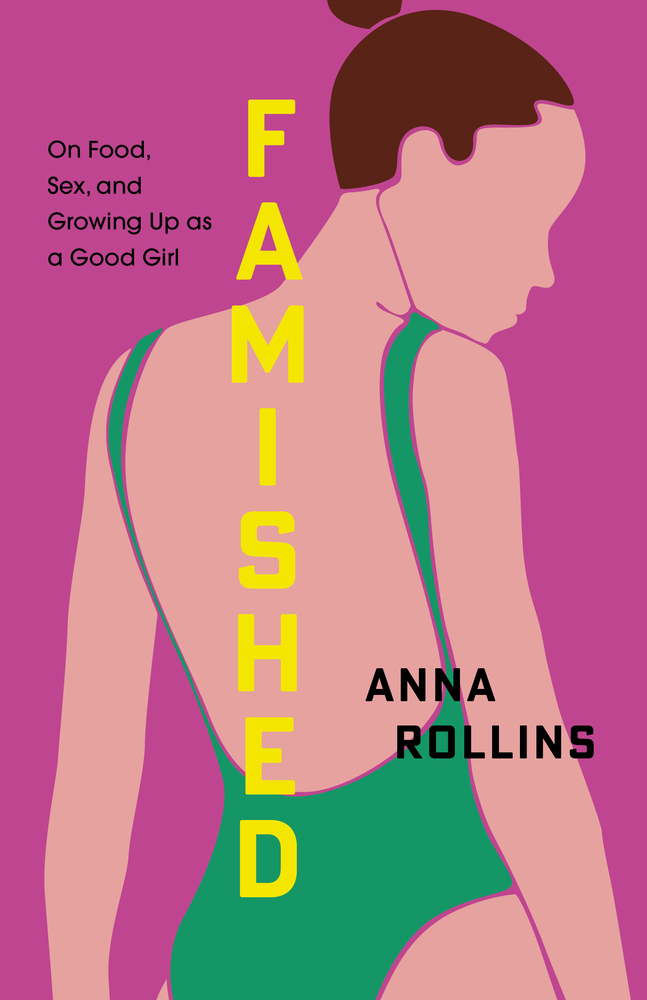
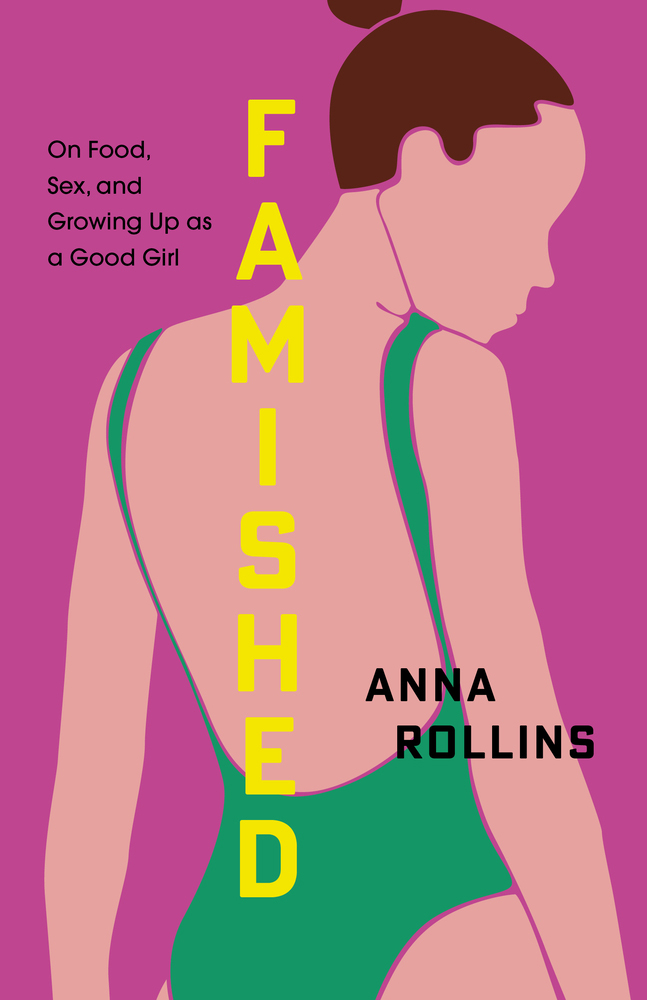
FAMISHED—ON FOOD, SEX, AND GROWING UP AS A GOOD GIRL by Anna Rollins: Book Review by Esther Nelson, part 2

Part 1 was posted yesterday.

MARRIAGE

“He looked at me without judgment.  With him, I didn’t feel the need to perform.”  Both her future husband (first year medical resident) and she (now studying applied linguistics) disliked fundamentalism’s legalism, but they were still committed to Christianity.  Both were “devoted to [sexual] abstinence.”  Sex did not even happen on their wedding night, but when it did, it hurt.  For years, the pain continued.  Vaginismus.  “I didn’t know there was a name for it.  I didn’t know that…it was twice as common for those who had grown up in religiously conservative households.”  It took years to get through the pain.  “It’s not until we can believe that our bodies are inherently good and worthy of pleasure and joy that we can begin to heal.”

A new pastor arrived at Rollins’ church armed with Christian nationalist ideas and fervor.  It didn’t set right with her.  She was moving toward progressive positions beginning with “my body, my choice.”  She adds, “If there’s anything someone who’s struggled with an eating disorder understands, it’s the concept of bodily autonomy.”  She began to research the Reformers beginning with Martin Luther who said this about women:  “If women become tired, even die, it does not matter.  Let them die in childbirth.  That’s what they are there for.”  Rollins’ husband pushes back, though, quoting Scripture—“there is no male or female…we are all unified in Christ.” Why then, Rollins wonders, does sexism run rampant in the church?

Continue reading “FAMISHED—ON FOOD, SEX, AND GROWING UP AS A GOOD GIRL by Anna Rollins: Book Review by Esther Nelson, part 2”

FAMISHED—ON FOOD, SEX, AND GROWING UP AS A GOOD GIRL by Anna Rollins: Book Review by Esther Nelson, part 1

In her Preface, Rollins writes, “Hypercontrolling my food and using exercise compulsively had always been how I coped with life, stress, expectations, and fear.”  Many people (usually women) use this coping technique in their day-to-day lives.  Controlling your body’s needs and desires allows you to feel powerful.  I know.  I am one of those people. 

Powerful or being in control was not something the author felt able to achieve in any “normal” way given her upbringing “in an Appalachian [West Virginia] church that fully embraced purity culture [sexual abstinence before marriage] and rigid gender roles.”  Rollins continues, “…I’d bought into the scripts offered to me by both diet culture [controlling food intake to achieve a better-looking body] and purity culture [controlling your sex drive] … [knowing] that if I controlled my appetites, I could control my world.  That if I made myself smaller, I would be better, safer.”

Rollins interviewed scholars, psychologists, and an array of women while writing FAMISHED.  She states, “When women worked to heal from body shame, their relationship to religion was intricately involved.”

The author divides her work into three sections:  Girlhood, Marriage, and Motherhood.

Continue reading “FAMISHED—ON FOOD, SEX, AND GROWING UP AS A GOOD GIRL by Anna Rollins: Book Review by Esther Nelson, part 1”

Three poems by Rebecca Rogerson

Don’t Take Me to Church

He never let me eat communion because I wasn’t a catholic, but it was okay for me to eat his dick. My tiny palms forced to stroke him, the same dextrous hands that coloured in the lines. 

I knew his God wasn’t my God. I knew she saw everything there was to see and that he wouldn’t reach salvation; no matter how many Hail Marys he said at mass in Ireland.

The Virgin Mary knew what he stole from me, what they steal from all of us.

I couldn’t fall apart on Sundays at noon when he took me to church—before he took me home after he did what he did—to the little Jewish girl who didn’t know she was Jewish.

I couldn’t remember it because I buried it in Survive, until, it was resurrected by nightmares and demons who professed caring and brought me to altars of despair to vomit up all the darkness, and when there was no more left to cleanse or tear out; light ripped in.


No one talks about the embarrassment that goes along with the telling, sharing and surfacing of sexual violence. How it comes up, how it comes back. How we’re always haunted by the deadbeat dead and grabby grandfathers who try to reach from there into here, pretending they are made of heaven.

I fled a friend’s choir concert because perpetrators keep stealing time, moments, sleep, joy, and friendship, in churches and baths. On my flight, I hunted for nature, soil and anything else that felt most alive in the hilly town of Nelson. Pretending I was like everyone else, I hid the panic that strikes broken hearts.

Continue reading “Three poems by Rebecca Rogerson”

To Childless Cat Ladies by Janet Maika’i Rudolph

I feel you. In a patriarchy where women’s reproductive abilities determine our worth, to be childless is a curse. We can thank VP candidate JD Vance for revealing this truth in all its ugly fullness. He is a walking billboard for patriarchy. Bottom line: Patriarchy is all about women’s bodies, our reproductive abilities and men’s desire to control them. We saw this in the Dobbs decision where it was declared that women have no constitutional right to the basics of healthcare, in Texas where it’s pretty much illegal to have a poor pregnancy outcome, and in Ohio where raped children are expected to give birth to their abuser’s child. Its endless 

But it is JD who made it plainer than plain what this is all about. Besides childless cat ladies being an old trope, just think of the judgement involved. Who is JD to decide on anyone’s family constellation? Or their pets? He also made disparaging remarks about the “childless left,” who have no “physical commitment to the future of this country.” That is a statement that only a person who totally lacks empathy can make. He is making a sweeping generalization that people without children don’t care about the future. This statement is more confession than truth. He reveals that until he had children, he had no care about the future of our world. It’s beyond egocentric. If only his kids are the center of his “caring,” that shuts out most of the world’s other children.

Continue reading “To Childless Cat Ladies by Janet Maika’i Rudolph”

Women’s March in CA 1/22/23 by Marie Cartier

WOMENS MARCH, Long Beach, California on the 50th anniversary of the passing of Roe v Wade,
January 22, 2023

Continue reading “Women’s March in CA 1/22/23 by Marie Cartier”

We Endure Abuse to Survive, Part 1 by Karen Tate

I considered myself savvy and educated and an advocate for peace, fairness and equality.  I thought abuse was something that happened to others, not me.  But it was happening to me.  It had happened to me and I didn’t see the danger signs as my life careened off the road.  I became aware abuse and the resulting trauma can happen to anyone.  I came to realize we have to examine all aspects of our lives for both blatant and insidious abuse.  We must recognize it and take steps to eradicate abuse from our lives and society.  That’s where I’ve been on for the last five years and I’m only now able to begin to share that journey.  To write a new book, Normalizing Abuse, and bring my radio show, Voices of the Sacred Feminine, back on the air after a long hiatus.

Part One

If you knew me before my unraveling, you might remember I was the hostess of the Voices of the Sacred Feminine podcast for more than a decade where I had the privilege of interviewing some of the most prominent thought leaders in spirituality, politics and academia. I’d published six books, gave talks at the Parliament of World Religions, the Academy of Religion and various other public and private associations. I had done dozens of interviews and was all over YouTube. I was out there and then gradually I wasn’t. I faded away and became a shadow of my former self.  And for a time I don’t think I cared if I ever came back. I had no motivation or inspiration.  I didn’t open my closet for three years. I didn’t care if I bathed or brushed my teeth. I was dreaming someone was trying to push me into a dark hole in the wall of a building. I’d hear floorboards creaking and feared the foundation of the house I was living in would collapse. I’d wake up with heart palpitations because the latest dream was one where our home had no ceiling or roof. I’d think cars slowly driving by my house were surveillance. 

Continue reading “We Endure Abuse to Survive, Part 1 by Karen Tate”

“Guns: The Sanctity of Life” by Marie Cartier

What can I say about guns?

I want to be like Gabby Giffords and survive

I want to be Emma Gonzalez and fight back

I want to be

I want to talk about how GUNS are less regulated

than my body

Guns can leave any state and travel to another state

and kill someone

I hate talking about guns

Continue reading ““Guns: The Sanctity of Life” by Marie Cartier”

From Footbinding to Abortion and Beyond – This Has to Stop! by Janet Maika’i Rudolph

Children’s Museum of Indianapolis

My husband, Marty, is a retired podiatrist.  He worked in pockets of New York City that were poor and largely immigrant. When he first started his practice, he treated women from China whose feet had been bound. Despite being officially outlawed 1912, footbinding was still being practiced well into modern times. He saw these patients in the 1970s and 80s.

For those who don’t know what it is, young girls, as young as 3-5 would have the bones in their feet broken and then the feet bound with cloth strips. Every few years, the feet would be broken again until the desired result was created. To create that affect, the toes would be flattened against the bottom of the foot and arch would be so broken and damaged that the heel would curl back to the front of the foot. At each of the breakings the girl would need to learn to walk again.  One can only imagine that pain of walking on foot bones that had been repeatedly broken. And here is an especially chilling part. The mothers would do it to their own daughters. I won’t go into further gruesome details because they can be easily looked up on the internet.  It left the girls crippled for life.

Continue reading “From Footbinding to Abortion and Beyond – This Has to Stop! by Janet Maika’i Rudolph”