

This post continues from Part 1, where I situated this essay as a reflection on Xochitl Alvizo’s article Human, Just Human. There, I questioned the difference between the power of naming versus the pressure to label. I then described my search for a personal identifier as ‘participation ticket’ to life. This feels important nowadays to join the conversation and not be dismissed by default. However, I wondered whether looking for things that set us apart emphasises otherness rather than shared humanity.

Today, I question what can we learn from autoethnography about the many selves we bring to different professional situations and how they might hide more than they reveal. I also describe the challenges of naming nature-based practices in a geographical area where 2000 years of Christianity forced our pagan traditions underground.
Professional Identity
The personal identity I discussed in Part 1 flows over in our professional work. Nowadays it’s almost impossible to qualify for funding if one doesn’t belong to a specific minority group such as lgbtqia2+ or bipoc for example.* I do recognise the importance of diverse research from different backgrounds, but it also runs the danger of specific memberships being prioritised over research quality.
As anthropologist I am used to positioning myself professionally, clarifying the lenses through which I do my fieldwork and choose specific methodologies. Autoethnography distinguishes between 1) brought selves, 2) research-based selves, and 3) situationally created selves (Reinharz, 1997: 5-11).
- The selves I brought to my doctoral fieldwork were “being a woman, a partner, Dutch, well educated and middle class, white,** born in 1977, being a dancer, a Movement Medicine participant, a daughter and, for whom this is of interest, a Libra” (Kieft 2013).
- The research-based selves are shared by most Arts and Humanities researchers. They include ‘being an academic’, ‘being a temporary community member’, hopefully ‘being a good listener and observer’, perhaps ‘being sponsored’, and ultimately always ‘being a person who is leaving’.
- Situationally created selves are around friendships that develop during fieldwork, being emotionally affected by cultural participation, and how time in the field informs our personality and shapes the further trajectory of our life.
I always feel these attempts to create transparency about our ‘selves’ seem to hide more than they reveal. I often miss psyche- and soul-related selves, which for objectivities’ sake are usually excluded from research publications. As I observed in my thesis,
“This does require a balancing act between pretending to (superficially) include the researcher on the one hand and a confessional (self-indulgent) autobiography on the other (Wallis, 2003: 8), and also an “admittance of the truth of ‘unreality’” (Grau, 1999: 172) or that which is not (yet) known or cannot be expressed.”
Kieft 2013
How much is this the case for the labelling or naming of our identities in everyday life? Do they meaningfully convey the texture of our personality? Do they indicate what we value and what inspires us? Do they reveal our motivations, drives, and beliefs? And, what remains unexpressed in, or hidden behind, these identities?
I also wonder if there aren’t, at times, much more ‘meaningful’ similarities between people of different labels, than within a label that is based on ethnicity, or sexual preference? To put it boldly, would you want to have sex with someone of your total opposite political choice, who hates nature when you love it, is anti-abortion if you are a fervent advocate, simply because you share a common denominator in ethnic or sexual identity?
Spiritual Identity
I’ve long been yearning for a recognised or legitimate connection to an ancestral spiritual practice that is embedded in the land. I am indigenous to North-Western Europe, but feel I need to justify that I’m singing to the sun and moon, that I’m visiting neolithic burial mounds, that I dance around campfires and do ceremonies in a sacred wheel. These practices came to me spontaneously as a child and have always been part of my personal relation to the mystery. I later learned that they used to be ingrained in pre-Christian pagan traditions that were slowly suppressed over time. This process culminated in the witch hunts, causing these traditions to go underground, and near-enough disappear from the collective conscious.
That lack of historical awareness means I’m easily accused of misappropriating nature-based practices from places where these traditions have been kept alive and are still visible. Yet I believe these practices to be part of our spiritual DNA wherever and whenever we were born.
- In other times I would have been a witch, a priestess, or nun, but I don’t identify with how these roles are profiled in our day and age.
- Being from Northern Europe, I don’t feel a strong connection with the classic Greek and Roman gods, goddesses and mythology (from southern Europe), even though they entered the western canon of philosophy on soft padded feet.
- I resonate more with Celtic mythology, but ‘Celtic’ culture never existed. This was a melting pot of nature-oriented tribes all over Europe, who were only later grouped together.
- My connection to the spiritual lineage of snake dreamers and healers feels real but isn’t rooted in any concrete family line of artisan communists and catholics (on mom’s side), and protestant farmers (on dad’s side).
- Reluctantly I call myself a shamanic practitioner because this is the term that best identifies what I do, although my work equally resonates with Taoist, pagan, wiccan, druidic and tantric practices, ‘Celtic’ Christianity, and some mystical branches of other religions.
In my search for labels I reach further, entering the archetypal realm… Perhaps I could claim a tribe of mermaids and mermen as my original family, since the polder land where I was born was sea until 30 years before my birth…
Being pulled from ocean clay, I belong to sea and land, allowing me to shape-shift between different forms. This is a powerful metaphor for an adaptive and fluid identity that supports me in all the actual moves between countries, languages, disciplines, and practices that I alluded to in Part 1. Yet it doesn’t, of course, serve as a proper identifier.
Still, it gives me a sense of body and nature as my first ‘homes’: my body as home for my individual soul, and nature as home of our collective spirit, where everything, animate and inanimate, has its own unique essence and contribution. I will ‘dive’ into this more in my final reflections in Part 3, which will be published on October 20th.
Footnotes & References
*) lgbtqia2+ = Lesbian, Gay, Bisexual, Transgender, Questioning, Intersex, Asexual and Two-Spirit. bipoc = Black, Indigenous, and people of color.
**) even though in The Netherlands we don’t have this class distinction!
Mermaid Image by Ronnie Chua from Getty Images
- Grau, Andrée (1999). Fieldwork, Politics and Power. In T. J. Buckland (Ed.), Dance in the field. Theory, Methods and Issues in Dance Ethnography (pp. 163-74). New York: Palgrave MacMillan.
- Kieft, Eline (2013). Dance, empowerment and spirituality: An ethnography of Movement Medicine, Ph.D. thesis, London: University of Roehampton.
- Reinharz, Shulamit (1997). Who Am I? The Need for a Variety of Selves in the Field. In R. Hertz (Ed.), Reflexivity and Voice (pp. 3-20). Thousand Oaks, California: Sage Publications.
- Wallis, Robert J. (2003). Shamans/Neo-Shamans. Ecstasy, alternative archaeologies and contemporary Pagans. London and New York: Routledge.
Events
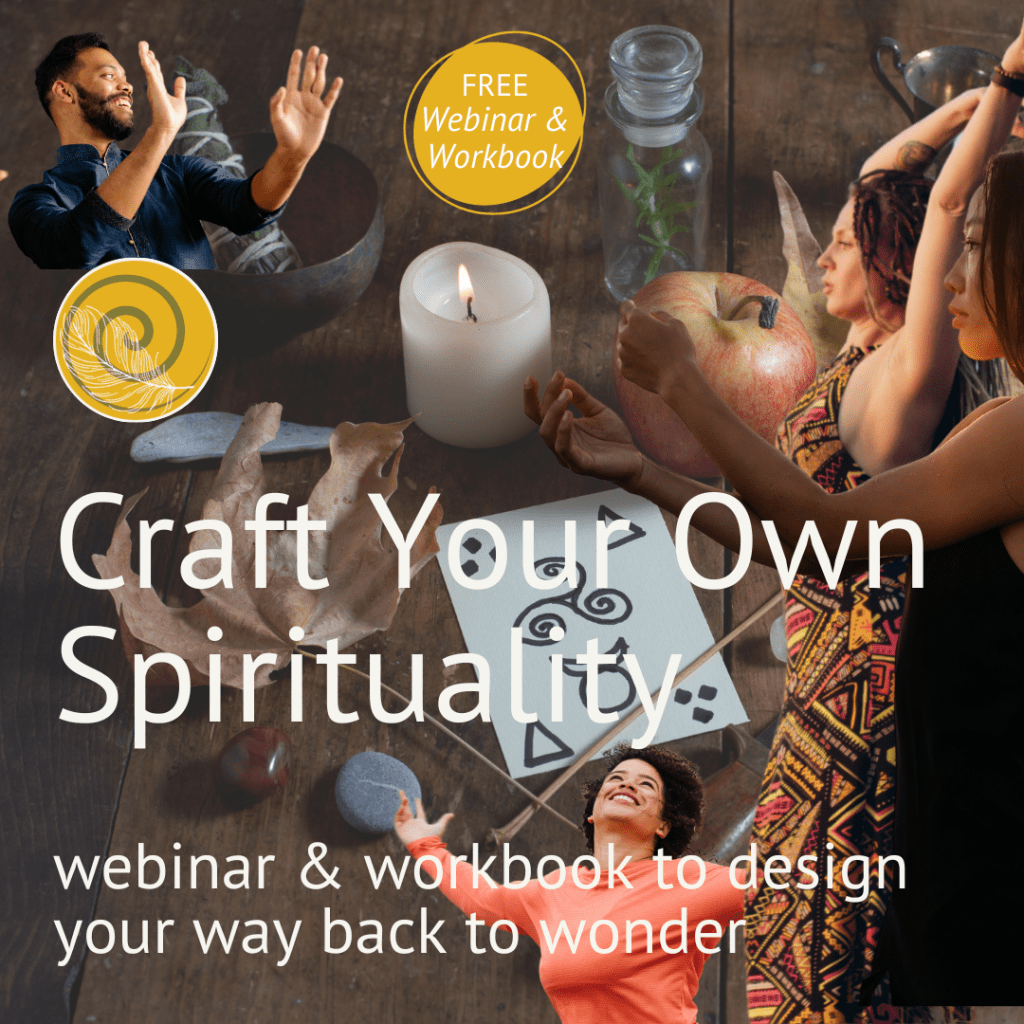
Free Webinar – Join the 1-hour inspirational talk on Crafting Your Own Spirituality live or via replay. We address differences between spirituality and religion, and look at the role of Mind, Heart and Body in spirituality and your everyday life. You also receive a Wild Guide to Design your own Spiritual Practice, and slides that summarise the presentation.
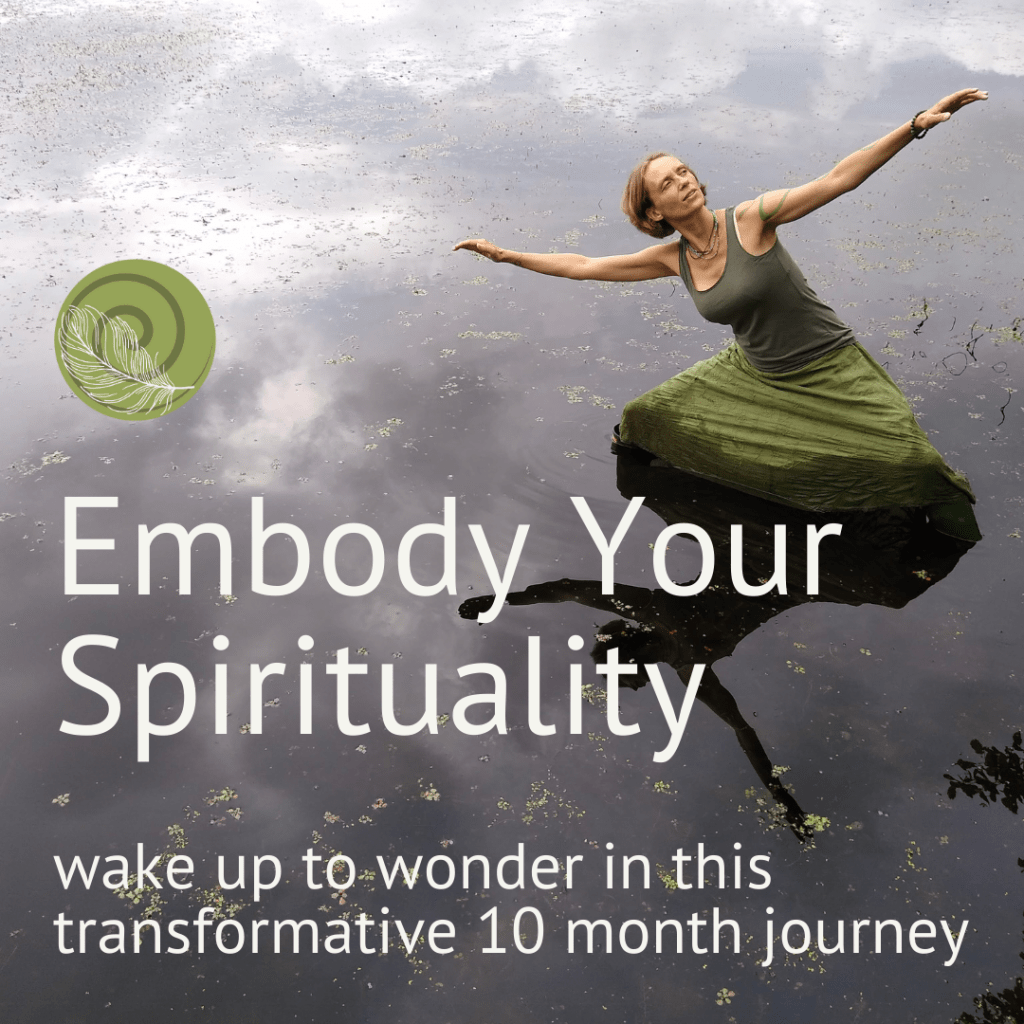
Embody Your Spirituality & Wake up to Wonder – In this year of inspiration with monthly group meetings and many resources to explore in your own time, you explore spirituality in all aspects of your life. (Re)awaken a sense of connection and wonder by remembering your sacred body, movement as a way of knowing and nature as teacher. Read more & sign up if you feel called!
Bio

Eline Kieft danced from a young age, including rigorous classical and contemporary training to become a professional dancer. She then studied anthropology, deepening her fascination with worldwide similarities between indigenous traditions regarding intangible aspects of reality and other ways of knowing, including embodied epistemologies and shamanic techniques.
She completed her PhD in dance anthropology at Roehampton University, trained in depth with the Scandinavian Centre for Shamanic Studies and the School of Movement Medicine. Eline worked at the Centre for Dance Research (C-DaRE) at Coventry University for five years, where she created a Somatics Toolkit for Ethnographers, and pioneered soulful academic pedagogy. Her recent book Dancing in the Muddy Temple: A Moving Spirituality of Land and Body was well received as a unique blend of theory and practice and a medicine for our times.
She is now a full-time change-maker and facilitates deep transformation through coaching and courses both online and in person. Her approach The Way of the Wild Soul offers a set of embodied, creative, and spiritual tools to re-connect with inner strength and navigate life’s challenges with confidence.
Website: https://www.elinekieft.com Also on Facebook | Instagram | Twitter | LinkedIn
Discover more from Feminism and Religion
Subscribe to get the latest posts sent to your email.


Thanks so much for inviting me to reflect on the distinction between a name and a label and their many implications. Keep on dancing!
LikeLike
Great it was useful! Would love to hear what reflections they spurred on!
LikeLiked by 1 person
Thanks for asking. Reflecting on my own sense of identity in the context of my Eastern European ancestry, my grandparents coming to America, being male, white, working class, being raised in “the church”, my education, career choices, travel experiences. and more. I hope to share as a series of posts on my website. Stay tuned. And thanks for inspiring me to do so. All the best.
LikeLike
Oh thank you so much for sharing Frank! That’s indeed a lot of threads to your tapestry. I look forward to reading more from you, here or on your website! Have a reflective week :-)
LikeLiked by 1 person
Thanks for the words of encouragement, Eline, and for the depth, care, and seriousness of your writing.
LikeLike