

This was originally posted on January 23, 2012
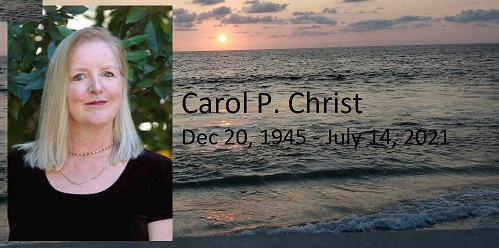
Some years ago, womanist theologian Karen Baker–Fletcher asked about ancestors following a lecture I gave on the body and nature. I have since come to realize that ancestors are a missing link between the two: we cannot speak adequately of embodiment and interdependence in the web of life without recognizing the ancestors whose lives made ours possible. Our mothers quite literally gave us our bodies. All of our ancestors gave us their genes. Care and callousness with origins going back longer than conscious memory was imprinted on the psyches of our parents and grandparents and transmitted to us. All of our ancestors give us connections to place. While many black people in America can recite oral histories that begin with slavery in the United States, I come from a family where stories of origin for the most part were not valued or told. Both of my father’s parents lost their fathers when they were very young, and my father, who was raised Catholic at a time when Catholics were discriminated against, preferred to think of our family as “American now.” Like the hero of the film Lost in America, most members of my family dreamed of “melting right into that pot.” In the process we lost stories we need to help us to understand ourselves and the complex realities that “becoming American” involved.
My grandmother’s brother Emery Searing traced the Searings back to the exodus of Huguenot Protestants from France to the Netherlands to England and the marriage of Jan Seroen to Jane Badger at St. Savior’s church in London in 1610. Their son Simon’s name is found on the deed of purchase of land from the Indians in 1647 in Hempstead, Long Island, to a group of people who were or became Quakers, at a time when New York was under Dutch rule. I did not remember this connection when I arrived at the Hempstead train station to visit relatives (not part of the Searing lineage) who lived in Hicksville (named after a famous Quaker family) in the 1960s and 1970s.
Samuel and Mary Pearsall Searing moved to Saratoga Springs, New York in 1778, probably because Samuel’s having fought in the Revolutionary War was controversial in the Quaker community in Hempstead. My great-great-great grandfather Nathaniel was born in Saratoga Springs in 1814. After his parents died, he hired out as a farm laborer and married Louisa C. Martin who was born in Vermont. They “came to Michigan in 1840, the journey occupying thirteen days and being made with a team, settling in the woods … and buil[ding] a log cabin” near Lyons, where they raised short-horn cattle. Nathaniel’s son James Augustus married Dora Sofia Bahlke, daughter of Anton Bahlke and Mary Hand who [my research shows] emigrated together from Mecklenburg, Germany to Michigan where they also established a farm. Popular culture provides images of the hardships these ancestors must have endured.
Dora and James Augustus were the parents of Emery born in 1880 and my grandmother Lena Marie born in 1891 and a number of other children. None of the children stayed on the Searing farm, still known by that name when my mother’s sister Mary Helen visited it in the 1970s. The farm featured in stories told by the family’s only raconteurs–Emery who described how he lost parts of his fingers in a threshing machine, and Lena whose tales of the pony that held its breath when they tried to saddle it, lulled us to sleep.
As I delve into my family history and ancestry, I uncover threads that have been woven into my life and come to understand something about who “my people” were. Some of these insights are affirming, others troubling.
Uncle Emery traced his fatherline but not his many motherlines. I have first-hand experience of the widespread patriarchal attitudes that led to this choice. However, he included most of the family names of the women who married the Searing men. These included: Badger, Pine, “Elizabeth (family name missing),” Embree, Pearsall, Wright, Martin, and Bahlke. Though the patrilineal name can be traced to France, the family had most likely–the motherlines are incomplete–become primarily English by the time Dora Bahlke married into it. In other branches of my family tree as well “ethnicity” is not easily specified, due to movements and changing boundaries within Europe and to intermarriages among groups.
As marriages to Indians were often covered up and the last names of all of the other Searing brides are known, I wonder if “Elizabeth (family name missing)” who married Simon’s grandson Jonathan in the late 1600s or early 1700s was Native American. Given that the fathers and grandfathers of the women who married into the Searing family had also settled on Indian land, it is unlikely that there are no marriages to Indian woman in our family story. Could this be a source of my affinity to Native American spirituality?
Records I found confirm that “Indian Wars” were on-going when Simon ‘s group settled in Hempstead, raising questions about how “free” the Indians were when they “sold” the land. Simon was fined in 1659 for selling wine to Indians, showing that he had some degree of “friendly” contact with them. Settlements in Saratoga Springs were also on formerly Indian land. The Michigan territory the Bahlkes and Searings claimed was “opened up” following polices of “pushing” the Indians westward. No doubt there were some Indians still living in both places, but I have not uncovered what kind of friendly or hostile contact my ancestors may have had with them. The knowledge that some of my ancestors were the first settlers of Indian lands is unsettling. Could this be why strong feelings are aroused in me by stories of the many trails of tears walked by the Indians? Because we live on land taken from the Indians, all Americans have a responsibility to repair the damage that is still being suffered as a result of conquest by living Indians. I also have a specific history to repair.
The Searing story reveals that I come from a family with longstanding and recent histories of conversion and strongly held religious beliefs. 30,000 Huguenot followers of John Calvin were killed on a single day and 200,000 others were driven out of France in the 1570’s. I did not realize that I had a connection to this history when I studied it. My family’s Quaker heritage was lost when Dora Bahlke Searing converted to Christian Science. Like the Huguenots, the Quakers were often persecuted for their beliefs. At the time of Samuel Searing’s emigration there were 4000 Quakers in English jails; Quakers were banished and even hanged in the colonies. I also did not remember that some of my ancestors were Quakers when I read of Quaker involvement in the abolitionist and suffrage movements and of Quaker pacifism. Though my own anti-racist, anti-war, and feminist commitments have made me something of a “black” sheep in my immediate family, I am carrying on commitments held by some of my more distant ancestors. My mother happily gave up Christian Science when she married because it made her “different,” but I am proud that my great-grandmother converted to and my grandmother followed a religion founded by a woman; I affirm the power of mind or faith healing, and I too am suspicious of the medical profession.
My deeply held beliefs created a rift in my family. My rejection of Christianity isolated me among feminists in the study of religion and limited my employment opportunities. Christian feminists sometimes ask how I can “abandon” women who remain Christian. When I feel alone, it is comforting to know that I come from a line of women and men who resisted authority, rejected the religions of their ancestors, and put their own lives and liberties on the line for their beliefs and for the rights of others.
Discover more from Feminism and Religion
Subscribe to get the latest posts sent to your email.


so sad
LikeLiked by 1 person
I loved reading Carol’s lineage story because she is ferreting out and constructing her own story out of threads of her ancestors… I think of her courage, her commitment to feminism, the rejection she endured, the way she lived her life with such integrity. She reminds us that we are living lives predicated on the lives of so many others and that there are always holes in the story. When I learned of her Quaker background it just ‘fit’ and I felt the same about her musing around the Native American thread. An impeccable scholar she never abandoned the natural world eventually merging goddess with nature. I remember the turtle who lived in her garden… the olive tree… the mountains and the sea she loved. In this time of earth chaos I wish she was still alive to guide women through this most difficult time. I miss her. I never use the word ‘wise’ when it comes to women because I feel as if we are all feeling our way through the dark. If we become elders we have experiences to share – but Carol was an exception – I call her a wise women because she was one, merging experience with wisdom.. we are fortunate that she remains a beacon in our lives.
I was also struck by similarities in our stories….My father was Italian – an immigrant and for many reasons gave up his Catholicism and heritage to become more ‘American’. And one of the skeletons in my family closet was the Native American/Indian connection…I never learned of it until after I had become an adult and had moved 16 nautical miles away from Camden Maine where my blood grandfather had been born and lived… It is said that if you go back seven generations any American family will find an Indian thread/relative because Native women were routinely raped and stolen into servitude…That we all owe a debt to the Indigenous Peoples who cherished this land before the colonizers arrived is simple truth. I have so often wondered if my love of nature came out of that Indian thread,. but I was taught by all the women of my family to love the land and only one carried the Native thread….
I can’t help wondering what stories come up for others when they read this post..
LikeLiked by 1 person
There is much in my ancestry that is very sad. On my Dad’s side my 3rd Great Grandmother living on a homestead in Keystone, South Dakota with an often absent and abusive, alcoholic husband. My family has transcriptions of her diaries from the late 1890’s to the early 1920’s. I feel lucky to have access to her words. Much of it was about how many quarts of pin cherries she collected and the weather. I speculate that recording this information was important to her survival. Every once and a while she would write “He held a gun to my head when he came home drunk.” The next sentence “Picked 20 quarts of pin cherries today and the high was 60 degrees.” I wonder if she married him because her first husband died young and she couldn’t manage the homestead alone. In later writings when she was in a nursing home she said she missed her second husband very much which I found confusing. But, I didn’t live her life.
On my Mom’s side (her Dad) my Grandfather’s Mom died 2 days after he was born. His older sisters tried to take care of him but they were very poor and a couple adopted him. They used him a work hand on their farm and were abusive. I remember him to be a very gentle kind person opposite of his upbringing. I also remember my Mother telling his sisters grew medicinal plants to help heal themselves from ailments as they didn’t have money for doctors. I think I carry the love of plants and gardening in my blood.
Carol you have helped me in disassembling and reassembling my own beliefs. Being brought up as an Evangelical and not really fully embracing it and feeling like the “other” of my family. I can relate to much of what you have written. I never personally met you but I think of you as a guiding light.
I learned of your writings through FAR and ordered the book “Rebirth of the Goddess”. My dear Mother was fighting cancer in 2020 and I discovered you were also battling cancer. A synchronicity that I often wonder if it was a coincidence or connection of spirit. I can’t thank you enough Carol for your writings and perceptions. Your words live on in my heart. The bravery of your writings and the sharing of your story lives on. I know you are with and part of the Goddess where we all came from and are a part of now. Thankyou.
LikeLiked by 2 people
I find this heartbreaking tribute to Carol deeply moving. So many of us can relate to these stories of abuse. And here at least they are witnessed by others who care – thanks to Carol and thanks to FAR.
LikeLike
Thanks Sara. I definitely feel that FAR is a place of healing for me and others.
Carol’s family story and what you shared in the comments got me thinking about a documentary I recently saw at The Denver Botanical Gardens called “Amache Rose”. It was about a Japanese Internment Camp in Granada, Colorado.
There were Japanese style gardens that these people made in a dry sandy desert with virtually nothing. An archaeologist sifting through the relics surprisingly came upon growing rose bushes that had not been tended to in 80 years. Denver Botanical Gardens is now growing roses from the cuttings of these roses. Something about that gives me hope.
In this documentary there was an Elder Japanese man’s story that really struck me. He was 3 years old when his Father, Mother and himself were forced to move from California to Colorado “Amache” after the attack on Pearl Harbor. He said that in Japenese culture they don’t dwell on things. That “It is what it is.” Yet he had the courage to talk about his experience there.
From nothing but the land around them they built these beautiful gardens growing vegetables and flowers. There was such an abundance of vegetables they were able to share the bounty with neighboring Internment camps. The resiliency of these people was awe inspiring to say the least. This attitude of “not dwelling on things” I think helped them to try to make something out of a horrible situation.
There was a Japanese ancestor who was interviewed and he had tears in his eyes about what happened to his grandparents and family. He said his family never talked about it. But, he was talking about it and so were others in this documentary. I thought how healing this is! To be able to speak aloud the story about his loved ones. Is there even a chance for learning and correcting the horrible mistakes that have been made if we don’t talk about them? I really believe there is such a power in people sharing there stories.
I feel it to be uncomfortable to share my story at times. It feels vulnerable. Other people sharing their stories somehow helps me to get the courage to share mine. My hope is that collectively we can start to heal She who takes care of us and ourselves. I don’t know the future but I always hope.
LikeLiked by 2 people
There is a knife edge walk between “not dwelling on things” and being afraid to tell our stories, the very stories that help us not to feel alone and are healing…I love the story about the roses and creating the garden – it’s creative acts like these that help us live THROUGH our lives and not around them. And kudos to you for sharing your story – who knows who might be helped!
LikeLike
I took a year long intensive course on Ancestral Repair two years ago. To do a complete repair requires four years…Maternal and Paternal on both sides. I found that a lot of our ancestral info is stored within us and we need to open the door. This course did it for me.
LikeLike