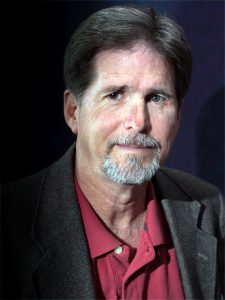
A GOOD HEART by Esther Nelson

In spite of organizations such as “Black Lives Matter” and the three or four waves of feminism over the past century, both racism and misogyny remain stubbornly alive.  We’ve made positive strides on both fronts, yet much remains to be done.  Curiously enough, I’ve noticed more sensitivity in our current society regarding racism than misogyny.  People claiming to be “woke” seem more inclined to be woke to the manifestations of racism—not so much to misogyny.

According to Merriam-Webster, the term woke is about being “aware of and actively attentive to important societal facts and issues (especially issues of racial and social justice).”  Merriam-Webster’s second definition of the term is “politically liberal (as in matters of racial and social justice) especially in a way that is considered unreasonable or extreme.” 

Continue reading “A GOOD HEART by Esther Nelson”

ESCORT SERVICE by Esther Nelson

These days, I spend most of my time in Roanoke, Virginia.  I moved here—a three-hour drive west—from Richmond, Virginia.  One of the ways I’m settling into my new community is by volunteering as an escort at Planned Parenthood.

The job is straight-forward:  Greet people as they exit their vehicle when they arrive at the medical facility’s parking lot.  Usually, there are several protestors in front of the building, and clients must drive past them before turning right into the driveway.  Protestors wave pink, plastic bags filled with anti-abortion literature as well as pamphlets that outline a specific, Christian view of “salvation.”  Not many drivers stop.  If they do, I walk over to the line that divides Planned Parenthood property from public space and wave the cars forward.  The drivers are grateful.  So many clients are nervous, upset, and unsure of protocol.  One woman asked me if I was associated with “those people out there,” pointing to the protestors.  “Not at all,” I assured her.  She smiled with relief.

Continue reading “ESCORT SERVICE by Esther Nelson”

HOPE, PAIN, DESPAIR, AND JESUS by Esther Nelson

Despite halting attempts to live my life with hope, I’ve failed. My experience is not unique. We suffer. The recent pandemic, including its side effects of loss and displacement, is but one example. Suffering can leave a sense of hopelessness in its wake. One place I look for balm is in poetry.

As with most poetry, Emily Dickinson’s (1830-1886) work requires me to pause and ponder. What is being said? Not easy to tell, nonetheless, I often do find meaning in her poems. If I understand her thrust at all, much of the meaning I glean disorients me.

Continue reading “HOPE, PAIN, DESPAIR, AND JESUS by Esther Nelson”

PATRIARCHY’S OFFSPRING by Esther Nelson

Elvis Presley (1935 – 1977) popularized the song “In the Ghetto” written by Mac Davis in 1969.  The following TikTok video, featuring an artist with whom I am not familiar, is better—in my opinion—than any other rendition I’ve heard.  Such depth!  Such raw passion!  Such strength!  Such vulnerability!

https://www.facebook.com/100064420368301/videos/1352885832113207/

Here are the lyrics:

As the snow flies
On a cold and gray Chicago mornin’
A poor little baby child is born
In the ghetto…

Continue reading “PATRIARCHY’S OFFSPRING by Esther Nelson”

Love and Other Fruits by Esther Nelson

The modern-day play “J.B.,” authored by Archibald MacLeish (1892–1982) and published in 1958, portrays a modern rendition of the Biblical character, Job, someone who became a pawn in a battle between God and Satan. God “allowed” all kinds of misery (sickness, loss of reputation, loss of wealth, and loss of children) to befall his faithful servant, Job. In MacLeish’s telling, we see that J.B. (like the biblical Job) undergoes setback after setback. In the end, J.B. comes to the realization that “He [God] does not love. He is.” Sarah, his wife, responds, “But we do. That’s the wonder.”

We (humans) spend a lot of time talking, singing, and writing about love. Sometimes we even claim to behave in loving ways. Yet, just what is love? Why do we love?  How do we love?

Continue reading “Love and Other Fruits by Esther Nelson”

From the Archives: They Really Do Hate Us* by Esther Nelson

This was originally posted on Nov. 20, 2020

A year or so before the November 2020 U.S. presidential election, a private Facebook group now titled “Wives of the Deplorables! Go Vote!” came together because many women were distraught about the political ideological rift between them and their husbands—a rift that became more evident as Election Day 2020 drew nigh.  Women, stunned and disappointed by the Trump-like behavior (angry, petty, and argumentative) of their Trump-supporting husbands or partners, encouraged each other virtually as Biden (now President-elect) moved closer and closer to winning the White House.

From the group’s private Facebook page: “This is a group created after a CNN report about the wives of Trump Supporters. This is not a politically affiliated group….This females only group is created to support each other and help women share their thoughts.”My sister Betty joined the group. Her Trump-supporting husband, she said, had been brainwashed by Fox News. One need not have a Trumpster spouse to be part of the group, but one must be supportive of the members who are upset, even devastated, by having become the target of their partner’s anger and rage when they discover “their women” voted (or planned to vote) for Biden.  Thanks to her invitation to join the group, I have been able to get a glimpse into the lives of these 2,000 or so members who feel demeaned—and yes, even hated, by their spouses. The group remains active post-Election.

Continue reading “From the Archives: They Really Do Hate Us* by Esther Nelson”

FRAME THE CHAOS by Esther Nelson

No matter how much we may want absolute control over our own lives and destiny, most of us realize that’s just not possible. Life itself is chaotic—both on a global and individual level. War, famine, drought, earthquakes, tsunamis, pandemics, poverty, sickness, ignorance, disability, divorce, and ultimately death comes calling for everybody living on planet Earth—a planet which will no doubt  eventually die as well. 

How do we maneuver through such dire straits?  Can we make sense of and find meaning in our day-to-day chaotic existence both as members of individual families/communities and as global citizens? Perhaps so, however, it’s impossible to tackle the tumult all at once. Hence, the title of this essay—“Frame the Chaos.”

Thanks to my former colleague Dr. Cliff Edwards for this phrase, gleaned from his reading of Gilles Deleuze, French philosopher (1925-1995). “Chaos is defined not so much by its disorder as by the infinite speed with which every form taking shape in it vanishes.  It is a void that is not nothingness but a virtual, containing all possible.”

Continue reading “FRAME THE CHAOS by Esther Nelson”

RELIGION, GOD, CHURCH, THE STATE, AND ABORTION by Esther Nelson

The phrase, “separation of church and state,” crops up frequently in conversation these days. I hear it most often when someone wants to clinch their argument on a politicized subject. Lately, it’s been concerning one’s “right” to an abortion. “It doesn’t matter what your church says, we have separation of church and state in this country.” That phrase, though, is not in the Constitution. It was Thomas Jefferson (1743-1826) who paraphrased the Constitution in a letter to the Danbury Baptists, “…building a wall of separation between church and state.”

The first part of the 1st amendment states: “Congress shall make no law respecting an establishment of religion, or prohibiting the free exercise thereof….” All manner of questions have been raised with this statement. What does it mean to establish a religion?  What is religion? Is religion something intrinsically good? Most Americans think of religion in terms of God. What/who is God? 

Continue reading “RELIGION, GOD, CHURCH, THE STATE, AND ABORTION by Esther Nelson”

SNAPSHOTS FROM SUMMER by Esther Nelson

I’ve been told that most children in the United States learn to write haiku in third grade. At the very least they learn that haiku is a traditional poetic art form using  seventeen syllables divided into lines of 5 – 7 – 5. The idea is to capture a moment in time. The famous Japanese poet/priest, Issa (1763-1828), focused on creating haiku using his love for nature in the process.

I did not grow up in the American school system, so it wasn’t until I took an undergraduate Zen Buddhism course that I learned to appreciate and have fun with creating this particular kind of poetry.

In the following haiku, I try to capture the moment I experienced the natural scene in front of me. Taking a photograph and then writing an accompanying haiku can be a meditative exercise. I keep striving to make that exercise a daily happening.

Ominous dark clouds
Follow me around the lake
Pushed by a brisk wind
Continue reading “SNAPSHOTS FROM SUMMER by Esther Nelson”

FREE OUR CHILDREN by Esther Nelson

I remember a poignant conversation with my sister when our children were young.  Our biggest fear at the time? How would we ever manage if one (or several) of our children refused to speak to us as they grew into young adulthood? Stories swirled around our social circles about a son or daughter who wanted nothing to do with their family of origin. These estranged children frequently put physical distance between themselves and their parents.

That fear eventually became my reality.  I despaired.

Like many parents, I lacked experience and maturity while raising my children. I didn’t have the wisdom to understand, trust, and apply the message of the Lebanese-American writer/poet, Kahlil Gibran (1883-1931). Had I done so, not only would I have avoided a lot of grief, but my children would probably have had an easier transition from childhood towards independent adulthood.

Continue reading “FREE OUR CHILDREN by Esther Nelson”