Breath, part 1 by Beth Bartlett

By breath, by blood, by body, by spirit, we are all one.

The air that is my breath . . .is the air that you are breathing.
And the air that is your breath . . . is the air that I am breathing.
The wind rising in my breast . . .is the wind, from the east, from the west,
From the north . . . from the south; Breathing in, breathing out.

So begins singer-songwriter Sara Thomsen’s song, “By Breath,” bringing together many elements I’ve been pondering in the last several days – breath, air, wind, spirit.

Continue reading “Breath, part 1 by Beth Bartlett”

Hope Is Giving Birth in the Face of the Dragon by Beth Bartlett

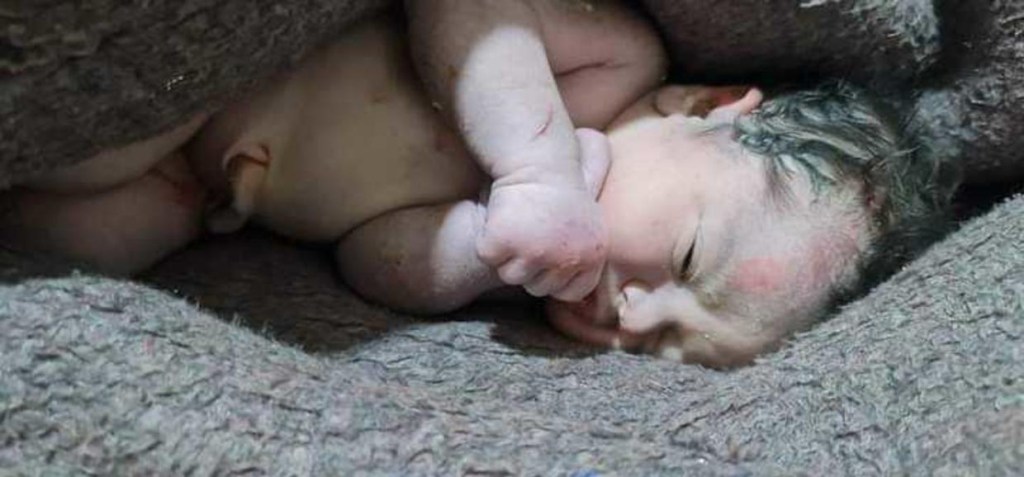
Syrian Baby

The image of the baby born under the rubble of the earthquake in Syria has been haunting me. So has the image in my mind of her mother, giving birth to her baby while trapped after the building, where she, her husband, and their children were sleeping, collapsed.  The baby’s uncle, when digging through the debris hoping to reach his brother and family, found the baby alive, her umbilical cord still attached to her mother. When he cut the cord, the baby let out a cry.  Tragically, her mother had died after giving birth, as had her father and siblings.

Continue reading “Hope Is Giving Birth in the Face of the Dragon by Beth Bartlett”

“A new heart I will give you . . . “: Part Two by Beth Bartlett

You can read part 1 here.

Hope: What is a heart transplant if not hope? In granting the possibility of new life out of death, it is the essence of hope. Yet, hopefulness is also knowing death is imminent and finding a way to live well into that knowledge. The impulse of hope encourages us to go on despite the odds. Hope indeed seems to spring eternal. In my darkest days, something would come along and lift me up. Hope is a testimony of the human spirit, lifting us up, refusing to refuse us. This new heart brought hope to me, and I believe that in our going on together, we carry the hopes of my donor’s loved ones as well. 

Continue reading ““A new heart I will give you . . . “: Part Two by Beth Bartlett”

“A new heart I will give you . . .” : Part One by Beth Bartlett

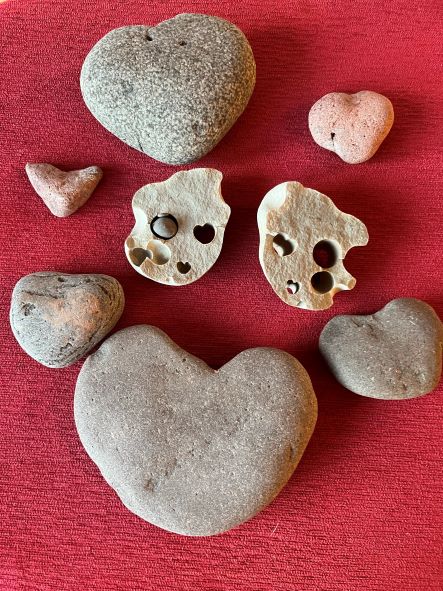
February is “Heart Month.” Presumably the American Heart Association chose February as the month to raise awareness about cardiovascular health because in February we celebrate Valentine’s Day which we observe by the giving and receiving of hearts of all kinds — heart-shaped Valentines, candy, jewelry – symbolic declarations of love, of giving our hearts to one another. Hearts have long been associated with love. When bringing our emotions to the surface, we “wear our hearts on our sleeve.” When speaking our deepest feelings, we “pour our hearts out.” Feelings of tenderness “warm our heart,” and compassion “pulls at our heartstrings.” When grieving, we feel “heartache,” and loss of love renders us “heartbroken.” The French word for heart, coeur, associates hearts with courage. We “take heart;” we “lose heart;” we “hearten.” We can engage in a task “wholeheartedly,” “halfheartedly,” or our “heart’s not in it” at all. We can be “bravehearted,” “lighthearted,” “tenderhearted,” “hardhearted,” or totally “heartless.”  That’s a lot for the heart to carry.

Continue reading ““A new heart I will give you . . .” : Part One by Beth Bartlett”

Seeds of Hope: Part Two by Beth Bartlett

You can read part 1 here.

The patenting of seeds[i] has made the thousands-year-old practice of seed saving illegal, as is the sharing of seeds from farmer to farmer. The most notorious case is that of Canadian farmer Percy Schmeiser, whose canola crops were contaminated with Roundup Ready canola pollen blown into his fields from neighboring corporate farms. When Monsanto trespassed onto his fields, took samples, and found Roundup Ready canola plants mixed in with Schmeiser’s own canola plants, they sued him for violation of patents. Ultimately, the Canadian Supreme Court ruled in favor of Monsanto, but also ruled that Schmeiser owed Monsanto nothing.

In my own city, seed sharing became an issue when in 2013 our local library decided to start a seed library. The project was begun with great hopes that patrons could check out seeds for their home gardens, with the understanding that they would save a portion of their seeds and return these to the library for next year’s use. [ii] Project leaders hoped this would preserve locally adapted seed varieties. Unfortunately, after the seed library came to the public’s attention, the Minnesota Department of Agriculture informed the library that they were in violation of a Minnesota statute that prohibited the exchange of non-commercial seeds. [iii] Library Manager Carla Powers commented, “ . . . the law went so far as to make it illegal for gardeners to exchange a handful of seeds with one another.”[iv] But this did not end the library’s efforts.  Several ally organizations[v] stepped up to create an amendment to the statute that exempted the exchange of non-commercial seeds from testing, labeling and licensing laws. This inspired a state-wide effort to change the law, which was successfully accomplished in that year’s legislative session.[vi]

Continue reading “Seeds of Hope: Part Two by Beth Bartlett”

Seeds of Hope: Part One by Beth Bartlett

Author’s Note: This piece was inspired by Janet Maika’i Rudolph’s wonderful FAR post of December 15th, 2022, “Ode to Seeds.”

“. . . I know, yes, there is renewal, /because this is what the seeds ask of us/ with their own songs/ when we listen to their small bundle of creation,/ of a future rising from the ground . . .” – Linda Hogan

The first seed catalogs started arriving in the mail even before the turn of the new year.  In an annual ritual of hope, in the depths of winter we turn our thoughts and dreams to growing things – seeds of heirloom tomatoes, cucumbers, squash, carrots, and beans that will feed us and grace our tables in the summer and fall, and colorful marigolds, nasturtiums, and zinnias that will delight all summer long with their beauty. Is this the invincible summer of which Camus wrote?[i] 

Continue reading “Seeds of Hope: Part One by Beth Bartlett”

Radical Joy by Beth Bartlett

On Christmas mornings my brother, sister, and I had to wait patiently upstairs until we heard the music playing. Then, at last, the trumpets and voices singing “Joy to the world!” beckoned us down to the living room, with presents piled high under the brightly lit Christmas tree and stockings filled to the brim hung by the roaring fire.  As a child, I experienced Christmas as a most magical and wonderful time of year, but it wasn’t just about getting presents. Strangers greeted each other with good cheer, wishing each other a “Merry Christmas.” Children visited the homes of the elderly and housebound, brought them cookies and sang carols.  People were different – kinder, friendlier, more open-hearted, more forgiving. These are the true gifts invoked by the Christmas season, and I often wondered why we couldn’t continue these all year. I still do. 

Continue reading “Radical Joy by Beth Bartlett”

Carol P. Christ: Weaver of Visions by Beth Bartlett

Author’s Note: Today’s post is the 4000th FAR blog post!  I first became aware of the Feminism and Religion blog when participating in a symposium honoring the life and work of Carol P. Christ in October 2021. I was inspired to write a piece on Christ’s contribution to ecofeminism, that was posted in the FAR blog a year ago today. I wanted to post another piece on Christ on the anniversary of that first post. I’m delighted that it is the 4000th, and so fitting that it is written in honor of Carol Christ, who was such an important part of the FAR blog.

A while ago, a friend asked me what spiritual reading I’d been doing lately. I told him that I’d been revisiting classics from the past. When he asked me who specifically, the first name I mentioned was Carol Christ. Even though he was a minister, he had never heard of her. Sadly, I suspect the same would be true for the vast majority of ministers, priests, rabbis, theologians, and other religious leaders. Yet, I can think of no one who has had a greater influence on my religious and spiritual thought and beliefs.

Continue reading “Carol P. Christ: Weaver of Visions by Beth Bartlett”

Remembering “The Burning Times,” Part 2: Healing by Beth Bartlett

You can read part 1 here.

The effects of “the burning times” are still with us. I can feel this in my own body. As Starhawk put it so vividly, “the smoke of the burned witches still hangs in our nostrils, . . . remind[ing] us to see ourselves as separated. . . in competition with each other, alienated, powerless and alone.”[i] However, she continues, “the struggle also continues.” That struggle is the impulse toward wholeness, healing. That journey toward healing begins with remembering and acknowledging past harms, so that we may better understand who we are and the ways these continue to live in our bodies, psyches, and culture in order to address them.

In South American indigenous cultures, trauma is recognized as susto, or “soul wound,” and it is on that level that healing needs to happen.[ii]  To quote Shirley Turcotte, “Healing from trauma is a spiritual matter, a relationship matter, and there are places in recovery that require a precious spiritual response.”[iii] The women’s spirituality movement continues to be one such precious response. The work of Starhawk and others to reclaim the word “witch” and to revive and reimagine a tradition of valuing immanence, the sacredness of the earth, and the ability to change the world for the good has been invaluable in this.[iv] In her examination of the reasons for the persecution of witches, Starhawk names the “war on immanence” as one of three factors.[v] If the spirit was not present in the earth itself, then people had to rely on priests and the Church for access to a transcendent god. 

Continue reading “Remembering “The Burning Times,” Part 2: Healing by Beth Bartlett”

Remembering “The Burning Times,” Part 1 by Beth Bartlett

I first saw it when looking at their faces while showing The Burning Times in class — the blank stares, the pained expressions, the tears, the looking away. The scenes and sounds of women tortured and burned alive touched something deep and ancient in them.  Here it was — the historical trauma of women.[i]  The lasting impact of historical trauma is experienced by subsequent generations for hundreds of years, manifesting in such things as depression, PTSD, self-destructive behaviors, anger, violence, suicide, and more. As Native LGBTQ activist and writer Chris Stark so eloquently put it: “The experiences of our grandparents and great-grandparents are written into the library of our bodies . . . . My ancestors’ loss and screams are written in me – their pain and murder and rape merged with my own as a child. . . We carry them through time. We remember.”

Continue reading “Remembering “The Burning Times,” Part 1 by Beth Bartlett”