Two Poems by Rebecca Rogerson

ROSE WATER

I am the holy place somewhere in the stars of eternity,
 someone’s daughter who seeks reprieve somewhere.

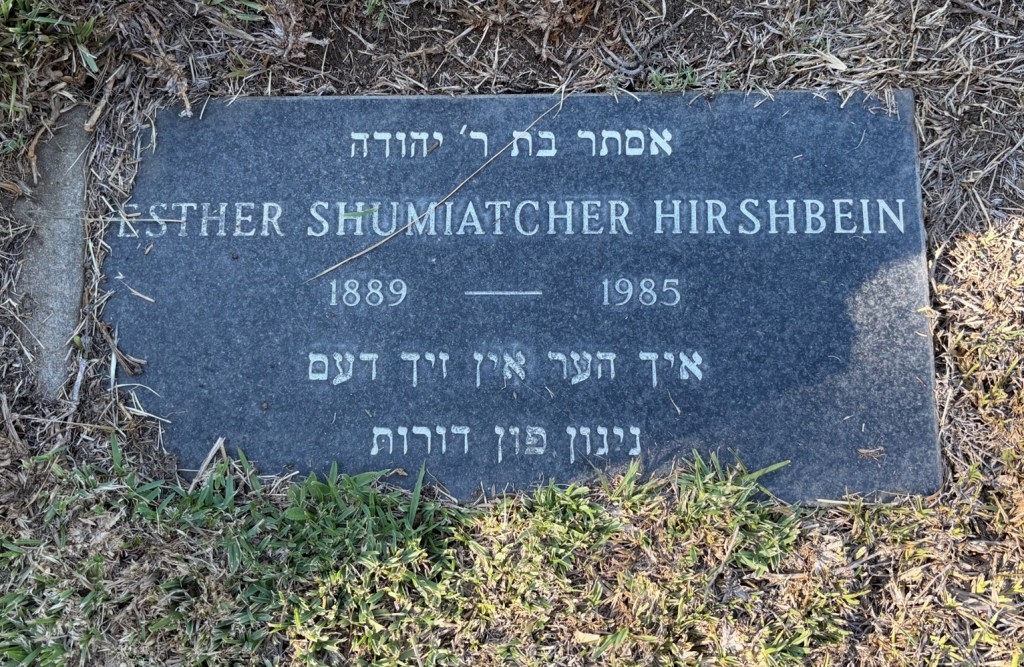
Yetta changed her name to Mary. She tried to erase her past, not as a Jew, well maybe some of that, but more as a Jew molested by her father—a frum[1], “Monster”, his daughters called him.

On my altar sits my tallit alongside a Menorah with seven brass holders. No stars of David—before or after the decimation of Gaza. Can rose water sweeten our hearts? We pour it graciously in our hands, hoping the lost petals heal our guts and brighten our thoughts. She searches hungrily for hope in glass bottles adorned with Farsi, that cost $4.29 each.

Continue reading “Two Poems by Rebecca Rogerson”

Veiled by Michelle Wahila

Photos by Paige Gribb Photography
 https://paigegribbphotography.com/

Springtime in Paris brings the magnificence of cherry blossoms, the scent of sweet crêpes, and an influx of tourists eager to capture their own moment of passion on the cobblestone streets of the world’s most romantic city. I may be biased because Paris is my home, but there’s no denying its magic. With its art, history, cuisine, fashion, and architecture, the city offers extraordinary experiences. It’s no wonder so many couples choose to marry in the City of Light.

Years ago, when I entered the wedding industry, I did so reluctantly, only after leaving the one profession I had ever known – ministry. What I didn’t expect was that I would become a bridge for couples navigating the ever-widening gap between love and institutional religion. The so-called “rules” of tradition are often mislabeled as matters of faith but are more accurately named as remnants of the heteropatriarchy. They place enormous pressure on engaged couples. It’s no surprise that many of the eloping couples I meet in Paris have chosen their path simply because it is less stressful than trying to appease tradition, religion, family, or friends (or all of the above).

Continue reading “Veiled by Michelle Wahila”

Presenting Feminine Courage by Cheryl Petersen

Madam C.J. Walker was born Sarah Breedlove in 1867, to sharecroppers who had been slaves before the American Civil War. Sarah married at age fourteen. Six years later Sarah was a widow with a daughter. For income, Sarah did laundry and cooked. In 1905, she remarried and became Madam C.J. Walker. With little more than a dollar, she began her own line of hair products for African American women and prospered humanity beyond imagination or expectation.

Nearly two decades back, I read “On Her Own Ground: The Life and Times of Madam C.J. Walker,” by A’Lelia Bundles. The author describes Walker’s journey from desperation to inspiration. The narrative impressed me with an exacting respect for the womanhood that embraces other women.

Continue reading “Presenting Feminine Courage by Cheryl Petersen”

Witches and Queens in C. S. Lewis’s Chronicles of Narnia by Elanur Williams

Jadis, The White Witch, by Leo and Diane Dillon. Front Cover for The Lion, The Witch, and the Wardrobe.

When I first encountered the Narnia novels as a child, the Christian symbolism was lost on me. I grew up in Istanbul, and what captivated me most was the magical world of Narnia, where one of my favorite characters, Aslan, had a Turkish name—a rarity in the British children’s books I read at the time. I also loved the mention of Turkish delight, which I did not consider to be “exotic;” rather, it was an ordinary reference to the rose, lemon, and pistachio flavored confections I often enjoyed at home. However, the character who truly fascinated me was Queen Jadis, also known as the White Witch. Her cold, regal majesty—draped in furs and gliding across a snowy landscape in her sleigh—was enchanting. I preferred witches to princesses and was drawn to stories where characters defied the roles they were expected to play, so it’s no surprise that I found the Witch’s character far more compelling than Lucy’s or Susan’s. I even had a picture of Jadis pinned to my bedroom wall. Yet within myself, I suppressed the Witch’s more admirable qualities—her anger, conviction, and sense of personal power. It took me years to reclaim, heal, and integrate these aspects.

Much has been written about C. S. Lewis’s restrictive and problematic portrayal of female characters. He perpetuates misogyny in Christian thought by depicting women who are idealized, distracted by ‘nylons and lipstick,’ in need of protection, or portrayed as liars—like Lucy, whose discovery of Narnia is initially dismissed as a childish fabrication, even though she is a truth-teller. Traces of paternalism run throughout his works, particularly through his reinforcement of a rigid gender binary. He perpetuates the view that women must suppress their own desires and dreams, in favor of being useful and serving others. Although the Narnia novels may appear to position women like Lucy and Susan as capable and responsible leaders (especially when they are crowned co-rulers of Narnia), this vision of female leadership is complicated by the presence of villainous witches and Queens.

Continue reading “Witches and Queens in C. S. Lewis’s Chronicles of Narnia by Elanur Williams”

Blodeuwedd; The Flower that Does Not Bloom and the Transhuman Death Spiral by Kelle Ban Dea

Blodeuwedd is often viewed as a Spring goddess, a personification of flower and bud and bloom. And why not; she is made of flowers after all; flowers and magic. It’s only when you read her original myth in the Fourth Branch of the Mabinogi that you realise how dark it is.

Of all the famous women – now seen as goddesses by many – in these ancient Celtic legends, Blodeuwedd is the only one who is not a mother, and therefore not seen as an aspect of the mother goddess, Modron. Bloduwedd cannot be a mother, because although she is made of flowers, she is a flower that will never bloom, that cannot reproduce.

In both ancient mythology and in the neopatriarchy we live in today, women who either cannot or will not be mothers (despite these being very different things; one a choice, one a lack of choice) are viewed with suspicion. As the opposite of the nurturing, fecund Mother, Bloduwedd instead brings betrayal and death to the hero of the tale. Yet, it was never Blodeuwedd at fault. She is created by the rapist magician Gwydion and given without her consent to be the wife of Lleu, the king, and our shining ‘hero’ of the story. Lleu has been cursed by his own mother to never have a human wife or children, so Bloduwedd is the best that Gwydion can conjure up, and he is celebrated for this marvellous feat of magic.

No-one, of course, bothers to ask Blodeuwedd what she might want.

Continue reading “Blodeuwedd; The Flower that Does Not Bloom and the Transhuman Death Spiral by Kelle Ban Dea”

Journey to Freedom: Harriet Tubman Still on the Move, part 2 by Maria Dintino

Part 1 appeared yesterday

Additional Developments

Although there’s a significant dearth of statues depicting real women in our country, Tubman’s image and legacy have done much to address this gap and put a serious dent in the bronze ceiling.

There are said to be at least 9 full-figure sculptures of Tubman with others in the works, along with plaques, busts,  parks and museums named in her honor. Also, three commemorative coins have been released, each depicting a particular phase in Tubman’s life.

Speaking of currency, the plan to replace President Andrew Jackson’s image with that of Harriet Tubman’s on the twenty-dollar bill is still in the works. It’s an important endeavor that’s taking far too long. Annie Linskey with The Philadelphia Tribune explains:

“There has never been a Black person on the U.S. currency, nor has there been a woman on a bill in the modern era, despite repeated attempts to diversify the currency.”

Continue reading “Journey to Freedom: Harriet Tubman Still on the Move, part 2 by Maria Dintino”

Journey to Freedom: Harriet Tubman Still on the Move, part 1 by Maria Dintino

Moderator’s Note: This post is brought to you by a collaboration by FAR and Nasty Women Writers written and hosted by Maria and Theresa Dintino. This post originally appeared on their website on Feb. 20,2024. It has been updated to reflect recent events. the post is subtitled: Nasty Women Writers: Breaking the Bronze Ceiling – Statues of Real Women in Public Spaces

It’s quite fitting that the 9-foot bronze statue of Harriet Tubman, named Journey to Freedom is still on the move, as was Tubman for much of her life.

Since 2020, the statue has traveled around the country. It’s currently on Hilton Head Island, South Carolina, in Historic Mitcheville Freedom Park. The monument will remain on Hilton Head through April 2025 and from there be transported to Vienna, Virginia.

Continue reading “Journey to Freedom: Harriet Tubman Still on the Move, part 1 by Maria Dintino”

Sacred Secrets: The Legacy of Women’s Wisdom Across Generations by Rabbi Nadya Gross

From my earliest memories, I saw things that others didn’t see and knew things I had no business knowing. But at the time, I didn’t realize that others didn’t witness the dance of light around their bodies or the life forms at the base of trees. I didn’t know that the insights I had into people’s emotions were not universally shared. My curiosity led me to ask questions about these things… until my grandmother, Savta (Heb), took me into the kitchen (where everything important happened), closed the doors, and told me never to talk about these things with anyone except her. And so, my training began.

Savta was gifted in ways different from mine. She had grown up in a circle of women and their daughters, a circle where women educated each other, shared their unique gifts and insights, and passed down a legacy of wisdom.

The wisdom she shared with me was as ancient as the land on which we lived. We began with reverence for the Earth and all her elements—pre-patriarchal Goddess wisdom. We explored what it means to be intimately connected to all aspects of Creation, understanding that we are interdependent. Harm to a tree, an insect, or the water harms us. We learned that the respect we wish to receive from others must first be shown by us. I learned to never pick up a beautiful stone that caught my attention without first asking permission to remove it from its resting place. When harvesting fruit from one of the many trees in my grandparent’ yard, I expressed deep gratitude to the mother-tree whose body nurtured that fruit to ripeness.

Continue reading “Sacred Secrets: The Legacy of Women’s Wisdom Across Generations by Rabbi Nadya Gross”

Love Without Want by Arianne MacBean

I have only felt love without want twice in my life. The first time was when I was invited to my therapist’s funeral. The summons arrived without surprise. Strangely, my therapist and I had talked about it, before dying any time soon was a thing either of us thought would occur. After my own mother had just received her second breast cancer diagnosis, I impulsively asked my therapist during our session, “How will I know if something happens to you? Will someone call?” Someone would call. I was on a list – a list of people to call if my therapist died.

In session, we talked through how her unexpected disappearance might go – playacting for therapeutical reasons, but not knowing we were setting the stage for a true and imminent exit. She asked me if I would like to come to her funeral. There was no hesitation. Yes. I had been seeing her for twelve years. She had gotten me through life, she had gotten me through me. Of course, I wanted to go to her funeral. Then, we talked about what would happen if I died. I asked her if she would come to my funeral. Yes. I asked her if she would give the eulogy. She laughed, “That might be a little weird.” Just two months later, she received her own gut-wrenchingly aggressive cancer diagnosis. We needed no list. She told me herself. The funeral was planned and when it arrived, I sat in the back row not knowing anyone there, listening to stories about a woman I didn’t know but knew. Because as much as I didn’t know anything about her, I knew her so fully through the way she loved me. The funeral invitation, her last selfless gift.

Continue reading “Love Without Want by Arianne MacBean”

WHEN I SAY THAT I MISS MY MOTHER (THIRTY YEARS AFTER HER DEATH), WHAT PRECISELY AM I MISSING? by Rebe Huntman

photo credit: Lac Hoang

On the eve of my 50th birthday, I found myself longing for my mother. She’d been dead thirty years—so long that I’d forgotten the sound of her voice or the temperature of her skin. And yet I missed her. Desperately. Shamefully.

The shape of that missing had something to do with the fact that I was nearing the age she’d been when she died. As a child, I’d watched my mother dress for a night of dancing with my father, lining her lips with red and stringing her neck with beads—sure signs she knew the secrets of being a woman: self-possessed; striding through the world with confidence and self-assurance; a real badass!

By now, I’d expected to feel that same sense of largesse. But the truth was that I still felt like the nineteen-year-old version of myself who had lost her mother, a child still waiting for someone to show me the way.

~*~

I wasn’t alone. My whole country seemed to have lost our way. We were surrounded by images of the feminine—pop icons and underwear models, feminists and porn stars, soccer moms and saints—all of them flashing large but pointing in different directions, unglued from whatever architecture might give them a coherent narrative: A blueprint that might hold us through the waters of our deepest anxieties. A guide who might answer our deepest questions: Who am I? Am I part of something larger than my own life? And if so, how do I fit within it?

~*~

Continue reading “WHEN I SAY THAT I MISS MY MOTHER (THIRTY YEARS AFTER HER DEATH), WHAT PRECISELY AM I MISSING? by Rebe Huntman”