

When I was growing up in my Egyptian Jewish immigrant home, each of the High Holidays was imbued with sacredness, thanks largely to my mother’s efforts to create a meaningful gathering of family and friends. Around a long table, covered with an embroidered white cloth and set with sparkling silver and delicately fluted china, she served at each season the festive meal that made manifest for us the presence of the Divine.
My father, an Orthodox Jewish man, followed the tenets of his faith, praying each morning and attending synagogue each week. But it was my mother who brought to life the seasonal festivals that also characterize Judaism. As a child, I longed to pray with my father and I envied my brother and male cousins who studied and recited the ancient Hebrew; I resented having to polish silver and set the table. But today I’m grateful for my mother’s quiet teachings.
Passover had special meaning for us because our family’s departure from Egypt seemed a reenactment of the ancient Exodus. But Rosh Hashanah, that holy day without explanatory narrative, seemed even purer in its celebration of abundance and blessing, renewal and return. Each year, I looked forward to the new moon in Tishrei that coincided with the arrival of autumn in New York and the beginning of the school year.
Continue reading “Rosh Hashanah and the Goddess – redux – by Joyce Zonana”

 When I was growing up, home was the last place I wanted to be. It’s not that ours was an abusive or angry household: both parents loved me and my mother labored to create a calm, clean space to contain us all. It’s just that I felt suffocated.
 How to come to terms with the most maligned or vulnerable aspect of ourselves—whether it be race, ethnicity, religion, gender, sexuality, physical ability, or any other trait—remains among the most pressing questions of our time. Should we try to “pass,” identifying with the oppressor and denying or rejecting who we are? Should we assume a militant, defiant stance, wreaking vengeance on those who have harmed us? Or can we find a way to embrace and affirm ourselves, neither denying nor reifying the pain of our individual and collective pasts? Can we love those who have harmed us?
 Very early in Henri Bosco’s 1948 novel Malicroix, a young man, Martial de Mégremut, living placidly amid fruitful orchards in a tame Provençal village, receives a letter informing him he has inherited “some marshland, a few livestock, a ramshackle house” from a reclusive great-uncle, Cornélius de Malicroix. Against his family’s strenuous objections–with alarm they speak of “marshes, mosquitoes, miasmas”–Mégremut resolves to travel alone to the remote Camargue to claim his “wild” Malicroix inheritance. The house is on an island, and to reach it Mégremut must cross a rough river, at night, in a frail wooden boat piloted by a taciturn old man who meets him at dusk in the middle of a vast plain.
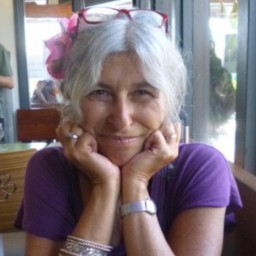 Just a few months ago, not long after turning seventy, I was diagnosed with mild osteoporosis. I had thought that all my yoga, my occasional forays to the gym, my daily walking, my frequently consumed leafy greens and yogurt , my calcium supplements would protect me. I had thought I was different from most other women my age, that I could avoid taking the medication that I knew was sometimes problematic. But the bone density scan revealed what I had feared, and because both of my parents declined and died shortly after hip fractures, because I had once broken an ankle, I decided to accept my doctor’s sober recommendation: that I begin a weekly dose of alendronate. It would be the first chronic medication I would ever be prescribed.
 Feminism and Religion