 Just a few months ago, not long after turning seventy, I was diagnosed with mild osteoporosis. I had thought that all my yoga, my occasional forays to the gym, my daily walking, my frequently consumed leafy greens and yogurt , my calcium supplements would protect me. I had thought I was different from most other women my age, that I could avoid taking the medication that I knew was sometimes problematic. But the bone density scan revealed what I had feared, and because both of my parents declined and died shortly after hip fractures, because I had once broken an ankle, I decided to accept my doctor’s sober recommendation: that I begin a weekly dose of alendronate. It would be the first chronic medication I would ever be prescribed.
But right before I actually began taking my weekly pill, I noticed a strange new pain across the instep of my left foot. For the first few days I ignored it; I felt it only when I walked, and I assumed it was a strained muscle or tendon. The pain increased; when, after ten days, it persisted even when I was not walking, I decided to see a podiatrist.
 Sixteen years ago, I was living alone in New Orleans in a lovely Craftsman’s Cottage I’d purchased the year before. In late December—just around now—a friend called to tell me about a kitten she’d seen at her Uptown veterinary office: “It’s time you got a familiar,” she declared. “I think this one’s perfect for you.” Grudgingly, I agreed to visit the vet’s office and take a look at the little black-and-white female tabby she’d seen. I wasn’t at all sure I was ready, but Mary was my priestess, the leader of our small coven, and I trusted her implicitly.
 It should have been a wonderful journey, organized by three dear friends who run a yoga center in Costa Rica. I would be traveling with my husband, these friends, and thirteen other like-minded folk to the
  I had never imagined visiting Eastern Europe, a place toward which I felt no attraction, or, if anything, a deep aversion. To my mind, these were the killing fields, where six million Jews, Roma, political prisoners, homosexuals, and others were massacred by the Nazis during World War II. As a bisexual Jew, a dark-skinned Middle Easterner sometimes taken for a gypsy, why would I want to go there?
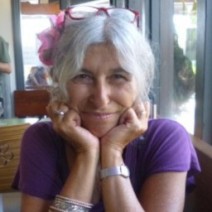 In Europe and Mexico, younger women and men of all ages regularly offer me their seats on buses and metros. I usually refuse, although at home in New York City, I’m always a little miffed when no one bothers to make a place for me. Yet cashiers never balk when I ask for a senior ticket at the movies or in museums. At first I was surprised: how do they know, I wondered. But of course it’s the gray hair, along with the wrinkles and sagging skin that now mark me.
 When I was growing up, I was fascinated to see my father each day recite the morning blessings mandated for Jewish men. While the rest of the household bustled sleepily—my mother in the kitchen, my brother and I taking turns in the bathroom, my grandmother slowly getting dressed—my father, still in his pajamas, would stand in the center of our small living room,
  A few weeks ago, a former colleague invited me to visit one of his classes, to discuss Mary Wollstonecraft Shelley’s 1818 novel Frankenstein; or, The Modern Prometheus and the essay I’d published about it almost thirty years ago, “
 At the lovely small Chanukah party I attended earlier this month, I did not taste the latkes, those delicious potato pancakes fried in oil and typically served with sour cream and applesauce. My hostess offered them to me repeatedly, proudly noting that she’d used her Polish grandmother’s recipe. But I politely said “no thank you,” I’d just started a diet. “Who starts a diet in December?” someone asked. Someone else pointedly wondered “How can you not eat latkes at Chanukah?” but I quietly insisted that I needed to refrain. I promised, though, that I’d have some next year, once I’d shed the extra pounds that were making me uneasy in my own body.
 Just last week—a few days after the New York Times reported on the Trump administration’s efforts to