From the Archives: Earth-Spirituality in the Qur’an and Green Muslims by Elisabeth S.

This was originally posted on March 14, 2017

There is some very helpful guidance in the Qur’an for how we should and should not treat the earth. In my exploration of Qur’anic verses on the environment, I have found a great deal of Earth-love that I want to share.

The first idea is that the earth is not ours to trash and misuse recklessly or indulgently. Sura 2:284 says, “Whatever is in the heavens and in the earth belongs to God.” This sentiment is found throughout the scriptures. Individual wealth and the practice of financial profit and salary as reward has given us the illusion that, if we’ve earned the cash, we can do with it whatever we like. We can buy anything we want, show it off, hoard it, and then trash it. How often do we quell our suffering or attachments through consumerism as if there were no consequences? But we need to begin to shift to the perspective of honoring the earth as not something we are entitled to or even deserve. If we are supposed to be stewards of the earth, then fine. But it seems that selfishness and personal gain have distracted us, making us neglect our duty. The idea that the earth is a bestowed gift is embedded into the Qur’anic “golden rule”: “You who believe, give charitably from the good things you have acquired and that We have produced for you from the earth. Do not seek to give bad things that you yourself would only accept with your eyes closed” (2:267). Yes, we work the land to produce food, but not everything is within our jurisdiction.

Continue reading “From the Archives: Earth-Spirituality in the Qur’an and Green Muslims by Elisabeth S.”

Unsung Heroines: Self-Worth takes Time: The Transformation of Angela di Foligno by Elisabeth Schilling

Angela di Foligno was a 13th century Umbrian Franciscan mystic who began her initiation on the spiritual path when she was almost 40. She was officially declared as saint in October of 2013. Her works were dictated to a relative who was scribe and a Franciscan brother in the church, and so we unfortunately do not have access to the complete depth and intimacies of her ecstatic visions and commentary (both she and her scribe discuss how he was writing in such haste and fear from admonishment from his religious brothers that it is a “short and defective version” of her experience). Nevertheless, as readers, there is still so much for us to gain in terms of inspiration and commiseration.

In “The First Twenty Steps of the Blessed Angela in the Way of Penance and Spiritual Perfection,” the Franciscan saint details the arduous journey of mastering both fear and love, a requirement to evolving in our human consciousness to realize our divine spark and transform shame. I want to discuss three aspects of this journey that relate specifically, as I see it, to the challenges set forth by many women: love for the body, love for one’s relational boundaries, and love for one’s time and space. Most cultures fail to honor women in all of their desires and powers, and so we must learn to honor ourselves and each other. Angela, as we shall see, was fiercely willing to honor herself.

Continue reading “Unsung Heroines: Self-Worth takes Time: The Transformation of Angela di Foligno by Elisabeth Schilling”

Spiritual vs. Material: The Middle Way? by Elisabeth Schilling

new FAR picFor much of my life, I’ve wanted experience. I think it stems from my childhood/teenage years. When I would travel (for school events, mostly), everyone my age or a bit older always seemed SO much older than me, so much more mature, and I always felt like a little kid, and that embarrassed me. I didn’t care about money or being materially successful. It seemed more admirable to take a road or overseas trip and meet a lot of different people and encounter cultures and read books that would help me grow emotionally and mentally. Recently, my friend who is younger and on his way to being a millionaire by the time he is 40 has tried to encourage me to read books about financial investments and business. I do not have the best habits with money, mainly meaning I don’t usually save or invest and just live paycheck-to-paycheck rather carelessly.


But in the Dhammapada and Upanishads, they say that neither those who only follow the material path nor those who only follow the spiritual path will reach nirvana. . . it is only those who find a balance between the material and spiritual, the mind and the body that will be able to reach nirvana, be one with Brahman and notice the true self. Continue reading “Spiritual vs. Material: The Middle Way? by Elisabeth Schilling”

The Sacred Love We Can Share through Kindness and Patience by Elisabeth Schilling

new FAR pic“Love is patient, love is kind.” – 1 Cor 13:4.

I think it was either Simone de Beauvoir or Betty Friedan who mentioned we live in a “sea of hostility.” Mainly it is the comment section of almost any post of photo or text where this can be evidenced. Since much of humanity spends a solid amount of time on social media these days, such negativity, judgment, criticism, canceling, and general snarky reactivity and pushing of opinion starts to leak into our veins. I was thinking about the human predicament the other day and what might be a central issue for many: the avoidance of pain.

We think we avoid suffering, discomfort when we project it on to another person. When we decide to play the game and live life for ourselves, acquiring more and more wealth, we forget there is a cost to the earth and often our near and far global neighbors. We try to avoid suffering when we demand our freedoms, trying to fashion a world according to our preference even as it means imposing our personal moralities onto others. Continue reading “The Sacred Love We Can Share through Kindness and Patience by Elisabeth Schilling”

Movement of Moving and Spiritual Journey by Elisabeth Schilling

It looks like it is time again for me to pack up and drive a few hundred or more miles to a new destination, a place I will finally try to plant roots, this time offering commitment + endurance, hoping to build a life of more balance and authenticity. I assume I will need a constant reminder of gratitude, quelling the entitlement that can bubble up when I think “this should be easier.” I’m not sure when, why, or where I’ve picked up that refrain, but I see it in others and myself and wish for an alternative.

With the help of several people, I’ve secured a full-time college teaching position on a beautiful college campus of a kind of institution I am certain is doing its part to heal the world. At least that is what I feel when I serve at a community college, a place where I feel inspired and challenged by students who have a diversity of needs. I’ve been teaching in such institutions for so long, I’ve fallen in love and know, by experience, that I can help in such spaces.

Continue reading “Movement of Moving and Spiritual Journey by Elisabeth Schilling”

All Are Our Teachers by Elisabeth Schilling

Art by doanminh0205

What can we learn from each other? Some people teach us that we need help with boundaries. Some remind us that we are easy to love. We can observe the way some lovers make us want to escape, simmering a queasy feeling in our stomach that we practice patience and non-attachment with so that we are not harmed too much whilst in their presence and other lovers are always ready with a supportive word, assuring us that what we desire is valid, that we do not need to justify our path.

The people who we react to the most intensely, most of the time negatively, are these people our lessons? That sounds rather crass when thought to apply to anyone in an extremely oppressive and/or abusive situation. I would not suggest we apply this to anyone but ourselves, if indeed, it works for us. This is not the fatalistic idea of people belonging in a certain state or being punished for something. This is more a strategic curiosity of looking at our own agency from a back door. For example, my body might contort in frustration and sadness with someone, which could indicate I need to not be in relationship with their energies, but until I can create another path (maybe due to work commitments, relational obligations, financial situations, etc.), I feel more empowered reflecting so that I can learn about myself and others so as to perhaps not invite the same energies in during the future or to not have them affect me so harshly so that it doesn’t matter.

Continue reading “All Are Our Teachers by Elisabeth Schilling”

If Holly Near’s Simply Love Album Were a Musical by Elisabeth Schilling

For many of us, listening to women-loving-women songs is a spiritual experience. That is because somehow it makes us feel seen, puts a sense of hope into our world as well as daydreams of romance. We can understand the challenges and the regret or guilt that comes with disappointing others and ourselves, them for not being who they wanted us to be and for us, not being who we are for far too long. Holly Near’s Simply Love album narrates a story that I might envision as a musical theatre production, and I really wish someone would ask me to write it and then hold the casting call (yeah, I’d want to be in it too, so save me a part). I offer some of my thoughts on two central songs in the would-be musical in hopes of sacred liturgy on a potential stage.

Simply Love has 28 songs and was released (according to Spotify) in 2000. I think the synopsis would be surrounding Cassandra, in a loving relationship with her partner, reflecting on her journey to this place of authenticity. I can imagine how it might be living one’s live in an exploratory way and coming to new revelations later in life.

Continue reading “If Holly Near’s Simply Love Album Were a Musical by Elisabeth Schilling”

Lessons Mothers Might Teach Their Daughters by Elisabeth Schilling

There might be lots of lessons to consider. These lessons might have holes, for I’m not a wise sage, and I’m not really even a mother. As I am a couple of years from 40, I think about what lessons I would teach my daughter if I had one, lessons to honor her physicality, lessons to create space for her soul. What do you think of these lessons? Would I be a bad mother?
  1. Be self-sufficient, and work hard and do it early.

I think there is much to say about a woman making her own money so that she can be in relationships that honor her tendencies and desires and contribute in those relationships financially. I’m not sure why it is, but I still feel that we are in a time where most men are more given the idea they should be self-sufficient and work hard and early to do it and many women, although perhaps a hint of this, would not have this as the core of who they are. A woman should have her own money so that she can be free.

  1. Find a spirituality and a community that allows you to be confident in your internal wisdom and body and support learning about life skills.

Continue reading “Lessons Mothers Might Teach Their Daughters by Elisabeth Schilling”

Gift-Economy in a Time of Lack by Elisabeth Schilling

Carol Christ wrote about gift economy on this blog in 2013, and I am taken by her story of the woman who brought raisins or cracked nuts to the group even though she had very little. In beginning to encounter the literature on gift economy myself, I am wondering how it all works, especially wondering, perhaps outside of such a conversation if it doesn’t relate or misses the point, what someone who feels they have nothing to give can give.

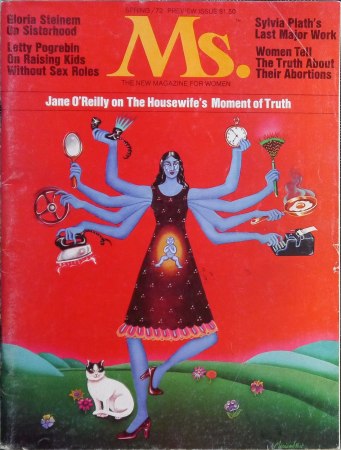
When Genevieve Vaughan wrote about gift economy in Ms. Magazine in 1991, she wrote, “where there is enough, we can abundantly nurture others. The problem is that scarcity is usually the case, artificially created in order to maintain control, so that other-orientation becomes difficult and self-depleting.”

I think we start to look for other ways of existing when we experience the brokenness of a current existence. The exchange economy under mindless capitalism does not honor equal, fair exchanges. If we could keep from manipulating and being deceptive about what a product is worth, if we could more generously assess the contribution of workers, then some of us might not be bothered. Of course, for that work which is never compensated by money, mostly women’s work, that is the other issue that might not be solved by more equal exchange, and probably more the point of Vaughn’s.

Continue reading “Gift-Economy in a Time of Lack by Elisabeth Schilling”

Marianne Williamson. . . I’m Sacredly Smitten by Elisabeth Schilling

I caution myself to be critical and nuanced. I’m sorry, folks. I just haven’t had such dazzling hope or remote interest in politics since. . . well, since I was a puppet junior high evangelist for an independent candidate my Dad liked, and I don’t want to try to remember who it was. But I was 13. And I’m 38 now. What hath made this cold, indifferent, anxious millennial’s soul to warm?

I am into mindfulness, contemplative studies, Eckhart Tolle, Don Miguel Ruiz, Nhat Thich Hanh, the kind of comparative religious studies scholar who has eastern spirituality leanings, so when I heard Marianne Williamson was a presidential candidate, I got curious. I’ve not read A Course in Miracles (although I think I’ve avoided it for the same assumptions Williamson says she initially made) or actually any of her books. Williamson is Jewish and has a pluralistic perspective when it comes to noting the basic underlying wisdom of all religious and spiritual beliefs (I realize we have discussed this before when I called them “wisdom traditions” – is any tradition actually wise/can you separate the violence, oppressions, and misogynies of them?).

She speaks in cool, rushing waters and has a platform that still sounds “political”/political (she breaks down what this word actually means in her latest CNN Town Hall) and is spiritual and based in a rhetoric of love. After the complete loss of hope in what [T . .] represents, and the not-yet healed wounds from [B. . .], she sounds like a reasonable adult, much like Obama did during his years. I wonder if they are friends? They should be.

Continue reading “Marianne Williamson. . . I’m Sacredly Smitten by Elisabeth Schilling”