Toward an Alternative Ecclesiology by Xochitl Alvizo 

I mentioned in a recent post that I would share a little more about my current research, as one of the aspects of my life I gained more clarity in during my recent process of regrounding was in the area of my research.

Two things stood out to me as I reflected on my work and scholarship: my concern for individual human dignity drives my work—it is an underlying thread in how I think and theologize. The second is that I want to make a major contribution to the theology of the church—I know I want to write a feminist ecclesiology. These two things are obviously related. I have witnessed enough of the ways that not only Christianity harms people, but how the church specifically is a conduit for the damages Christianity causes. At the same time, Christianity remains a living tradition, a shared story and language, and a community to which many are committed. So just as people are harmed by church, some are also nurtured and held by it. While it is true, then, that church indeed harms people and violates their dignity, often also justifying that violation on theological grounds, it need not do so and has other possibilities before it.

Thus, I want to contribute to a theology of church that is a grounded and liberating alternative to the problematic one to which people most often default or inherit. A queer, feminist, anti-racist, and decolonial ecclesiology.    

Continue reading “Toward an Alternative Ecclesiology by Xochitl Alvizo “

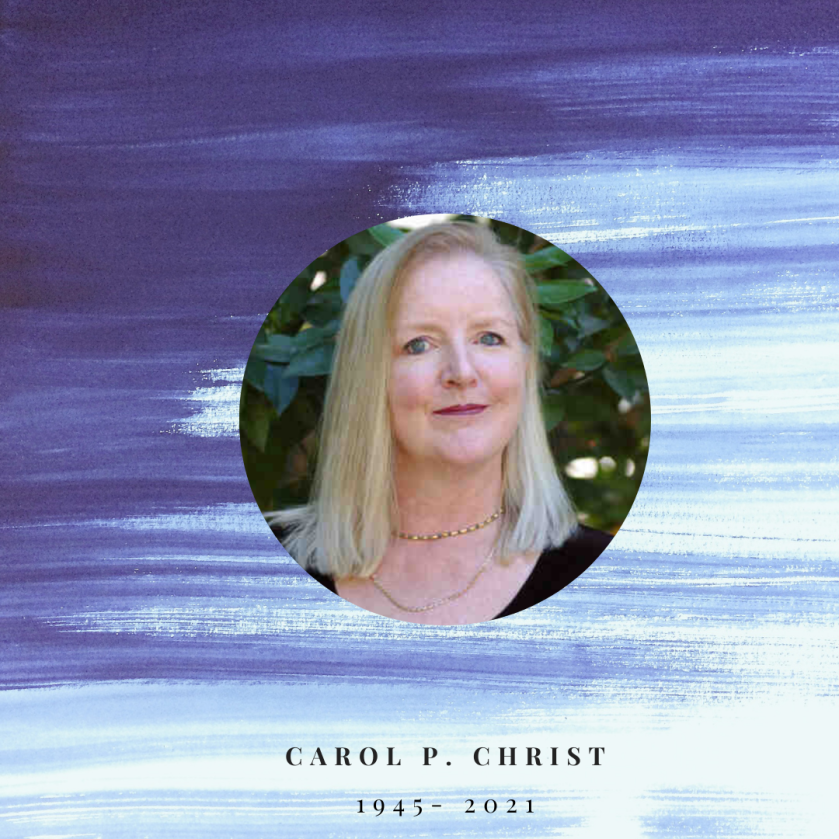
Legacy of Carol P. Christ:“Ursula Niebuhr, Ursula Niebuhr”: Unacknowledged Co-author of Great Works of Theology?

This was originally posted on August 26, 2019. It fits in with our new project of Unsung Heroines.

A few days ago while watching the movie The Wife, I kept hearing the words “Ursula Niebuhr, Ursula Niebuhr,” in my mind. I knew the reason was Ursula’s unacknowledged collaboration on the work of Reinhold Niebuhr, which I discovered while writing an earlier blog on uncredited co-authors.

I had not been particularly interested in seeing The Wife because I assumed it was the familiar story of the woman who gives up her career interests when she marries. Want to become a rabbi? Marry one. Want to become an artist? Live with him and become his muse. This is a very old story, and for me, not a very interesting one.

Continue reading “Legacy of Carol P. Christ:“Ursula Niebuhr, Ursula Niebuhr”: Unacknowledged Co-author of Great Works of Theology?”

Legacy of Carol P. Christ: His Terror

Moderator’s Note: This was originally posted on March 25, 2019. AND the issues are still with us and as vivid as ever.

The first two parts of Susan Griffin’s Woman and Nature, “MATTER” and “SEPARATION,” are written in the authoritative voice of western philosophy and science that declares matter to be dead and the body an impediment to thought, and proceeds to separate the mind from the body. All of this, Griffin suggests, is based in the fear of death.

As Griffin notes, in this equation woman is identified with the body and her voice is silenced. Re-reading these parts of Woman and Nature for the umpteenth time for a class I am teaching felt even more painful than it had before. I was reliving parts of my own story.

I was brought up in the tract home suburbs of post-war Los Angeles in a world of women. Both of my grandmothers played central roles in my upbringing, introducing me to nature and the spirit of life they experienced as we explored trails the Los Angeles County arboretum before it was fenced or when we frolicked in the waves and picked up sand dollars at the seashore south of San Francisco. When I was ten years old my family moved to a new neighborhood that was almost entirely made up of families like ours with small children, fathers who worked, and mothers who stayed home.

Continue reading “Legacy of Carol P. Christ: His Terror”

Legacy of Carol P. Christ: “Fertility” and the Regeneration of Life

This was originally posted on October 12, 2020

Prehistoric and indigenous religious traditions are often disparagingly mischaracterized as primitive fertility religions, concerned not with higher morality, but rather with the processes of reproduction of humans, animals, and plants. When these religions feature a Great Mother Goddess, it may be assumed that these religions are primarily focused on birthing human babies. Nothing could be farther from the truth.

Indeed, archaeologist Marija Gimbutas discovered that in the symbol systems of Old Europe, the Goddess is only rarely imaged as pregnant or giving birth. Nor is She portrayed solely in human form. Rather, She is portrayed with a bird head, wings, and a plethora of other animal and plant features. If She is a Great Mother Goddess, She is revered as the Source of Life, not simply as a mother of human babies. Gimbutas states that in Old Europe the Goddess was worshiped in as a symbol of the powers of birth, death, and regeneration in all of life. Gimbutas said these societies were matrilineal and probably matrilocal. Recent research into matrilineal and matrilocal egalitarian matriarchies provides insight into the values of prehistoric societies. The Minangkabau of West Sumatra, Indonesia are matrilineal and matrilocal, with family ties being traced through the mother line and land being held communally and in perpetuity by the maternal clan. Though the Minangkabau trace their ancestry through their mothers and grandmothers, it is important to note that, as Peggy Reeves Sanday discusses in Women at the Center, it is not birth or the ability to give birth that is celebrated as the highest value, but rather the nurturing of the weak and the vulnerable.

Continue reading “Legacy of Carol P. Christ: “Fertility” and the Regeneration of Life”

The Legacy of Carol P. Christ: Weaving and Spinning Women: Witches and Pagans by Max Dashu A Review

Moderator’s Note: This was originally posted on September 19, 2016

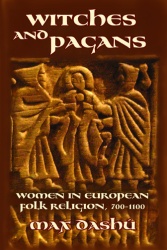
Max Dashu’s  Witches and Pagans: Women in European Folk Religion 700-1000 challenges the assumption that Europe was fully Christianized within a few short centuries as traditional historians tell us. Most of us were taught not only that Europe became Christian very rapidly, but also that Europeans were more than willing to adopt a new religion that was “superior” to “paganism” in every way. Careful readers of Dashu’s important new work will be challenged to revise their views. When the full 15 volumes of the projected series are in print, historians may be forced to hang their heads in shame. This of course assumes that scholars will read Dashu’s work. More likely they will ignore or dismiss it, but sooner or later–I dare to hope–the truth will out.

witches-and-pagans-cover

History has been written by the victors—in the case of Europe by elite Christian men. These men may have wanted to believe that their views were widely held, but Dashu suggests that they were not. Combing artistic and archaeological records, Dashu finds (to give one example) that images of Mother Earth nursing a snake are far from uncommon and can even be found as illustrations in Christian documents and on Christian monuments. Clerics rage against people—particularly women–who continue to visit holy wells and sacred trees and to practice divination and healing rituals invoking pagan powers. To paraphrase Shakespeare: “Methinks the cleric doth protest too much.” Were these things not happening and happening often, there would have been no need to condemn them.  Using these clues, Dashu provides intriguing new readings of the Poetic Edda and Norse sagas.

Continue reading “The Legacy of Carol P. Christ: Weaving and Spinning Women: Witches and Pagans by Max Dashu A Review”

Teacher Appreciation Week & Appreciating Teaching by Sara Frykenberg

Part of discovering my love for teaching and moving through my anxiety involved reconsidering my “ideals” of teaching, which were numerous and high minded.

I always wanted to be a teacher. Sure, I had other career dreams as a child too. I wanted to be a model, because I wanted to be pretty like a model. I wanted to be a flying missionary to please my father—you see, it was not quite enough just to do missions. I also needed “save” (pun intended) people with my daring airplane recuses. And in moments of practical mindedness, I thought I should definitely be a “cleaning lady” (aka a housekeeper), because I was very good at cleaning, which was a way of life and survival in my home. But “teacher” was a persistent calling, so I followed in my teacher-mother’s footsteps AND tried to satisfy paternal aggrandizement by becoming a professor.

It occurred to me recently that I have actually been teaching now for nine years. I’ve also discovered in the last few years that I like teaching. And no, I didn’t always know this. I always wanted to like teaching; and sometimes I was sure that I did indeed like teaching. But non-teaching associated trauma during my early career and my social anxiety also sometimes made (and makes) the process excruciating. (Neo-liberal and late-capitalist academic practice, politics and policy don’t help either.) Part of discovering my love for teaching and moving through my anxiety involved reconsidering my “ideals” of teaching, which were numerous and high minded.

Continue reading “Teacher Appreciation Week & Appreciating Teaching by Sara Frykenberg”

“Fertility” and the Regeneration of Life by Carol P. Christ

Prehistoric and indigenous religious traditions are often disparagingly mischaracterized as primitive fertility religions, concerned not with higher morality, but rather with the processes of reproduction of humans, animals, and plants. When these religions feature a Great Mother Goddess, it may be assumed that these religions are primarily focused on birthing human babies. Nothing could be farther from the truth.

Indeed, archaeologist Marija Gimbutas discovered that in the symbol systems of Old Europe, the Goddess is only rarely imaged as pregnant or giving birth. Nor is She portrayed solely in human form. Rather, She is portrayed with a bird head, wings, and a plethora of other animal and plant features. If She is a Great Mother Goddess, She is revered as the Source of Life, not simply as a mother of human babies. Gimbutas states that in Old Europe the Goddess was worshiped in as a symbol of the powers of birth, death, and regeneration in all of life. Gimbutas said these societies were matrilineal and probably matrilocal. Continue reading ““Fertility” and the Regeneration of Life by Carol P. Christ”

A Case for Context by Sara Frykenberg


I have a close family member who is staunchly Republican and frequently posts videos from the conservative platform PragerU or “Prager University.” Video topics include: why the Democratic Party is the “real” racist party (as though either party is innocent of racism), the “war on boys” and masculinity, and how feminists don’t care about Muslim women (as though some Muslim women aren’t also feminists), among other issues. You get the picture. It is a propaganda media source founded by radio talk show hosts which creates short videos on every topic there is, presenting the conservative viewpoint as the simple “God’s honest truth” about the issue.

I’ve seen some of these videos. They are as offensive as they are misleading. But one element that is particularly egregious to me is their complete disregard for larger context. Continue reading “A Case for Context by Sara Frykenberg”

What’s Changed? by Elise M. Edwards

An image of Elise Edwards smiling outdoorsFriends, it has been a few months since I’ve posted in this community.  I’m amazed at how much our world has changed since then.  Here in the northern hemisphere, spring came and went.  It felt like a tide of turmoil rolled in, leaving debris all along the shore and now we are trying to clean it up while keeping our eyes on the sea for more dangerous waves that are coming.

The issues we now face began before March, but for many of us, that was when the COVID-19 pandemic began to alter our patterns of daily existence. In-person instruction at my university and most schools was suspended and spring semester courses shifted online.  In March and April, we quarantined, self-isolated, and sheltered in place.  While a gradual re-opening of businesses and services has occurred in the months since then, I don’t know anyone who has resumed daily life as it was before. The virus continues to spread and the death toll rises.

Continue reading “What’s Changed? by Elise M. Edwards”

Ancient Mothers, I Hear You Calling Me to Crete by Carol P. Christ

On a cold and rainy morning in Lesbos, I ponder the advice of my intuitive friend Cristina to reflect on the spiritual dimensions of my decision to move to Crete. When asked why I am moving from Lesbos to Crete, I tend focus on the negative: I am lonely in my small village; and I am disheartened by my neighbors’ lack of compassion for the refugees who come to our island from Syria, Iraq, Iran, and Afghanistan.

As I begin to think again, I recall the many wonderful things I have experienced in Lesbos. This is the island where Sappho sang, and I too have been inspired by the muses who arise from the land. It is here that I first felt Greece calling me to leave my home. It is here that I learned to speak Greek. It is here that I listened to the stories of the old people who remembered a time when everyone lived closer to each other and the land. It is here that I learned to dance the traditional dances of Greece. It is here that I learned to identify over 300 species of birds that visit the wetlands on spring migration or are year-around or summer and winter residents. It is here that I dedicated a decade of my life to the effort to protect the wetland home of the birds I came to love. It is here that I was asked to run for regional and national office by the Green Party Greece. It is here that I met green friends I will always hold in my heart. It is here that I became an amateur geologist, learning the volcanic history of an island that has been declared a UNESCO Geopark. It is here that I imagined the time before 1922 when Turks, Armenians, and Greeks lived together in my village. It is here that I renovated a small Turkish house in a neighborhood that once had a mosque and later, a Neoclassical “mansion” (not particularly large by American standards) built by a Greek shipowner who transported goods brought by camels along the silk road from China. It is here that I learned to drink retsina and to relish food drenched in olive oil. I will carry all of this with me, for it is in my blood and in my bones.

But now, Crete is calling me. Continue reading “Ancient Mothers, I Hear You Calling Me to Crete by Carol P. Christ”