On Reading, Not Reading, and Disagreeing by Linn Marie Tonstad

Linn Marie TonstadThe theology blogosphere in all its glory has been alive in recent days with furor sparked by a blog post from Janice Rees at Women In Theology, where she discusses not reading Karl Barth, the heavyweight German 20th-century Protestant theologian, as an act of resistance against his dominance in the theological academy and his status as a litmus test for serious scholarship. Reminding myself repeatedly of the great xkcd comic, I’ve resisted my urge to comment on this and a number of other recent debates. (See here for a list of links if you wish to catch up on the discussion, however.) So this is not a post on whether to read Karl Barth.* Rather, the debate made me take a look at some of my own reading practices, and the visions of theological discussion that they encode. It also brought me back to the question of feminist disagreement, which continues to lurk in the back of my mind as I pursue disagreements with some prominent feminist theologians in my current book project.

I’ve written here before about reading authors that I disagree with, and indeed working on theologians I think are wrong about certain issues. On the simplest level, as a feminist and queer theologian, many of the theologians I work on would have questioned or outright resisted my participation in the discipline to begin with – although we cannot always know whether and how they would have done so today (since many of them are dead – yes, the dreaded dead white European males). But I often – not always – find projects that I sincerely disagree with utterly fascinating. From what perspective does the system being developed in such a project make sense? Where would one have to stand to see what that author sees? What do I come to understand about my current context, or the author’s context, from the perspective of the debates and decisions that the author finds pressing? One fairly trivial example: any interest I might once have had in historical Jesus debates was settled forever by reading Albert Schweitzer as an undergraduate. I simply do not find such debates compelling in themselves. (That does not mean I think they are valueless, of course!) But reading theologians who were engaged in such debates teaches me a great deal about how the commonsense assumptions many of us today operate with came to be. And seeing how such debates accompany disagreement over right social relations, over the nature of transmission of Christian traditions, and over what counts as scholarship in theology and religious studies is simply fascinating. Continue reading “On Reading, Not Reading, and Disagreeing by Linn Marie Tonstad”
The Difference a Feminist Makes by Elise M. Edwards

Elise EdwardsOf the many reasons I am grateful for feminismandreligion.com, I have to say that I am most grateful for the time it requires of me to reflect about feminism’s impact in my life, faith, and work.  I decided it was time to reflect on this question: What difference does feminism make for the way I structure and approach my classes?

I recently started a new position as a full-time lecturer in the Department of Religion at Baylor University.  Earlier this week, I attended a gathering for the department, where I was introduced, along with a few others, as new faculty.  At the end of the evening, the wife of a retired male professor introduced herself to me and remarked about how happy she was to see more women in the department. (Four full-time faculty members were hired this year, and three of us are women.)  She had been looking forward to this kind of change for quite a while.  I was appreciative of her remarks, just as I have been generally pleased with the warm reception I have received around the University.

Her excitement about the increase in the number of women faculty provoked me to reflect on what I add to my department, particularly for my undergraduate students.  I have thought before about how, from a purely representative standpoint, I bring something different to the faculty.  I have thought about how my students may not have previously had a professor–especially a religion professor–who looks like me.  Even if they had, I’ve had different life experiences than many of my colleagues, and that this bears on my approach to theology and ethics.  Therefore, the research I do and share is distinctive in its approach.  Yet, I am slightly embarrassed to admit that I have not given much thought about how my being a black feminist woman might impact my students.  I am tempted to blame it on the fact that I have just been trying to keep my head above water in a new position.  Of the many reasons I am grateful for feminismandreligion.com, I have to say that I am most grateful for the time it requires of me to reflect about feminism’s impact in my life, faith, and work.  So I decided to reflect on this question: What difference does feminism make for the way I structure and approach my classes? Continue reading “The Difference a Feminist Makes by Elise M. Edwards”

The Hot Seat by John Erickson

Being a man in feminism isn’t easy and that’s how it is supposed to be.

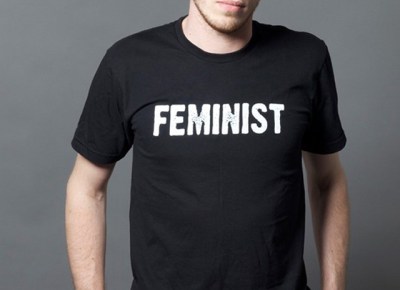
men_feminist_mainI’ve been thinking a lot about what it means to be a male feminist lately.  As the only man to be a permanent blogger on this very site until my colleague and friend Kile Jones came on board, I took my role, as a man in a traditional feminist (online) space very seriously.  Although the ongoing struggle to be a male feminist is one continually wrought with dialogues about power and positionality (amongst a host of many other topics), I am often conflicted when I see male feminists take advantage and destroy the hard work that many, specifically on this site and beyond, worked hard to build and defend.
Not wanting to reopen old wounds or start new online battles, men have been involved in feminism for quite some time.  From James Mott chairing the first women’s rights convention, to radical feminist Andrea Dworkin’s life partner John Stoltenberg, to Michael Kimmel and Michael Kaufman’s life long work to legitimize not only men in feminism but also what it means to be a man who works for gender equality, being a man in feminism isn’t easy and that’s how it is supposed to be. Continue reading “The Hot Seat by John Erickson”

Some Friendly Advice for Female Graduate Students by Grace Yia-Hei Kao

I’m officially in “back to school” mode, as I put the finishing touches on my syllabi, get my course websites ready, and prepare my 5-year old son for Kindergarten.

As I think about new graduate students studying theology or ministry, I’m reminded that while women make-up approximately 1/3 of all seminary students nationwide, at the place at which I work  (Claremont School of Theology), they comprise half of the student body.

In honor of all the new, especially female, matriculates (at my school or elsewhere), I’m reposting below one of my first entries on this blogsite. It was entitled “Undermining Our Own Authority.” The advice I gave then still captures what I’d say now.

Continue reading “Some Friendly Advice for Female Graduate Students by Grace Yia-Hei Kao”

Women’s Christian Heritage by Elise M. Edwards

elise-edwardsIt is difficult to carve out time in a course that covers Christianity from the past 2000 years to address material beyond the standard textbooks.  But yet, I must because the visual and material culture, the worship practices, and the daily activities of women and men who have called themselves Christians or followers of Christ throughout history also comprise the story of the Christian heritage.

Over the past several weeks, I have been developing material for a historical and theological survey course called “The Christian Heritage.” In the multiple sections of this course taught at my university, and I imagine similarly at schools across the country, students are assigned a course reader.  The reader we use is a collection of texts that have shaped the Christian faith from the first century to the 21st.  It is a good collection, and I have no objection to using it.  However, for the way I would like to teach the course, I will need to supplement the reader with other material.  I have two interrelated concerns: the reliance on texts as a way of determining theological history and the absence of women in that history before the medieval period (and even then the number of women included is small). Continue reading “Women’s Christian Heritage by Elise M. Edwards”

To Dust and Ashes by Natalie Weaver

Natalie WeaverThis year marks the fifth anniversary of the publication of Mama, PhD: Women Write About Motherhood and Academic Life, edited by Caroline Grant and Elrena Evans.  I contributed a chapter.  A few days ago, I was contacted by the editors and asked for an update.  “What had changed for me in five years?” they asked.  As I tried to respond to their questions, I was surprised by the gravity in my heart.  When I wrote about motherhood and life as a professional theologian five years earlier, I was a new mother, applying for my third-year review, and trying to navigate my nascent roles as both mom and scholar/educator.  I felt overwhelmed to be sure, but I was overtly grateful to have such a rich and full array of choices about how I lived my life.  Here, a few years later, I am applying for full-professorship.  I am a more seasoned mother with two healthy children.  I chair two departments at my school, and I am generally more established in the many things I juggle simultaneously.  Had I given it any consideration, I would have anticipated a more cheerful five-year check-in. Continue reading “To Dust and Ashes by Natalie Weaver”

5 Interesting Facts about Women and Religion by Kile Jones

Kile Jones, atheistPart of my research is focused on how the social sciences relate to “religion” and religious studies.  More specifically, I spend time examining the sociology of religion.  I look at stats, demographics, and polls.  I look at rates of attendance, frequency of prayer, levels of “religiosity,” apostates (or the less religiously-loaded term “exiters”), and political outlooks.  I also look at how bias this area of study is in favor of religion.  One facet of this work that has always interested me, is the differences in “gender” and “sex” as they relate to religious beliefs and observances.  Accepting the fact that there are spectrums of sex, gender, and identity, and the presence of difficult philosophical questions surrounding self-identification and the limits of labels, some really interesting facts and statistics crop up time and time again.  In what follows I will lay out a couple of these interesting facts, along with some thoughts on them: Continue reading “5 Interesting Facts about Women and Religion by Kile Jones”

Blindness of the Gals by Oxana Poberejnaia

Oxana PoberejnaiaWomen (and men) are often blind to women’s inequality. I, as a Buddhist practitioner, have been blind to the reality of women’s second-class status in sacred texts of Buddhism and practice.

In her book “Buddhism After Patriarchy” Rita M. Gross describes how her fellow western Buddhist women completely overlooked the fact that women are not allowed into Rumtek Buddhist monastery in Sikkim, even after watching a video of a woman leaving an offering outside the gate and walking away.

Continue reading “Blindness of the Gals by Oxana Poberejnaia”

Re-membering the Revolution by Xochitl Alvizo

This post includes information about a conference scheduled for next spring at Boston University: A Revolutionary Moment: Women’s Liberation in the late 1960s and early 1970s. The Call for Papers is due July 1st – just two days away!

I remember how Mary Daly used to ask me where the feminists were – what were they up to today? I would try to update her on the things I was aware of here in Boston, events at the Women’s Center in Cambridge, conferences by Women, Action, and the Media, the latest publication of Rain and Thunder: A Radical Feminist Journal of Activism and Discussion, and the myriad of things happening within feminist theology with which I was most familiar. Nonetheless, Mary was never satisfied with my responses, “Where is the revolution?” she would ask. At the time, I didn’t quite understand her disappointment. I could tell she wanted me to update her on something big – she wanted to hear of sweeping changes, lots of them. I often thought that the changes were already there, that big things had taken place and were incorporated into the daily life of society. I was always vexed that I couldn’t give her the answer she was looking for – but also, I didn’t know exactly what she was looking for. Then one day she asked me to find her a book that was on one of her shelves – she didn’t know which shelf – so I went searching, and in that search I discovered a world that gave me a glimpse of the revolution Mary wanted and I understood a little bit more  why Mary was dissatisfied with feminism today. Continue reading “Re-membering the Revolution by Xochitl Alvizo”

Public Depression and Feminist Spirituality by Linn Marie Tonstad

Linn Marie TonstadIn her recent book Depression: A Public Feeling, Ann Cvetkovich examines the experience of depression through the genre of memoir as well as by the construction of an archive of depression. Her archive includes sources ranging from John Cassian’s discussion of the way monks experience acedia to analyses of depression as the result of racism and colonialism, to suggestions for spiritual practices of transcendence – daily habituated actions of repetition and physical wellbeing – that might contribute to rendering depression manageable if not curable. The book, part of the Public Feelings project, is fascinating for the scholar of religion on multiple levels.

First, in terms of teaching and mentoring, Cvetkovich’s analysis of depression as reflective of real states of affairs in the world, rather than as a (mere) biological fact, speaks to an experience that I, and no doubt many others, have every year. At some point, an activist student (usually but not always female) will either email me or ask for an appointment to talk about struggles she’s been having. These students are usually heavily engaged in struggles for queer causes, in learning about intersectionality, reading critical race theory or Karl Marx for the first time, or discovering feminist theology, and trying to live into such modes of analysis in their personal relationships as well as in their ‘public’ lives as activists, members of churches, future clergy members, or the like. And unsurprisingly – and very familiarly – such students get to a point where they ask questions about how to remain engaged in such struggles when the opposition – personal and structural – feels so overwhelming. What do I do when I’m at a party and one of my friends says something heterosexist? How do I remain committed to the cause to which I’ve devoted my energies when I see so many other causes needing support? I’m worried that I’m alienating my family by the ways in which I’m changing. How ought I to relate to parishioners who think that opening a soup kitchen constitutes the pinnacle of meaningful service to God and neighbor? Continue reading “Public Depression and Feminist Spirituality by Linn Marie Tonstad”