How will the world end? No, it isn’t Lucifer himself coming from hell to bring in the end times, it is someone far worse, and his name is Donald Trump.
When I was a little boy I was terrified that I would live to experience the end of the world. Whether it was by an asteroid, Y2K, or a zombie plague, I would make myself sick by picturing these horrible things that could befall me and my family. Although I was a precocious child, the crippling fear that would lurch its way up my stomach and into my head would sometimes make it impossible to sleep at night. While I like to think I grew out of that phase, I now sit here feeling that way again. I’m crippled with fear that the end of the world is at hand and there may be nothing we can do to stop it. How will the world end? No, it isn’t Lucifer himself coming from hell to bring in the end times, it is someone far worse, and his name is Donald Trump.
By the time you’re reading this post, the first Presidential debate between Hillary Clinton and Donald Trump will have occurred and, no matter where you look, the aftermath will haunt us for weeks to come. We will either be sitting here, coaxing in the sunlight that Clinton has, in proper fashion, just goaded Trump into revealing to the 100 or so million viewers that will have chimed in to viewing how completely dangerous he truly is, or will we be scurrying to uncover decade old bunkers that were used during the 1950s and the Cold War to take shelter from the fallout to come should, Donald Trump become the next President of the United States. Continue reading “The End is Nigh by John Erickson”
“I just don’t trust Hillary,” a friend said. “Give me one good reason why I should vote for her—other than that, you know, she’s a woman—since I know you teach Women’s Studies.“
OK. Here goes.
I recently got a request for support from Gabby Giffords, who was shot on January 8, 2011. This U.S. Representative and eighteen others were shot during a constituent meeting held in a supermarket parking lot in Casas Adobes, Arizona, in the Tucson metropolitan area. Six people died, including federal District Court Chief Judge John Roll; Gabe Zimmerman, one of Rep. Giffords’ staffers; and a nine-year-old girl, Christina-Taylor Green. Giffords was holding the meeting, called “Congress on Your Corner” in the parking lot of a Safeway store when Jared Lee Loughner drew a pistol and shot her in the head before proceeding to fire on other people.
In her recent request for support, Rep. Giffords pondered why she didn’t die and six others had. There is no answer—save for that, if there is God’s hand in this, she is the one who went on to fight against the all-powerful Gun Lobby who, for years on end continue to use big money to influence Congress.
I try very hard this election season to avoid reading about, watching, or listening to Donald Trump: the man is a liar, a cheat, a bully, a narcissist, a racist, a sexist, the list goes on. Yet even progressive commentators are talking almost exclusively about him. And now I am joining them–despite my best intentions.
Reflecting on why facts seem to matter so little to Trump, Patricia J. Williams characterizes his campaign as an exercise in one-way communication:
In the winter of 2013, I went on pilgrimage to Kathmandu, Nepal. While there, I visited the Khachoe Ghakyil Ling (Pure Land of Bliss) Tibetan Buddhist nunnery, the largest in Nepal with about 400 nuns. It’s affiliated with the nearby Kopan monastery where I stayed in the retreat housing. The nuns gave a group of us a tour of the gompa (meditation room), classrooms, workshops, and kitchen. The studies at the nunnery include math, science, and English, Nepali, and Tibetan languages, as well as meditation, debate, ritual arts, and chanting, the same education that the monks receive at the monastery. When not engaged in prayer and education, the nuns produce herbal incense renowned for its healing properties, which clear and uplift the mind. Not surprisingly for their ambitious program, a nun’s average day is 14 hours long.
Since I am averse to crowds and rebellious by nature, I ducked out of much of the sight-seeing and instead spent my time engaging with the novitiates, the young nuns who were milling about before dinner because they had completed their classes, daytime prayers, and other duties. We asked each other questions like “What’s your name?” and “Where are you from?” Then I was treated to “Watch me do this!” and “Can you do this?” because the language of children is universal. Yet, what was special about these girls was that they were being given food, shelter, and an education — opportunities that many their ages, especially girls, would never know. Continue reading “20 Tibetan Buddhist Nuns Become Geshemas — An Update by Karen Nelson Villanueva”
There has been so much hate on display in the world so far in the 21st century that it’s easy to fall into despair. Not only are there wars in the Middle East, beginning with the Bush-Cheney invasion of Iraq, passing through the general failure of the Arab Spring, and continuing into the work of sociopathic terrorists of the so-called Islamic State, but we have also seen a multitude of murders in the U.S. I’m almost afraid to turn on the news! We have insane, mostly young, men who buy guns and ammunition and invade movie theaters, churches, hair salons, regional centers, and schools. We have murders of black men by (usually) white police, then the murder of police by an angry black man, and then more murders. As some protesters are now saying, “All lives matter.” Right on!
Let’s turn off the news for a little while. Let’s set aside our devices and all those pesky social media. Instead, let’s consider one of the best known (and, alas, probably most ignored) teachings of Jesus—the Sermon on the Mount as given in the Gospel of Matthew. I especially like the Beatitudes (verses 3-12):Continue reading “Blessed Are They by Barbara Ardinger”
Last month, I took a dear friend on a trip to the North Carolina mountains. Throughout the trip we were sharply aware that we were no longer in the progressive enclave where we both lived – the tiny area whose deep blue always stands out in votes-by-county maps after elections and whose responses to discriminatory legislation like HB2 – the controversial “bathroom bill” that prevented trans people from using the restrooms that correspond to their identities – has always been resistance.
Even in our progressive bubble, though, transphobic people found themselves empowered by legislative support to speak louder and more harshly to gender nonconforming people. Leaving that bubble for two days of rural travel with a trans friend meant a thread of tension that followed us throughout much of our trip, as every glance, every bathroom break and every interaction with strangers had the potential to become upsetting or frightening. Continue reading “I’ll Go With You: On Bathrooms and Theocracy by Chris Ash”
Every week, the women participating in my workshops easily share their experiences in the social, political or community world. However, it is difficult for them to talk about themselves. Several of them face complex situations: A divorce or a long layoff, illness of a relative whom they are caretakers, raising a disabled child. They are ashamed to speak up about how they feel; this should not be so. We women have the right and the duty to speak openly about what ails us in our private lives. The idea that the personal is political has to be a perfect circle.
Bisi Adeleye-Fayemi says that the lack of attention to physical, emotional and spiritual needs of women has become one of the weak points in the work of feminists. In our own social and institutional spheres where we work, the combined effects of the strong reactions against women’s movements, harassment on social networks, cultural and religious fundamentalisms, the pressures for leadership and the challenge of finding a balance between multiple spheres of life make it difficult to conserve energy.
While activisms mean resistance to the hegemonic system, some dynamics could reproduce patriarchal control’s devices on women’s emotions and impact us negatively: The expectation of renunciation and silent sacrifice as supreme feminine virtue. Sadness, illness or emotional distress are political issues and a way to control us with them is through the imposing or adopted silence about. Continue reading “Caring as Resistance and Sisterhood by Vanessa Rivera de la Fuente”
When you read this Feminism and Religion community, we will have just finished the televised portion of the Republican National Convention (RNC), which as I write this Wednesday, July 20 has announced that Donald Trump is the presumptive nominee for president of the United States.
Last night the first night of the RNC we witnessed the emerging platform of the party going far to the right.
Republicans moved on Tuesday toward adopting a staunchly conservative platform that takes a strict, traditionalist view of the family and child rearing, bars military women from combat, describes coal as a “clean” energy source and declares pornography a “public health crisis.”
The platform demands that lawmakers use religion as a guide when legislating, stipulating “that man-made law must be consistent with God-given, natural rights.”
It also encourages the teaching of the Bible in public schools because, the amendment said, a good understanding of its contents is “indispensable for the development of an educated citizenry.”
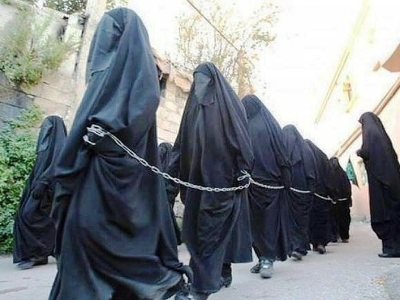
The photo that accompanies this article, or others similar, have been posted, shared and commented through social networks as expression of the inherent misogyny of Islam, with descriptions such as “DAESH taking women to sell in the concubine’s market” or “Muslim women being carried to forced marriages”. I’ve also seen this picture being used by some feminists in academic conferences to illustrate their presentations on the “Status of Women in Islam.”
This photo has been misused. This image is taken from a religious event which is celebrated for Shiite Muslims to describe the terrible events that took place in Karbala 1,200 years ago. This act recalls the occasion when the family of the Prophet Muhammad, formed mostly by women, was taken prisoner, including children and forced to walk chained. History records and praises the courage of women who bear this painful pilgrimage instead of submit themselves to their captors.
In my home city of Cleveland, Ohio, yesterday Donald Trump received the nomination to run as the Republican presidential candidate in the 2016 election. While we were on an upswing following the Cavaliers NBA championship and have been highlighted as “Believeland,” the nomination of Trump is another disappointing and health hazardous event that can be added to the reasons Cleveland is sometimes called “the mistake on the lake.”
There are so many reasons to be angered by the nomination of Trump; his blatant racism and bigotry, incitement of violence, ignorance of domestic or foreign policy, his insistence on discussing his penis size, and the list goes on. With the recent tragic murders of Alton Sterling, Philandro Castile, and eight police officers in Dallas and Baton Rouge, Sterling’s 15 year old son has called for us to come together as “one united family” and end the violence. Trump on the other hand, capitalized on their deaths as a way to highlight his “law and order” campaign and argue that Obama and Hillary Clinton are weak.
We’ve seen time and time again that Trump is unable to articulate anything meaningful in relation to his ability to fulfill the role of POTUS and his hateful rhetoric is influencing the ongoing violence in our nation. Critical points are being made about an anti-immigrant, anti-Muslim, anti-Latino, pro-white supremacy Trump; however, I am concerned that appropriate attention is not being given to the anti-woman sentiment of Trump and the GOP in general.
Oppressions are deeply intertwined and must be uprooted together. And so, the misogyny that exists within the Republican party must also be acknowledged as problematic.
Trump has certainly been condemned for his statements about women; however as a whole the Republican party is focused on a campaign that is anti-woman and ordained by God. My question is why are many much more willing to acknowledge racist and bigoted statements, but often turn a blind eye to the repeated right wing attempts to over turn Roe vs. Wade, defund Planned Parenthood, and regulate women’s sexuality in the name of religion?
Despite the fact that we are a secular nation, the Republican Party has claimed Christianity as a weapon against women’s human rights and it has been accepted as fair game in the world of politics. Trump’s argument, along with Gingrich’s and others that we should create tracking systems or ban Muslims from coming into the nation has been immediately recognized as racist, ethnocentric, and fear mongering (and rightfully so). But attempting to control women’s bodies and send us back to biblical times, well, it is something that many shrug their shoulders at and call a reasonable political issue.
All forms of oppression need to be addressed; you cannot uproot one, you must uproot all. And so, if we are to properly address the bigoted statements coming from the Republican nominee, and booming through Cleveland at the moment being, we must acknowledge the complexities of these issues, the ways they are intertwined, and why all are unacceptable.
Gina Messina, Ph.D. is an American feminist scholar, Catholic theologian, author, and activist. She is also Co-founder of Feminism and Religion. She writes for The Huffington Post, has authored multiple publications and is the co-editor of the highly acclaimed Faithfully Feminist: Jewish, Christian, and Muslim Feminists on Why We Stay. Messina is a widely sought after speaker and has presented across the US at universities, organizations, conferences and on national platforms including appearances on MSNBC, Tavis Smiley, NPR and the TEDx stage. She has also spoken at the Commission on the Status of Women at the United Nations to discuss matters impacting the lives women around the world. Messina is active in movements to end violence against women and explores opportunities for spiritual healing. Connect with her on Twitter @FemTheologian, Facebook, and her websiteginamessinadysert.com.


 When I was a little boy I was terrified that I would live to experience the end of the world. Whether it was by an asteroid, Y2K, or a zombie plague, I would make myself sick by picturing these horrible things that could befall me and my family. Although I was a precocious child, the crippling fear that would lurch its way up my stomach and into my head would sometimes make it impossible to sleep at night. While I like to think I grew out of that phase, I now sit here feeling that way again. I’m crippled with fear that the end of the world is at hand and there may be nothing we can do to stop it. How will the world end? No, it isn’t Lucifer himself coming from hell to bring in the end times, it is someone far worse, and his name is Donald Trump.
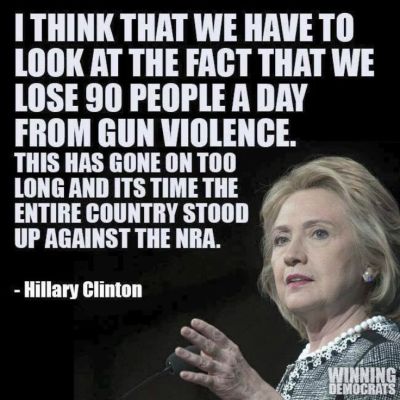 I recently got a request for support from Gabby Giffords, who was shot on January 8, 2011. This
  I try very hard this election season to avoid reading about, watching, or listening to Donald Trump: the man is a liar, a cheat, a bully, a narcissist, a racist, a sexist, the list goes on. Yet even progressive commentators are talking almost exclusively about him. And now I am joining them–despite my best intentions.
 In the winter of 2013, I went on pilgrimage to Kathmandu, Nepal. While there, I visited the Khachoe Ghakyil Ling (Pure Land of Bliss) Tibetan Buddhist nunnery, the largest in Nepal with about 400 nuns. It’s affiliated with the nearby Kopan monastery where I stayed in the retreat housing. The nuns gave a group of us a tour of the gompa (meditation room), classrooms, workshops, and kitchen. The studies at the nunnery include math, science, and English, Nepali, and Tibetan languages, as well as meditation, debate, ritual arts, and chanting, the same education that the monks receive at the monastery. When not engaged in prayer and education, the nuns produce herbal incense renowned for its healing properties, which clear and uplift the mind. Not surprisingly for their ambitious program, a nun’s average day is 14 hours long.
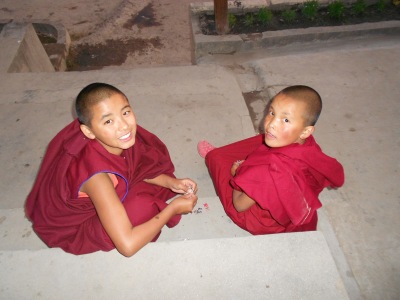 Since I am averse to crowds and rebellious by nature, I ducked out of much of the sight-seeing and instead spent my time engaging with the novitiates, the young nuns who were milling about before dinner because they had completed their classes, daytime prayers, and other duties. We asked each other questions like “What’s your name?” and “Where are you from?” Then I was treated to “Watch me do this!” and “Can you do this?” because the language of children is universal. Yet, what was special about these girls was that they were being given food, shelter, and an education — opportunities that many their ages, especially girls, would never know.
  There has been so much hate on display in the world so far in the 21
 Let’s turn off the news for a little while. Let’s set aside our devices and all those pesky social media. Instead, let’s consider one of the best known (and, alas, probably most ignored) teachings of Jesus—the Sermon on the Mount as given in the Gospel of Matthew. I especially like the Beatitudes (verses 3-12):
 Last month, I took a dear friend on a
 When you read this Feminism and Religion community, we will have just finished the televised portion of the Republican National Convention (RNC), which as I write this Wednesday, July 20 has
  The photo that accompanies this article, or others similar, have been posted, shared and commented through social networks as expression of the inherent misogyny of Islam, with descriptions such as
  In my home city of Cleveland, Ohio, yesterday Donald Trump received the nomination to run as the Republican presidential candidate in the 2016 election. While we were on an upswing following the Cavaliers NBA championship and have been highlighted as “Believeland,” the nomination of Trump is another disappointing and health hazardous event that can be added to the reasons Cleveland is sometimes called “the mistake on the lake.”
